
Discover The Picos de Europa | A Visitor's Introduction to The Picos de Europa
Recommended places to stay, places to visit and things to do in and near The Picos de Europa
The Picos de Europa is a dramatic limestone mountain range in northern Spain, spread across Asturias, Cantabria and Castile and León. Known for sheer peaks, deep gorges, green valleys, remote villages and some of Spain’s finest walking, this mountain region is a perfect destination for hikers, wildlife lovers, road trippers and travellers seeking a cooler alternative to the country’s cities and coasts. With routes such as the Cares Gorge, cable-car access at Fuente Dé and the high lakes above Covadonga, the Picos de Europa offers one of the most distinctive landscapes in the Iberian Peninsula.
Browse Picos de Europa Hotels and Other Accommodation
Pre-book Picos de Europa Activities, Tours and Experiences
Why is Picos de Europa Worth a Visit?
The Picos de Europa is worth visiting because the mountains rise with exceptional drama from the surrounding valleys and lie surprisingly close to the Cantabrian coast. Limestone towers, narrow gorges and high meadows create scenery that feels far more rugged than the range’s relatively compact size suggests.
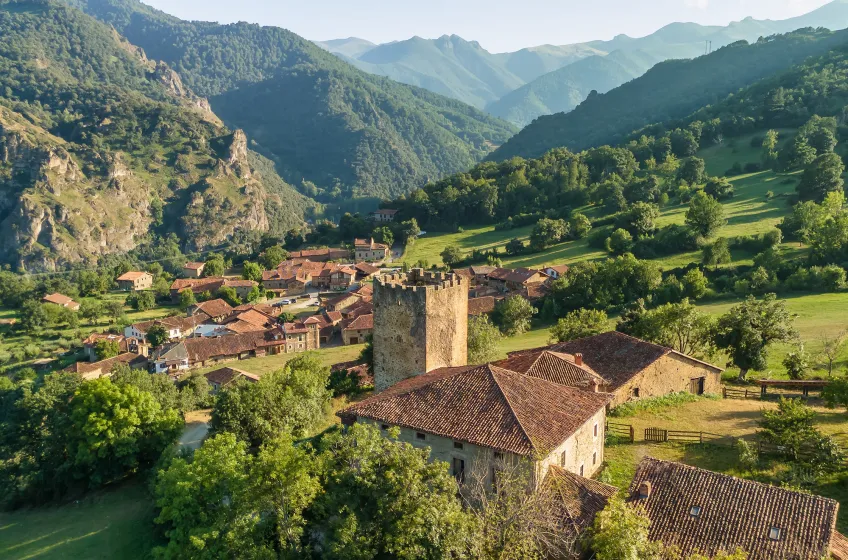
The area is also culturally rich. Small villages preserve stone houses, livestock traditions and regional food, while local life remains closely connected with grazing, cheese-making and mountain routes. Different valleys have their own character, from the greener Asturian approaches around Cangas de Onís to the high Liébana basin near Potes and the remote southern slopes around Posada de Valdeón.
The Picos work equally well for serious walkers and casual visitors. Challenging routes cross high passes and rocky terrain, but there are also cable cars, scenic drives, viewpoints and shorter valley walks.
Three or four days are enough for one main base and several excursions. A week allows a more complete journey across the Asturian, Cantabrian and Castilian sides.
Picos de Europa Highlights: Things to See and Do in Picos de Europa
Walk the Cares Gorge
The Cares Gorge route is the most famous walk in the Picos de Europa.
The path follows a narrow ledge high above the River Cares between Poncebos and Caín. Tunnels, exposed sections and towering cliffs make it one of the most dramatic walks in Spain.
The full out-and-back route is long and tiring, so many visitors arrange transport to walk in one direction. There is very little shade and limited access to water.
Wear proper walking shoes, start early and avoid the route during storms, extreme heat or icy conditions. Visitors uncomfortable with heights may find some sections difficult.
Visit the Lakes of Covadonga
The Lakes of Covadonga sit high above the Asturian side of the range.
Lakes Enol and Ercina are surrounded by meadows, limestone ridges and grazing livestock. Short circular walks connect the main viewpoints, while longer routes continue into the mountains.
Private-car access is often restricted during busy periods, with shuttle buses operating from lower parking areas. Arrive early and check current access arrangements.
Mist can descend quickly, even when the lower valleys are clear.
Explore the Sanctuary of Covadonga
Covadonga lies below the lakes in a dramatic wooded setting.
The basilica and cave chapel are associated with the beginnings of the medieval Kingdom of Asturias and the figure of Pelayo. A small chapel stands within the rock above a waterfall and pool.
The site is both religious and historical, so visitors should expect services, pilgrims and organised groups.
It becomes especially busy in summer and during religious celebrations.
Ride the Fuente Dé Cable Car
The Fuente Dé cable car climbs rapidly from the Liébana Valley to high mountain terrain.
The upper station provides immediate views across limestone peaks and opens onto several walking routes. Even visitors not planning a long hike can enjoy the dramatic ascent and short walks near the top.
Queues can be substantial during summer and public holidays. Operation depends on wind, weather and maintenance, so check before travelling.
Bring an extra layer, as temperatures at the upper station can be much lower than in Potes.
Walk from Fuente Dé
Fuente Dé is the starting point for some of the best-known routes in the central and eastern massifs.
Options range from short panoramic walks to long descents towards Espinama and demanding routes across high passes. Terrain can be rocky and exposed, and route-finding may become difficult in fog.
Do not assume that cable-car access makes the mountain environment easy. Carry water, food, waterproofs and navigation suitable for the chosen route.
Stay in Potes
Potes is the main service town on the Cantabrian side of the Picos.
Stone bridges, narrow lanes and traditional houses line the rivers that meet in the centre. The Torre del Infantado is the town’s principal landmark.
Potes has the widest choice of accommodation, restaurants and shops in the Liébana Valley. It is an excellent base for Fuente Dé, Santo Toribio and the Hermida Gorge.
Summer weekends become busy, so book ahead.
Drive Through the Hermida Gorge
The Hermida Gorge forms the dramatic eastern approach to the Liébana Valley.
The road follows the River Deva between steep limestone walls, passing tunnels, bridges and small settlements. The route is spectacular but can feel narrow and enclosed.
Do not stop outside designated areas. Rockfall, roadworks and heavy traffic may occasionally slow the journey.
Visit Cangas de Onís
Cangas de Onís is one of the main gateways to the Asturian side of the Picos.
Its best-known landmark is a medieval bridge over the River Sella, often called the Roman Bridge despite its later origins. The town also has restaurants, hotels and outdoor-activity businesses.
Cangas de Onís is especially useful for visiting Covadonga, the lakes and eastern Asturias.
Explore Arenas de Cabrales
Arenas de Cabrales is a practical base near the northern entrance to the Cares Gorge.
The town is closely associated with Cabrales cheese and has accommodation, restaurants and mountain services. It also provides access to Poncebos, Bulnes and nearby valleys.
The surrounding scenery is impressive, but the town itself functions mainly as a gateway.
Visit Bulnes
Bulnes is a small mountain village with no direct road connection.
It can be reached by a steep walking route from Poncebos or by underground funicular. Stone houses and narrow lanes sit beneath some of the range’s most dramatic peaks.
The village can become busy around the funicular arrival area, but quieter paths continue beyond it. Weather changes quickly, so do not set out on longer routes without preparation.
See Naranjo de Bulnes
Naranjo de Bulnes, also known as Picu Urriellu, is one of the Picos de Europa’s most recognisable mountains.
Its sheer orange-grey limestone faces attract experienced climbers from around the world. Walkers can approach viewpoints and the mountain refuge, but the full route is demanding and crosses serious mountain terrain.
The summit itself requires technical climbing. Casual visitors should admire it from recognised viewpoints rather than attempting an ascent.
Explore Sotres
Sotres is one of the highest villages in Asturias.
It stands among mountain pastures and provides access to walking routes towards Áliva, Andara and Picu Urriellu. The village has a remote feel despite being reachable by road.
Roads are steep and narrow, and winter conditions can be difficult. Sotres is best suited to visitors comfortable with mountain driving and walking.
Visit Posada de Valdeón
Posada de Valdeón is the principal settlement on the southern side of the range.
It provides access to the Valdeón Valley, Caín and the southern end of the Cares Gorge. The scenery is more open than around Poncebos, with broad views of the surrounding peaks.
The area is quieter than the Asturian and Cantabrian gateways and suits travellers seeking a more rural base.
Explore Caín
Caín is a small village at the entrance to the narrowest section of the Cares Gorge.
It is reached by a winding mountain road through the Valdeón Valley. Restaurants and small guesthouses serve walkers beginning or ending the gorge route.
Parking is limited and the road can be busy during peak periods. Arrive early and drive carefully.
Walk in the Áliva Meadows
The Áliva meadows lie between high limestone massifs above the Liébana Valley.
Broad grassy landscapes, grazing animals and mountain tracks create a gentler contrast with the sheer cliffs nearby. Routes from Fuente Dé, Espinama and Sotres cross this area.
Weather remains exposed despite the softer terrain, and mist can obscure tracks quickly.
Visit Santo Toribio de Liébana
The Monastery of Santo Toribio de Liébana stands near Potes.
It is an important pilgrimage destination and is traditionally associated with a relic of the True Cross. The monastery’s wooded setting beneath the mountains adds to its atmosphere.
Visitors should dress respectfully and avoid interrupting services.
Discover the Cabrales Cheese Caves
Cabrales cheese is one of the region’s best-known products.
It is matured in natural caves, where cool, humid conditions help develop its strong blue character. Museums and guided experiences around Arenas de Cabrales explain the production process.
The cheese is intense, so try a small portion before buying a large piece.
Look for Wildlife
The Picos de Europa supports chamois, deer, vultures, eagles and many smaller species.
Brown bears and wolves live in wider parts of northern Spain, but sightings are rare and should never be expected. Wildlife is best observed quietly and from a distance.
Do not approach livestock, especially animals with young, and keep dogs under close control.
Explore the Mountain Villages
Villages such as Mogrovejo, Espinama, Tielve, Sotres and Santa Marina de Valdeón provide a strong sense of local architecture and mountain life.
Stone houses, barns, churches and narrow lanes remain common. Services are limited, and some villages have only a few restaurants or guesthouses.
Stay overnight in one of these communities for a quieter experience than the main gateway towns.
Practical Advice for Visitors
Getting There
The Picos de Europa is reached most easily through Asturias, Cantabria or Castile and León.
Oviedo and Santander are the nearest major regional gateways, while Bilbao can also be practical for international flights. León provides access from the south.
Public transport reaches towns such as Cangas de Onís, Potes and Arenas de Cabrales, but services to trailheads and remote villages are limited.
A car offers the greatest flexibility.
Getting Around
The range is divided by deep valleys and high mountains, so journeys between bases can take much longer than distances suggest.
There is no quick road across the centre of the range. Travelling between Cangas de Onís, Potes and Posada de Valdeón often requires substantial detours.
Choose one or two bases rather than attempting to cover every side in a short stay.
Driving and Parking
Mountain roads are often narrow, steep and winding.
Livestock, cyclists, hikers and falling rock may all affect driving conditions. Use low gears on long descents and never stop on blind bends.
Parking at Poncebos, Covadonga, Fuente Dé and popular trailheads fills quickly. Seasonal shuttle systems or access restrictions may apply.
Avoid driving after dark on unfamiliar rural roads when possible.
Choosing Where to Stay
Cangas de Onís is best for Covadonga, the lakes and eastern Asturias.
Arenas de Cabrales suits walkers visiting Poncebos, Bulnes and the Cares Gorge.
Potes is the strongest all-round base for Fuente Dé, Liébana and the eastern range.
Posada de Valdeón provides a quieter base for Caín and the southern mountains.
Splitting a week between two sides of the range gives a much better experience than staying in one place.
Walking Safety
Mountain weather changes rapidly.
Carry waterproof clothing, warm layers, water, food and an offline map. Do not rely entirely on mobile reception, which is weak in many valleys.
Choose routes suitable for your fitness and experience. High-level paths may involve loose rock, exposure, snow or difficult navigation.
Tell someone your planned route and expected return time. Turn back early when conditions deteriorate.
Dining
Food in the Picos is substantial and well suited to mountain weather.
Stews, beans, grilled meat, game, trout and local cheeses are common. Portions are often generous.
Cocido lebaniego is a chickpea-based stew associated with the Cantabrian side, while fabada asturiana is widely served in Asturias.
Lunch is usually the main meal and commonly begins after 1.30pm.
Cheese
The Picos area produces several distinctive cheeses.
Cabrales is a strong blue cheese from the Asturian side. Picón Bejes-Tresviso is another powerful blue cheese from Cantabria, while Gamonéu combines smoky and blue flavours.
Quesucos de Liébana are generally smaller and milder.
A mixed cheese board is the best way to compare styles.
Cider and Wine
Natural cider is common on the Asturian side and is traditionally poured from a height.
The Liébana Valley is associated more with local wine and strong grape-based spirits. These can be deceptively powerful.
Drink in moderation, especially before driving or hiking.
Shopping
Typical purchases include cheese, honey, cured meat, cider and regional preserves.
Specialist shops in Arenas de Cabrales, Potes and Cangas de Onís offer the widest choice. Vacuum-packed cheese is easier to transport.
Check international customs restrictions before carrying dairy or meat products home.
When to Visit
Late May to June is excellent for green valleys, waterfalls and spring flowers, although snow may remain on high routes.
July and August provide the greatest access to walking trails, cable cars and visitor services. They are also the busiest months.
September is one of the best periods, with quieter paths and generally stable conditions.
October brings autumn colour but shorter days and more uncertain weather.
Winter is suitable only for properly equipped visitors. Snow, ice and road closures can affect large parts of the range.
Local Events
Mountain villages hold food fairs, livestock events, pilgrimages and local festivals throughout the year.
Cheese festivals and agricultural celebrations are especially important in several valleys.
Cangas de Onís and Potes host larger regional events during warmer months and autumn.
Dates vary annually, so check local programmes before arranging a trip around a particular event.
Exploring Beyond Picos de Europa
Oviedo offers pre-Romanesque churches, museums and cider houses.
Gijón combines beaches, maritime heritage and a lively urban atmosphere.
Santander has elegant waterfront districts, beaches and easy transport connections.
Llanes and Ribadesella provide attractive coastal bases on the Asturian side.
Santillana del Mar and Altamira add medieval streets and prehistoric heritage in Cantabria.
León offers a Gothic cathedral, Romanesque art and excellent tapas south of the mountains.
Shortlist
- Your Shortlist is empty