
Discover Valencia Region | A Visitor's Introduction to Valencia Region
Recommended places to stay, places to visit and things to do throughout Valencia Region
The Valencia Region, officially the Valencian Community, is a varied Mediterranean territory on Spain’s eastern coast, stretching from the mountains and historic towns of Castellón to the beaches, wetlands and palm groves of Alicante province. Known for rice dishes, citrus orchards, lively festivals, medieval castles and a long coastline, this region is a perfect destination for beach travellers, food lovers, families and visitors interested in historic cities. With Valencia as its capital and attractive destinations such as Alicante, Peñíscola, Morella, Xàtiva and Elche, the Valencia Region offers much more than a conventional seaside holiday.
Browse Valencia Region Hotels and Other Accommodation
Pre-book Valencia Region Activities, Tours and Experiences
Why is the Valencia Region Worth a Visit?
The Valencia Region is worth visiting because it combines major cultural attractions with varied landscapes and generally straightforward transport. Valencia city offers museums, markets, Gothic architecture and the futuristic City of Arts and Sciences, while Alicante provides a more compact urban break centred on a castle, marina and beaches.
The coast changes considerably from north to south. Castellón province has mountain-backed beaches, small resorts and the fortified old town of Peñíscola. Central stretches include the Albufera wetlands and the broad beaches around Valencia. Farther south, the Costa Blanca mixes large resorts with fishing towns, coves and rugged headlands.
Inland areas are just as rewarding. Xàtiva has one of Spain’s most impressive hilltop castles, Morella is enclosed by medieval walls, Requena is surrounded by vineyards, and Alcoy sits among wooded mountains associated with festivals and industrial history.
Food is central to the region’s identity. Valencia is the birthplace of paella, but local cooking also includes seafood stews, baked rice, noodles, salted fish, tiger-nut horchata and almond-based sweets. Different provinces have their own specialities, making the region especially suitable for a touring holiday.
A week allows time for Valencia and part of the coast. Ten days to two weeks are better for combining the capital with Alicante, inland towns and the northern province of Castellón.
Valencia Region Highlights: Things to See and Do in the Valencia Region
Explore Valencia City
Valencia is the regional capital and the best place to begin.
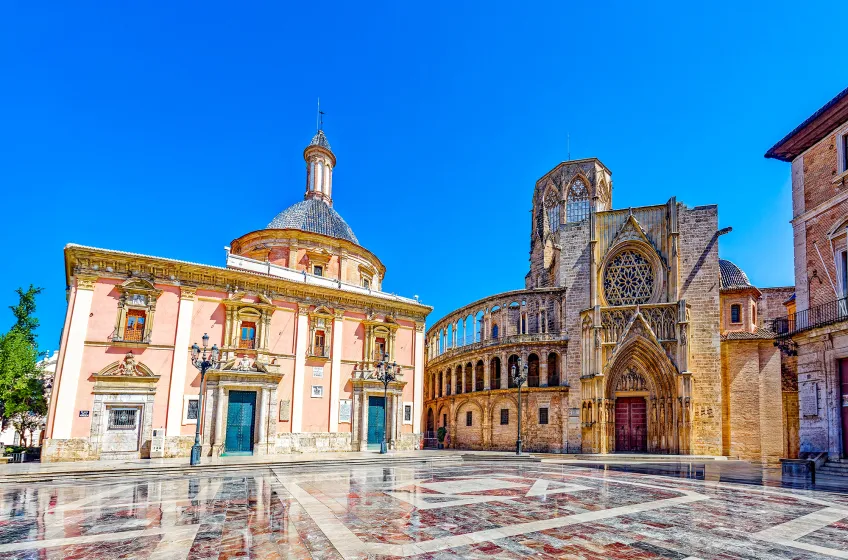
Its historic centre contains the cathedral, Central Market, Silk Exchange and surviving medieval gates. El Carmen is known for narrow streets, street art and nightlife, while Ruzafa has cafés, restaurants and independent shops.
The City of Arts and Sciences provides a dramatic modern contrast, with museums, performance spaces and Oceanogràfic. The Turia Gardens link much of the city through a long park occupying the former riverbed.
Allow at least three full days, particularly when including the beach or Albufera.
Visit the Albufera Natural Park
Albufera lies immediately south of Valencia city and protects a broad lagoon, wetlands, dunes and rice fields.
Boat trips provide views across the shallow water, while birdwatching areas reveal the park’s ecological importance. Sunsets are especially attractive, with flat horizons reflecting across the lagoon.
The nearby village of El Palmar is known for traditional rice restaurants. Public buses make the park accessible without a car, although transport becomes less frequent later in the evening.
Discover Alicante
Alicante is a lively port city on the Costa Blanca.
The Castle of Santa Bárbara rises above the centre on Mount Benacantil, providing views over the harbour, beaches and surrounding coast. Lifts and roads reduce the climb, although walking routes are available.
Below the castle, the Santa Cruz district contains whitewashed houses, steep lanes and flower-filled balconies. The Explanada de España is a palm-lined promenade paved with a distinctive wave pattern.
Alicante combines museums, restaurants, urban beaches and excellent transport connections, making it a practical base for the southern region.
Visit Elche
Elche is famous for its enormous palm grove, a cultural landscape containing thousands of date palms.
The Palmeral developed through agricultural techniques with roots in the Islamic period. Public gardens and walking routes provide the easiest way to experience it, with Huerto del Cura among the best-known sections.
Elche is also associated with the Mystery Play, a historic religious drama staged within the Basilica of Santa María.
The city lies close to Alicante Airport and can be combined easily with Alicante or the southern Costa Blanca.
Explore Peñíscola
Peñíscola is one of the region’s most picturesque coastal towns.
Its fortified old centre stands on a rocky headland above the Mediterranean, dominated by a castle associated with the Knights Templar and Pope Benedict XIII. White houses, stone lanes and sea views fill the compact historic district.
Long sandy beaches extend north of the old town, making Peñíscola suitable for both sightseeing and a beach stay.
The centre becomes very busy during summer afternoons. Arriving early or staying overnight provides a calmer experience.
Visit Morella
Morella is a magnificent fortified town in the mountainous interior of Castellón province.
Its houses climb a steep hill beneath a ruined castle, while medieval walls and gates enclose the old centre. The Basilica of Santa María la Mayor contains an elaborate interior and distinctive raised choir staircase.
The climb through Morella is demanding, but viewpoints across the surrounding highlands make the effort worthwhile.
Winters can be cold and occasionally snowy, while summer evenings are much cooler than those on the coast.
Discover Xàtiva
Xàtiva is a historic inland town south of Valencia city.
Its long castle complex stretches across a ridge above the town and consists of two principal fortified sections. The battlements provide extensive views across valleys, farmland and surrounding mountains.
The old town below contains churches, museums and buildings connected with the influential Borgia family.
The castle is exposed and involves considerable walking. Avoid the hottest part of the day during summer.
Explore Requena
Requena is a historic wine town west of Valencia.
Its oldest district, La Villa, contains stone streets, churches and houses built above a network of underground caves. These spaces were used for storage, refuge and wine production.
The surrounding Utiel-Requena wine region is particularly known for the Bobal grape, used for red, rosé and sparkling wines.
Winery visits usually require advance booking. Requena can be reached by train, though a car provides greater flexibility for exploring surrounding estates.
Visit Gandia
Gandia combines a traditional town centre with a large Mediterranean beach resort.
The Ducal Palace of the Borgias is the principal cultural attraction, containing courtyards, ornate rooms and displays connected with the powerful Borgia family.
Several kilometres away, Platja de Gandia has broad sand, hotels, restaurants and family facilities. The separation between historic town and resort area gives visitors two contrasting experiences.
Regional trains connect Gandia with Valencia.
Relax in Dénia
Dénia is a port town on the northern Costa Blanca, beneath the Montgó mountain.
A castle rises above the historic centre, while restaurants and fishing activity cluster around the harbour. The town is known for seafood, particularly the highly valued local red prawn.
Ferries depart for the Balearic Islands, and long beaches extend north of the centre. Rocky coves and clearer water are found towards the south.
Dénia is an excellent base for combining food, beaches and walking.
Explore Jávea
Jávea, also known as Xàbia, has three distinct areas: a traditional inland old town, a port and the beach district around Arenal.
The coastline includes coves, cliffs and viewpoints beneath the Montgó massif. Granadella and Portitxol are among the best-known coves, though access and parking can be difficult during summer.
The old town has pale stone buildings and a fortified church, offering a quieter contrast to the waterfront.
A car is useful, but local congestion is significant during peak season.
Visit Altea
Altea is known for its whitewashed old town rising above the Costa Blanca.
Steep cobbled lanes lead towards the Church of Our Lady of Consolation, whose blue-tiled domes form the town’s best-known landmark. Art shops, restaurants and viewpoints occupy the surrounding streets.
The modern lower town has a long promenade and pebble beaches.
Altea becomes crowded in the evening, when visitors gather for dinner and sunset views.
Discover Benidorm
Benidorm is the region’s largest purpose-built resort and has a skyline unlike anywhere else in Spain.
Its high-rise hotels overlook long beaches at Levante and Poniente. The resort offers nightlife, family attractions, restaurants and extensive tourist facilities.
Benidorm is highly developed, but it also has a small old centre and access to mountain scenery. The headlands around the bay provide excellent coastal viewpoints.
It works best for travellers who value convenience, entertainment and broad beaches rather than historic atmosphere.
Walk in the Serra Gelada Natural Park
Serra Gelada protects cliffs and coastal hills between Benidorm and Albir.
Walking routes provide views over the Mediterranean, nearby towns and offshore islands. Some trails are easy, while the full ridge route is long, exposed and physically demanding.
There is little shade. Avoid midday hiking in summer and carry more water than you expect to need.
Visit Guadalest
Guadalest is a small mountain village inland from Benidorm.
Its historic centre occupies a rocky outcrop reached through a tunnel cut into the stone. Castle remains, museums and viewpoints overlook a turquoise reservoir and surrounding mountains.
The village becomes very busy with coach groups during the middle of the day. Early morning and late afternoon are more enjoyable.
Explore Alcoy
Alcoy lies in a rugged inland landscape north of Alicante.
The city is known for industrial heritage, modernist architecture and an elaborate Moors and Christians festival. Bridges span steep ravines between different districts.
Nearby natural parks provide walking through forested mountains, while the city’s museums explore local history, festivals and industry.
Alcoy is a useful base for visitors seeking a less tourist-oriented side of the region.
Visit Villajoyosa
Villajoyosa is a colourful coastal town south of Alicante.
Rows of brightly painted houses line the waterfront, traditionally helping fishermen identify their homes from the sea. A sandy beach and promenade occupy the centre.
The town is also strongly associated with chocolate production. Museums and factory-related attractions explain the history of cocoa processing in the area.
Villajoyosa is easily reached by tram from Alicante or Benidorm.
Explore Orihuela
Orihuela is a historic town in the southern part of Alicante province.
Its old centre contains churches, palaces, convents and a cathedral, reflecting its former religious and administrative importance. The town is associated with poet Miguel Hernández.
Orihuela lies inland, while a separate coastal area contains resorts and beaches. The two should not be confused when booking accommodation.
See the Pink Lagoon at Torrevieja
The salt lagoons around Torrevieja form an unusual protected landscape.
One lagoon can appear pink because of microorganisms and high salinity, although the intensity varies with light, season and environmental conditions. Flamingos and other birds may be seen in the wider park.
Visitors should use official paths and viewpoints. Entering the water or crossing restricted salt-working areas may be prohibited.
Explore the Columbretes Islands
The Columbretes are a small volcanic island group offshore from Castellón.
Protected waters and unusual geology make them attractive for boat excursions, diving and wildlife observation. Visitor access is controlled to protect the fragile environment.
Trips are weather-dependent and generally involve a substantial journey across open sea. Advance booking is advisable.
Practical Advice for Visitors
Getting There
Valencia and Alicante have the region’s principal airports.
Valencia Airport is convenient for the capital, Castellón province and central coastal destinations. Alicante Airport serves the Costa Blanca and has an extensive network of flights from the UK and northern Europe.
High-speed trains connect Valencia and Alicante with Madrid. Long-distance and regional services link the major coastal cities with Barcelona, Murcia and other Spanish destinations.
Castellón also has an airport with a smaller and more variable route network.
Getting Around
Trains are useful along parts of the coast and between larger cities.
Valencia has metro, tram and bus systems, while Alicante’s tram network serves destinations including Villajoyosa, Benidorm, Altea and Dénia through connected services.
A car is highly useful for Morella, Guadalest, inland natural parks, vineyard areas and smaller coves. Public transport to rural locations may be infrequent.
Distances are longer than the map may suggest, particularly when mountain roads are involved.
Driving and Parking
Vehicles drive on the right.
Central Valencia and Alicante have restricted areas, one-way streets and controlled parking. Leave the car in a public garage and explore on foot or by public transport.
Parking near coves and historic villages fills rapidly during summer. Some coastal locations use shuttle systems or seasonal road restrictions.
Mountain roads can be narrow and winding. Drive cautiously, especially after heavy rain.
Beaches and Swimming
The region has everything from broad sandy beaches to small rocky coves.
Valencia city, Gandia, Benidorm and much of the northern Costa Blanca offer long, developed beaches with extensive facilities. Jávea, Dénia and parts of the southern coast have smaller coves with clearer water.
Water shoes are useful on pebble and rocky beaches. Observe warning flags, as currents and rough sea conditions can occur even on sunny days.
Never leave valuables unattended while swimming.
Dining
Rice is the foundation of much Valencian cooking.
Traditional paella Valenciana usually contains chicken, rabbit, beans and rice. Seafood paella is widely available, but it is a different dish rather than the original local version.
Other specialities include arroz a banda, arroz al horno, black rice and fideuà, which uses short noodles. Fish stews, salted seafood and grilled vegetables are common along the coast.
Lunch is normally served after 1.30pm, with dinner often beginning after 8.30pm.
Horchata and Sweets
Horchata de chufa is a sweet chilled drink made from tiger nuts.
It is especially associated with Alboraya, just north of Valencia city, and is traditionally served with long soft pastries called fartons.
Alicante province is known for turrón, a nougat-like sweet commonly made with almonds and honey. Jijona produces a soft version, while Alicante-style turrón is harder and contains whole almonds.
Wine
The region has several protected wine areas.
Utiel-Requena is known particularly for Bobal-based reds and rosés. Alicante produces sweet wines, Monastrell reds and other styles, while Valencia’s wider designation covers several inland districts.
Smaller wineries often require advance booking. Organised tours are useful when public transport is limited.
Shopping
Typical regional purchases include rice, wine, olive oil, ceramics, turrón, saffron and orange-based products.
Valencia city and Alicante have the widest retail choice. Smaller towns provide food markets, bakeries and craft shops.
Manises, near Valencia, is particularly associated with ceramics.
Most ordinary shops close on Sundays, apart from selected resort and transport locations.
Language
Spanish and Valencian are both official languages.
Valencian, a regional variety of Catalan, appears widely on signs, public information and menus. Its everyday use varies between different towns and provinces.
Spanish is understood throughout the region, while English is common in major resorts and tourist attractions.
When to Visit
April to June is one of the best periods for sightseeing, coastal walking and comfortable beach weather.
September and October offer warm sea temperatures, fewer crowds and excellent conditions for food and touring holidays.
July and August are hot, humid and extremely busy along the coast. Inland towns can experience even higher daytime temperatures.
Winter is mild beside the sea and suitable for city breaks, cycling and walking. Mountain areas around Morella and Alcoy are considerably cooler.
Heavy rain can occur during autumn, occasionally causing flooding and transport disruption. Take weather warnings seriously.
Local Events
Las Fallas transforms Valencia and several surrounding towns with giant sculptures, fireworks, marching bands and neighbourhood celebrations.
The Moors and Christians festivals are especially important in Alcoy, Villajoyosa and many other towns. They include elaborate costumes, music and staged processions.
Alicante’s Bonfires of Saint John bring monuments, fireworks and street celebrations during June.
The Mystery Play of Elche is one of the region’s most distinctive religious traditions.
La Tomatina takes place in Buñol and attracts visitors for a large organised tomato-throwing event.
Festival dates and access arrangements vary annually, and accommodation can sell out well in advance.
Exploring Beyond the Valencia Region
Catalonia lies to the north, with Tarragona, the Ebro Delta and Barcelona forming natural extensions.
Aragón is accessible inland, offering Teruel, Albarracín and Mudéjar architecture.
Castile-La Mancha lies west of Valencia and includes Cuenca, Albacete and the landscapes associated with Don Quixote.
Murcia lies south of Alicante and offers historic cities, market gardens and the Mar Menor.
The Balearic Islands can be reached by ferry from Valencia and Dénia or by flights from Valencia and Alicante.
Shortlist
- Your Shortlist is empty