
Discover Pamplona | A Visitor's Introduction to Pamplona
Recommended places to stay, places to visit and things to do in and near Pamplona
Pamplona is the historic capital of Navarre in northern Spain, set on a high plateau beside the River Arga. Known internationally for the Running of the Bulls during the San Fermín festival, the city also has a handsome old quarter, impressive fortifications, excellent food and strong Camino de Santiago connections. With leafy parks, lively pintxos bars and easy access to the Pyrenees and Navarre’s wine country, Pamplona is a rewarding destination well beyond its famous July celebrations.
Browse Pamplona Hotels and Other Accommodation
Pre-book Pamplona Activities, Tours and Experiences
Why is Pamplona Worth a Visit?
Pamplona is worth visiting because it combines medieval streets, military architecture and a relaxed northern Spanish atmosphere in a compact, walkable centre. The city’s walls, citadel and gateways reveal its strategic importance, while the cathedral and old quarter reflect centuries of religious and civic history.
Its Camino heritage is another major attraction. Pilgrims enter through the historic Portal de Francia before crossing the old town on their way west towards Puente la Reina and Santiago de Compostela.
Pamplona is also a strong food destination. Navarrese vegetables, grilled meat, local cheeses and pintxos feature widely, while nearby wine areas add excellent regional bottles.
The city changes dramatically during San Fermín. In July it becomes crowded, noisy and intensely festive. At other times, Pamplona is calmer, greener and easier to explore.
Two full days are enough for the historic centre, walls and parks. Three or four nights allow time for museums, slower meals and a day trip into rural Navarre.
Pamplona Highlights: Things to See and Do in Pamplona
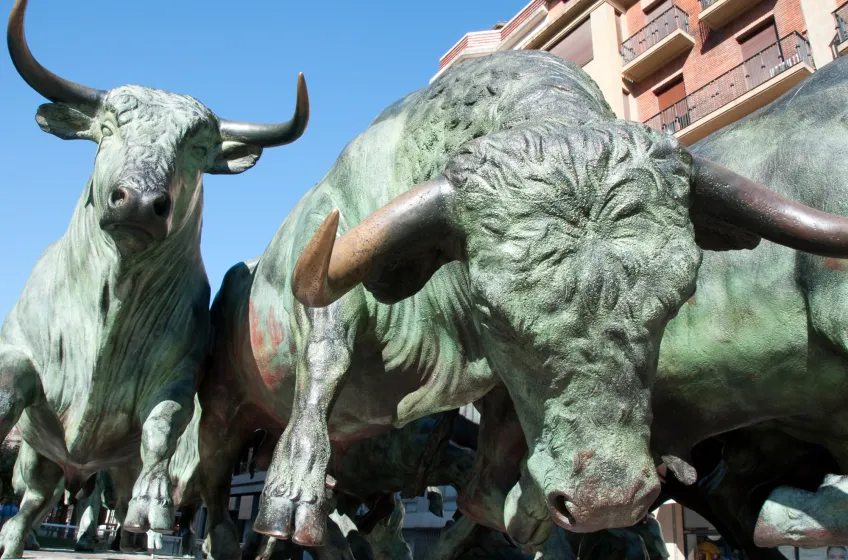
Walk the San Fermín Bull-Run Route
The famous encierro route runs through the old town from the corrals near Santo Domingo to the bullring.
Outside the festival, visitors can walk the route at a relaxed pace and appreciate how narrow and sharply angled some sections are. Key points include the Santo Domingo slope, Plaza Consistorial, Calle Mercaderes and the bend into Calle Estafeta.
Interpretation plaques and local tours explain the history and risks of the event.
During San Fermín, the route becomes extremely crowded and is subject to strict controls.
Visit Plaza Consistorial
Plaza Consistorial is one of Pamplona’s best-known urban spaces.
The ornate Baroque façade of the Town Hall fills the compact square. It is from here that the opening rocket, the chupinazo, launches the San Fermín festivities each July.
The square is much smaller than television images may suggest, which helps explain the intense atmosphere during the festival.
Visit early in the morning for clearer photographs.
Explore the Old Town
Pamplona’s old town is a dense network of pedestrian streets, small squares, churches and pintxos bars.
Calle Estafeta is the best-known street, but nearby lanes are often quieter and equally attractive. Plaza del Castillo, Calle San Nicolás and the cathedral quarter should all be included in a walking route.
The old town becomes liveliest from lunchtime onwards and again in the evening.
Relax in Plaza del Castillo
Plaza del Castillo is Pamplona’s main social square.
Arcaded buildings, cafés and hotel façades surround the open centre. The square has long been associated with public life, celebrations and café culture.
It is an excellent place to pause between the old town and the greener districts around the citadel.
Evenings are especially pleasant when residents gather for drinks and conversation.
Visit Pamplona Cathedral
The Cathedral of Santa María la Real stands near the eastern edge of the old town.
Its neoclassical façade hides a largely Gothic interior with a beautiful cloister, royal tombs and religious artworks. The contrast between the exterior and interior is one of the building’s most interesting features.
The cathedral museum helps explain the city’s medieval history and the role of Navarre’s monarchy.
Allow at least an hour for a thorough visit.
Explore the Cathedral Cloister
Pamplona Cathedral’s cloister is one of its finest architectural spaces.
Gothic arches, sculpted doorways and quiet galleries surround a peaceful central garden. The cloister feels far removed from the busy streets of the old town.
Look closely at the carved details around the portals and chapels.
Walk Through the Portal de Francia
The Portal de Francia is one of Pamplona’s surviving historic gateways.
Pilgrims on the Camino de Santiago traditionally enter the old city through this area after crossing the River Arga. The route continues uphill towards the cathedral and Plaza Consistorial.
The gateway and nearby walls are particularly atmospheric in the early morning, when Camino walkers are setting out.
Walk Along the City Walls
Pamplona preserves long sections of fortifications around the old centre.
Paths along the walls provide views over the River Arga, northern neighbourhoods and surrounding landscape. Interpretation panels explain bastions, gateways and defensive features.
The walls are easy to combine with the cathedral, Portal de Francia and riverside.
Some sections are exposed to sun and wind, so dress for the weather.
Explore the Citadel
Pamplona’s star-shaped citadel is one of the city’s most impressive military landmarks.
Originally constructed as part of a wider defensive system, it now forms a large public park with lawns, paths, ramparts and exhibition spaces inside former military buildings.
The citadel is popular with walkers, runners and families. It is especially pleasant in the late afternoon.
Allow at least an hour to explore the interior and surrounding parkland.
Walk Through Vuelta del Castillo Park
Vuelta del Castillo surrounds the citadel.
Broad lawns, mature trees and paths create one of Pamplona’s largest central green spaces. The area is ideal for walking, picnics and a break from the historic centre.
The park is also a useful route between the old town and university district.
Visit the Museum of Navarre
The Museum of Navarre occupies a former hospital near the old city walls.
Its collections cover archaeology, Roman remains, medieval art and later regional history. Highlights include mosaics, sculpture and works connected with Navarre’s religious and political past.
The museum provides the best broad introduction to the region beyond Pamplona itself.
Walk Along Calle Estafeta
Calle Estafeta is the most famous street on the bull-run route.
Outside San Fermín, it is a lively pedestrian street filled with pintxos bars, food shops and local businesses. The narrow layout creates a strong sense of enclosure.
Evening is the best time for eating, though it can become crowded at weekends.
Visit the Church of San Saturnino
San Saturnino, also known as San Cernin, is one of Pamplona’s most important medieval churches.
Its sturdy towers and defensive appearance reflect a period when different parts of the city were separate fortified boroughs. The church is closely associated with the city’s patron saint.
The interior is restrained but atmospheric.
See the Church of San Nicolás
San Nicolás is another fortified medieval church within the old town.
It once served both religious and defensive functions. Thick walls and a solid exterior contrast with the surrounding commercial streets.
The church sits close to excellent pintxos areas, making it easy to include during an evening walk.
Visit the Monument to the Fueros
The Monument to the Fueros stands on Paseo de Sarasate.
It commemorates Navarre’s historic legal rights and regional identity. Sculptural figures and inscriptions refer to local institutions and political traditions.
The broad promenade around it links the old town with the newer city centre.
Explore Taconera Gardens
Taconera is Pamplona’s oldest and most elegant public park.
Formal paths, flowerbeds, old walls and viewpoints create a peaceful setting near the historic centre. Animal enclosures in the lower moat areas are a distinctive feature, though conditions and access may change.
The park is particularly attractive in spring and early autumn.
Walk Beside the River Arga
The River Arga provides a quieter side of Pamplona.
Walking and cycling paths follow the river beneath old bridges, parks and sections of the city walls. The route can be combined with Portal de Francia and the Camino approach.
The riverside is generally flat and suitable for an easy walk.
Visit the Bullring Exterior
Pamplona’s bullring marks the end of the San Fermín bull-run route.
Outside festival periods, the exterior is the main point of interest unless tours or events are available. The building helps visitors understand the final stage of the encierro.
Bullfighting remains controversial, and visitors may prefer to treat the site as part of the city’s social history rather than attend an event.
Follow the Camino de Santiago
Pamplona is one of the major early stops on the Camino Francés.
The route enters from the north-east, passes through the old town and continues west towards Cizur Menor and the Alto del Perdón.
Walking a short section gives visitors a clear sense of how pilgrimage remains embedded in the city’s daily life.
Practical Advice for Visitors
Getting There
Pamplona has rail and long-distance coach connections with Madrid, Barcelona, Zaragoza, San Sebastián, Bilbao and other Spanish cities.
Pamplona Airport has a limited route network, so Bilbao, San Sebastián or Biarritz may be more practical for some international travellers.
The railway station lies north-west of the centre, while the coach station is more centrally placed beneath the citadel area.
Getting Around
The old town and central districts are best explored on foot.
Most major sights are within 15 to 20 minutes of Plaza del Castillo. Local buses serve the railway station, university areas and outer neighbourhoods.
Cycling is possible, though cobbles and pedestrian streets require care.
A car is unnecessary for the city itself.
Parking
Driving into the old town is inconvenient because of pedestrian areas, restricted access and narrow streets.
Public garages are available beneath or near central squares and around the outer centre. Park once and continue on foot.
During San Fermín, traffic controls and parking restrictions become much more extensive.
Choosing Where to Stay
The old town is ideal for atmosphere, nightlife and easy access to the main sights.
Accommodation near Plaza del Castillo is especially convenient but may be noisy. The Ensanche offers wider streets, modern hotels and a calmer night-time environment.
Staying near the citadel provides good access to parks and transport while remaining within walking distance of the centre.
During San Fermín, book far in advance and expect much higher prices.
Dining
Pamplona has an excellent northern Spanish food scene.
Pintxos bars dominate the old town, while traditional restaurants serve lamb, beef, game, peppers and seasonal vegetables. Navarre’s fertile river valleys produce some of Spain’s best-known asparagus, artichokes and piquillo peppers.
Lunch usually begins after 1.30pm, while dinner commonly starts after 8.30pm.
Reservations are useful at popular restaurants, especially on Friday and Saturday.
Eat Pintxos
Calle Estafeta, Calle San Nicolás and surrounding streets are the main pintxos areas.
Some bars specialise in a single famous item, while others offer creative hot dishes. Order one or two per stop and move between several establishments.
Paying systems vary, so follow local practice or ask staff.
Try Piquillo Peppers
Piquillo peppers are one of Navarre’s best-known ingredients.
They are small red peppers with a sweet, lightly smoky flavour, often roasted and peeled. They may be stuffed with cod, meat or cheese, or served simply with olive oil.
Good versions appear in both pintxos bars and traditional restaurants.
Taste Navarrese Asparagus
White asparagus from Navarre is prized for its tender texture and delicate flavour.
It is usually served simply with mayonnaise, vinaigrette or olive oil. Fresh local asparagus is seasonal, while preserved versions are available throughout the year.
Quality varies, so look for clearly identified regional produce.
Try Menestra de Verduras
Menestra de verduras is a vegetable dish associated strongly with Navarre.
It may contain artichokes, peas, beans, asparagus and other seasonal produce, sometimes enriched with ham. The exact combination changes according to season.
This is one of the best dishes for understanding the importance of market gardening in the region.
Drink Navarre Wine
Navarre produces red, white and rosé wines.
Rosado remains particularly associated with the region, while reds often use Garnacha, Tempranillo and international varieties. White wines may include Chardonnay or native grapes.
Wine bars and restaurants commonly serve regional labels by the glass.
Try Pacharán
Pacharán is a traditional Navarrese liqueur made by steeping sloe berries in an anise-based spirit.
It is usually served after a meal, chilled or over ice. The flavour is sweet, fruity and herbal.
It can be stronger than it tastes, so drink in moderation.
Shopping
Typical purchases include wine, pacharán, preserved vegetables, cheese, cured meat and confectionery.
Food shops in and around the old town offer regional products, while larger retail streets extend through the Ensanche.
Most ordinary shops close on Sundays, apart from selected tourist businesses.
When to Visit
April to June is excellent for mild weather, green parks and manageable crowds.
September and October are also attractive, with food, wine and comfortable walking conditions.
July is dominated by San Fermín and is suitable mainly for visitors seeking the festival atmosphere. Prices, noise and crowds increase dramatically.
Winter is cold and sometimes foggy, but the city remains lively and food-focused.
Local Events
San Fermín is Pamplona’s internationally famous festival and takes place each July.
The programme includes the bull runs, processions, concerts, fireworks and continuous street celebrations. The event is intense, crowded and alcohol-heavy.
Running in the encierro is extremely dangerous and should never be treated as a casual tourist activity. Strict rules apply, and serious injuries occur.
Other annual events include religious celebrations, cultural festivals, food fairs and Camino-related activities.
Programmes vary, so check current information before travelling.
Safety and Common Visitor Problems
Pamplona is generally safe outside the busiest festival periods.
During San Fermín, crowded streets, heavy drinking, theft and accidents become much greater concerns. Keep valuables secure and avoid isolated streets late at night.
Stone paving can become slippery after rain. Summer afternoons may be hot, while winter nights are cold.
Do not underestimate distances or mountain conditions when taking day trips towards the Pyrenees.
Exploring Beyond Pamplona
Puente la Reina is a beautiful Camino town known for its medieval bridge and pilgrim streets.
Olite has an extraordinary royal palace with towers, courtyards and fortified walls.
Estella combines Romanesque churches, historic streets and Camino heritage.
The Bardenas Reales offers a semi-desert landscape of eroded clay formations in southern Navarre.
Roncesvalles is one of the symbolic starting points of the Camino Francés in Spain.
The Baztan Valley provides green hills, stone villages and strong Basque-Navarrese character.
San Sebastián lies north-west of Pamplona and offers beaches, pintxos and elegant coastal architecture.
Shortlist
- Your Shortlist is empty