
Discover Barcelona | A Visitor's Introduction to Barcelona
Recommended places to stay, places to visit and things to do in and near Barcelona
Barcelona is the cosmopolitan capital of Catalonia, set between the Mediterranean Sea and the Collserola hills in north-eastern Spain. Known for Antoni Gaudí’s extraordinary architecture, lively neighbourhoods, sandy beaches and world-class food, this energetic city is a perfect destination for art lovers, architecture enthusiasts, families, foodies and travellers seeking both culture and nightlife. With Gothic lanes, Modernista landmarks, bustling markets and panoramic viewpoints, Barcelona offers one of Europe’s most varied city breaks.
Browse Barcelona Hotels and Other Accommodation
Pre-book Barcelona Activities, Tours and Experiences
Why is Barcelona Worth a Visit?
Barcelona is worth visiting because it combines a major historic city with beaches, bold architecture and a strong local identity. Few destinations offer medieval streets, internationally famous museums, neighbourhood markets and Mediterranean swimming within the same compact urban area.
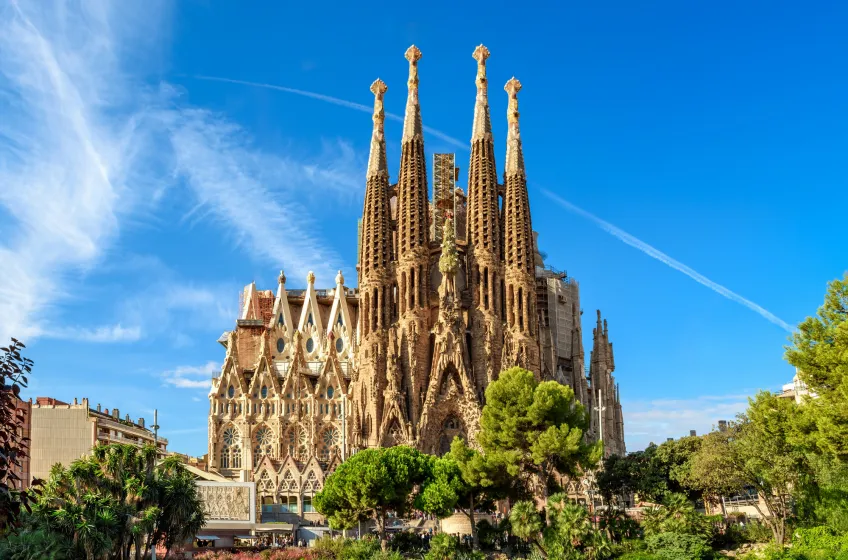
Architecture is the city’s defining attraction. Gaudí’s Sagrada Família, Park Güell, Casa Batlló and La Pedrera are unlike buildings found anywhere else, while the wider Eixample district contains an exceptional concentration of Catalan Modernisme.
Barcelona also rewards visitors who move beyond the most famous sights. Gràcia has village-like squares and independent cafés, Poblenou mixes industrial heritage with creative businesses, and Montjuïc combines museums, gardens and harbour views.
Food is another major reason to visit. Catalan cooking ranges from simple tomato-rubbed bread and grilled seafood to elaborate contemporary dining. Markets, bakeries, neighbourhood restaurants and vermouth bars provide plenty of options at different prices.
Three full days cover the principal landmarks, but four or five nights allow time for beaches, museums and quieter neighbourhoods. Booking major attractions in advance is strongly advisable.
Barcelona Highlights: Things to See and Do in Barcelona
Visit the Sagrada Família
The Sagrada Família is Barcelona’s defining landmark and Antoni Gaudí’s most ambitious work.
Its towers rise above the Eixample, while the richly sculpted façades present very different interpretations of Christ’s life. The Nativity Façade is organic and densely decorated, while the Passion Façade is more angular and austere.
Inside, branching columns and coloured light create the impression of a vast stone forest. The interior is more spacious and luminous than the exterior suggests.
Timed tickets are essential during busy periods. Tower access usually requires a separate booking and involves lifts, stairs and narrow passages.
Construction work remains part of the experience, so expect restricted areas and occasional changes to visitor routes.
Explore Park Güell
Park Güell is a hillside complex of gardens, architecture and mosaics designed by Gaudí.
Its most famous features include the tiled terrace, serpentine bench, monumental staircase and colourful dragon fountain. Curving stone viaducts and irregular columns blend into the surrounding landscape.
The regulated monumental area requires timed entry, while other sections of the park may be freely accessible. Arrive early to avoid the largest crowds and summer heat.
The park is steep in places, and the nearest metro stations involve uphill walking. Local buses or taxis can be more convenient.
Visit Casa Batlló
Casa Batlló is one of Gaudí’s most imaginative residential buildings.
Its undulating façade, coloured tiles and bone-like balconies create a striking appearance on Passeig de Gràcia. Inside, curved woodwork, stained glass, ventilation systems and marine-inspired details reveal Gaudí’s attention to both beauty and function.
Rooftop chimneys and the dragon-like roofline are particular highlights.
Entry is expensive, so travellers choosing between Gaudí houses may prefer to visit one in detail and admire the others from outside.
Explore La Pedrera
Casa Milà, commonly known as La Pedrera, occupies a prominent corner of Passeig de Gràcia.
Its rippling stone façade and wrought-iron balconies are immediately recognisable. The interior route usually includes courtyards, an apartment, an attic exhibition and the rooftop.
The rooftop is the main attraction, with sculptural chimneys, stair towers and views towards the Sagrada Família.
Evening visits may include special lighting or audiovisual presentations, depending on the current programme.
Walk Through the Gothic Quarter
The Gothic Quarter forms the historic core of Barcelona.
Narrow lanes, small squares, medieval churches and Roman remains create a dense and atmospheric district. Major sights include Barcelona Cathedral, Plaça del Rei and the remains of the Roman city of Barcino.
Some streets become extremely crowded during the day. Early morning is the best time for quiet exploration.
The neighbourhood is fascinating but heavily commercialised in places, so wander away from the busiest routes around La Rambla.
Visit Barcelona Cathedral
Barcelona Cathedral, officially the Cathedral of the Holy Cross and Saint Eulalia, stands at the heart of the Gothic Quarter.
Its Gothic interior contains chapels, choir stalls, cloisters and the crypt associated with Saint Eulalia. The cloister is traditionally home to a group of white geese.
Rooftop access may provide views over the old town, though arrangements vary.
Dress requirements and service times can affect entry.
Explore El Born
El Born combines medieval streets with bars, boutiques, museums and restaurants.
The Basilica of Santa Maria del Mar is the district’s principal landmark, while the former market building of El Born preserves archaeological remains connected with the city’s history.
Passeig del Born and surrounding lanes are particularly lively in the evening.
The district is convenient for combining the Gothic Quarter, Parc de la Ciutadella and waterfront.
Visit Santa Maria del Mar
Santa Maria del Mar is one of Barcelona’s finest Gothic churches.
Its interior is spacious, harmonious and relatively restrained compared with the cathedral. Tall columns and broad arches create an impressive sense of openness.
The church is closely associated with the medieval merchants and maritime community of the Ribera district.
Rooftop or tower visits may be available separately.
Walk Along La Rambla
La Rambla is Barcelona’s most famous pedestrian boulevard.
It runs from Plaça de Catalunya towards the waterfront, passing flower stalls, cafés, street performers and historic buildings. The atmosphere is energetic but highly tourist-oriented.
The boulevard is worth seeing once, though it is rarely the best place for eating or shopping.
Pickpocketing is a significant concern. Keep phones, wallets and bags secure, especially in crowds.
Visit La Boqueria Market
La Boqueria is Barcelona’s best-known food market.
Stalls sell fruit, seafood, meat, cheese, sweets and prepared dishes. Although the market has become heavily visited, traditional traders still operate alongside tourist-focused counters.
Visit early in the morning for a calmer experience and better sense of everyday market activity.
Prices for juices, snacks and seafood vary greatly, so check before ordering.
Explore the Eixample
The Eixample is Barcelona’s spacious 19th-century expansion district.
Its grid plan, chamfered street corners and broad avenues contrast with the medieval old city. Many buildings display floral decoration, stained glass, carved stone and ironwork associated with Catalan Modernisme.
Passeig de Gràcia contains the most famous architecture, but quieter surrounding streets are rewarding for an unhurried walk.
See the Block of Discord
The Block of Discord is a celebrated group of Modernista buildings on Passeig de Gràcia.
Casa Batlló, Casa Amatller and Casa Lleó Morera stand close together but display very different architectural styles. Their contrasting façades make this one of Barcelona’s most distinctive streetscapes.
The buildings are particularly attractive in soft morning or late-afternoon light.
Visit the Palau de la Música Catalana
The Palau de la Música Catalana is one of Barcelona’s finest Modernista interiors.
Its concert hall is decorated with stained glass, mosaics, sculpture and floral motifs. The central skylight fills the auditorium with natural light.
Guided visits are worthwhile, but attending a concert provides the best experience of the building.
Book ahead, especially during busy cultural periods.
Visit the Hospital de Sant Pau
The former Hospital de Sant Pau is a vast Modernista complex near the Sagrada Família.
Decorative pavilions are connected by gardens and underground passages. Mosaics, tiled roofs, domes and sculpted details show how architecture was used to create a more humane hospital environment.
The site is generally less crowded than Gaudí’s main attractions and deserves at least 90 minutes.
Explore Montjuïc
Montjuïc is a broad hill overlooking the harbour and city.
Its attractions include museums, gardens, Olympic sites, viewpoints and the castle. Because the area is large, visitors should choose a few priorities rather than trying to see everything in one visit.
Cable cars, buses and the funicular help reduce the amount of uphill walking.
Visit the National Art Museum of Catalonia
The Museu Nacional d’Art de Catalunya occupies the grand Palau Nacional on Montjuïc.
Its collections range from medieval Romanesque frescoes to Gothic, Renaissance, Baroque and modern Catalan art. The Romanesque collection is particularly important.
Terraces outside the museum provide broad views over Plaça d’Espanya and the city.
Allow at least two hours for a focused visit.
Explore the Joan Miró Foundation
The Joan Miró Foundation presents an extensive collection of work by the Catalan artist.
Paintings, sculptures, drawings and tapestries are displayed in a light-filled building on Montjuïc. Temporary exhibitions place Miró within wider modern and contemporary art.
The surrounding terraces and gardens add to the experience.
Visit Montjuïc Castle
Montjuïc Castle stands at the summit of the hill.
The fortress has a complex history connected with military control, warfare and political repression. Exhibitions provide context, while the walls offer excellent views over the port and coastline.
The cable car provides the most scenic approach, though buses and walking routes are also available.
Explore Parc de la Ciutadella
Parc de la Ciutadella is one of central Barcelona’s main green spaces.
Its paths, lawns, monumental fountain and boating lake attract families, students and performers. The Catalan Parliament and Barcelona Zoo also occupy parts of the park.
The park is easy to combine with El Born and the Arc de Triomf.
Keep belongings close when sitting on the grass.
See the Arc de Triomf
Barcelona’s Arc de Triomf was built as a ceremonial entrance for the 1888 Universal Exhibition.
Its red-brick design differs from many classical triumphal arches. A broad pedestrian promenade connects it with Parc de la Ciutadella.
The area is popular with walkers, cyclists and street performers.
Relax on Barceloneta Beach
Barceloneta is the city’s best-known urban beach.
Its broad promenade, seafood restaurants and easy access from the old town make it extremely popular. Swimming is possible when conditions are safe, though the beach becomes crowded in summer.
Bag theft can occur while visitors are swimming. Take only essential belongings and never leave valuables unattended.
Beaches farther north, such as Bogatell, often feel calmer.
Explore Barceloneta
Barceloneta was developed as a maritime neighbourhood beside the port.
Narrow streets, small balconies and traditional bars survive behind the modern beach promenade. The area’s fishing identity remains visible, though tourism has changed much of its character.
Explore the interior streets rather than staying only on the waterfront.
Walk Through Gràcia
Gràcia has a village-like atmosphere despite being close to central Barcelona.
Small squares, independent shops, cafés and neighbourhood restaurants distinguish it from the grander Eixample. Plaça del Sol and Plaça de la Vila de Gràcia are among its main social spaces.
Evening is lively, but residential areas require consideration regarding noise.
Visit Tibidabo
Tibidabo is the highest prominent hill overlooking Barcelona.
The summit contains a historic amusement park, the Temple of the Sacred Heart and wide views over the city and Mediterranean. The journey can involve trains, buses or funicular services depending on current arrangements.
Cloud, haze and strong wind can reduce visibility, so choose a clear day.
Explore Poblenou
Poblenou is a former industrial district transformed by technology businesses, creative studios and residential development.
Rambla del Poblenou is lined with cafés and restaurants, while former factories and warehouses appear throughout the surrounding streets.
The neighbourhood also provides access to quieter beaches than Barceloneta.
Visit Camp Nou and the FC Barcelona Museum
FC Barcelona is one of the city’s most important cultural institutions.
Stadium access, museum displays and match arrangements may be affected by ongoing building work or temporary relocation. Check current information before making plans.
Tickets for major matches are expensive and may be difficult to obtain through official channels.
Avoid unofficial street sellers and unverified resale websites.
Practical Advice for Visitors
Getting There
Barcelona-El Prat Airport lies south-west of the city.
Trains, metro services, airport buses and taxis connect the terminals with central Barcelona. The best option depends on your accommodation and arrival time.
High-speed trains connect Barcelona with Madrid, Zaragoza, Valencia, Girona and parts of France. The main long-distance station is Barcelona Sants.
Coaches and regional trains provide links throughout Catalonia.
Getting Around
Barcelona has an extensive metro, bus, tram and suburban rail network.
The metro is usually the quickest way to move between central districts. Walking remains the best way to explore individual neighbourhoods.
Transport tickets and fare systems can change, so check the current options for the length of your stay.
Take care on escalators, station platforms and crowded trains, where pickpocketing is common.
Parking
Driving in central Barcelona is rarely worthwhile.
Traffic, restricted zones, one-way streets and expensive parking make a car inconvenient. Public garages are available, but daily costs can be substantial.
Use public transport within the city and rent a car only when leaving for rural destinations.
Choosing Where to Stay
The Eixample is the best all-round area for first-time visitors, with strong transport links and easy access to major architecture.
The Gothic Quarter and El Born provide atmosphere but can be noisy, crowded and difficult for taxi access.
Gràcia is excellent for neighbourhood restaurants and a more local feel. Poblenou suits visitors seeking beaches and quieter evenings.
Accommodation near La Rambla is convenient but often busy and heavily tourist-oriented.
Check whether the property has a lift, air conditioning and soundproofing, particularly in older buildings.
Dining
Barcelona’s food scene ranges from traditional Catalan restaurants to markets, tapas bars and experimental dining.
Typical dishes include grilled vegetables, seafood, rice, stews, cured meats and seasonal mushrooms. Avoid assuming every restaurant serving paella represents traditional local cooking.
Lunch normally begins after 1.30pm, while dinner commonly starts after 8.30pm.
Reservations are advisable for popular restaurants, especially from Thursday to Saturday.
Try Pa Amb Tomàquet
Pa amb tomàquet is one of the simplest and most characteristic Catalan foods.
Bread is rubbed with ripe tomato and seasoned with olive oil and salt. It is often served with cured meat, cheese or grilled dishes.
Quality depends on good bread, tomatoes and oil.
Eat Escalivada
Escalivada combines roasted peppers, aubergine and onion, usually dressed with olive oil.
It may be served alone, with anchovies or on toasted bread. The dish is particularly enjoyable during warmer weather.
Try Botifarra
Botifarra is a traditional Catalan sausage.
It is commonly grilled and served with white beans, vegetables or potatoes. Different versions include fresh, cured and blood sausages.
Traditional neighbourhood restaurants are the best places to try it.
Taste Crema Catalana
Crema catalana is a custard dessert flavoured with citrus and cinnamon and topped with caramelised sugar.
It resembles crème brûlée but has its own texture and seasoning. Good versions should have a crisp top and cool, smooth custard beneath.
Seafood and Rice
Barcelona’s coastal location supports a broad range of fish, shellfish and rice dishes.
Seafood restaurants near the beach and harbour vary considerably in quality and price. Look for places with clear menus and a strong local clientele.
Some fish is priced by weight. Confirm the cost before ordering.
Drinking
Cava, vermouth and Catalan wine are widely available.
Traditional vermouth bars are particularly popular for a late-morning or pre-lunch drink. Cava from nearby Penedès works well with seafood and fried dishes.
Barcelona’s nightlife continues late, but public drinking and noise restrictions should be respected.
Shopping
Passeig de Gràcia contains luxury shops and major international brands.
The Gothic Quarter, El Born and Gràcia offer independent boutiques, crafts and design stores. Food markets and specialist shops sell olive oil, wine, tinned seafood and confectionery.
Be cautious with generic souvenirs and unofficial branded goods.
Most ordinary shops close on Sundays, though rules vary by district and season.
When to Visit
April to June is one of the best periods for warm weather, long days and manageable heat.
September and October are also excellent, although heavy rain can occasionally occur.
July and August are hot, humid and extremely busy. Accommodation prices rise, and major attractions sell out well ahead.
Winter is mild and quieter, making it a good period for museums, architecture and food, although beach time is limited.
Local Events
Barcelona hosts religious, cultural, music and neighbourhood festivals throughout the year.
La Mercè is the city’s major annual celebration, featuring concerts, processions, human towers and fire-related traditions.
Gràcia’s neighbourhood festival is known for creatively decorated streets and busy evening events.
Sant Jordi fills the city with books and roses during spring.
Dates and programmes vary annually, so check current arrangements before planning around a particular event.
Safety and Common Visitor Problems
Barcelona requires more vigilance against theft than many Spanish cities.
Pickpockets frequently operate on public transport, La Rambla, beaches, station escalators and crowded attractions. Keep bags closed and in front of you, and avoid placing phones on café tables.
Be cautious when strangers create distractions, offer unsolicited help or ask you to sign something.
Use official taxis or recognised transport services. Avoid carrying your passport unless necessary and keep a secure copy separately.
The city is generally safe for walking, but ordinary late-night precautions still apply.
Exploring Beyond Barcelona
Montserrat combines a mountain monastery, dramatic rock formations and walking trails.
Girona has medieval lanes, colourful riverside buildings and impressive city walls.
Sitges offers beaches, whitewashed streets and a lively cultural scene.
Tarragona preserves major Roman remains beside the Mediterranean.
Figueres is best known for the Dalí Theatre-Museum.
The Penedès region offers cava producers, vineyards and small wine towns.
The Costa Brava provides coves, coastal paths and attractive towns such as Tossa de Mar, Begur and Cadaqués.
Shortlist
- Your Shortlist is empty