
Discover Aragón | A Visitor's Introduction to Aragón
Recommended places to stay, places to visit and things to do throughout Aragón
Aragón is a large and varied region in north-eastern Spain, stretching from the high Pyrenees to the dry landscapes of the Ebro Valley and the historic towns of Teruel province. Known for its Mudéjar architecture, dramatic mountains, medieval villages and the cultural importance of Zaragoza, this region is a perfect destination for history enthusiasts, walkers, food lovers and road trippers. With Roman ruins, castle-topped towns, canyon landscapes and ski resorts, Aragón offers a striking contrast between northern mountains and arid southern plains.
Browse Aragón Hotels and Other Accommodation
Pre-book Aragón Activities, Tours and Experiences
Why is Aragón Worth a Visit?
Aragón is worth visiting because it contains some of Spain’s most distinctive architecture and scenery without the visitor pressure found in Barcelona, Madrid or Andalusia. Zaragoza is a major historic city with Roman, Islamic, Christian and modern layers, while towns such as Teruel, Albarracín, Jaca and Alquézar offer very different experiences.
The region’s natural variety is exceptional. The Pyrenees provide high peaks, glacial valleys, waterfalls and winter sports, while the Bardenas-like landscapes of the Ebro basin feel dry and almost desert-like. Farther south, river gorges, pine forests and rocky plateaux dominate parts of Teruel province.
Aragón is also important for Mudéjar architecture, a style created through the interaction of Christian and Islamic artistic traditions. Brick towers, patterned tiles and decorative geometric details are especially prominent in Zaragoza and Teruel.
Food is another strong reason to visit. Roast lamb, cured ham, olive oil, peaches, truffles and robust wines reflect the region’s rural traditions. Three or four days are enough for Zaragoza and one excursion, while a week or more allows time for the Pyrenees, Teruel and several historic villages.
Aragón Highlights: Things to See and Do in Aragón
Explore Zaragoza
Zaragoza is the capital of Aragón and the region’s main cultural and transport centre.
The city stands on the River Ebro and has a history stretching from Roman Caesaraugusta through Islamic Saraqusta to the modern regional capital. Its centre combines grand religious buildings, archaeological remains, busy shopping streets and lively tapas areas.
Plaza del Pilar is the principal public space, dominated by the Basilica of Our Lady of the Pillar and the Cathedral of La Seo. Several museums and Roman sites are within easy walking distance.
Zaragoza is large enough to justify two full days, especially when including the Aljafería Palace and the museums devoted to Roman history.
Visit the Basilica of Our Lady of the Pillar
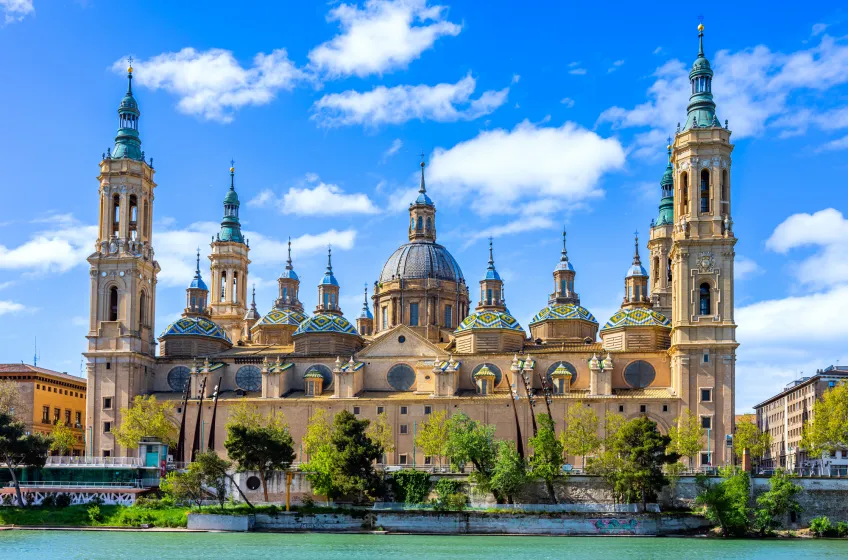
The Basilica del Pilar is Zaragoza’s defining landmark.
Its domes and towers rise beside the River Ebro, creating one of Spain’s most recognisable religious skylines. Inside, the chapel of the Holy Pillar is an important pilgrimage site.
The basilica also contains frescoes by Francisco de Goya, who was born in Aragón. A lift may provide access to one of the towers, offering broad views over the river and city.
The building remains active, so access can be limited during major services.
See La Seo Cathedral
La Seo stands at the opposite end of Plaza del Pilar and is one of Aragón’s finest historic buildings.
Its architecture reflects Romanesque, Gothic, Mudéjar, Renaissance and Baroque phases. The exterior wall facing the square contains especially impressive patterned brick and ceramic decoration.
Inside, chapels, altarpieces and a tapestry collection reveal the wealth and political importance of medieval Zaragoza.
The cathedral is smaller than the basilica but more architecturally varied.
Visit the Aljafería Palace
The Aljafería is a fortified palace west of Zaragoza’s centre.
Originally built as an Islamic palace, it later became a residence of Christian monarchs and was adapted for military and political use. Horseshoe arches, carved plasterwork and elegant courtyards survive from its early phases.
The palace now also houses Aragón’s regional parliament, so visitor routes may be affected by official activity.
Advance booking is sensible during busy periods.
Discover Roman Zaragoza
Zaragoza preserves several archaeological sites from Roman Caesaraugusta.
The forum, theatre, public baths and river port are presented in separate museums across the city centre. Together, they explain how the ancient city functioned and traded.
A combined ticket may provide better value when visiting several sites. The Roman Theatre is particularly impressive for its scale and central location.
Explore El Tubo
El Tubo is Zaragoza’s best-known tapas district.
Narrow streets near the historic centre contain bars specialising in small dishes, local wine and regional ingredients. Rather than eating a full meal in one place, many visitors move between several bars.
The area becomes busiest in the evening and at weekends. Arriving slightly earlier provides more space and faster service.
Visit Goya Sites
Francisco de Goya was born near Zaragoza and worked in the city during the early part of his career.
His paintings and frescoes can be seen in the Basilica del Pilar, local museums and religious sites around the region. The Goya Museum provides a broader introduction to his work and influence.
Fuendetodos, his birthplace, lies south of Zaragoza and contains a small museum and preserved house associated with the artist.
Explore Huesca
Huesca is a compact provincial capital at the foot of the Pyrenees.
Its historic centre contains a Gothic cathedral, monastery, museums and traditional streets. The city is calmer than Zaragoza and makes a useful base for exploring the Sierra de Guara and western Pyrenees.
Huesca’s restaurant scene is stronger than its modest size suggests, reflecting the quality of produce from the surrounding countryside.
Visit Loarre Castle
Loarre Castle is one of Spain’s most impressive Romanesque fortresses.
It stands on a rocky ridge north-west of Huesca with views across the plains. Towers, defensive walls, chapels and interior passages remain in excellent condition.
The exposed setting adds greatly to the atmosphere. Wind can be strong, and summer sun is intense, so bring suitable clothing and water.
The castle is easiest to reach by car.
Explore Alquézar
Alquézar is a medieval village in the Sierra de Guara.
Stone houses and narrow lanes rise towards a collegiate church and fortified complex above the River Vero. The village is exceptionally picturesque but becomes busy during summer weekends.
Alquézar is also a major base for canyoning, hiking and outdoor activities. Parking is outside the historic centre, and the streets are steep.
Walk the Pasarelas del Vero
The Pasarelas del Vero route follows the gorge beneath Alquézar.
Metal walkways cling to the rock above the river, creating a dramatic but accessible circuit. The route includes steps, exposed sections and uneven ground.
Advance booking may be required during busy periods. Avoid the walk during intense heat, storms or when local restrictions are in place.
Visitors uncomfortable with heights may find parts challenging.
Explore Ordesa y Monte Perdido National Park
Ordesa y Monte Perdido is one of Spain’s greatest mountain landscapes.
Deep glacial valleys, waterfalls, limestone cliffs and high peaks define the park. The Ordesa Valley is the most famous section, with walking routes ranging from valley-floor paths to demanding high-level hikes.
Access arrangements can change during busy seasons, with shuttle buses replacing private vehicles on some routes.
Weather changes quickly in the Pyrenees. Carry proper footwear, waterproof clothing, food and extra layers.
Visit Aínsa
Aínsa is a fortified medieval town overlooking the meeting of two rivers.
Its large stone Plaza Mayor, castle remains and mountain backdrop make it one of Aragón’s most attractive historic settlements. The old town sits above the modern lower district.
Aínsa is an excellent base for Ordesa, the Añisclo Canyon and the surrounding Pyrenean valleys.
Explore the Añisclo Canyon
The Añisclo Canyon is a deep limestone gorge within the broader Ordesa region.
Roads and walking routes pass through dramatic rock walls, forests and river scenery. Access can be affected by one-way traffic systems, weather and seasonal restrictions.
Short walks are possible, but longer routes require planning and good footwear.
Visit Jaca
Jaca is one of Aragón’s principal Pyrenean towns.
Its cathedral is one of the earliest major Romanesque churches in Spain, while the star-shaped citadel reflects the town’s military importance near the French border.
Jaca has a lively centre, good transport connections and a broad range of accommodation. It works well as a base for skiing, walking and excursions into the western Pyrenees.
See San Juan de la Peña
The monastery of San Juan de la Peña is built beneath a vast overhanging rock south-west of Jaca.
Its location is extraordinary, with cloisters, chapels and royal tombs incorporated into the natural cliff. The site played an important role in the early history of Aragón.
A newer monastic complex and visitor facilities stand higher on the mountain. Allow time for both sites and the surrounding viewpoints.
Explore Teruel
Teruel is the capital of southern Aragón and one of Spain’s finest centres of Mudéjar architecture.
Its towers, church façades and cathedral combine brickwork, glazed ceramics and geometric decoration. The towers of El Salvador and San Martín are especially striking.
Teruel is also known for the medieval legend of the Lovers of Teruel, commemorated through a mausoleum and local festival.
The city is compact, walkable and far less crowded than Spain’s better-known historic destinations.
Visit Albarracín
Albarracín is one of Spain’s most beautiful small towns.
Pink and ochre houses climb steeply above the River Guadalaviar, enclosed by defensive walls and rocky hills. Narrow lanes, wooden balconies and irregular streets create a strong medieval atmosphere.
The climb to the walls provides exceptional views but is steep and exposed. Proper shoes are essential.
Albarracín becomes busy during weekends, so staying overnight or arriving early is worthwhile.
Explore the Sierra de Albarracín
The countryside around Albarracín contains pine forests, rock formations, rivers and prehistoric art.
Walking routes lead through quieter landscapes than the town itself. The area is also known for mushrooms, game and rural villages.
Temperatures can be much cooler than in Zaragoza, particularly at night and outside summer.
Visit Dinópolis
Dinópolis in Teruel is a large family attraction devoted to dinosaurs and palaeontology.
Exhibitions, reconstructions, interactive displays and entertainment present the fossil history of Aragón. Several associated sites around the province focus on local discoveries.
The attraction is particularly suitable for families and works well during poor weather.
Discover the Matarraña Region
Matarraña lies in eastern Teruel province near Catalonia.
Stone villages, olive groves, rivers and low mountains define the landscape. Valderrobres is the principal town, with a castle, Gothic church and attractive bridge.
The region is sometimes compared with Tuscany because of its rural scenery and food culture, though it remains distinctly Aragonese.
A car is essential for exploring it properly.
Practical Advice for Visitors
Getting There
Zaragoza is the principal gateway to Aragón.
High-speed trains connect Zaragoza with Madrid and Barcelona, usually in around one and a half hours or less depending on the service. Trains also continue towards Lleida, Huesca and other destinations.
Zaragoza Airport has a limited passenger network. Madrid and Barcelona airports generally provide more international options.
Teruel and the Pyrenean valleys are less well connected by rail and often require buses or a car.
Getting Around
Train travel works well for Zaragoza and selected larger towns, but a car is much more useful for castles, villages, national parks and rural districts.
Regional bus services exist but may be infrequent, especially in Teruel province and the Pyrenees.
Distances are considerable. Avoid trying to combine Zaragoza, Ordesa and Teruel in a short trip without allowing for long drives.
Driving and Parking
Vehicles drive on the right.
Motorways and main roads are generally good, while mountain and village roads can be narrow and winding. Snow and ice affect Pyrenean routes in winter.
Historic centres such as Albarracín, Alquézar and Aínsa restrict vehicle access. Use designated car parks outside the old streets.
Fuel stations can be far apart in remote areas, so refill before entering the mountains or sparsely populated parts of Teruel.
Dining
Aragonese cooking is hearty and strongly influenced by livestock farming. "Ternasco de Aragón" is young lamb, often roasted or grilled. Pork, game, beans, mushrooms and substantial stews also appear frequently.
In the Pyrenees, mountain dishes tend to be richer, while the Ebro Valley produces vegetables, fruit and olive oil.
Lunch commonly begins after 2pm, and dinner after 9pm. Fixed-price weekday menus can offer excellent value.
Ham and Cured Meat
Jamón de Teruel is one of the region’s best-known protected products.
It has a delicate flavour and is usually served thinly sliced. Cured sausages, dried meats and pork products are also common throughout the region.
Buy from established butchers or specialist food shops and ask to compare different grades.
Truffles
The province of Teruel is an important producer of black truffles.
Winter is the main season, and restaurants may offer truffle menus, eggs, sauces and simple dishes designed to showcase the aroma.
Truffle fairs and specialist events take place in selected towns. Genuine fresh truffle is expensive, so be cautious with heavily marketed products containing little actual truffle.
Fruit and Olive Oil
The Ebro Valley and eastern Aragón produce peaches, cherries, olives and other fruit.
Calanda peaches are a well-known regional speciality, while olive oil from areas such as Bajo Aragón has a strong local reputation.
Markets and farm shops provide the best opportunities to buy seasonal produce.
Wine
Aragón contains several important wine regions.
Somontano, near the Pyrenees, produces a broad range of modern whites and reds. Campo de Borja is known especially for Garnacha, while Cariñena and Calatayud also produce powerful reds and increasingly refined styles.
Winery visits usually require advance booking. Use a designated driver or organised transport when tasting.
Shopping
Typical purchases include Jamón de Teruel, wine, olive oil, truffle products, ceramics and regional sweets.
Zaragoza has the broadest retail choice, while smaller towns focus on food, crafts and souvenirs.
Teruel and Muel are associated with ceramics, including pieces influenced by Mudéjar decoration.
Most ordinary shops close on Sundays, and smaller businesses may close during the afternoon.
When to Visit
April to June is excellent for Zaragoza, Teruel, villages and lower-level walking.
September and October are also ideal, with cooler temperatures, harvest activity and clear mountain scenery.
July and August can be very hot in Zaragoza, the Ebro Valley and Teruel province. The Pyrenees are more comfortable but busier.
Winter is suitable for skiing in the Pyrenees and city visits, though mountain driving may require snow equipment.
Spring snow can remain on high routes well into the season.
Local Events
The Fiestas del Pilar in Zaragoza are the region’s largest celebrations, with religious events, music, processions and public activities.
Teruel’s medieval festival of the Lovers recreates the city’s famous legend with costumes and performances.
Holy Week is marked across Aragón, with particularly strong traditions in parts of Teruel province.
Town festivals, wine fairs, truffle events and livestock celebrations take place throughout the year.
Dates vary annually, so confirm details before booking travel around a specific event.
Exploring Beyond Aragón
Catalonia lies to the east, with Lleida, Tarragona and Barcelona providing easy extensions.
Navarre and La Rioja lie to the north-west, offering Pamplona, wine regions and further Pyrenean scenery.
Castile and León begins west of Aragón and contains Soria, Burgos and extensive historic landscapes.
Castile-La Mancha lies to the south-west, with Cuenca and inland plateaux within reach.
Valencia lies south-east of Teruel and combines Mediterranean scenery with major cultural attractions.
France and Andorra are accessible across the Pyrenees, though mountain routes can be seasonal and weather-dependent.
Shortlist
- Your Shortlist is empty