
Discover La Rioja | A Visitor's Introduction to La Rioja
Recommended places to stay, places to visit and things to do throughout La Rioja
La Rioja is a compact region in northern Spain, best known for its celebrated red wines, medieval monasteries, vineyard-covered hills and the lively city of Logroño. Set along the River Ebro between the Basque Country, Navarre, Aragón and Castile and León, it is a perfect destination for wine lovers, foodies, walkers and travellers interested in historic towns. With traditional bodegas, hilltop villages, Camino de Santiago heritage and mountain scenery in the Sierra de la Demanda, La Rioja offers far more than wine tasting alone.
Browse La Rioja Hotels and Other Accommodation
Pre-book La Rioja Activities, Tours and Experiences
Why is La Rioja Worth a Visit?
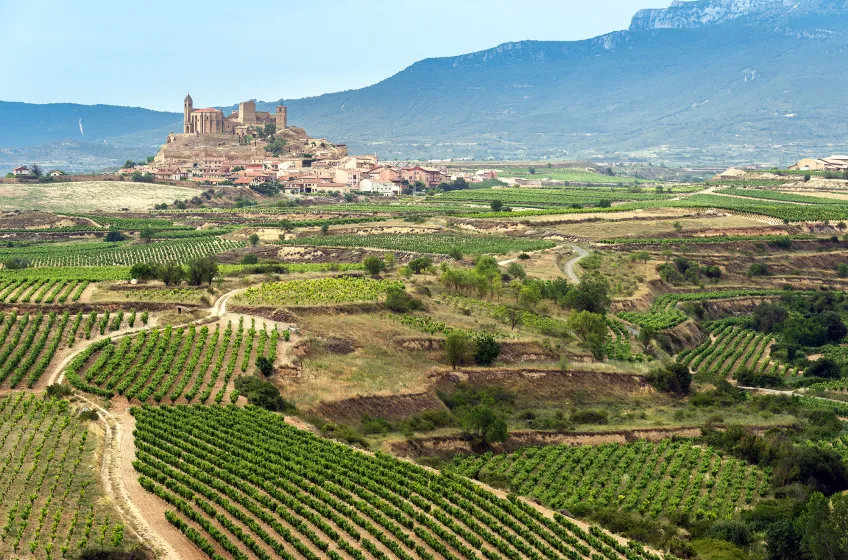
La Rioja is worth visiting because it combines one of Europe’s most famous wine landscapes with excellent food, manageable distances and a strong sense of place. Vineyards spread across the Ebro Valley beneath villages, castles and mountain ridges, while wineries range from centuries-old underground cellars to striking contemporary buildings.
The region is also closely connected with the Camino de Santiago. Pilgrims cross La Rioja through Logroño, Navarrete, Nájera and Santo Domingo de la Calzada, linking churches, monasteries and historic bridges.
La Rioja’s towns are small enough to explore slowly. Logroño has one of northern Spain’s best-known tapas streets, Haro is surrounded by major wine estates, and Briones offers exceptional views across vineyards towards the mountains.
The region works especially well for a short touring break. Three or four days are enough for Logroño, Haro and several wineries, while a week allows time for monasteries, mountain villages and the quieter eastern wine districts.
La Rioja Highlights: Things to See and Do in La Rioja
Explore Logroño
Logroño is the capital of La Rioja and the best base for visitors travelling without a car.
Its compact historic centre lies beside the River Ebro and includes churches, pedestrian streets, small squares and sections of the Camino de Santiago. The Concatedral de Santa María de la Redonda, with its twin towers, is the main religious landmark.
The city’s greatest appeal is its social atmosphere. Evenings revolve around tapas bars, regional wine and informal dining, particularly around Calle del Laurel and Calle San Juan.
Allow at least one full day and two evenings to enjoy the city properly.
Eat on Calle del Laurel
Calle del Laurel is Logroño’s most famous food street.
Its narrow lanes are packed with bars, many specialising in one particular dish. Mushrooms, grilled prawns, pork skewers, croquettes and small sandwiches are among the typical offerings.
The best approach is to order one speciality and a small glass of wine before moving to the next bar. The area becomes very crowded on Friday and Saturday evenings, so arrive earlier for a more relaxed experience.
Calle San Juan offers a similar atmosphere with a slightly more local feel.
Walk Along the Ebro
The River Ebro runs along the northern edge of Logroño’s old centre.
Paths and bridges provide an easy walk away from the busiest streets. The Stone Bridge is associated with the Camino de Santiago and remains one of the principal entrances into the city for pilgrims.
The riverbanks are especially pleasant in the morning or around sunset.
Visit Haro
Haro is one of the principal towns of the Rioja wine region.
Its Barrio de la Estación contains an extraordinary concentration of historic wineries close to the railway station. Several of the best-known producers in Rioja have cellars here.
The old town has lively squares, traditional bars and elegant buildings reflecting the wealth generated by the wine trade.
Haro is easy to reach by road and can be visited as a day trip, though staying overnight makes winery visits and evening dining more convenient.
Explore the Barrio de la Estación
The Station Quarter in Haro is one of Spain’s most important wine districts.
Large wineries stand close together, making it possible to visit several without driving between them. Their cellars hold long rows of oak barrels and extensive collections of ageing bottles.
Advance booking is essential for most tours and tastings. Visits vary considerably: some focus on historic cellars, while others emphasise production methods, food pairing or premium wines.
Avoid scheduling too many tastings in one day. Two substantial visits are usually enough.
Discover Briones
Briones is a beautiful hilltop village overlooking the Ebro Valley.
Stone houses, churches and narrow streets sit above a broad landscape of vineyards. On clear days, views extend towards the Sierra de Cantabria.
The village is compact but steep in places. Its quiet atmosphere makes a pleasant contrast with busier Logroño and Haro.
Briones is particularly attractive during late afternoon, when the light falls across the surrounding vines.
Visit Vivanco Museum of Wine Culture
The Vivanco Museum near Briones explores wine from historical, artistic and technical perspectives.
Displays cover vineyard work, barrel making, bottle design, cork production and wine’s role in art and culture. The museum is substantial and deserves more time than a typical cellar tour.
Gardens containing grape varieties add an outdoor element.
It is one of the best attractions in La Rioja for visitors who want to understand wine beyond tasting.
Explore San Vicente de la Sonsierra
San Vicente de la Sonsierra stands on a hill above vineyards and the River Ebro.
Castle ruins, a fortified church and old defensive walls occupy the upper part of the village. The climb provides impressive views over Rioja Alta and the mountains to the north.
Traditional wineries and underground cellars are scattered through the surrounding area.
The village is quieter than nearby Haro and Briones, making it a rewarding stop on a wine-country drive.
Visit Laguardia
Laguardia lies just outside the administrative region of La Rioja, in the Basque province of Álava, but it is central to the wider Rioja wine area.
The walled hilltop town has pedestrian streets, stone houses and a network of underground wine cellars. Vineyards extend across the surrounding plain below the Sierra de Cantabria.
Parking is outside the walls. The centre is small and easily explored on foot.
Laguardia combines naturally with visits to wineries in Rioja Alavesa.
Discover Santo Domingo de la Calzada
Santo Domingo de la Calzada is one of La Rioja’s most important Camino de Santiago towns.
Its cathedral is associated with a medieval miracle involving a rooster and hen, represented by live birds traditionally kept inside the building. The town also contains sections of wall, a pilgrim hospital and historic streets.
Pilgrims give the centre a lively atmosphere during the walking season.
The town works well as a stop between Haro and the monasteries around San Millán.
Visit Nájera
Nájera lies beside the River Najerilla beneath distinctive red cliffs.
The Monastery of Santa María la Real is the principal attraction, with royal tombs, a Gothic cloister and a church built partly against the rock.
The town was once politically important to the medieval Kingdom of Navarre. Today, it remains a significant Camino stop.
The riverside and surrounding hills provide pleasant short walks.
Explore the Monasteries of San Millán de la Cogolla
San Millán de la Cogolla is home to the monasteries of Suso and Yuso.
Suso is the older and smaller monastery, built into a hillside above the valley. It is associated with early written forms of Spanish and Basque.
Yuso is much larger and contains cloisters, a church, library and elaborate religious interiors. Guided access is often the best way to understand both sites.
Visiting arrangements differ between the two monasteries, so check schedules before travelling.
Visit Ezcaray
Ezcaray is an attractive mountain town in the upper Oja Valley.
Stone houses, arcaded squares and traditional balconies give the centre a strong rural character. The surrounding Sierra de la Demanda offers walking, cycling and winter activities.
Ezcaray also has a reputation for good food and high-quality woollen products.
It makes an excellent base for travellers seeking a cooler, greener contrast to the vineyard plains.
Explore the Sierra de la Demanda
The Sierra de la Demanda forms the mountainous south-western edge of La Rioja.
Forests, high ridges, river valleys and small villages provide opportunities for walking and scenic drives. Conditions are cooler and wetter than in the Ebro Valley.
Winter may bring snow, while spring and autumn are excellent for woodland scenery.
Public transport is limited, so a car is the most practical option.
Visit Arnedillo
Arnedillo is a small town in eastern La Rioja known for natural thermal waters.
Open-air pools beside the River Cidacos provide an informal bathing experience, while local accommodation may offer more developed spa facilities.
The surrounding valley contains rocky slopes and walking routes. Vultures can often be seen overhead.
The pools may become busy at weekends, and visitors should follow local guidance on access and water conditions.
Discover Arnedo
Arnedo is a working town in eastern La Rioja with a long association with footwear manufacturing.
The surrounding cliffs contain caves and archaeological remains, while the town has shopping outlets, churches and museums.
Arnedo is less picturesque than the wine villages farther west, but it offers insight into the region’s industrial and everyday life.
Explore the Cidacos Valley
The Cidacos Valley in eastern La Rioja has a drier, more rugged appearance than Rioja Alta.
Small towns, thermal springs, dinosaur footprints and rocky landscapes provide an alternative to vineyard tourism.
The area is especially suitable for families interested in palaeontology and travellers exploring by car.
See Dinosaur Footprints
La Rioja contains numerous fossilised dinosaur track sites, particularly around Enciso and other parts of the south-east.
Marked trails and interpretation centres explain how the footprints were formed and what they reveal about prehistoric animals.
Some sites are outdoors and exposed to sun, wind or rain. Good footwear and water are essential.
The sites are spread across the countryside, so allow plenty of driving time.
Visit Calahorra
Calahorra is one of the principal towns of eastern La Rioja.
It has Roman origins, a cathedral, museums and a strong agricultural identity. The surrounding district is known for vegetables and fertile farmland.
Food festivals and menus often highlight peppers, artichokes, asparagus and other local produce.
Calahorra is a useful stop when travelling between Logroño and Aragón.
Explore Alfaro
Alfaro lies near La Rioja’s eastern border.
Its most notable landmark is the Collegiate Church of San Miguel, where large numbers of white storks nest on the roof and towers during the breeding season.
The nearby Ebro wetlands are important for birds and nature walks.
Alfaro offers a very different experience from the winery-focused west of the region.
Practical Advice for Visitors
Getting There
Logroño is the main transport hub for La Rioja.
Long-distance buses connect it with Madrid, Bilbao, Zaragoza, Pamplona and other northern cities. Rail services also operate, though routes and journey times may be less convenient than buses for some journeys.
Bilbao Airport is one of the most useful international gateways. Zaragoza, Madrid and Pamplona may also be practical depending on the itinerary.
A car is highly useful once outside Logroño.
Getting Around
Public transport works reasonably well between Logroño, Haro, Calahorra and several larger towns.
Wineries, hilltop villages, monasteries and rural attractions are much easier to reach by car, taxi or organised tour. Bus services in smaller communities may be limited.
Distances are not enormous, but tasting appointments, winding roads and slow village routes can make days feel full.
Avoid trying to visit more than two wineries alongside major sightseeing in one day.
Driving and Parking
Vehicles drive on the right.
Roads are generally good and traffic is light outside Logroño. Historic centres such as Laguardia, Briones and Ezcaray have narrow streets or restricted vehicle access.
Use designated parking outside the oldest districts.
Never drink and drive after wine tastings. Book a driver, taxi or guided excursion when planning several winery visits.
Choosing a Base
Logroño is best for nightlife, public transport and visitors without a car.
Haro is ideal for historic wineries and a quieter town atmosphere.
Briones and San Vicente de la Sonsierra suit travellers wanting vineyard views and rural accommodation.
Ezcaray is the strongest base for mountains, walking and a cooler climate.
Splitting a longer stay between Logroño and a smaller wine or mountain town provides the best balance.
Dining
Riojan cooking is hearty, seasonal and closely connected with local agriculture.
Patatas a la riojana combines potatoes, chorizo and peppers in a rich stew. Lamb chops grilled over vine cuttings are another regional speciality.
Vegetables are especially important in eastern La Rioja. Peppers, artichokes, asparagus and beans feature widely.
Lunch usually begins after 1.30pm, while dinner often starts after 8.30pm.
Tapas
Logroño is the region’s main destination for tapas-style dining.
Bars often specialise in a single item, allowing visitors to move between several places. Small glasses of Rioja wine are commonly ordered alongside each dish.
The atmosphere is informal and sociable. Keep track of what you order, as payment systems vary between bars.
Wine
Rioja is one of Spain’s best-known wine names, but its styles are diverse.
Tempranillo is the principal red grape, often blended with Garnacha, Graciano or Mazuelo. White Rioja may include Viura and other varieties.
Traditional wines may spend long periods ageing in oak and bottle, while newer producers often emphasise vineyard character, individual villages or specific plots.
Do not assume older always means better. Ask winery staff or restaurant sommeliers to explain the style.
Booking Winery Visits
Most wineries require advance booking, even when they appear open to casual visitors.
Tours may be offered only at fixed times and in selected languages. Private visits and food pairings usually cost more but can be more detailed.
Arrive punctually, as production sites often operate to strict schedules.
Allow time between appointments for driving, lunch and unexpected delays.
Shopping
Wine is the obvious regional purchase, but La Rioja also offers olive oil, preserved vegetables, cured meat, cheese, pastries and handmade products.
Logroño and Haro have specialist wine shops that can help arrange shipping. Check airline baggage limits and import rules before buying large quantities.
Ezcaray is known for blankets, scarves and other woollen goods.
Most ordinary shops close on Sundays.
When to Visit
April to June is excellent for green vineyards, mild temperatures and walking.
September and October are especially attractive because of the grape harvest and autumn colours. This is also one of the busiest periods for wineries and rural accommodation.
July and August can be hot in the Ebro Valley, though evenings are often pleasant. Mountain areas around Ezcaray are cooler.
Winter is quiet and atmospheric, with hearty food, cellar visits and possible snow in the Sierra de la Demanda.
Local Events
The grape harvest season brings wine-related celebrations across the region.
Haro’s famous wine festival involves large crowds and people throwing wine over one another. It is lively, messy and very different from a formal tasting event.
Logroño hosts major festivities connected with regional traditions, food and wine.
Santo Domingo de la Calzada, Nájera and other Camino towns hold religious and historic celebrations throughout the year.
Dates vary annually, so confirm the current programme before arranging travel around a particular event.
Exploring Beyond La Rioja
The Basque Country lies immediately north, with Bilbao, Vitoria-Gasteiz and San Sebastián within reach.
Navarre lies to the east and offers Pamplona, medieval towns and the Bardenas Reales.
Castile and León begins west and south of La Rioja, with Burgos and Soria among the nearest historic cities.
Aragón lies to the south-east, offering Zaragoza and extensive Mudéjar heritage.
The wider Rioja wine region extends into Álava and parts of Navarre, so a wine-focused itinerary can cross regional borders without losing its central theme.
Shortlist
- Your Shortlist is empty