
Discover Tarragona | A Visitor's Introduction to Tarragona
Recommended places to stay, places to visit and things to do in and near Tarragona
Tarragona is a historic Mediterranean city in southern Catalonia, overlooking the Costa Daurada around 100 kilometres south-west of Barcelona. Known for its exceptional Roman remains, medieval cathedral, sandy beaches and lively food scene, this compact city is a perfect destination for history enthusiasts, coastal travellers and anyone seeking a quieter alternative to Barcelona. With ancient walls, sea-facing promenades and easy access to vineyards, fishing towns and family attractions, Tarragona offers an appealing mix of culture and coast.
Browse Tarragona Hotels and Other Accommodation
Pre-book Tarragona Activities, Tours and Experiences
Why is Tarragona Worth a Visit?
Tarragona is worth visiting because few cities in Spain combine Roman archaeology and Mediterranean scenery so successfully. Once known as Tarraco, it was one of the most important Roman cities on the Iberian Peninsula, and substantial remains survive throughout the modern centre.
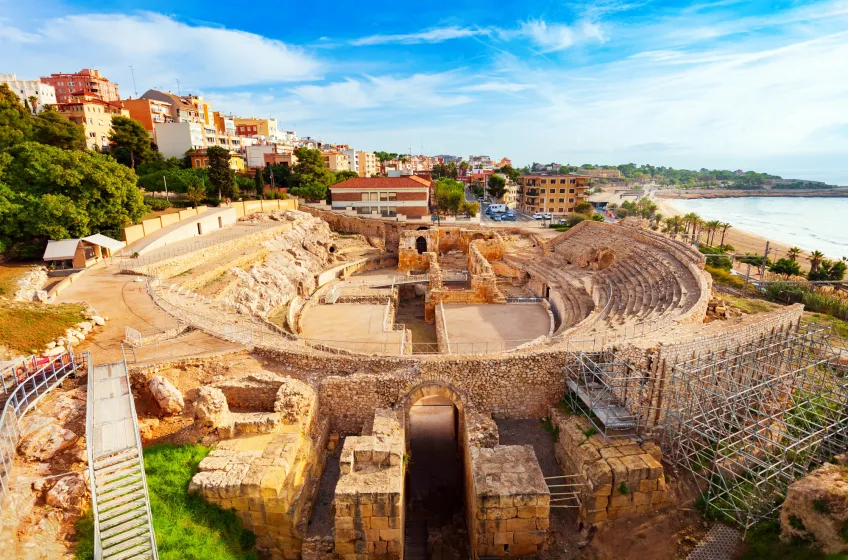
The city’s Roman amphitheatre stands dramatically beside the sea, while sections of the ancient walls, forum, circus and aqueduct reveal the scale of the former provincial capital. These monuments are not isolated museum pieces; they are woven into Tarragona’s streets and neighbourhoods.
The upper old town, known as the Part Alta, adds another layer of history. Medieval lanes climb towards the cathedral, opening into atmospheric squares filled with cafés, restaurants and local life.
Tarragona also has several beaches within walking distance or a short bus ride of the centre. This makes it easy to combine sightseeing with swimming, especially from late spring to early autumn.
Two full days are enough for the main monuments and old town. Three or four nights allow time for beaches, museums and an excursion into the surrounding Costa Daurada or Priorat wine region.
Tarragona Highlights: Things to See and Do in Tarragona
Visit the Roman Amphitheatre
Tarragona’s Roman amphitheatre is the city’s most recognisable ancient monument.
Built close to the shoreline, it once hosted gladiatorial contests, public spectacles and executions. The remains include seating areas, underground spaces and the foundations of later religious buildings.
Its position above the Mediterranean makes the site especially impressive. The contrast between ancient stone, railway lines and the sea captures the layered character of modern Tarragona.
Visit in the morning or late afternoon for softer light and cooler conditions.
Explore the Roman Circus
The Roman circus once hosted chariot races and was among the largest entertainment buildings in Tarraco.
Much of it lies beneath later streets and houses, but surviving vaults, passageways and sections of seating help visitors understand its scale. Some underground areas are particularly atmospheric.
The circus is closely connected with the Praetorium tower, and the two are usually explored together.
Climb the Praetorium Tower
The Praetorium is a substantial Roman and medieval tower beside the circus.
Stairways lead through archaeological levels to an upper viewpoint over the old town, amphitheatre and sea. The building was adapted repeatedly over centuries, reflecting Tarragona’s changing political importance.
There are numerous steps and enclosed passages, so it may not suit every visitor.
Walk Along the Roman Walls
Tarragona preserves an impressive section of Roman defensive wall around the upper town.
The Archaeological Promenade follows the walls past towers, gateways and later fortifications. Interpretation panels explain construction techniques and the development of the defences.
The route is pleasant and relatively quiet, though some sections are exposed to summer sun.
Visit Tarragona Cathedral
Tarragona Cathedral stands at the highest point of the Part Alta.
The building combines Romanesque and Gothic elements, with a grand façade, large rose window and richly decorated interior. Chapels, tombs, religious art and a peaceful cloister form the main visitor route.
The cathedral occupies the site of earlier Roman and religious structures, adding further historical depth.
Allow at least an hour, especially when including the cloister and museum.
Explore the Part Alta
The Part Alta is Tarragona’s historic upper town.
Narrow streets, stone façades, medieval houses and small squares create a markedly different atmosphere from the modern lower city. Plaça de la Font, Plaça del Fòrum and the cathedral area are among its principal focal points.
The district is lively in the evening, when terraces fill with residents and visitors.
Wear comfortable shoes, as the streets are hilly and often paved with stone.
Relax in Plaça de la Font
Plaça de la Font is one of Tarragona’s main social squares.
The long open space lies over part of the former Roman circus and is lined with restaurants, cafés and municipal buildings. It is a convenient place to stop between archaeological sites.
Evening is the liveliest time, though the square can become busy during festivals and summer weekends.
Visit the National Archaeological Museum
Tarragona’s archaeological museum presents discoveries from ancient Tarraco and the surrounding region.
Collections include mosaics, sculpture, inscriptions, household objects and architectural fragments. The museum is essential for understanding how the Roman city functioned beyond its monumental buildings.
Exhibitions or locations may change during renovation projects, so check current arrangements before visiting.
See the Roman Forum
The colonial forum was once the administrative and commercial centre of Roman Tarraco.
Today, surviving columns, foundations and streets sit within the modern city. The site is less visually dramatic than the amphitheatre but provides useful context for everyday Roman life.
It is usually quieter than the better-known monuments and can be explored in a relatively short visit.
Visit the Early Christian Cemetery
Tarragona’s early Christian cemetery contains burial sites and archaeological material from late antiquity.
It reflects the city’s transition from Roman pagan society to an important Christian centre. Tombs, inscriptions and museum displays help explain changing funerary practices.
The site lies outside the main old-town circuit and is best suited to visitors with a particular interest in archaeology or religious history.
Walk Along the Balcó del Mediterrani
The Balcó del Mediterrani is Tarragona’s classic sea viewpoint.
At the end of Rambla Nova, a broad terrace overlooks the railway, beaches and Mediterranean coastline. Local tradition encourages visitors to touch the iron railing for good luck.
The viewpoint is especially attractive at sunrise, sunset and during clear winter days.
Stroll Down Rambla Nova
Rambla Nova is Tarragona’s main central avenue.
Shops, cafés, public buildings and sculptures line the broad pedestrian promenade. It connects the newer city with the Balcó del Mediterrani and provides a useful orientation route.
The monument to the castellers, or human-tower builders, is one of the avenue’s notable features.
See a Casteller Monument
Human towers are an important part of Catalan culture and are strongly associated with Tarragona.
A large bronze monument on Rambla Nova depicts a tower in progress, showing the concentration and teamwork involved. During festivals, real castells may be performed in major squares.
Watching a live event is far more memorable than seeing the sculpture, but dates vary throughout the year.
Visit El Serrallo
El Serrallo is Tarragona’s traditional fishing district.
Colourful boats, seafood restaurants and harbour buildings line the waterfront. The area feels more local and maritime than the monumental old town.
It is one of the best places for a seafood lunch, particularly rice dishes, grilled fish and prawns.
Explore the Port Area
Tarragona remains an active port city.
Waterfront paths, cultural buildings and maritime spaces extend beyond El Serrallo. The port’s scale reflects its continued commercial importance as well as its historic role.
Some sections are better suited to cycling or a longer walk than casual sightseeing.
Relax on Platja del Miracle
Platja del Miracle is the nearest major beach to the city centre.
It lies below the amphitheatre and Balcó del Mediterrani, making it convenient for combining swimming with sightseeing. The beach is broad, though the nearby railway and urban setting make it less secluded than others along the coast.
Observe local safety flags and take care with belongings.
Visit Arrabassada Beach
Platja de l’Arrabassada lies north-east of the centre.
It has a more relaxed atmosphere than Platja del Miracle and is popular with local residents and families. Buses and coastal roads provide access.
The beach can become crowded in summer, especially at weekends.
Walk the Coastal Paths
Paths and roads along Tarragona’s northern coast connect beaches, coves and residential areas.
Sections around Arrabassada, Savinosa and beyond offer sea views and a quieter atmosphere than the city centre. Some routes involve uneven ground or roadside walking, so choose recognised paths.
Carry water and sun protection during warmer months.
Visit the Ferreres Aqueduct
The Ferreres Aqueduct, commonly called the Devil’s Bridge, stands several kilometres outside Tarragona.
The surviving Roman structure crosses a wooded valley in two tiers of arches. Visitors can walk around the site and, where permitted, cross the upper channel area.
It is reached most easily by car, taxi or organised excursion, though public transport options may also be available.
The surrounding woodland makes it pleasant for a short walk or picnic.
Discover the Roman Quarry of El Mèdol
El Mèdol was one of the principal quarries supplying stone for Roman Tarraco.
A tall central needle of rock shows the original ground level before extraction. Paths pass through a wooded landscape shaped by ancient quarrying.
The site is less famous than the aqueduct but rewarding for visitors interested in engineering and construction.
Visit the Central Market
Tarragona’s central market occupies an elegant modernist-style building.
Inside, stalls sell fish, meat, vegetables, cheese and prepared foods. It is a good place to see local produce and buy picnic supplies.
The surrounding square often feels livelier in the morning, when the market is busiest.
Practical Advice for Visitors
Getting There
Tarragona has rail connections with Barcelona, Valencia, Lleida and other Spanish cities.
Regional trains usually arrive at the station near the lower city and waterfront. High-speed services often use Camp de Tarragona station, which lies well outside the centre and requires a bus, taxi or pre-arranged transfer.
Barcelona Airport is the most practical major international gateway for many visitors. Reus Airport is closer but has a more limited and seasonal route network.
Long-distance coaches provide additional connections along the Mediterranean coast.
Getting Around
Central Tarragona is best explored on foot.
The Part Alta, cathedral, Roman circus, amphitheatre and Rambla Nova are all close together. However, the old town is hilly, and routes between the waterfront and upper city involve steep streets or steps.
Local buses are useful for beaches, outer archaeological sites and residential districts.
A car is unnecessary for central sightseeing but helpful for rural excursions.
Parking
Driving in the Part Alta is inconvenient because of narrow streets, restricted access and limited spaces.
Public garages are available around Rambla Nova, the lower city and outer edge of the historic centre. Park once and continue on foot.
Beach parking fills quickly during summer weekends.
Choosing Where to Stay
The Part Alta is best for atmosphere, historic streets and evening dining, though access with luggage can be awkward.
Accommodation near Rambla Nova provides a convenient balance between the old town, station and waterfront.
El Serrallo suits travellers seeking a quieter maritime atmosphere and seafood restaurants.
Beachfront properties lie farther from the main historic attractions but may appeal during summer.
Dining
Tarragona’s food reflects both Catalan and Mediterranean traditions.
Seafood, rice dishes, grilled fish, vegetables and olive oil feature prominently. Inland influences bring meat, stews and produce from the Camp de Tarragona region.
Lunch usually begins after 1.30pm, while dinner commonly starts after 8.30pm.
Restaurants in El Serrallo are particularly popular for seafood, while the Part Alta offers tapas, Catalan cooking and more varied evening options.
Try Romesco
Romesco is one of Tarragona’s defining flavours.
The sauce is typically made with roasted tomato, garlic, nuts, peppers, olive oil and bread. It may accompany fish, seafood, vegetables or grilled onions.
Recipes vary, with some versions thicker, smokier or more vinegary than others.
Eat Arrossejat
Arrossejat is a traditional fishermen’s rice dish associated with Tarragona and the surrounding coast.
Rice is cooked in a concentrated fish stock, often after the fish itself has been served separately. Garlic and seafood flavours are usually prominent.
It is often prepared for a minimum of two people and may require advance ordering.
Try Calçots
Calçots are long, mild spring onions traditionally grilled over open flames.
They are eaten with a nutty, pepper-based sauce and are especially associated with winter and early spring. The meal, known as a calçotada, is usually informal, messy and highly social.
The Valls area, inland from Tarragona, is especially famous for them.
Seafood
Tarragona’s harbour gives the city access to excellent seasonal seafood.
Prawns, squid, mussels, clams and grilled fish appear widely. Some products are priced by weight or market availability.
Ask for the total price before ordering expensive shellfish or whole fish.
Wine and Vermouth
The Tarragona region is surrounded by important wine areas.
Priorat and Montsant are known especially for powerful red wines, while the Penedès and neighbouring areas produce Cava and a wide range of whites and reds.
Nearby Reus has a strong vermouth tradition. Many Tarragona bars serve local vermouth before lunch.
Shopping
Typical purchases include wine, vermouth, olive oil, nuts, preserved seafood and regional sweets.
Rambla Nova and surrounding streets contain the principal shops, while the Part Alta offers smaller independent businesses.
The Central Market is best for food products and picnic ingredients.
Most ordinary shops close on Sundays.
When to Visit
April to June is excellent for warm weather, sightseeing and relatively uncrowded beaches.
September and early October are also very appealing, with warm sea temperatures and fewer peak-season visitors.
July and August are hot and busy. Visit archaeological sites early in the day and avoid exposed areas during the strongest afternoon heat.
Winter is mild and quiet, making it good for monuments, food and walking, although beach facilities are limited.
Local Events
Tarragona hosts major religious, historical and cultural celebrations throughout the year.
Santa Tecla is the city’s principal festival, bringing processions, music, traditional figures, fire-related events and human towers to the streets.
Roman-themed events and historical programmes celebrate Tarragona’s ancient heritage.
Human-tower competitions and performances are among the city’s most distinctive cultural experiences.
Dates and programmes vary annually, so check current arrangements before planning around a particular event.
Safety and Common Visitor Problems
Tarragona is generally safe and straightforward to explore.
Pickpocketing is possible around railway stations, festivals and crowded attractions, so keep valuables secure.
Stone streets in the Part Alta can become slippery after rain. Summer heat and limited shade are more common problems than crime.
Take care around railway crossings and coastal cliffs, and always follow beach safety flags.
Exploring Beyond Tarragona
Reus is known for Modernista architecture, vermouth and connections with Antoni Gaudí.
Valls is the traditional centre of calçot culture and an important town for human towers.
PortAventura World offers large theme parks and family attractions near Salou.
Cambrils has a fishing harbour, beaches and a strong restaurant scene.
Priorat provides dramatic vineyard landscapes and powerful red wines around towns such as Falset and Gratallops.
The Poblet Monastery is one of Catalonia’s great medieval monastic complexes.
The Ebro Delta offers wetlands, birdlife, rice fields and broad coastal landscapes farther south.
Shortlist
- Your Shortlist is empty