
Discover Oviedo | A Visitor's Introduction to Oviedo
Recommended places to stay, places to visit and things to do in and near Oviedo
Oviedo is the elegant capital of Asturias in northern Spain, set between the Cantabrian Mountains and the Bay of Biscay. Known for its compact old town, pre-Romanesque churches, impressive cathedral, cider culture and immaculate public spaces, this walkable city is a perfect destination for history lovers, foodies and travellers exploring Spain’s greener north. With lively squares, excellent museums and easy access to the Asturian coast and mountains, Oviedo offers a refined but relaxed city break.
Browse Oviedo Hotels and Other Accommodation
Pre-book Oviedo Activities, Tours and Experiences
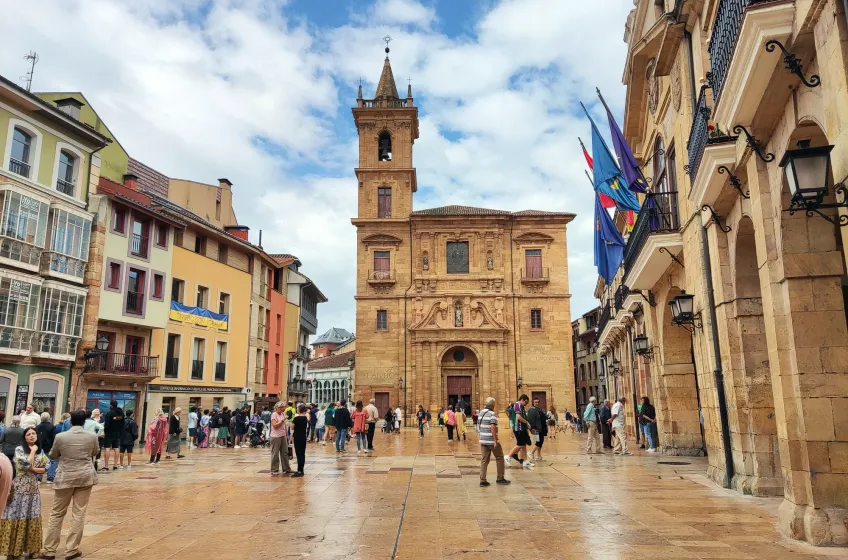
Why is Oviedo Worth a Visit?
Oviedo is worth visiting because it combines important architecture, strong local culture and an unusually pleasant city centre. Its pedestrian streets are clean, attractive and easy to explore, with sculptures, cafés, traditional cider houses and historic buildings appearing around almost every corner.
The city played a central role in the early medieval Kingdom of Asturias. Several churches and structures from the 9th century survive in and around Oviedo, making it one of Spain’s most important places for pre-Romanesque architecture.
Oviedo is also one of the best cities for experiencing Asturian food. Cider houses serve local dishes in a lively, informal setting, while bakeries, markets and restaurants showcase regional cheeses, cured meat and seafood.
Its location is another major advantage. Gijón, Avilés, the coast and the mountains are all within easy reach. Two nights are enough for the main sights and dining, while three or four allow time for museums and day trips.
Oviedo Highlights: Things to See and Do in Oviedo
Visit Oviedo Cathedral
The Cathedral of San Salvador is Oviedo’s principal landmark.
Its tall Gothic tower dominates the old centre, while the interior contains chapels, religious art and historic tombs. The cathedral grew over many centuries, so several architectural styles appear throughout the complex.
Its most important section is the Cámara Santa, or Holy Chamber, which preserves major medieval religious objects and forms part of the older fabric of the site.
Allow at least an hour for a general visit and more if including the museum and Holy Chamber.
Explore the Cámara Santa
The Cámara Santa is one of Oviedo’s most significant historic spaces.
Originally built during the early medieval period, it later became part of the cathedral complex. It contains relics and ceremonial objects associated with the Asturian monarchy and Christian pilgrimage traditions.
The chamber is relatively small, but its historical importance is considerable. Access may be controlled as part of a cathedral ticket or guided route.
Walk Through the Old Town
Oviedo’s old town is compact, elegant and highly walkable.
Narrow lanes open into attractive squares such as Plaza del Fontán, Plaza de la Constitución and Plaza de Trascorrales. Churches, palaces and colourful façades create a strong sense of continuity.
The area is lively without feeling overwhelming. Early evening is particularly pleasant, when residents gather for drinks and dinner.
Explore Plaza del Fontán
Plaza del Fontán is one of Oviedo’s most atmospheric public spaces.
Arcaded buildings, colourful façades and restaurant terraces surround the square. Nearby streets contain market activity, food shops and traditional bars.
The square is especially lively in the morning and around lunchtime.
Visit El Fontán Market
El Fontán Market is one of the best places to understand local food culture.
Stalls sell fish, meat, cheese, vegetables, bread and regional produce. It is particularly useful for seeing the range of Asturian cheeses and cured products.
Visit in the morning, when the market is busiest and the displays are at their freshest.
See the Town Hall and San Isidoro Church
Plaza de la Constitución is one of the formal centres of old Oviedo.
The Town Hall and Church of San Isidoro el Real face the square, creating an attractive architectural ensemble. The area is easy to combine with El Fontán and surrounding pedestrian streets.
Visit the Museum of Fine Arts of Asturias
The Museum of Fine Arts of Asturias is one of Oviedo’s strongest cultural attractions.
Its collection includes Spanish and Asturian painting, sculpture and decorative arts. Works by major Spanish artists appear alongside regional figures, providing a useful overview of artistic development.
The museum is spread across several connected buildings near the cathedral.
Allow at least 90 minutes for a focused visit.
Explore the Archaeological Museum of Asturias
The Archaeological Museum occupies a former monastery beside the cathedral.
Its displays cover prehistoric settlement, Roman history and the medieval Kingdom of Asturias. It is especially valuable for understanding the region’s early churches and royal sites.
The building itself, with cloisters and stone architecture, adds to the experience.
Visit Santa María del Naranco
Santa María del Naranco stands on the slopes of Monte Naranco above the city.
Originally built as a royal hall in the 9th century, it later became a church. Its balanced proportions, arched openings and elevated setting make it one of Spain’s finest examples of Asturian pre-Romanesque architecture.
The site is small but exceptionally important. Guided access or limited opening arrangements may apply.
See San Miguel de Lillo
San Miguel de Lillo stands close to Santa María del Naranco.
It was built as part of the same royal complex, though only part of the original church survives. Carved stone details and unusual architectural features reveal the sophistication of early medieval Asturias.
The two buildings should be visited together.
Visit San Julián de los Prados
San Julián de los Prados, also known as Santullano, is another major pre-Romanesque church.
Its exterior is relatively plain, but the interior contains important early medieval wall paintings and architectural features. It stands outside the main tourist centre and receives fewer visitors than the Naranco churches.
Opening times can be limited, so check locally before making a special journey.
See La Foncalada
La Foncalada is a small 9th-century fountain structure in central Oviedo.
It was built during the reign of Alfonso III and is one of the few surviving civil works from the Asturian monarchy. Its simple stone form can be easy to overlook, but it is historically significant.
It can be included easily in a walking route between the old town and northern centre.
Walk Through Campo de San Francisco
Campo de San Francisco is Oviedo’s main central park.
Tree-lined paths, lawns, ponds and sculptures provide a calm break from surrounding streets. The park is popular with walkers, families and local residents.
It lies between the old town and the commercial centre, making it easy to visit during a day of sightseeing.
See the Mafalda Statue
A small statue of the comic character Mafalda sits in Campo de San Francisco.
It has become one of Oviedo’s most photographed public artworks. The city contains many sculptures of writers, workers, animals and fictional figures, so noticing them becomes part of exploring the centre.
Follow Oviedo’s Sculpture Trail
Oviedo is filled with public sculpture.
Figures appear on pavements, benches, squares and street corners, representing local traditions, literature and everyday life. Well-known examples include La Regenta, the milkmaid and various bronze street characters.
Walking between these works is an enjoyable way to discover different parts of the city.
Visit the Campoamor Theatre
The Campoamor Theatre is Oviedo’s principal performing arts venue.
Its elegant interior hosts opera, theatre, concerts and major ceremonies. The building is also associated with the annual presentation of the Princess of Asturias Awards.
Interior access may depend on performances or guided visits.
Explore Calle Gascona
Calle Gascona is Oviedo’s best-known cider street.
The road is lined with traditional cider houses, or sidrerías, where staff pour cider from a height to aerate it. The atmosphere is lively, informal and often noisy.
This is one of the best places to try Asturian dishes alongside local cider.
Visit in the evening for the fullest atmosphere, but reserve popular restaurants at weekends.
Walk the Original Camino Route
Oviedo is an important starting point for the Camino Primitivo, one of the oldest pilgrimage routes to Santiago de Compostela.
Markers lead from the cathedral through the city before the route continues west into the Asturian countryside. Walking a short section provides insight into Oviedo’s pilgrimage history.
The route is physically demanding over its full distance, but a brief urban stretch is easy to experience.
Visit Monte Naranco
Monte Naranco rises north of the city.
Beyond the pre-Romanesque churches, its slopes contain roads, walking routes and viewpoints over Oviedo and the surrounding mountains. A large monument to the Sacred Heart stands near the summit.
Weather can be cooler and windier than in the centre.
Practical Advice for Visitors
Getting There
Oviedo is connected with Madrid, León, Gijón and other northern cities by rail and long-distance coach.
Asturias Airport lies west of the city, near Avilés. Airport buses and taxis connect it with Oviedo, Gijón and other regional destinations.
The railway and bus stations stand close together north-west of the centre, around a 10- to 15-minute walk from the old town.
Getting Around
Central Oviedo is compact and best explored on foot.
Most principal sights are within easy walking distance, though Santa María del Naranco, San Miguel de Lillo and San Julián de los Prados require a longer walk, bus or taxi.
Local buses are reliable for outer districts and hilltop attractions.
The centre includes some slopes but is generally easier to navigate than many historic Spanish cities.
Parking
Driving in central Oviedo is unnecessary.
Public garages are available around the commercial centre and outer edge of the old town. Street parking is controlled and can be limited.
Use a garage and explore on foot, particularly around pedestrian areas.
Choosing Where to Stay
The old town is best for historic atmosphere, restaurants and evening walks.
Accommodation near Calle Uría and Campo de San Francisco is convenient for shopping, transport and major sights. Properties near the railway station offer easy arrivals but feel less atmospheric.
Rooms close to Calle Gascona can be noisy at night.
Dining
Asturian food is rich, generous and strongly regional.
Fabada asturiana is the best-known dish, made with white beans, black pudding, chorizo and pork. It is substantial and usually better suited to lunch than dinner.
Other specialities include bean dishes with clams, grilled meat, stews and seafood.
Lunch generally begins after 1.30pm, while dinner commonly starts after 8.30pm.
Try Asturian Cider
Natural Asturian cider is dry, tart and lightly sparkling when poured correctly.
It is traditionally poured from a height into a wide glass, which aerates the drink. Only a small amount is served at a time and should be drunk promptly.
Cider houses on Calle Gascona provide the easiest introduction.
Taste Cabrales Cheese
Cabrales is Asturias’ most famous cheese.
It is a strong blue cheese traditionally matured in caves in the Picos de Europa. Its flavour is intense and works well in sauces, cheese boards and small portions with bread.
Oviedo’s markets and specialist food shops offer a good range of Asturian cheeses beyond Cabrales.
Shopping
Typical regional purchases include cheese, cider, cured meat, honey, preserves and sweets.
El Fontán and specialist food shops in the centre are the best places for local products. Vacuum-packed cheese and charcuterie travel more easily, though customs restrictions should be checked.
Most ordinary shops close on Sundays.
When to Visit
May to June is excellent for mild weather, green landscapes and fewer crowds.
July and August bring the warmest conditions, though rain remains possible. The city can feel quieter when residents travel to the coast.
September is one of the best months, with comfortable temperatures and lively city life.
Winter is cool, damp and frequently cloudy, but Oviedo’s museums, cider houses and old streets remain enjoyable.
Local Events
The San Mateo festivities are Oviedo’s principal annual celebrations, with concerts, markets and public activities.
The Princess of Asturias Awards bring international figures and media attention to the city.
Holy Week includes religious processions through the historic centre.
Cider, food and cultural events take place throughout the year. Dates vary annually, so check the current programme before booking.
Safety and Common Visitor Problems
Oviedo is generally safe and straightforward to explore.
The main practical issue is rain, which can make stone paving slippery. Bring waterproof clothing and shoes with good grip.
Pickpocketing is uncommon but still possible around festivals, transport hubs and busy markets.
Do not underestimate the strength of cider, particularly when drinking several small pours over a long meal.
Exploring Beyond Oviedo
Gijón offers beaches, a maritime old quarter and a lively waterfront around 30 kilometres away.
Avilés has an attractive historic centre and the modern Oscar Niemeyer cultural complex.
The Picos de Europa provide some of Spain’s finest mountain scenery.
Cangas de Onís and Covadonga are major gateways to the eastern mountains.
Llanes, Ribadesella and Cudillero are among Asturias’ most attractive coastal towns.
The mining valleys south of Oviedo offer industrial heritage, mountain scenery and a less visited side of the region.
Shortlist
- Your Shortlist is empty