
Discover Madrid | A Visitor's Introduction to Madrid
Recommended places to stay, places to visit and things to do in and near Madrid
Madrid is Spain’s vibrant capital, set on the high central plateau in the heart of the country. Known for world-class art museums, grand boulevards, late-night dining and lively neighbourhoods, this energetic city is a perfect destination for culture lovers, foodies, football fans and urban explorers. With royal palaces, historic squares, leafy parks and an outstanding tapas scene, Madrid offers a sophisticated but informal city break with plenty to discover at almost any hour.
Browse Madrid Hotels and Other Accommodation
Pre-book Madrid Activities, Tours and Experiences
Why is Madrid Worth a Visit?
Madrid is worth visiting for its exceptional art collections, monumental architecture and unmistakably sociable atmosphere. The Prado, Reina Sofía and Thyssen-Bornemisza museums form one of Europe’s strongest concentrations of art, while the Royal Palace and surrounding historic quarter reveal the city’s political importance.
What distinguishes Madrid from many other European capitals is the way daily life spills into the streets. Cafés, tapas bars, terraces and public squares remain busy late into the evening, and different neighbourhoods have strong identities of their own. La Latina feels traditional and informal, Malasaña is creative and youthful, Chueca is lively and inclusive, while Salamanca is elegant and polished.
Madrid is also practical for visitors. The metro is extensive, the centre is highly walkable and high-speed trains make onward travel simple. Three full days are enough for the principal sights, but four or five allow time for quieter neighbourhoods, markets, parks and a day trip.
Madrid Highlights: Things to See and Do in Madrid
Visit the Prado Museum
The Prado Museum is Madrid’s most important cultural attraction and one of the world’s great collections of European painting.
Its galleries include major works by Velázquez, Goya, El Greco, Titian, Rubens and Bosch. Highlights include Las Meninas, Goya’s royal portraits and Bosch’s The Garden of Earthly Delights.
The museum is too large to cover properly in one visit, so choose a few artists or galleries rather than attempting everything. Allow at least two to three hours and book ahead during weekends and holiday periods.
See Guernica at the Reina Sofía
The Reina Sofía Museum focuses on modern and contemporary art.
Its defining work is Picasso’s Guernica, displayed alongside photographs, sketches and other material connected with the Spanish Civil War. The wider collection includes important works by Salvador Dalí, Joan Miró and other 20th-century artists.
The museum occupies a former hospital near Atocha station, with a modern extension and spacious courtyards. Allow around two hours for a focused visit.
Explore the Thyssen-Bornemisza Museum
The Thyssen-Bornemisza Museum completes Madrid’s principal trio of major art museums.
Its collection bridges many of the gaps between the Prado and Reina Sofía, ranging from medieval religious painting to Impressionism, American art and modern movements.
It is generally easier to navigate than the Prado and particularly useful for visitors seeking a broad overview of western painting.
Walk Around Plaza Mayor
Plaza Mayor is one of Madrid’s grandest historic spaces.
The rectangular square is enclosed by arcaded red-brick buildings and has hosted markets, royal ceremonies, public celebrations and more troubling historic events.
Today it is lined with restaurants and souvenir shops. Prices can be high, so enjoy the architecture and then eat in the surrounding streets.
Early morning is best for photographs without large crowds.
Experience Puerta del Sol
Puerta del Sol is the symbolic centre of Madrid and one of its busiest public spaces.
Several major streets meet here, and a marker identifies the traditional starting point for Spain’s national road network. The square is also associated with Madrid’s New Year celebrations.
The surrounding area is busy throughout the day, with shops, cafés, street performers and constant pedestrian movement. Keep valuables secure in the crowds.
Visit the Royal Palace
The Royal Palace of Madrid stands on the western edge of the historic centre.
Although it is still used for official ceremonies, much of the complex is open to visitors. State rooms, grand staircases, armour, tapestries and decorative arts reveal the scale of Spain’s royal court.
The palace is large and often busy. Timed tickets reduce queues, though official events may affect access.
The neighbouring Plaza de Oriente and Sabatini Gardens are worth exploring before or after the visit.
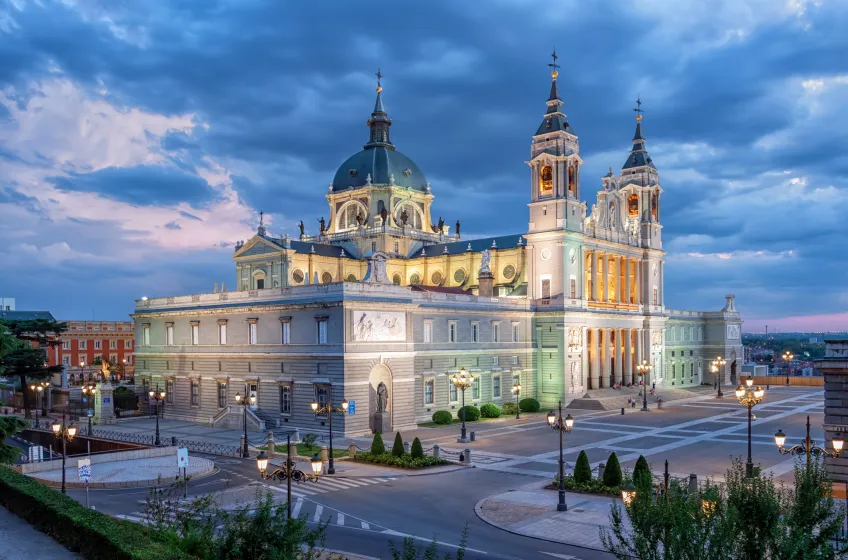
See Almudena Cathedral
Almudena Cathedral stands directly opposite the Royal Palace.
Its exterior is designed to complement the palace, while the interior has colourful ceilings and a more modern feel than Spain’s medieval cathedrals.
A museum and dome visit may provide views over the palace and western side of the city. The building remains active, so services can affect sightseeing access.
Walk Along Gran Vía
Gran Vía is Madrid’s great entertainment and shopping avenue.
Its ornate early 20th-century buildings create one of the city’s most recognisable streetscapes. The avenue is lined with theatres, hotels, restaurants, shops and rooftop terraces.
It is busiest in the afternoon and evening. Walk the full route from Plaza de España towards Calle de Alcalá to appreciate the changing architecture.
Relax in Retiro Park
Retiro Park is Madrid’s best-known green space.
Its paths pass formal gardens, fountains, monuments and a large boating lake. The Crystal Palace is one of the park’s most attractive structures and often houses temporary exhibitions.
The park is especially lively on weekends, with families, performers, rowers and runners. Early morning and late afternoon are the best times in summer.
See the Puerta de Alcalá
The Puerta de Alcalá stands beside Retiro Park on Plaza de la Independencia.
This monumental gateway was once part of the city’s eastern entrance and remains one of Madrid’s most recognisable landmarks.
It can be combined easily with Retiro Park, the Prado and a walk along Calle de Alcalá.
Explore the Literary Quarter
The Barrio de las Letras is associated with writers from Spain’s Golden Age.
Miguel de Cervantes, Lope de Vega and other major literary figures lived or worked in the area. Quotations are set into some pavements, while narrow streets contain bookshops, taverns and small squares.
The House-Museum of Lope de Vega provides insight into literary and domestic life of the period.
The neighbourhood is especially pleasant around Plaza de Santa Ana.
Discover La Latina
La Latina is one of central Madrid’s most atmospheric neighbourhoods.
Its sloping streets, traditional taverns and small public squares are especially lively around Calle Cava Baja. The district is popular for tapas and relaxed evening meals.
On Sundays, nearby streets host El Rastro flea market, when the area becomes extremely crowded.
La Latina is best explored slowly, with stops in several bars rather than one long meal.
Visit El Rastro
El Rastro is Madrid’s famous Sunday and public-holiday street market.
Stalls sell clothing, antiques, household goods, prints, records and souvenirs across a large area south of Plaza Mayor.
The busiest central streets can feel congested, while side streets often contain more interesting specialist shops.
Keep bags closed and valuables secure.
Explore Malasaña
Malasaña is a creative neighbourhood associated with alternative culture, independent shops and nightlife.
Its streets contain cafés, vintage stores, bars and small cultural venues. Plaza del Dos de Mayo forms the neighbourhood’s social centre.
Malasaña is liveliest in the evening, though daytime is better for shopping and cafés.
Visit Chueca
Chueca is one of Madrid’s most vibrant central districts and a major centre of LGBTQ+ life.
Restaurants, bars, fashion shops and public squares create an open, lively atmosphere. Mercado de San Antón combines food stalls, dining and a rooftop space.
The neighbourhood is busiest at night and during Madrid’s major Pride celebrations.
Explore Madrid de los Austrias
Madrid de los Austrias is the historic district developed under the Habsburg monarchy.
It includes Plaza Mayor, Plaza de la Villa, old churches and narrow streets leading towards the Royal Palace. Its architecture is generally more restrained than the later Bourbon districts.
A self-guided walk from Puerta del Sol to the Royal Palace is one of the best introductions to old Madrid.
See the Temple of Debod
The Temple of Debod is an ancient Egyptian monument reconstructed in a park near Plaza de España.
It was presented to Spain after international efforts to preserve monuments threatened by the building of the Aswan High Dam.
The surrounding viewpoint is especially popular at sunset, with views towards the Royal Palace and western horizon.
The exterior is worth seeing even when the interior is unavailable.
Visit the Santiago Bernabéu Stadium
The Santiago Bernabéu is the home of Real Madrid.
Stadium visits may include panoramic views, museum displays, trophies and areas connected with the club’s history. Routes can change during matches, construction or special events.
Match tickets are often expensive and demand can be extremely high. Use official sales channels and avoid unverified resellers.
The stadium is easy to reach by metro.
Explore Madrid Río
Madrid Río is a long park following the River Manzanares west and south of the centre.
It contains walking and cycling paths, playgrounds, bridges and landscaped spaces. The park offers a more residential and everyday view of the city than the monumental centre.
The section below the Royal Palace provides attractive skyline views.
Visit Matadero Madrid
Matadero Madrid is a major cultural complex created within a former slaughterhouse.
Its brick buildings host exhibitions, performances, film screenings, markets and creative events. The programme changes regularly.
It stands beside Madrid Río and can be combined with a riverside walk.
Browse Mercado de San Miguel
Mercado de San Miguel is a historic iron-and-glass market near Plaza Mayor.
Today it operates mainly as a gourmet food hall, with stalls selling tapas, seafood, sweets and drinks. It is visually attractive and convenient but heavily oriented towards visitors.
For a more local market experience, explore neighbourhood markets in Chamberí, La Latina or Lavapiés.
Explore Lavapiés
Lavapiés is one of Madrid’s most culturally diverse neighbourhoods.
Its steep streets contain international restaurants, small theatres, galleries and traditional bars. The area feels less polished than nearby tourist districts and offers a strong sense of contemporary city life.
Lavapiés is close to the Reina Sofía and several smaller cultural venues.
Visit the Sorolla Museum
The Sorolla Museum occupies the former home and studio of painter Joaquín Sorolla.
Its rooms display paintings, furniture and personal objects in a much more intimate setting than Madrid’s large art museums. The garden is an additional attraction.
The museum is especially rewarding for visitors interested in Spanish light, portraiture and domestic architecture.
See Madrid from a Rooftop
Madrid’s skyline is best appreciated from above.
Rooftop terraces around Gran Vía, Plaza de España, Círculo de Bellas Artes and central hotels provide views over domes, towers and distant mountains.
Some require an admission charge or drink purchase. Sunset is popular, so arrive early for a good position.
Practical Advice for Visitors
Getting There
Madrid-Barajas Airport is Spain’s largest international airport.
Metro, suburban trains, express buses and taxis connect the terminals with the city. The best option depends on the arrival terminal and location of your accommodation.
Madrid is also the centre of Spain’s high-speed rail network. Atocha and Chamartín stations handle services to cities including Barcelona, Valencia, Seville, Málaga, Zaragoza and Alicante.
Allow extra time at major stations for security screening and platform information.
Getting Around
Madrid has an extensive metro, suburban train and bus network.
The metro is the simplest option for most central journeys. Walking is often faster for neighbouring attractions, particularly around Sol, Gran Vía, the Literary Quarter and the museums.
Suburban Cercanías trains are useful for Atocha, Chamartín, the airport and regional excursions.
Check whether a tourist or multi-journey ticket offers better value for your plans.
Parking
Driving in central Madrid is generally unnecessary.
The city has low-emission controls, restricted streets, resident zones and expensive public garages. Visitors should not assume that access to a hotel means unrestricted access by car.
Leave vehicles outside the centre or use park-and-ride options whenever practical.
Choosing Where to Stay
Centro is best for first-time visitors who want to walk to major landmarks, though some streets can be noisy.
Atocha is practical for the Prado, Reina Sofía and railway connections. Retiro offers a calmer atmosphere near the park.
Malasaña and Chueca suit visitors interested in nightlife, cafés and independent shops. Salamanca is elegant and quieter but often more expensive.
Chamberí is a strong choice for neighbourhood restaurants and a more residential feel.
Dining
Madrid’s food scene ranges from traditional taverns to modern tasting menus and international restaurants.
Cocido madrileño is a substantial chickpea, vegetable and meat stew, often served in several stages. Callos a la madrileña is a rich tripe dish cooked with paprika and sausage.
Other staples include grilled pigs’ ears, croquettes, Spanish omelette and roast meat.
Lunch generally begins after 2pm, while dinner commonly starts after 9pm.
Try a Calamari Sandwich
The bocadillo de calamares is one of Madrid’s classic informal foods.
Fried squid rings are served in a crusty bread roll, sometimes with lemon or a little sauce. Bars around Plaza Mayor are especially associated with it.
Choose a busy place frying squid regularly for a fresher result.
Eat Tapas
Tapas in Madrid range from simple snacks included with a drink to carefully prepared plates ordered separately.
La Latina, Chamberí, Lavapiés and the Literary Quarter are all good areas for bar hopping. Calle Ponzano is known for modern tapas and nightlife but can be crowded and expensive.
Ask what the house speciality is rather than ordering the same dishes everywhere.
Try Churros with Chocolate
Churros are traditionally served with thick hot chocolate.
They are eaten for breakfast, as an afternoon snack or after a late night out. Porras are a thicker, softer alternative.
Popular central churrerías attract queues, especially on weekends.
Shopping
Gran Vía, Calle Preciados and the streets around Puerta del Sol contain major retailers.
The Salamanca district is known for luxury shopping, while Chueca, Malasaña and Las Salesas have more independent fashion and design businesses.
El Rastro is best for browsing antiques and second-hand goods.
Typical purchases include ceramics, olive oil, wine, cured meat, leather goods and traditional sweets.
When to Visit
March to May is one of the best periods for parks, outdoor dining and comfortable sightseeing.
September to early November also offers pleasant temperatures, although occasional heat can continue into early autumn.
July and August are hot and dry. Museums may be quieter, but outdoor sightseeing should be concentrated in the morning and evening.
Winter is often bright but cold, with chilly nights and occasional frost.
Local Events
San Isidro is Madrid’s principal traditional festival, with music, food, religious events and celebrations across the city.
Madrid Pride attracts very large crowds, particularly around Chueca and central streets.
The city also hosts major art fairs, theatre programmes, concerts and football fixtures throughout the year.
Christmas lights, markets and New Year celebrations bring large crowds to the centre in winter.
Dates vary annually, so check the programme before arranging a visit around a particular event.
Safety and Common Tourist Problems
Madrid is generally easy to visit, but pickpocketing is common in crowded central areas and on public transport.
Take extra care around Puerta del Sol, Gran Vía, Plaza Mayor, major stations and busy metro lines. Keep phones and wallets secure and do not hang bags over the backs of café chairs.
Use official taxis or recognised transport services. Ignore unsolicited help at ticket machines and avoid unverified sellers offering football tickets.
Summer heat can be a serious problem. Carry water, use sun protection and rest during the hottest part of the afternoon.
Exploring Beyond Madrid
Toledo is an easy day trip for its cathedral, hilltop old town, synagogues and El Greco heritage.
Segovia offers a Roman aqueduct, Gothic cathedral and the distinctive Alcázar.
Ávila is known for its complete medieval walls and religious history.
San Lorenzo de El Escorial contains a vast royal monastery and palace beneath the Sierra de Guadarrama.
Alcalá de Henares is a historic university city associated with Miguel de Cervantes.
Aranjuez offers a royal palace, formal gardens and riverside walks.
Cuenca is farther away but rewards visitors with hanging houses, deep gorges and modern art.
Shortlist
- Your Shortlist is empty