
Discover Catalonia | A Visitor's Introduction to Catalonia
Recommended places to stay, places to visit and things to do throughout Catalonia
Catalonia is a culturally distinct region in north-eastern Spain, stretching from the Pyrenees and the French border to the Mediterranean coast and the plains surrounding the River Ebro. Known for Barcelona, Romanesque churches, modernist architecture, mountain villages, beaches and a strong food and wine culture, this region is a perfect destination for city-break visitors, walkers, art lovers and coastal travellers. With its own language, traditions and varied landscapes, Catalonia offers far more than Barcelona alone.
Browse Catalonia Hotels and Other Accommodation
Pre-book Catalonia Activities, Tours and Experiences
Why is Catalonia Worth a Visit?
Catalonia is worth visiting because it combines one of Europe’s great cities with beaches, mountains, medieval towns, vineyards and important historic sites. Barcelona provides world-class architecture and museums, while places such as Girona, Tarragona, Besalú, Vic and Lleida reveal different sides of Catalan history.
The scenery changes quickly. The Costa Brava has rocky coves, fishing villages and pine-covered cliffs, while the Pyrenees contain glacial lakes, ski resorts and high walking routes. Inland areas are quieter, with monasteries, vineyards, olive groves and walled towns.
Catalonia also has a strong cultural identity. Catalan is widely spoken alongside Spanish, and local festivals, food and architecture reflect a distinct regional tradition. Visitors will encounter castells, or human towers, giant festival figures, fire-running events and elaborate local celebrations.
Food is another major attraction. Catalan cooking brings together seafood, mountain produce, rice, vegetables, cured meats, sauces and desserts. Wine regions such as Penedès, Priorat and Empordà add further depth.
A week is enough for Barcelona and one or two excursions, but two weeks allow a much better introduction to the coast, inland towns and mountains.
Catalonia Highlights: Things to See and Do in Catalonia
Explore Barcelona
Barcelona is Catalonia’s capital and its main cultural centre.
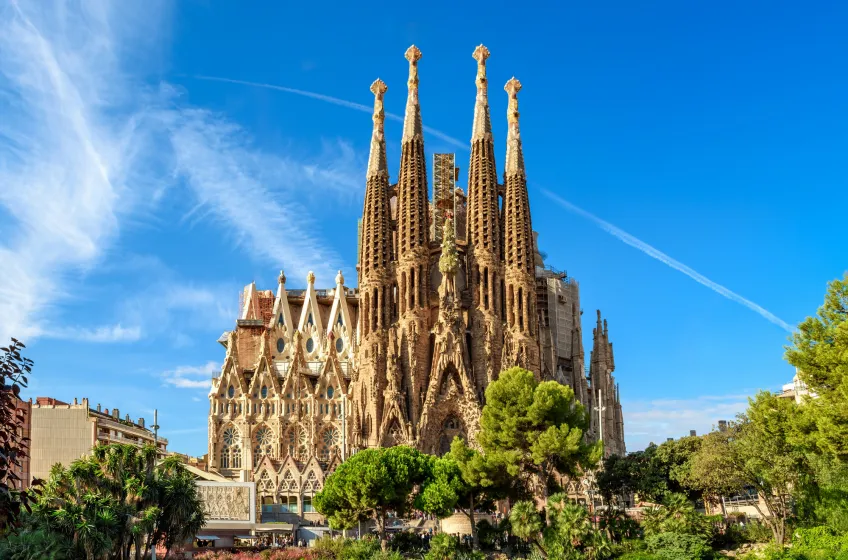
The city combines medieval streets, grand 19th-century avenues, Mediterranean beaches and some of Europe’s most recognisable architecture. Antoni Gaudí’s Sagrada Família is the defining landmark, while Park Güell, Casa Batlló and La Pedrera reveal his distinctive approach to form, colour and structure.
The Gothic Quarter contains Roman remains, churches, narrow lanes and atmospheric squares. El Born is known for museums, restaurants and independent shops, while Gràcia feels more residential and village-like.
Allow at least three full days. Major attractions should be booked in advance, especially during spring, summer and public holidays.
Visit the Sagrada Família
The Sagrada Família is Barcelona’s most famous building.
Its towers, sculpted façades and vast interior create a highly individual interpretation of a cathedral. Coloured light from the stained glass transforms the interior throughout the day.
Timed tickets are essential during busy periods. Tower access normally requires a separate reservation and involves lifts, stairs or both.
Arrive early and allow enough time to study the exterior as well as the interior.
Discover Girona
Girona is one of Catalonia’s most attractive historic cities.
Its old quarter rises above the River Onyar, with narrow lanes, stone stairways and medieval walls. The cathedral has an enormous Gothic nave and stands at the top of a broad ceremonial staircase.
The Jewish Quarter is among the best preserved in Spain, while sections of the city walls provide excellent views across rooftops and surrounding hills.
The colourful houses along the Onyar are especially attractive from the central bridges.
Explore the Costa Brava
The Costa Brava stretches north from Barcelona province towards the French border.
It is known for rocky coves, clear water, pine forests and historic fishing settlements. Towns such as Cadaqués, Calella de Palafrugell, Begur and Tossa de Mar offer a more scenic experience than the larger package-holiday resorts.
Coastal paths known as camins de ronda connect beaches, coves and headlands. Some sections are gentle, while others involve steep steps and exposed cliffs.
A car provides flexibility, but parking is difficult in popular villages during summer.
Visit Cadaqués and Portlligat
Cadaqués is a whitewashed coastal town surrounded by dry hills and rocky shoreline.
Its narrow streets, harbour and artistic associations make it one of the Costa Brava’s most distinctive places. Salvador Dalí spent long periods nearby at Portlligat, where his former home can be visited.
The road into Cadaqués is winding and can be slow during busy periods. Staying overnight allows you to enjoy the town after day visitors leave.
Explore the Dalí Theatre-Museum in Figueres
The Dalí Theatre-Museum in Figueres is devoted to Salvador Dalí and was designed as an artwork in its own right.
Its galleries contain paintings, sculpture, jewellery, installations and theatrical displays. The building is playful, surreal and deliberately unconventional.
Advance booking is strongly recommended. The museum can be combined with Girona, Cadaqués or the nearby castle at Púbol.
Visit Tarragona
Tarragona is one of Spain’s most important Roman cities.
Ancient Tarraco was a major provincial capital, and remains survive throughout the modern city. The amphitheatre stands beside the sea, while sections of wall, forum and circus are integrated into the historic centre.
The upper old town contains a cathedral, medieval lanes and lively squares. Tarragona’s beaches and seafood restaurants make it more than an archaeological destination.
Allow at least one full day.
See the Poblet Monastery
Poblet is one of Catalonia’s great medieval monasteries.
The vast Cistercian complex contains cloisters, churches, royal tombs and defensive walls. It became an important burial place for the Crown of Aragón.
Guided or timed visits provide the clearest understanding of the site. The monastery remains active, so some areas may be restricted.
Poblet combines well with Montblanc and the wine areas of inland Tarragona.
Visit Montserrat
Montserrat is a jagged mountain massif north-west of Barcelona.
A Benedictine monastery stands among the distinctive rock formations and contains a revered image of the Virgin known as La Moreneta. The site is both a pilgrimage destination and a major mountain excursion.
Trains, cable cars and rack railways provide access. Walking routes lead to viewpoints, chapels and higher ridges.
The monastery area becomes very busy during the middle of the day. Arrive early and check the final mountain transport before starting a longer walk.
Explore the Pyrenees
The Catalan Pyrenees contain high peaks, glacial valleys, Romanesque churches and traditional villages.
The western valleys are known for dramatic scenery and heritage sites, while the eastern Pyrenees provide easier access from Barcelona and Girona. Popular bases include Vielha, Boí, Sort, La Seu d’Urgell, Puigcerdà and Camprodon.
Summer offers hiking, cycling and rafting. Winter brings skiing and snowshoeing, though road and trail conditions require careful checking.
Visit Aigüestortes i Estany de Sant Maurici National Park
Aigüestortes is Catalonia’s principal national park.
Its landscape includes granite peaks, pine forests, streams and numerous glacial lakes. Access often involves shuttle vehicles, mountain taxis or walking from designated entry points.
Routes vary from gentle valley paths to serious high-level hikes. Weather changes quickly, and snow may remain into late spring.
Carry proper footwear, water, food and warm layers.
Discover the Vall de Boí
The Vall de Boí is famous for a group of Romanesque churches set among Pyrenean villages.
Stone towers, simple interiors and medieval wall paintings reflect the region’s religious and artistic importance. Sant Climent de Taüll is the best-known church.
The valley is also an excellent base for walking and access to Aigüestortes National Park.
A car is useful, though local buses and taxis may connect selected villages.
Explore Vic
Vic is a historic inland city north of Barcelona.
Its large arcaded Plaça Major hosts markets and public events, while surrounding streets contain medieval, Baroque and modernist buildings. The cathedral, Roman temple and Episcopal Museum add cultural depth.
Vic is also known for cured meats, especially fuet and other pork products.
The city makes an easy rail excursion from Barcelona.
Visit Besalú
Besalú is a small medieval town known for its fortified stone bridge.
The old centre contains narrow lanes, churches, arcades and remains associated with its former Jewish community. Its compact scale makes it suitable for a half-day stop.
The bridge is most attractive early in the morning or late in the afternoon, before or after peak visitor times.
Besalú combines well with Girona, Banyoles or the volcanic landscape around Olot.
Explore La Garrotxa
La Garrotxa is a green volcanic region around Olot.
Extinct volcanic cones, beech forests and small villages create a landscape unlike the drier parts of Catalonia. Walking routes cross areas such as the Fageda d’en Jordà forest and the volcanic zone near Santa Pau.
The region is especially attractive in spring and autumn. A car is useful for linking villages and trailheads.
Visit Lleida
Lleida is the principal city of western Catalonia.
Its defining landmark is the hilltop Seu Vella, a former cathedral complex with cloisters, towers and broad views over the plains. The fortress-like setting reflects Lleida’s strategic importance.
The lower city contains museums, shops and riverside paths. Lleida is less tourist-oriented than Barcelona or Girona and provides a useful base for western Catalonia.
Explore the Ebro Delta
The Ebro Delta is one of Catalonia’s most distinctive natural landscapes.
Rice fields, lagoons, wetlands, beaches and flat horizons support a wide variety of birdlife. Flamingos can often be seen in suitable areas and seasons.
Cycling is one of the best ways to explore because the terrain is flat. Boat trips, birdwatching hides and seafood restaurants add variety.
Mosquitoes can be troublesome in warm weather, so bring repellent.
Visit Sitges
Sitges is a stylish coastal town south-west of Barcelona.
It is known for beaches, whitewashed streets, museums, nightlife and a long-standing reputation as an LGBTQ+-friendly destination. The waterfront church creates one of the town’s classic views.
Sitges can become extremely busy during festivals and summer weekends. Early booking is essential during Carnival and major events.
Explore the Penedès Wine Region
Penedès lies between Barcelona and Tarragona and is one of Catalonia’s principal wine areas.
It is especially associated with sparkling wine produced using the traditional method, as well as still whites and reds. Sant Sadurní d’Anoia and Vilafranca del Penedès are the main centres.
Wineries range from large producers to small family estates. Advance booking is usually required.
Use trains, taxis or organised tours when tasting.
Visit Priorat
Priorat is a rugged wine region in Tarragona province.
Steep vineyard terraces, slate soils and small villages produce some of Spain’s most highly regarded red wines. Falset is the principal service town, while villages such as Gratallops and Porrera are closely associated with wine production.
The roads are winding and public transport is limited. A car or organised wine tour is the most practical option.
Explore the Medieval Towns of Empordà
The Empordà countryside contains attractive stone villages, farmland and vineyards between Girona and the Costa Brava.
Pals, Peratallada, Monells and Ullastret are among the best-known settlements. Their narrow lanes, towers and small squares are highly photogenic.
These villages become busy during summer. Visiting early, late or outside peak season creates a far better experience.
Practical Advice for Visitors
Getting There
Barcelona is the main international gateway to Catalonia.
Barcelona Airport has extensive connections across Europe and beyond. Girona and Reus airports serve selected low-cost and seasonal routes.
High-speed trains connect Barcelona with Madrid, Zaragoza, Valencia and cities in France. Regional trains serve Girona, Tarragona, Lleida, Figueres and many coastal towns.
Road access from France is straightforward through the main Pyrenean corridors.
Getting Around
Catalonia has an extensive rail and bus network, especially around Barcelona and the main coastal cities.
High-speed trains are useful for Girona, Figueres, Tarragona and Lleida, while regional services connect many smaller towns. Some rural areas and beach villages are much easier by car.
Public transport becomes less frequent in the Pyrenees, Priorat and inland districts. Check evening and Sunday schedules carefully.
Driving and Parking
Vehicles drive on the right.
Barcelona and other larger cities have restricted-traffic and low-emission zones. Avoid driving into central Barcelona unless necessary.
Historic villages often have designated parking outside pedestrian centres. Coastal parking fills quickly during July and August.
Mountain roads can be narrow, winding and affected by snow or ice in winter.
Language
Catalan and Spanish are both official languages.
Catalan is widely used on signs, menus, transport information and in everyday conversation. Spanish is understood throughout the region.
English is common in Barcelona and major tourist destinations but less reliable in rural areas.
Using a few Catalan words, such as bon dia for good morning and gràcies for thank you, is appreciated.
Dining
Catalan cuisine combines coastal and mountain ingredients.
Typical dishes include pa amb tomàquet, bread rubbed with tomato and olive oil, and escudella i carn d’olla, a substantial soup and meat dish. Botifarra sausage, grilled vegetables, seafood and rice dishes are also common.
Sauces such as romesco and allioli appear frequently. In winter and early spring, calçots, a type of long green onion, are grilled and served with sauce during large communal meals.
Lunch usually begins after 1.30pm, while dinner commonly starts after 8.30pm.
Seafood and Rice
The Costa Brava and Ebro Delta are particularly strong for seafood and rice dishes.
Try grilled fish, prawns, mussels, cuttlefish and suquet de peix, a traditional fish stew. Delta restaurants often serve rice with seafood, duck or local vegetables.
Ask about the source of seafood when local provenance matters.
Wine and Cava
Catalonia has several important wine regions.
Penedès is best known for sparkling wine, while Priorat and Montsant produce powerful reds. Empordà, Terra Alta, Costers del Segre and Pla de Bages offer additional styles.
Many wineries require advance booking. Public transport works for some Penedès visits, but a car is more useful elsewhere.
Shopping
Barcelona has the broadest shopping choice, including fashion, design, food halls and specialist shops.
Typical regional purchases include wine, olive oil, ceramics, cured meat, cheese, chocolate and torró.
Small towns often have weekly markets selling food, clothing and household goods. Most ordinary shops close on Sundays.
When to Visit
April to June is one of the best periods for cities, vineyards and coastal walking.
September and October are also excellent, with warm sea temperatures, harvest activity and fewer summer crowds.
July and August are hot and busy along the coast and in Barcelona. The Pyrenees are more comfortable but still popular.
Winter is suitable for city breaks, food tourism and skiing. Coastal towns can be very quiet outside the main season.
Local Events
La Mercè is Barcelona’s major city festival, with music, processions, fire events and human towers.
Sant Jordi fills towns and cities with books and roses during spring.
Castells are performed at festivals across Catalonia, with teams building human towers in public squares.
Patum de Berga is a traditional celebration involving giant figures, drums and fire.
The Tarragona human-tower competition, Girona flower festival and Sitges Carnival are among the region’s other major events.
Dates vary annually, so check the programme before booking.
Exploring Beyond Catalonia
Aragón lies to the west, with Zaragoza, the Pyrenees and Mudéjar architecture.
Valencia lies to the south and offers Mediterranean beaches, rice culture and major modern attractions.
Andorra is accessible through the Pyrenees and combines mountain scenery with skiing and shopping.
Southern France is an easy extension from Girona and northern Catalonia, with Perpignan, Collioure and Carcassonne among the most convenient destinations.
The Balearic Islands can be reached by ferry or flight from Barcelona, providing a natural continuation to a Mediterranean itinerary.
Shortlist
- Your Shortlist is empty