
Discover Navarre | A Visitor's Introduction to Navarre
Recommended places to stay, places to visit and things to do throughout Navarre
Navarre is a remarkably varied region in northern Spain, stretching from the high Pyrenees near France to the dry, sculpted landscapes of the Bardenas Reales. Known for Pamplona, medieval pilgrimage towns, mountain valleys, castles and excellent food, this former kingdom is a perfect destination for walkers, history enthusiasts, road trippers and travellers interested in regional culture. With the Camino de Santiago crossing its heart and Basque, Spanish and Pyrenean influences shaping its identity, Navarre offers far more than the famous running of the bulls.
Browse Navarre Hotels and Other Accommodation
Pre-book Navarre Activities, Tours and Experiences
Why is Navarre Worth a Visit?
Navarre is worth visiting because it compresses several very different landscapes into one manageable region. In the north, steep valleys, forests and traditional villages rise towards the Pyrenees. Central Navarre contains vineyards, fortified towns and the lively regional capital, Pamplona. Farther south, the climate becomes drier and the scenery opens into farmland, river valleys and semi-desert terrain.
History is equally varied. Navarre was once an independent kingdom, and its former political importance survives in royal palaces, monasteries, defensive walls and hilltop castles. Olite has one of Spain’s most memorable medieval palace complexes, while Roncesvalles remains closely associated with pilgrimage and legend.
The region is also central to the Camino de Santiago. The French Way enters Spain through the Pyrenees before passing through Roncesvalles, Pamplona, Puente la Reina and Estella-Lizarra. Even visitors who are not walking the full route will encounter bridges, hostels, churches and pilgrims throughout central Navarre.
Food is another major attraction. Asparagus, piquillo peppers, artichokes, lamb, trout, mushrooms and farmhouse cheeses feature prominently, alongside wine and cider. A week is enough for Pamplona, Olite, the Bardenas and one Pyrenean valley, while ten days allow a more relaxed circuit.
Navarre Highlights: Things to See and Do in Navarre
Explore Pamplona
Pamplona is the capital of Navarre and the region’s main cultural and transport centre.
Its compact old town sits within substantial defensive walls and contains narrow streets, lively squares, churches and numerous bars. Plaza del Castillo is the city’s social heart, surrounded by cafés and elegant façades.
Pamplona is famous for the San Fermín festival, but it is enjoyable outside the celebrations, when the streets are calmer and easier to explore. The city also makes an excellent base for day trips to central and northern Navarre.
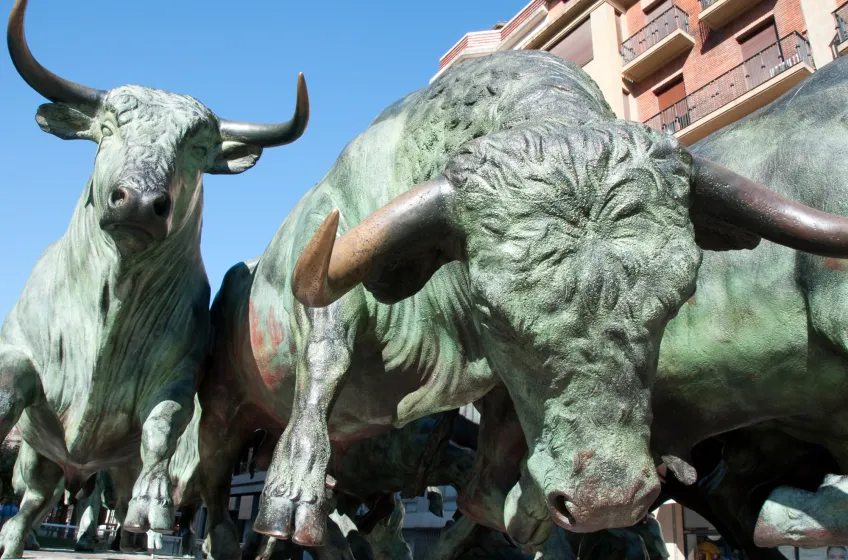
Walk the San Fermín Bull-Run Route
The route used during the famous running of the bulls passes through Pamplona’s old town.
It begins near the corrals below the historic centre and continues through streets including Cuesta de Santo Domingo and Estafeta before reaching the bullring. Markers and local tours help explain the route.
Outside festival season, it is an ordinary urban walk and provides a useful introduction to the old town. During San Fermín, access, crowds and security arrangements are entirely different.
Visit Pamplona Cathedral
The Cathedral of Santa María la Real stands in the old town.
Its restrained Neoclassical façade hides a mainly Gothic interior, with a fine cloister, royal tombs and archaeological remains. The museum complex helps explain the development of the cathedral and the medieval city.
Allow time for the cloister, which is one of the most attractive parts of the site.
Walk Pamplona’s City Walls
Pamplona’s fortifications reflect its former strategic position near the French frontier.
Paths around the walls and citadel provide views over parks, lower districts and surrounding hills. The Vuelta del Castillo park forms a broad green space around the star-shaped citadel.
This is one of the best areas for a relaxed walk, especially in the morning or early evening.
Explore the Pintxos Streets
Pamplona has a strong pintxos culture influenced by neighbouring Basque traditions.
Bars around Calle Estafeta, Calle San Nicolás and the old town serve small dishes ranging from simple skewers to elaborate hot plates. The usual approach is to order one or two specialities before moving elsewhere.
The atmosphere becomes liveliest in the evening and at weekends. Ask what each bar does best rather than choosing only from what is displayed.
Visit Olite
Olite is one of Navarre’s most attractive historic towns.
Its Royal Palace dominates the centre with towers, courtyards, battlements and elevated walkways. The complex was developed by the medieval kings of Navarre and has a romantic, almost theatrical appearance.
The surrounding old town contains churches, stone houses and wine bars. Olite is easy to visit from Pamplona by car or train and deserves at least half a day.
Explore the Royal Palace of Olite
The Royal Palace is the principal reason to visit Olite.
Visitors can climb towers and walk along terraces for views over the town and surrounding countryside. The restored interior is relatively sparse, so the architecture and movement through the complex are the main attractions.
There are many steps and exposed upper levels. Visit early during summer, as the stone surfaces can become very hot.
Discover the Bardenas Reales
The Bardenas Reales are a semi-desert landscape in southern Navarre.
Wind and water have shaped clay, sandstone and gypsum into ravines, plateaux and isolated rock formations. The scenery feels dramatically different from the green Pyrenees farther north.
Marked roads and trails provide access by car, bicycle and on foot. Some areas may close temporarily for conservation, weather or military use.
There is little shade, so avoid the hottest hours, carry plenty of water and never leave marked routes.
See Castildetierra
Castildetierra is the best-known rock formation in the Bardenas Reales.
Its narrow column and broader cap have become a symbol of the park. The formation is fragile and continues to erode.
Visitors must remain behind barriers and avoid climbing or touching the structure. Early morning and late afternoon offer softer light and more comfortable temperatures.
Explore Tudela
Tudela is the main city of southern Navarre.
Its historic centre reflects Christian, Jewish and Islamic influences, while the cathedral incorporates elements from an earlier mosque. Narrow streets, small palaces and lively squares surround the central market area.
Tudela is also one of Spain’s strongest destinations for vegetable-based cuisine. Spring is especially rewarding, when local asparagus, artichokes, peas and other produce appear on menus.
Visit Puente la Reina
Puente la Reina is an important Camino de Santiago town.
Its graceful medieval bridge crosses the River Arga and gives the town its name. The main street follows the pilgrimage route past churches, inns and traditional houses.
The town is compact and easy to explore in a few hours. Early morning and evening are the best times to see pilgrims crossing the bridge.
Explore Estella-Lizarra
Estella-Lizarra developed as a major Camino town during the Middle Ages.
Churches, palaces, bridges and narrow streets line the River Ega. The town has a strong mixture of Romanesque, Gothic and later architecture.
Its dual Spanish and Basque name reflects Navarre’s linguistic diversity. Estella makes a useful base for nearby monasteries, vineyards and walking routes.
Visit the Monastery of Irache
The Monastery of Irache stands near Estella-Lizarra.
It has Romanesque, Gothic and Renaissance elements and was historically associated with pilgrims, education and healthcare. A well-known wine fountain nearby offers small quantities to passing walkers, though visitors should treat it responsibly and not expect unrestricted access.
The monastery and surrounding vineyards make a pleasant stop on a Camino-themed journey.
Discover Ujué
Ujué is a fortified hilltop village in central Navarre.
Stone houses and steep lanes climb towards the Church-Fortress of Santa María, which dominates the settlement. From the upper terraces, views extend across the plains towards the Pyrenees.
The village is small but atmospheric. Roads are winding, and parking is usually outside the oldest streets.
Visit Sangüesa
Sangüesa lies near the Aragón border and developed around a branch of the Camino de Santiago.
The Church of Santa María la Real has an exceptionally detailed Romanesque portal. The town also contains palaces, convents and historic streets.
Sangüesa combines naturally with Javier Castle and the monastery of Leyre.
Explore Javier Castle
Javier Castle is one of Navarre’s most important historic landmarks.
It is associated with Saint Francis Xavier, the missionary and co-founder of the Jesuit order. Towers, walls, chapels and museum displays explain the site’s religious and defensive history.
The castle stands in an isolated rural setting east of Pamplona. Large pilgrimages and religious events can make it very busy.
Visit the Monastery of Leyre
The Monastery of Leyre occupies a wooded slope overlooking the Yesa Reservoir.
Its Romanesque crypt is particularly impressive, with massive columns and a powerful sense of age. The complex has strong associations with the medieval kings of Navarre.
Religious services and chants may be part of the experience, but visitors should respect the monastery’s active spiritual role.
The viewpoint over the reservoir adds to the visit.
Explore Roncesvalles
Roncesvalles is one of the most famous pilgrimage locations in the Pyrenees.
It lies near the traditional entry of the Camino Francés into Spain and is associated with the medieval legend of Roland. The collegiate church, pilgrim buildings and small museum form the core of the settlement.
The atmosphere changes through the day as walkers arrive and depart. Weather can be cold, wet and misty even in summer.
Walk in the Baztan Valley
The Baztan Valley is a green northern district of forests, farms and traditional villages.
Elizondo is the principal town, with stone houses, bridges and riverside streets. Smaller communities such as Amaiur and Ziga provide a stronger rural atmosphere.
The valley is culturally close to the Basque-speaking areas on both sides of the French border. A car is the easiest way to explore it.
Visit Zugarramurdi
Zugarramurdi is known for caves and stories associated with witchcraft trials.
The caves are large natural openings shaped by a stream rather than enclosed chambers filled with formations. Exhibitions in the village explain local beliefs, persecution and folklore.
The site can be wet and slippery, so sturdy footwear is useful.
Zugarramurdi combines well with the nearby village of Urdazubi-Urdax.
Explore the Irati Forest
The Irati Forest is one of western Europe’s largest beech and fir woodlands.
Walking and cycling routes pass through dense forest, rivers and reservoir scenery near the eastern Pyrenees. Ochagavía and Orbaizeta are useful bases.
Autumn is especially beautiful but also popular. Access roads, parking and one-way systems may operate seasonally.
Mobile reception can be weak, so carry an offline map and basic supplies.
Visit Ochagavía
Ochagavía is one of Navarre’s most attractive Pyrenean villages.
Stone houses with steep roofs line narrow lanes beside the River Anduña. A medieval bridge and hillside church add to the setting.
The village is a principal gateway to the Irati Forest and nearby mountain routes.
Winter can bring snow, while summer weekends become busy with walkers and day visitors.
Explore the Roncal Valley
The Roncal Valley lies in the eastern Navarrese Pyrenees.
Mountain villages, forests and high passes lead towards the French border. Isaba is the main base for walking and scenic drives.
The valley is associated with Roncal cheese, made from sheep’s milk. Traditional houses and pastoral landscapes remain central to its identity.
See the Foz de Lumbier
The Foz de Lumbier is a narrow limestone gorge carved by the River Irati.
A relatively easy path follows a former railway line through tunnels and beneath cliffs. Griffon vultures are commonly seen overhead.
The route is exposed to heat in summer, and the unlit tunnels may require a torch or phone light.
Visit the Foz de Arbayún
The Foz de Arbayún is a larger and wilder gorge than Lumbier.
A roadside viewpoint provides a broad view over the canyon, river and wooded slopes. Birds of prey often circle above the cliffs.
Walking access is more limited and demanding than at Lumbier, so many visitors experience it primarily from the viewpoint.
Practical Advice for Visitors
Getting There
Pamplona is Navarre’s principal transport hub.
Its small airport has limited routes, while Bilbao, Biarritz and Zaragoza airports provide a wider choice of flights. Madrid can also be practical for travellers arriving by rail.
Long-distance trains and coaches connect Pamplona with Madrid, Barcelona, Zaragoza, San Sebastián and other northern cities.
Tudela has useful rail connections on the main corridor between Zaragoza and northern Spain.
Getting Around
A car is the most flexible way to explore Navarre.
Public transport works well for Pamplona, Tudela and selected larger towns, but services to the Pyrenees, Bardenas Reales and small villages are limited.
Mountain journeys take longer than expected because of winding roads. Avoid combining distant northern and southern attractions in one day.
Cycling is popular, but gradients, heat and traffic conditions vary greatly.
Driving and Parking
Vehicles drive on the right.
Pamplona’s old town has restricted access, paid parking and pedestrian streets. Use public garages or park-and-ride facilities where practical.
Historic towns such as Olite, Ujué and Puente la Reina have designated parking outside their centres.
Snow and ice can affect Pyrenean roads in winter. Check conditions before crossing high passes or using remote mountain routes.
Choosing Where to Stay
Pamplona is the best base for first-time visitors, public transport and evening dining.
Olite suits travellers interested in castles, wine and central Navarre.
Tudela is the most practical base for the Bardenas Reales and southern food culture.
Elizondo works well for the Baztan Valley, while Ochagavía or Isaba are better for the Pyrenees.
A longer road trip is best divided between at least two bases.
Dining
Navarrese cooking reflects both fertile river valleys and mountain farming.
Typical dishes include lamb, trout, beans, mushrooms and seasonal vegetables. Menus change considerably through the year.
In the north, food shows a stronger Basque influence, while southern Navarre is especially known for market-garden produce.
Lunch usually starts after 1.30pm, and dinner is commonly served after 8.30pm.
Vegetables
Navarre has an exceptional reputation for vegetables.
White asparagus, piquillo peppers, artichokes and tender spring vegetables appear in restaurants and food shops. Tudela is particularly associated with mixed vegetable dishes known as menestra.
Freshness and season matter greatly. Spring is the best time for the widest variety.
Cheese
Roncal cheese is one of Navarre’s best-known products.
It is made from sheep’s milk and has a firm texture and increasingly intense flavour as it matures. The Pyrenean valleys are the best places to encounter local versions.
Idiazabal cheese is also widely available in northern Navarre, sometimes with a light smoky character.
Wine
Navarre produces red, white, rosé and sweet wines.
Rosé has long been a regional speciality, often made from Garnacha. Red wines may use Tempranillo, Garnacha and international varieties, while cooler areas also produce fresh whites.
The principal vineyard zones lie south of Pamplona and around towns such as Olite, Tafalla and Estella.
Winery tours normally require advance booking.
Pacharán
Pacharán is a traditional liqueur made by soaking sloe berries in an anise-flavoured spirit.
It is usually served after a meal. Commercial versions vary from sweet and simple to more complex styles.
Drink it in moderation, as the sweetness can disguise its strength.
Shopping
Typical purchases include wine, cheese, piquillo peppers, asparagus, olive oil, cured meat and pacharán.
Pamplona has the broadest retail choice, while Tudela and smaller market towns are better for regional food products.
Check luggage and customs rules before carrying meat or dairy products internationally.
Most ordinary shops close on Sundays.
Language
Spanish is spoken throughout Navarre.
Basque is also official in the northern Basque-speaking zone and appears widely on signs and public information there. Many towns have both Spanish and Basque names.
English is understood in major hotels and tourist attractions but less consistently in rural areas.
When to Visit
April to June is excellent for green landscapes, spring vegetables and comfortable sightseeing.
September and October are ideal for wine, walking and autumn colour, particularly in the Pyrenees and Irati Forest.
July and August are busiest in Pamplona and mountain areas. Southern Navarre can be extremely hot, especially around Tudela and the Bardenas.
Winter is quiet and suitable for city breaks, but snow may affect Pyrenean roads and trails.
Local Events
San Fermín is Navarre’s most famous festival, filling Pamplona with bull runs, music, processions and continuous street celebrations.
It is intensely crowded, noisy and expensive. Accommodation should be booked well in advance, and visitors should understand that the bull run is dangerous and regulated.
Smaller towns hold medieval fairs, food festivals, pilgrimages and patron-saint celebrations throughout the year.
Olite hosts cultural events connected with its royal palace, while northern valleys maintain strong local traditions.
Dates vary annually, so check the current programme before travelling for a particular festival.
Exploring Beyond Navarre
The Basque Country lies to the west and offers San Sebastián, Bilbao and a renowned food culture.
La Rioja lies south-west of Navarre, with Logroño, Haro and extensive wine tourism.
Aragón lies to the east, providing access to Zaragoza, Jaca and the Pyrenees.
The French Basque Country and Béarn lie across the northern border, with Saint-Jean-Pied-de-Port, Bayonne and Pau among the most practical extensions.
The Camino de Santiago continues west through La Rioja and Castile and León towards Galicia.
Shortlist
- Your Shortlist is empty