
Discover Spain | A Visitor's Introduction to Spain
Recommended places to stay, places to visit and things to do throughout Spain
Spain is a large and remarkably varied country in south-western Europe, extending from the green Atlantic coast and the Pyrenees to the Mediterranean beaches of Andalusia, Catalonia and Valencia. Known for its historic cities, regional cuisines, world-class art, lively festivals and diverse landscapes, Spain is a perfect destination for culture lovers, foodies, beach travellers and outdoor enthusiasts. With Moorish palaces, Gothic cathedrals, modern architecture, mountain villages and island resorts, Spain offers far more than a conventional sun-and-sea holiday.
Why is Spain Worth a Visit?
Spain is worth visiting because every region has a strong identity of its own. The architecture, language, food and landscape can change dramatically within a relatively short journey. Barcelona feels distinctly Catalan, Seville reflects the traditions of Andalusia, Bilbao represents the industrial and cultural confidence of the Basque Country, while Santiago de Compostela has the atmosphere of a historic pilgrimage city.
The country’s artistic and architectural heritage is exceptional. Visitors can see Roman ruins in Mérida and Tarragona, Islamic architecture in Córdoba and Granada, medieval walls in Ávila, royal palaces in Madrid and the imaginative buildings of Antoni Gaudí in Barcelona.
Food is another major reason to travel around Spain. Tapas are only one part of a much broader culinary culture that includes Basque pintxos, Valencian rice dishes, Galician seafood, Andalusian gazpacho, Asturian cider, Manchego cheese and cured Iberian ham.
Spain also works for almost every style of holiday. Its high-speed trains make major cities easy to combine, while the islands, mountain ranges, national parks and rural regions reward slower exploration by car or local transport.
Spanish Highlights: Things to See and Do in Spain
Explore Madrid
Madrid is Spain’s capital and one of Europe’s greatest cities for art, food and nightlife.
The Prado Museum contains masterpieces by Velázquez, Goya, El Greco and many other major European artists. The nearby Reina Sofía and Thyssen-Bornemisza museums complete the city’s celebrated art district.
Elsewhere, visitors can explore the Royal Palace, Plaza Mayor, Retiro Park and neighbourhoods such as La Latina, Malasaña and Chueca.
Madrid is energetic late into the evening. Meal times are later than in the UK, and the city’s streets often remain busy well after midnight.
Discover Barcelona
Barcelona combines medieval streets, Mediterranean beaches and some of Europe’s most recognisable modern architecture.
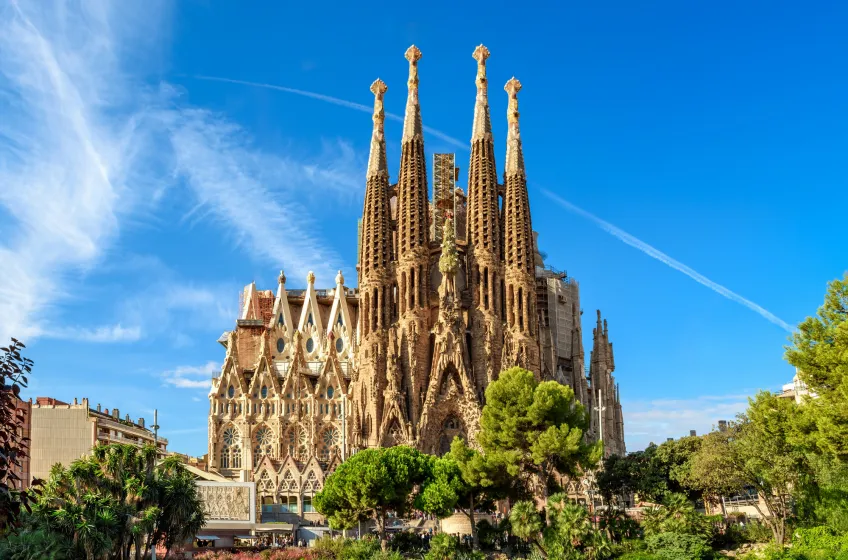
The Sagrada Família is the city’s defining landmark, while Park Güell, Casa Batlló and La Pedrera reveal Antoni Gaudí’s highly individual style. Advance booking is strongly advisable for the most famous sites.
The Gothic Quarter contains narrow lanes, churches and Roman remains, while El Born offers museums, independent shops and lively restaurants.
Barcelona’s beach is convenient, but travellers seeking a quieter seaside stay may prefer locations farther along the Catalan coast.
Visit Seville
Seville is the cultural heart of Andalusia and one of Spain’s most atmospheric cities.
The vast cathedral, Giralda tower and Royal Alcázar form the principal historic group. The Alcázar’s courtyards, tiled rooms and gardens display layers of Islamic, Mudéjar and Christian influence.
The Santa Cruz district is filled with narrow streets and shaded squares, while Triana has strong associations with ceramics and flamenco.
Summer temperatures can be extreme. Spring, late autumn and winter are generally more comfortable for sightseeing.
See the Alhambra in Granada
The Alhambra is a palace and fortress complex overlooking Granada from the slopes of the Sierra Nevada.
Its Nasrid palaces contain intricate plasterwork, tiled courtyards, fountains and carefully framed views. The Generalife gardens and older defensive sections add variety to the visit.
Tickets often sell out well ahead, and the Nasrid Palaces are usually entered at a fixed time. Arrive early and allow at least half a day.
Granada itself is also worth exploring for the Albaicín district, cathedral, tapas culture and views from the Mirador de San Nicolás.
Explore Córdoba
Córdoba was one of the great cities of medieval Europe and remains one of Spain’s most important historic destinations.
The Mosque-Cathedral is the centrepiece. Its forest of striped arches surrounds a later Christian cathedral inserted into the former mosque.
The old Jewish quarter, Roman bridge, patios and Alcázar de los Reyes Cristianos can be explored on foot.
Córdoba is especially famous for its flower-filled courtyards, although the historic centre is attractive throughout the year.
Experience Valencia
Valencia combines a historic centre with bold modern architecture and an extensive urban beach.
The City of Arts and Sciences contains futuristic buildings devoted to science, performance and marine life. The old town offers markets, churches, towers and lively squares.
Valencia is the birthplace of paella. Traditional versions are usually made with rice, rabbit, chicken and beans rather than seafood.
The former Turia riverbed has been transformed into a long park crossing much of the city, making it excellent for walking and cycling.
Visit Bilbao and the Basque Country
Bilbao has transformed from an industrial port into one of Spain’s leading cultural destinations.
The Guggenheim Museum is its best-known landmark, but the compact old town, riverside walks and exceptional food scene are equally important.
Pintxos are small dishes traditionally eaten while moving between bars. The greatest concentration can be found in the Casco Viejo and surrounding central districts.
Beyond Bilbao, the Basque coast contains fishing towns, cliffs, beaches and destinations such as San Sebastián, Getaria and Hondarribia.
Eat Your Way Through San Sebastián
San Sebastián is one of Europe’s strongest food destinations.
Its old town contains a dense concentration of pintxos bars, while the wider region has an impressive number of acclaimed restaurants. Eating is often informal, with visitors ordering one or two specialities before continuing elsewhere.
La Concha is one of Spain’s most attractive urban beaches. Walk around the bay, climb Monte Urgull or take the funicular to Monte Igueldo for elevated views.
Reservations are essential for top restaurants, while popular pintxos bars become crowded in the evening.
Follow the Camino to Santiago de Compostela
Santiago de Compostela is the traditional destination of the Camino de Santiago pilgrimage routes.
Its cathedral stands at the heart of a granite old town filled with arcades, churches, monasteries and lively restaurants. Pilgrims arrive throughout the year, creating a distinctive atmosphere around Praza do Obradoiro.
Visitors do not need to complete a long pilgrimage to appreciate Santiago. Even walking the final section into the city can provide a sense of the route’s cultural importance.
Galicia’s seafood, octopus, empanadas and crisp white wines are an additional attraction.
Explore Toledo
Toledo stands above the River Tagus within easy reach of Madrid.
The city is known for its Christian, Jewish and Islamic heritage. Highlights include the cathedral, Alcázar, synagogues, mosques and paintings by El Greco.
Its steep streets and stone lanes are best explored on foot. Comfortable shoes are essential.
Many people visit on a day trip, but staying overnight reveals a much quieter and more atmospheric city.
Visit Salamanca
Salamanca is one of Spain’s finest university cities.
Its golden sandstone buildings include two connected cathedrals, historic university courtyards and the magnificent Plaza Mayor.
The large student population gives the city a lively nightlife and café culture. It is particularly attractive in the evening, when the illuminated stone façades appear to glow.
Discover the Balearic Islands
The Balearic Islands combine beaches, coves, historic towns and varied nightlife.
Mallorca offers the greatest diversity, including Palma’s cathedral, the Serra de Tramuntana mountains and attractive villages such as Valldemossa and Deià.
Menorca is quieter and known for sheltered coves, prehistoric sites and coastal walking. Ibiza has famous clubs but also contains rural landscapes, beaches and a fortified old town.
Formentera is smaller and particularly popular for clear water, cycling and relaxed beach holidays.
Explore the Canary Islands
The Canary Islands lie in the Atlantic Ocean off the coast of north-western Africa and have a warm climate throughout much of the year.
Tenerife is dominated by Mount Teide, Spain’s highest peak. Lanzarote is known for volcanic landscapes and architecture associated with César Manrique.
Gran Canaria combines beaches, mountains and historic neighbourhoods, while La Palma, La Gomera and El Hierro are especially appealing to walkers and nature lovers.
Conditions vary greatly between the coasts and high ground, so pack for more than beach weather.
Visit Spain’s Northern Coast
Northern Spain offers a greener and cooler alternative to the Mediterranean.
Asturias and Cantabria contain rugged coastline, fishing villages, caves and mountain scenery. The Picos de Europa provide dramatic hiking within reach of the sea.
Galicia is known for estuaries, seafood, pilgrimage routes and weathered stone towns. The coast can be wild and beautiful, but rain is possible throughout the year.
The north is particularly rewarding for travellers interested in food, walking and less crowded landscapes.
Explore Andalusia’s White Villages
The pueblos blancos of Andalusia are traditional towns and villages characterised by whitewashed houses, hilltop positions and narrow lanes.
Ronda is the best known, dramatically divided by the deep El Tajo gorge. Smaller places such as Grazalema, Zahara de la Sierra and Vejer de la Frontera often feel more intimate.
A car provides the greatest flexibility, although driving and parking inside historic centres can be difficult.
Practical Advice for Visitors
Getting There
Spain has major international airports in Madrid, Barcelona, Málaga, Alicante, Palma de Mallorca and several other cities.
Direct flights from the UK serve most major destinations, particularly during the summer season.
Rail travel from France is possible through high-speed connections into Barcelona and onward services to Madrid and other Spanish cities.
Ferries connect Spain with the Balearic Islands, Canary Islands, North Africa and selected European ports.
Getting Around
Spain’s high-speed rail network is excellent for journeys between major cities such as Madrid, Barcelona, Valencia, Seville, Córdoba, Málaga and Zaragoza.
Tickets are usually cheaper when booked in advance. Different train operators may serve the same route, so compare departure times, luggage rules and ticket conditions.
Regional buses often provide better coverage than trains in rural areas and along parts of the coast.
A car is most useful for mountain villages, remote beaches, wine regions and rural Andalusia. Avoid driving in the centres of major cities unless necessary.
Parking and Driving
Many Spanish cities have restricted-traffic areas, pedestrian zones and low-emission regulations.
Historic centres often contain narrow one-way streets, underground car parks and limited street parking. Leave the car outside the centre and use public transport where possible.
Motorways are generally good, though some routes have tolls. Fuel stations can be widely spaced in rural areas.
Driving styles may feel more assertive than in the UK, particularly in cities. Vehicles drive on the right.
Dining
Spanish meal times are generally later than in the UK. Lunch often begins around 2pm, while dinner may not start until 9pm or later.
Tapas can refer to a small snack, a shared plate or a style of eating, depending on the region. In the Basque Country, similar small dishes are known as pintxos.
Look for the menú del día at lunchtime. This fixed-price meal often includes several courses and can provide excellent value.
Regional specialities are more rewarding than relying on the same familiar dishes everywhere. Seafood in Galicia, rice in Valencia, pork in Extremadura and stews in central Spain all deserve attention.
Shopping
Spain offers everything from large department stores to markets, family-run food shops and craft businesses.
Typical purchases include olive oil, ceramics, saffron, cheese, cured meat, leather goods, wine and regional sweets.
Food markets are useful for both shopping and casual meals. Well-known examples include La Boqueria in Barcelona, Mercado Central in Valencia and Mercado de San Miguel in Madrid, although smaller neighbourhood markets can feel more authentic.
Most shops close on Sundays. In smaller towns, some businesses also close for part of the afternoon.
Language
Spanish is spoken throughout the country, but several regions have additional official languages.
Catalan is widely used in Catalonia, Valencia and the Balearic Islands, with regional variations. Basque is spoken in the Basque Country and parts of Navarre, while Galician is used in Galicia.
English is common in major tourist destinations but less dependable in rural areas. Basic Spanish phrases are useful and appreciated.
Money and Tipping
Spain uses the euro.
Cards are accepted widely, although cash remains useful in small bars, markets, villages and rural businesses.
Service is generally included in restaurant prices. Tipping is optional, but rounding up or leaving a modest amount is appreciated for good service.
When to Visit
April to June and September to October are the best periods for city sightseeing and touring. Temperatures are generally pleasant, and crowds are often lower than in midsummer.
July and August are extremely hot in inland and southern cities. They are better suited to northern Spain, mountain areas and beach destinations.
Winter is mild on the Mediterranean coast and Canary Islands but can be cold in Madrid, Castilla y León and high inland regions.
Spring is particularly attractive in Andalusia, while autumn suits wine regions, northern Spain and long-distance walking.
Local Events
Semana Santa, or Holy Week, is celebrated throughout Spain, with particularly elaborate processions in Seville, Málaga, Valladolid and other historic cities.
Las Fallas fills Valencia with giant sculptures, fireworks and street celebrations in March.
The Feria de Abril brings traditional dress, music, dancing and temporary fairgrounds to Seville after Easter.
San Fermín in Pamplona is famous for the running of the bulls, though the wider festival also includes music, processions and nightlife.
La Tomatina takes place in Buñol near Valencia, while Carnival is especially prominent in Cádiz, Tenerife and Gran Canaria.
Dates and arrangements vary, and accommodation can sell out far in advance.
Safety and Common Tourist Problems
Spain is generally straightforward for visitors, but pickpocketing is a concern in crowded transport hubs, busy streets and major attractions.
Keep valuables secure in Barcelona, Madrid and popular coastal resorts. Avoid placing phones or wallets on café tables beside busy pedestrian areas.
Use licensed taxis or recognised ride-booking services. Check restaurant menus for prices before ordering in highly tourist-oriented districts.
Summer heat is a more serious risk than many visitors expect. Carry water, use sun protection and avoid strenuous activity during the hottest part of the afternoon.
Exploring Beyond the Main Cities
Extremadura offers Roman ruins, medieval towns and excellent food with far fewer visitors than neighbouring Andalusia.
Castilla y León contains historic cities such as Segovia, Ávila, Burgos and León, alongside castles, monasteries and wide open landscapes.
Navarre combines the city of Pamplona with Pyrenean valleys, semi-desert scenery and pilgrimage routes.
La Rioja is one of Spain’s best-known wine regions, with vineyard towns, monasteries and modern winery architecture.
Murcia and Almería provide dry landscapes, historic centres and less crowded Mediterranean beaches.
Spain also combines easily with Portugal, southern France, Andorra, Gibraltar and Morocco, depending on the route and available time.
Shortlist
- Your Shortlist is empty