
Discover Andalucia | A Visitor's Introduction to Andalucia
Recommended places to stay, places to visit and things to do throughout Andalucia
Andalucía is Spain’s southernmost mainland region, stretching from the Atlantic beaches of Cádiz and Huelva to the Mediterranean coast of Málaga, Granada and Almería. Known for Moorish palaces, whitewashed hill towns, flamenco, tapas and some of Europe’s most dramatic historic cities, this varied region is a perfect destination for culture lovers, foodies, road trippers and beach travellers. With the Alhambra, Seville’s monumental centre, Córdoba’s Mosque-Cathedral and landscapes ranging from olive groves to desert and high mountains, Andalucía offers one of Spain’s richest and most distinctive travel experiences.
Browse Andalucia Hotels and Other Accommodation
Pre-book Andalucia Activities, Tours and Experiences
Why is Andalucía Worth a Visit?
Andalucía is worth visiting because it brings together an extraordinary concentration of architecture, history, landscape and living tradition. Roman, Islamic, Jewish and Christian influences are visible throughout the region, particularly in Seville, Córdoba and Granada.
The legacy of Al-Andalus is one of Andalucía’s defining features. The Alhambra in Granada, the Mosque-Cathedral of Córdoba and the Alcázar of Seville are not isolated monuments but parts of a wider cultural landscape shaped over centuries.
The region is also extremely varied. The Sierra Nevada rises to the highest peaks on the Iberian Peninsula, while Almería contains dry, almost desert-like terrain. The Atlantic coast has dunes, wetlands and long beaches, whereas the Mediterranean includes resort towns, rocky coves and busy ports.
Andalucía’s towns and villages add another layer. Ronda stands above a deep gorge, Cádiz occupies a narrow Atlantic peninsula and white villages such as Grazalema, Vejer de la Frontera and Zahara de la Sierra preserve strong local character.
Food, music and festivals are central to everyday life. Flamenco has deep roots here, while regional cooking includes seafood, cured ham, olive oil, cold soups, fried fish and Moorish-influenced sweets.
A week is enough for two major cities and one rural area. Ten days to two weeks allow a more balanced journey through the cities, villages and coast.
Andalucia Highlights: Things to See and Do in Andalucía
Explore Seville
Seville is the capital of Andalucía and one of Spain’s most atmospheric cities.
Its historic centre contains the vast cathedral, the Giralda tower and the Royal Alcázar. Nearby, the former Jewish quarter of Santa Cruz is a maze of narrow lanes, orange trees and shaded courtyards.
Plaza de España is another major landmark, built around a sweeping semicircular structure beside María Luisa Park. Across the river, Triana is associated with ceramics, flamenco and traditional neighbourhood life.
Seville is particularly rewarding in spring, late autumn and winter. Summer temperatures can make afternoon sightseeing uncomfortable or even unsafe.
Visit Seville Cathedral and the Giralda
Seville Cathedral is one of the largest Gothic churches in the world.
Its enormous interior contains chapels, religious art, royal tombs and the monument traditionally associated with Christopher Columbus. The building occupies part of the site of an earlier mosque.
The Giralda began as a minaret and later became the cathedral’s bell tower. Its upper levels are reached mainly by broad ramps rather than a conventional staircase.
The tower provides excellent views over the rooftops of central Seville. Advance booking is strongly advisable.
Explore the Royal Alcázar of Seville
The Royal Alcázar is a complex of palaces, courtyards and gardens developed over many centuries.
Its most famous sections display Mudéjar architecture, with carved plasterwork, geometric tiles and elegant arches created under Christian rulers using Islamic artistic traditions.
The gardens contain fountains, orange trees, palms and pavilions. Allow at least two hours, and preferably longer.
Timed tickets frequently sell out, particularly during spring and public holidays.
Discover Córdoba
Córdoba was one of the great cities of medieval Europe.
Its old centre surrounds the Mosque-Cathedral, a remarkable building in which a Christian cathedral was constructed within an earlier mosque. The interior’s forest of striped arches is one of Spain’s most memorable architectural sights.
The Jewish Quarter contains narrow whitewashed streets, small squares and a historic synagogue. The Roman bridge and Alcázar de los Reyes Cristianos add further interest.
Córdoba is possible as a day trip from Seville or Málaga, but an overnight stay provides a quieter and more atmospheric experience.
Visit the Mosque-Cathedral of Córdoba
The Mosque-Cathedral is Andalucía’s most important expression of layered religious history.
Its earliest Islamic sections were expanded repeatedly, creating an immense prayer hall supported by columns and double-tiered arches. After the Christian conquest, chapels and a cathedral nave were added.
The contrast between the Islamic and Christian spaces is central to the visit. Arrive early, when the building is generally quieter and the light is softer.
Check access arrangements around religious services.
See Córdoba’s Patios
Córdoba is famous for private and communal courtyards decorated with flowers, fountains, tiles and hanging pots.
Some patios open to visitors throughout much of the year, while many more participate in the city’s major spring courtyard festival. Access can involve queues during festival periods.
The San Basilio district is one of the best areas for exploring traditional courtyard architecture.
Explore Granada
Granada lies beneath the Sierra Nevada and is one of Andalucía’s most compelling historic cities.
The Alhambra dominates the skyline, but the city also contains the old Albaicín quarter, cathedral, royal chapel and lively student districts.
Granada has a strong tapas culture, and many bars traditionally serve a small dish with a drink. The city’s Moroccan and Middle Eastern restaurants also reflect its historical and contemporary connections.
Allow at least two full days, with one substantial block of time reserved for the Alhambra.
Visit the Alhambra
The Alhambra is a palace, fortress and garden complex above Granada.
Its Nasrid Palaces contain intricately carved walls, tiled rooms, courtyards and fountains. The Court of the Lions and the reflective pool of the Court of the Myrtles are among its best-known spaces.
The Generalife gardens, Alcazaba fortress and later Palace of Charles V form separate parts of the wider site.
Entry to the Nasrid Palaces is usually tied to a specific time. Tickets often sell out far ahead, so book as early as possible and bring the required identification.
Walk Through the Albaicín
The Albaicín is Granada’s old hillside quarter.
Its narrow lanes, white houses and small squares preserve a street pattern developed during the Islamic period. The district is steep, uneven and best explored slowly.
The Mirador de San Nicolás offers the classic view towards the Alhambra with the Sierra Nevada behind it. Sunset is popular and often crowded.
Avoid relying entirely on digital maps, as routes may include steep steps or confusing passages.
Visit Málaga
Málaga combines an attractive historic centre with museums, beaches and a working Mediterranean port.
The Alcazaba rises above the Roman Theatre, while Gibralfaro Castle occupies the higher ridge. Together they reveal the city’s strategic and Islamic history.
Málaga is also closely associated with Pablo Picasso. The Picasso Museum and his birthplace introduce different aspects of his life and work.
The city’s old centre is lively throughout the year, and its airport makes it one of the easiest gateways to Andalucía.
Explore the Alcazaba and Gibralfaro Castle
Málaga’s Alcazaba is a fortified palace built on the slopes above the city.
Courtyards, gateways and gardens create a quieter atmosphere than the busy streets below. The neighbouring Roman Theatre demonstrates the site’s much earlier history.
Gibralfaro Castle stands higher up and provides broad views over Málaga, the port and coastline. The climb can be strenuous in hot weather, so use local transport when necessary.
Discover Cádiz
Cádiz occupies a narrow Atlantic peninsula and claims a history extending back to ancient Phoenician settlement.
Its old centre is surrounded by sea, defensive walls and waterfront promenades. The cathedral’s golden dome, harbour towers and beaches create a distinctive skyline.
Central Market is an excellent place to try seafood and casual food, while La Caleta is the most atmospheric urban beach.
Cádiz feels especially rewarding outside midsummer, when temperatures are milder and the old town is less crowded.
Walk the Cádiz Waterfront
The waterfront circuit is one of the best ways to understand Cádiz.
Paths pass the cathedral, old fortifications, botanical gardens, sea walls and La Caleta. Atlantic wind and changing light give the route a very different atmosphere from Mediterranean cities.
Watch the sunset from La Caleta or the western sea walls, but bring an extra layer in cooler months.
Visit Jerez de la Frontera
Jerez is known internationally for sherry, horses and flamenco.
Historic bodegas offer guided tours explaining the solera ageing system used for different styles of fortified wine. These range from dry fino and manzanilla to richer oloroso and sweet Pedro Ximénez.
The city also has an Alcázar, cathedral, traditional neighbourhoods and venues connected with equestrian culture.
Jerez is less polished than Seville but offers a strong sense of working Andalusian life.
Explore Ronda
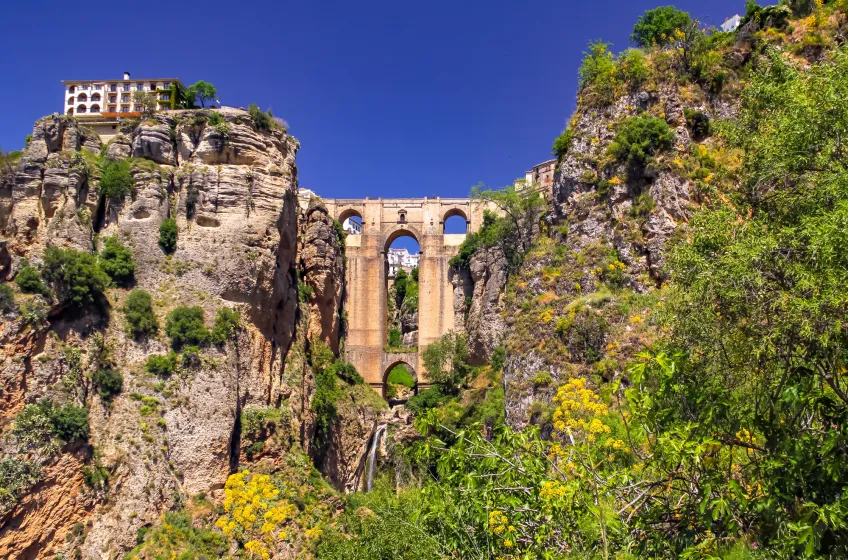
Ronda is dramatically positioned above the El Tajo gorge.
The Puente Nuevo spans the chasm and connects the newer town with the older historic district. Several viewpoints reveal the bridge, cliffs and surrounding mountains from different angles.
Ronda also contains a historic bullring, palaces, Arab baths and remnants of its defensive walls.
The town becomes busy with day visitors. Staying overnight allows you to enjoy the viewpoints and old streets in quieter conditions.
Tour the White Villages
Andalucía’s pueblos blancos are whitewashed towns and villages scattered across hills and mountain slopes.
Grazalema is surrounded by rugged limestone scenery, while Zahara de la Sierra overlooks a reservoir beneath a hilltop castle. Vejer de la Frontera has courtyards, arches and views towards the Atlantic.
Other rewarding villages include Setenil de las Bodegas, where houses are built beneath rock overhangs, and Arcos de la Frontera, which occupies a long ridge above the countryside.
A car provides the greatest flexibility, although parking is usually outside historic centres.
Explore Doñana National Park
Doñana protects wetlands, dunes, woodland and coastal habitats near the mouth of the Guadalquivir.
It is one of Europe’s most important areas for migratory birds. Flamingos, herons, raptors and many other species may be seen depending on season and water conditions.
Access to sensitive areas is controlled, and organised visits are often the best way to understand the park.
El Rocío, with its sandy streets and pilgrimage traditions, is a common gateway.
Visit the Sierra Nevada
The Sierra Nevada rises behind Granada and contains mainland Spain’s highest mountains.
Winter brings skiing and snow activities, while summer opens high-level walking routes. Lower villages and valleys provide gentler alternatives.
Conditions can change rapidly with altitude. Snow may remain on high routes well into the warmer months.
Proper mountain equipment is essential for serious walks, and route conditions should be checked locally.
Explore the Alpujarras
The Alpujarras occupy the southern slopes of the Sierra Nevada.
White villages, terraced farmland, ravines and traditional flat-roofed architecture define the landscape. Pampaneira, Bubión and Capileira are among the best-known settlements.
The area is ideal for walking, village stays and slower travel. Roads are winding, and distances take longer than expected.
Local food includes cured ham, mountain stews, almonds and honey.
Visit Almería
Almería is a less-visited city with a powerful fortress, dry landscapes and a working port.
The Alcazaba is one of the largest Islamic fortifications in Spain. Its walls, courtyards and viewpoints overlook the city and sea.
Almería also contains museums, historic shelters and a cathedral built with defensive features.
The city makes a useful base for the Cabo de Gata coast and the desert interior.
Explore Cabo de Gata-Níjar Natural Park
Cabo de Gata is a volcanic coastal landscape of cliffs, dry hills, salt flats and small beaches.
Villages such as San José, Las Negras and Agua Amarga provide bases for swimming, walking and boat trips. Playa de los Genoveses and Playa de Mónsul are among the best-known beaches.
Facilities are limited in more remote areas, and road access may be controlled during peak summer periods.
Bring water, sun protection and suitable footwear. Shade is scarce.
Discover the Tabernas Desert
The Tabernas Desert lies inland from Almería.
Its eroded hills, dry ravines and sparse vegetation have been used as locations for numerous Westerns and other films. Visitor attractions connected with cinema operate in the area.
Walking independently requires care because of heat, lack of shade and confusing terrain. Spring and autumn are far more comfortable than midsummer.
Visit Jaén
Jaén is surrounded by one of the world’s largest olive-growing landscapes.
The city’s Renaissance cathedral dominates the centre, while Santa Catalina Castle stands on a ridge with views across seemingly endless olive groves.
Jaén is less visited than Andalucía’s better-known cities and provides an excellent introduction to the region’s olive-oil culture.
Explore Úbeda and Baeza
Úbeda and Baeza are neighbouring Renaissance towns in Jaén province.
Úbeda is known for monumental squares, palaces and churches commissioned by wealthy families during the 16th century. Baeza has an old university, cathedral and harmonious stone architecture.
They can be visited together in one busy day, but an overnight stay allows a more relaxed exploration.
Both towns make good bases for olive-oil estates and the countryside of northern Andalucía.
Practical Advice for Visitors
Getting There
Andalucía has major airports at Málaga and Seville.
Málaga Airport serves the Costa del Sol, Granada province and much of eastern Andalucía. Seville Airport is convenient for the regional capital, Córdoba, Cádiz and western areas.
Smaller airports at Granada-Jaén, Jerez and Almería serve selected domestic and international routes.
High-speed trains connect Madrid with Córdoba, Seville, Málaga and Granada. Long-distance buses cover many towns not served directly by rail.
Getting Around
Rail travel is excellent between the principal cities, particularly Seville, Córdoba, Málaga and Granada.
Regional and long-distance buses are often the best option for Cádiz, Ronda, coastal resorts and smaller inland towns.
A car is extremely useful for white villages, Cabo de Gata, the Alpujarras, Doñana and rural Jaén. However, avoid driving into historic centres where streets are narrow and access may be restricted.
The region is larger than it first appears. Allow generous time between provinces.
Driving and Parking
Vehicles drive on the right.
Motorways are generally good, but mountain and village roads can be steep, winding and narrow. Rural fuel stations may be widely spaced.
Use designated public car parks outside the historic centres of Ronda, Granada, Córdoba and white villages.
Some cities operate traffic restrictions or controlled-access zones. Confirm parking arrangements with your accommodation before arrival.
Choosing Where to Stay
Seville is the strongest base for monumental architecture, nightlife and excursions to Córdoba or Cádiz.
Granada is best for the Alhambra, tapas and the Sierra Nevada.
Málaga suits visitors wanting museums, transport links and access to the Costa del Sol.
Cádiz offers a more atmospheric Atlantic stay, while Ronda works well for white villages and mountain scenery.
A longer trip is better divided between two or three bases rather than spent in one city.
Dining
Andalusian food varies considerably between coast, mountains and inland plains.
Gazpacho is a chilled tomato-based soup, while salmorejo, especially associated with Córdoba, is thicker and usually topped with egg and cured ham.
Fried fish is common in Málaga and Cádiz. Other regional dishes include grilled sardines, oxtail stew, aubergines with honey and slow-cooked pork cheeks.
Lunch often begins after 2pm, while dinner may not start until 9pm or later.
Tapas
Tapas culture differs across Andalucía.
In Granada, a small dish is often included with a drink, although the exact system varies by establishment. In Seville, Córdoba and Cádiz, tapas are generally ordered and paid for individually.
Portions may be listed as a tapa, half portion or full portion. Ordering several smaller dishes is the best way to try more local food.
Olive Oil
Andalucía is one of the world’s great olive-oil-producing regions.
Jaén province is especially important, with olive groves covering vast areas. Farm and mill visits explain harvesting, pressing and differences between varieties.
High-quality extra virgin olive oil should have a fresh aroma and may taste grassy, fruity, bitter or peppery.
Small tins travel more safely than glass bottles.
Sherry
Sherry is produced within a designated area centred on Jerez de la Frontera, Sanlúcar de Barrameda and El Puerto de Santa María.
Styles range from very dry fino and manzanilla to nutty amontillado, fuller oloroso and intensely sweet Pedro Ximénez.
Bodega tours usually require advance booking. Tastings can be stronger than expected, so use public transport, taxis or an organised excursion.
Cured Ham
The mountain areas of Huelva and Granada produce highly regarded cured ham.
Jabugo is especially associated with Iberian ham produced from pigs raised in dehesa landscapes. The highest grades are expensive and should carry clear labelling.
Trevelez in the Alpujarras is known for cured ham produced in a cool mountain environment.
Shopping
Typical regional purchases include olive oil, ceramics, leather goods, wine, cured ham, fans and food products.
Seville and Granada have the widest choice of craft and specialist shops. Jerez is best for sherry, while Jaén is ideal for olive oil.
Úbeda, Córdoba and several smaller towns are known for ceramics and leatherwork.
Most ordinary shops close on Sundays, apart from selected tourist areas.
Language
Spanish is spoken throughout Andalucía.
Regional accents can be fast and unfamiliar to learners, with some consonants softened or dropped in everyday speech. Visitors should not worry about missing words initially.
English is widely used in major resorts and tourist attractions but less consistently in rural areas.
When to Visit
March to May is one of the best periods for city sightseeing, spring festivals and green countryside.
October and November are also excellent, with milder temperatures and fewer crowds.
July and August can be extremely hot in Seville, Córdoba, Jaén and Granada. Coastal areas are cooler but busy and humid.
Winter is ideal for cultural city breaks and quieter travel. The Sierra Nevada may offer skiing, while lower coastal areas remain comparatively mild.
Local Events
Semana Santa is celebrated throughout Andalucía with processions, music and religious sculpture. Seville, Málaga, Granada and Córdoba hold particularly elaborate events.
Seville’s April Fair brings traditional dress, horses, dancing and temporary fairgrounds.
The Córdoba Patio Festival fills courtyards with flowers during spring.
Cádiz Carnival is known for costumes, satire and musical groups, while Jerez hosts flamenco and equestrian events.
Granada, Málaga and other cities run major music, film and cultural festivals.
Dates vary annually, and accommodation becomes expensive during the largest celebrations.
Safety and Summer Heat
Andalucía is generally straightforward for visitors, but extreme heat requires planning.
In summer, begin sightseeing early, rest indoors during the hottest afternoon period and carry water. Historic stone streets and exposed archaeological sites can become intensely hot.
Pickpocketing is possible in crowded centres, public transport and major attractions. Keep valuables secure and avoid leaving phones or wallets on outdoor café tables.
At beaches, follow swimming flags and remain cautious around strong Atlantic waves.
Exploring Beyond Andalucía
Extremadura lies to the north-west and offers Mérida, Cáceres, Trujillo and excellent birdwatching.
Castile-La Mancha lies north of Jaén and includes Toledo, windmill landscapes and historic hill towns.
Murcia lies east of Almería and provides additional Mediterranean scenery and historic cities.
Portugal’s Algarve and Alentejo are natural extensions from western Andalucía.
Gibraltar can be visited from the Cádiz or Málaga coasts, while ferries from southern ports connect Andalucía with North Africa.
Shortlist
- Your Shortlist is empty