
Discover San Sebastián | A Visitor's Introduction to San Sebastián
Recommended places to stay, places to visit and things to do in and near San Sebastián
San Sebastián, officially Donostia-San Sebastián, is an elegant coastal city in Spain’s Basque Country, set around the sweeping curve of La Concha Bay close to the French border. Known for its exceptional pintxos, urban beaches, Belle Époque architecture and internationally respected restaurants, this compact city is a perfect destination for food lovers, beachgoers and travellers who enjoy culture alongside the sea. With wooded hills, waterfront promenades and a lively old quarter, San Sebastián offers one of the most distinctive city breaks in northern Spain.
Browse San Sebastián Hotels and Other Accommodation
Pre-book San Sebastián Activities, Tours and Experiences
Why is San Sebastián Worth a Visit?
San Sebastián is worth visiting because few European cities combine high-quality urban life, beautiful beaches and serious food culture so successfully. La Concha provides a sheltered sweep of sand directly beside the centre, while Zurriola attracts surfers and Ondarreta offers a quieter atmosphere near the western end of the bay.
Food is central to the city’s identity. Pintxos bars range from traditional taverns serving simple seafood and croquettes to creative establishments producing elaborate small dishes. San Sebastián also has an unusually high concentration of acclaimed restaurants, although excellent eating does not have to be expensive.
The city is compact and highly walkable. Visitors can move easily between the Parte Vieja, La Concha, the shopping streets of the Centro district and the riverside neighbourhood of Gros. Funiculars and hill paths add panoramic viewpoints without requiring a car.
San Sebastián also has a strong Basque character. The Basque language is visible throughout the city, local sporting traditions remain important and the surrounding landscape of fishing towns, green hills and Atlantic cliffs feels distinct from Mediterranean Spain.
Two full days are enough for the main beaches, old town and viewpoints. Three or four nights allow a slower food-focused visit and an excursion to Hondarribia, Getaria or the nearby French Basque coast.
San Sebastián Highlights: Things to See and Do in San Sebastián
Walk Along La Concha Bay
La Concha Bay is San Sebastián’s defining natural feature.
Its elegant promenade curves around a sheltered bay framed by Monte Urgull, Monte Igueldo and Santa Clara Island. Ornate white railings, lamps and Belle Époque buildings add to its classic resort character.
The full waterfront walk from the city centre to Ondarreta is easy and mostly flat. Early morning is best for quieter views, while sunset creates softer light across the bay.
The appearance of the beach changes greatly with the tide, so the width of the sand varies throughout the day.
Relax on La Concha Beach
La Concha is one of Europe’s most attractive urban beaches.
Its sheltered position usually produces calmer conditions than the open coast, making it popular for swimming, paddleboarding and relaxed sunbathing. Facilities are generally good during the main season.
The beach becomes busy in July and August, particularly near central access points. Walk farther west for more space.
Always follow local flags and lifeguard advice, as sea conditions can still change.
Explore the Parte Vieja
The Parte Vieja is San Sebastián’s historic and culinary centre.
Narrow streets are packed with pintxos bars, traditional shops and restaurants. The area lies between the harbour, Monte Urgull and the River Urumea.
It is lively from lunchtime until late at night. Morning offers a quieter chance to see the streets and churches, while evening is best for the full pintxos atmosphere.
The district can become extremely crowded at weekends and during festivals.
Eat Pintxos
Pintxos are the essential San Sebastián food experience.
Traditional versions may include anchovies, tortilla, peppers, croquettes or seafood arranged on bread. More modern bars serve hot dishes prepared to order.
The usual approach is to visit several bars and order one or two items with a drink in each. Do not feel obliged to stay in one place for an entire meal.
Some bars display cold pintxos on the counter, while hot specialities are listed on boards or menus. Ask staff what the house is best known for.
Visit Plaza de la Constitución
Plaza de la Constitución is the main historic square in the Parte Vieja.
Its colourful façades have numbered balconies, a reminder of the period when the square was used for bullfighting and spectators rented viewing spaces.
Today the arcades contain bars and cafés. The square is especially lively during festivals and public celebrations.
See the Basilica of Santa María del Coro
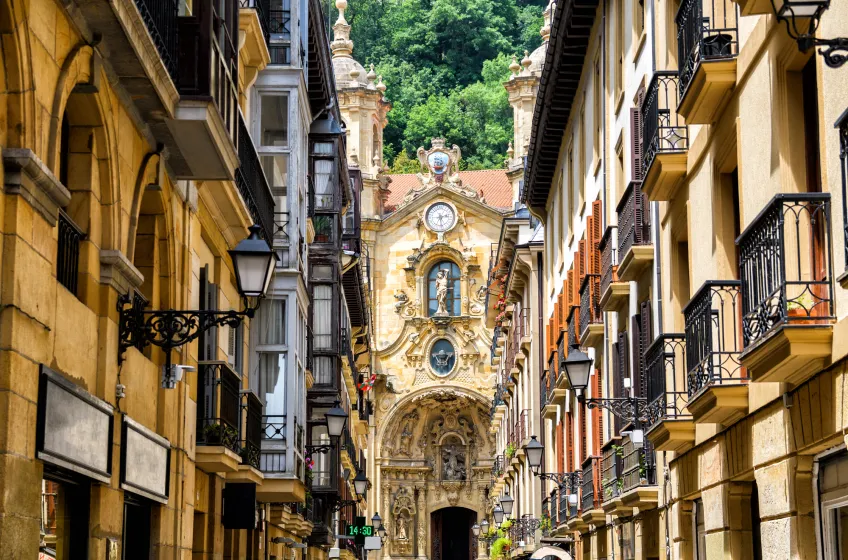
The Basilica of Santa María del Coro stands at one end of the Parte Vieja.
Its ornate Baroque façade faces along Calle Mayor towards the Church of San Vicente, creating one of the old town’s most striking urban views. The interior contains richly decorated religious art and an image of the city’s patroness.
Access may be affected by services, so visit quietly and respectfully.
Visit the Church of San Vicente
San Vicente is one of San Sebastián’s oldest surviving churches.
Its Gothic interior feels more restrained than the Basilica of Santa María. Stone vaulting, religious sculpture and a quieter atmosphere make it a worthwhile stop.
The church stands close to several of the old town’s busiest pintxos streets.
Climb Monte Urgull
Monte Urgull rises immediately behind the Parte Vieja.
Walking paths wind through woodland, former defensive structures and viewpoints before reaching the summit monument. The hill provides excellent views over La Concha, the harbour, Zurriola and the city centre.
The climb is moderate rather than technically difficult, but some paths are steep. Wear shoes with good grip, particularly after rain.
Allow at least 90 minutes for a relaxed circuit.
Visit Castillo de la Mota
The remains of Castillo de la Mota occupy the summit area of Monte Urgull.
Fortifications reflect San Sebastián’s former military importance and strategic position on the coast. Small exhibitions may explain the city’s history, depending on current access.
The main attraction is the panoramic setting rather than the surviving architecture alone.
Explore the Harbour
San Sebastián’s small harbour lies between the Parte Vieja and Monte Urgull.
Fishing boats, excursion vessels and seafood restaurants line the waterfront. The harbour provides a calmer, more intimate contrast with La Concha’s grand promenade.
It is a pleasant place for a short walk before climbing Monte Urgull or visiting the aquarium.
Visit the Aquarium
San Sebastián Aquarium stands at the outer edge of the harbour.
Exhibitions cover Basque maritime history, fishing and marine life, while aquarium displays present species from local waters and beyond. The underwater viewing tunnel is one of the principal attractions.
It is a useful option for families or during wet weather.
Walk to the Peine del Viento
The Peine del Viento, or Comb of the Wind, is a group of steel sculptures by Eduardo Chillida at the western end of Ondarreta Bay.
The works are fixed directly into dark coastal rocks, where waves, wind and sea spray become part of the experience. Openings in the promenade may release air and water during rough conditions.
The setting is most dramatic when the sea is active, but stay behind barriers and avoid exposed areas during severe weather.
Relax on Ondarreta Beach
Ondarreta lies west of La Concha beneath Monte Igueldo.
It is usually quieter than La Concha and popular with families. The beach provides easy access to the Peine del Viento and the western waterfront.
Swimming conditions depend on tide and weather, so observe local guidance.
Ride the Monte Igueldo Funicular
The historic funicular climbs from near Ondarreta to the top of Monte Igueldo.
At the summit, visitors find one of the classic panoramic views over La Concha Bay, Santa Clara Island and the city. A traditional amusement area adds a nostalgic atmosphere.
Operating hours may vary with season and weather. Clear conditions provide the best views, so avoid committing to the trip when low cloud covers the hill.
Visit Santa Clara Island
Santa Clara Island sits in the centre of La Concha Bay.
Seasonal boats may connect the harbour with the island during warmer months. A small beach, walking paths and viewpoints provide a different perspective on the city.
Facilities are limited, so take water and check the final return service carefully.
Strong tides affect the island beach and landing conditions.
Explore Gros
Gros lies east of the River Urumea and has a more contemporary, residential atmosphere than the old town.
The neighbourhood is known for Zurriola Beach, independent shops, cafés and a strong selection of pintxos bars. It attracts surfers, younger residents and visitors seeking a less crowded evening scene.
Plaza de Cataluña and surrounding streets are good places to start exploring.
Watch Surfers at Zurriola Beach
Zurriola is San Sebastián’s main surfing beach.
Its exposure to the open sea produces larger waves than La Concha. Surf schools and board-rental businesses operate nearby, though conditions are not suitable for beginners every day.
Even without surfing, the beach is an enjoyable place to watch the waves and walk along the promenade.
Swimmers should be particularly careful and follow lifeguard instructions.
Visit the Kursaal
The Kursaal is a modern conference and cultural centre beside Zurriola Beach.
Designed as two illuminated glass cubes, it has become one of the city’s main contemporary landmarks. The building hosts concerts, conferences and major cultural events.
Its riverside setting is particularly attractive after dark when the façades are illuminated.
Walk Along the River Urumea
The River Urumea divides the Centro and Gros districts.
Several ornate bridges cross the river, while paths provide a pleasant route between the coast, theatre district and residential neighbourhoods.
The María Cristina Bridge is especially decorative, with sculpted features and grand lamps.
Explore the Centro District
The Centro district contains elegant streets, shops, cafés and Belle Époque architecture.
Plaza Gipuzkoa, Avenida de la Libertad and the area around the cathedral are among its main focal points. The atmosphere is more spacious and formal than in the Parte Vieja.
It is the best district for general shopping and a useful link between La Concha and the River Urumea.
Visit the Buen Pastor Cathedral
The Cathedral of the Good Shepherd is a neo-Gothic church in the city centre.
Its tall spire is one of San Sebastián’s most recognisable landmarks. The interior is relatively restrained, with high arches and stained glass.
The cathedral sits in an open pedestrian area surrounded by cafés and shops.
See San Telmo Museum
San Telmo Museum occupies a former Dominican convent beside Monte Urgull.
Its exhibitions explore Basque history, society, art and identity. The combination of historic architecture and modern extension is part of the attraction.
The museum provides the best introduction to Basque culture for visitors who want more context beyond food and beaches.
Walk Through Cristina Enea Park
Cristina Enea is one of San Sebastián’s largest central green spaces.
Wooded paths, lawns and ornamental features create a peaceful retreat above the River Urumea. Peacocks are often associated with the park, though wildlife should not be approached or fed.
It is quieter than the waterfront and useful for a slower afternoon walk.
Practical Advice for Visitors
Getting There
San Sebastián has a small airport near Hondarribia, although its route network is limited.
Bilbao Airport is the most practical major international gateway for many visitors. Regular coaches connect Bilbao Airport with San Sebastián.
Biarritz Airport in France may also be convenient, depending on seasonal routes and border transport.
Trains and long-distance coaches connect San Sebastián with Bilbao, Madrid, Barcelona, Pamplona and French destinations. The main stations are within walking distance of the centre.
Getting Around
Central San Sebastián is best explored on foot.
The Parte Vieja, La Concha, Centro and Gros are all close together. Public buses are useful for outer neighbourhoods, Monte Igueldo and accommodation farther from the waterfront.
Cycling is popular, and dedicated lanes cover many central routes. Remain alert when crossing cycle paths.
A car is unnecessary within the city.
Parking
Parking in central San Sebastián is expensive and limited.
Street spaces are tightly controlled, while underground garages offer the most practical option. Traffic restrictions and one-way systems make driving in the centre inconvenient.
Accommodation with parking is valuable for visitors travelling by car. Another option is to park outside the centre and use public transport.
Choosing Where to Stay
The Parte Vieja is best for nightlife and pintxos but can be noisy late into the night.
Centro offers the most convenient all-round location for La Concha, shopping and transport. Gros is ideal for surfing, independent cafés and a more local evening atmosphere.
Antiguo, near Ondarreta and Monte Igueldo, is quieter and suits families or visitors prioritising the beach.
Sea-view rooms command high prices, particularly in summer and during festivals.
Dining
San Sebastián is one of Europe’s leading food destinations.
The city offers traditional pintxos bars, seafood restaurants, cider houses and highly regarded tasting-menu establishments. Reservations are essential for the most sought-after restaurants.
Excellent food is also available at modest prices, particularly when eating pintxos or choosing lunch menus.
Lunch commonly begins after 1.30pm, while dinner usually starts after 8.30pm.
Pintxos Etiquette
Busy pintxos bars can feel confusing at first.
Stand at the counter, look for chalkboards listing hot dishes and order directly from staff. In some bars, cold items are taken from the counter; in others, everything should be requested.
Paying systems vary. Some bars settle each order immediately, while others keep a running total.
Avoid ordering large quantities in the first place. Moving between bars is part of the experience.
Try Gilda
The Gilda is one of San Sebastián’s classic pintxos.
It usually combines an anchovy, pickled green chilli and olive on a skewer. The result is salty, sharp and slightly spicy.
Its simplicity makes ingredient quality especially important.
Eat Grilled Fish
The Basque coast is known for excellent grilled fish.
Turbot, hake, sea bream and seasonal catches may be cooked whole over charcoal. These dishes are often priced by weight and intended for sharing.
Ask about the total cost before ordering, particularly in specialist seafood restaurants.
Try Txuleta
Txuleta is a thick, bone-in beef steak usually grilled over high heat and served rare.
It is often ordered by weight and shared between several diners. Traditional restaurants may serve it with little more than salt, peppers or a simple salad.
Confirm the weight and price before ordering.
Taste Basque Cheesecake
Burnt Basque cheesecake has become internationally famous.
The San Sebastián version is typically crustless, deeply browned on top and soft in the centre. It is rich, so one portion is often enough to share.
Several bars and bakeries serve their own versions.
Drink Txakoli
Txakoli is a crisp Basque white wine with high acidity and a light, refreshing character.
It pairs particularly well with seafood, anchovies and fried dishes. Some bars pour it from a height, though this should not be confused with Asturian cider tradition.
Local wineries can be visited around Getaria and other coastal areas.
Visit a Cider House
Traditional Basque cider houses are found mainly outside the city, especially around Astigarraga and Hernani.
Meals usually feature cod omelette, cod dishes, grilled steak, cheese and walnuts, accompanied by cider drawn directly from large barrels.
The main cider-house season traditionally falls during the cooler months, though some establishments operate for longer periods.
Advance booking and arranged transport are advisable.
Shopping
Typical purchases include anchovies, tinned seafood, cheese, chocolate, wine and Basque culinary products.
Independent food shops are concentrated in the old town and centre. The Bretxa market area remains associated with food, although its layout and functions may change over time.
Boutiques and larger shops line central streets around Avenida de la Libertad.
Most ordinary shops close on Sundays.
Weather
San Sebastián has a mild, wet Atlantic climate.
Rain is possible throughout the year, including summer. Bring a waterproof jacket and shoes with good grip.
Summer temperatures are generally comfortable, though humid or hot periods can occur. Sea breezes may make evenings cooler than expected.
Flexible plans are useful because beach and viewpoint conditions can change quickly.
When to Visit
May to June is excellent for mild weather, green scenery and lower accommodation prices than peak summer.
July and August offer the best chance of beach weather but bring the largest crowds and highest prices.
September is particularly appealing, combining cultural activity with generally comfortable temperatures.
October can still be pleasant but is more unsettled. Winter is quiet, wet and ideal for food-focused visits, though some seasonal attractions operate reduced hours.
Local Events
San Sebastián hosts major film, music, cultural and culinary events throughout the year.
The international film festival brings actors, journalists and large crowds to the city. Accommodation becomes expensive and should be booked well in advance.
The city’s main summer celebrations include fireworks, concerts and street events.
Tamborrada is one of the most distinctive local festivals, filling the city with drumming and organised groups.
Exact dates and programmes vary, so check current arrangements before planning around a particular event.
Safety and Common Visitor Problems
San Sebastián is generally safe.
Pickpocketing can occur in crowded old-town streets, beaches and transport areas. Keep belongings secure and do not leave valuables unattended on the sand.
Wet paving can be slippery, particularly around the harbour and older streets.
Sea conditions can become dangerous quickly at Zurriola and exposed coastal points. Always follow local warnings.
Exploring Beyond San Sebastián
Hondarribia is a beautiful fortified town with colourful fishermen’s houses and excellent restaurants near the French border.
Getaria is known for grilled fish, Txakoli wine and its attractive harbour setting.
Zarautz has a long surfing beach and a lively summer atmosphere.
Pasaia offers a dramatic natural harbour and strong maritime character.
Astigarraga is the main destination for traditional cider-house meals.
Biarritz combines beaches, elegant architecture and French Basque culture.
Saint-Jean-de-Luz has a sheltered harbour, historic centre and appealing waterfront.
Bilbao is an easy onward destination for the Guggenheim Museum, riverside architecture and another excellent Basque food scene.
Shortlist
- Your Shortlist is empty