
Discover Cantabria | A Visitor's Introduction to Cantabria
Recommended places to stay, places to visit and things to do throughout Cantabria
Cantabria is a compact region on Spain’s northern coast, set between the Bay of Biscay and the Cantabrian Mountains. Known for Santander, prehistoric cave art, green valleys, rugged beaches and access to the Picos de Europa, this region is a perfect destination for walkers, history enthusiasts, food lovers and travellers seeking a cooler, quieter alternative to Mediterranean Spain. With elegant seaside towns, medieval villages, dramatic cliffs and mountain scenery, Cantabria offers an unusually rich variety of experiences within a relatively small area.
Browse Cantabria Hotels and Other Accommodation
Pre-book Cantabria Activities, Tours and Experiences
Why is Cantabria Worth a Visit?
Cantabria is worth visiting because it combines coast, countryside and cultural heritage without requiring long journeys between them. Santander offers urban beaches and museums, while Santillana del Mar, Comillas and Castro Urdiales provide attractive historic centres. Inland, caves, forests and mountain valleys create a very different atmosphere.
The region is especially important for prehistoric art. Altamira is one of the world’s best-known decorated caves, while several less famous sites also preserve paintings created by early humans thousands of years ago.
Cantabria’s coastline is another major attraction. Long sandy beaches alternate with rocky coves, estuaries and high cliffs. Some places feel lively and developed, while others remain wild and exposed to the Atlantic.
The southern and western parts of the region rise towards the Picos de Europa and the Cantabrian Mountains. Here, stone villages, cable cars and walking routes provide access to some of northern Spain’s finest landscapes.
Food adds further character. Seafood, anchovies, mountain stews, local cheeses and rich pastries feature prominently. Five to seven days allow time for Santander, the central coast and one mountain excursion, while ten days provide a better introduction to eastern and western Cantabria.
Cantabria Highlights: Things to See and Do in Cantabria
Explore Santander
Santander is Cantabria’s capital and principal transport hub.
The city curves around a broad bay, with beaches, gardens, shopping streets and cultural attractions spread along the waterfront. Much of the historic centre was rebuilt following a major fire, so Santander feels more open and modern than many northern Spanish cities.
The Centro Botín is the main contemporary landmark, standing on the harbour beside landscaped gardens. Nearby streets contain restaurants, shops and bars, while the Magdalena Peninsula and Sardinero beaches lie farther east.
Santander works well as a two- or three-night base, particularly for visitors travelling without a car.
Visit the Magdalena Peninsula
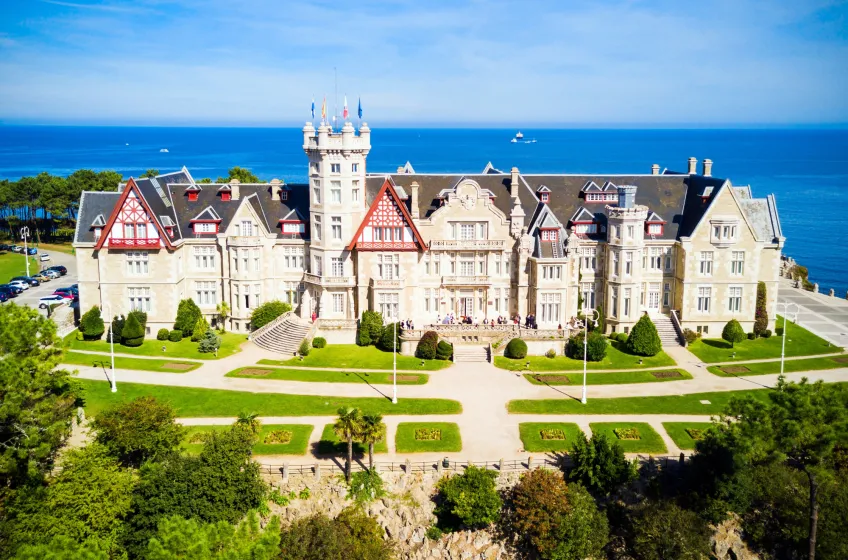
The Magdalena Peninsula projects into Santander Bay and is one of the city’s most attractive areas.
Wooded paths, coastal viewpoints and beaches surround the former royal palace at its highest point. The palace was built as a summer residence for the Spanish royal family and is now used for cultural and educational purposes.
The peninsula is easy to explore on foot, although the route includes slopes. Views extend across the bay towards the mountains on clear days.
Relax at El Sardinero
El Sardinero is Santander’s best-known beach district.
Two broad sandy beaches are backed by promenades, gardens, hotels and restaurants. The area became fashionable as a seaside resort during the late 19th and early 20th centuries.
Tides affect the width of the beach, and Atlantic waves can be powerful. Observe swimming flags and local warnings.
The promenade is attractive throughout the year, even when conditions are unsuitable for swimming.
Visit the Centro Botín
The Centro Botín is a modern arts centre on Santander’s waterfront.
Its raised, reflective buildings were designed to preserve views and public movement beneath them. Temporary exhibitions focus on contemporary art, while terraces provide excellent harbour views.
The surrounding Pereda Gardens make the centre a pleasant stop even for visitors who do not enter the galleries.
Explore Santillana del Mar
Santillana del Mar is one of Cantabria’s best-preserved historic towns.
Its cobbled streets are lined with stone houses, wooden balconies, small palaces and traditional inns. The Collegiate Church of Santa Juliana forms the architectural centre, with a Romanesque church and cloister.
Despite its name, the town is neither coastal nor especially flat. Comfortable shoes are useful on the uneven streets.
Santillana becomes busy with day visitors, so staying overnight or arriving early provides a calmer experience.
Discover Altamira
Altamira is one of the world’s most important prehistoric art sites.
The original cave contains extraordinary paintings of bison and other animals, but access is severely restricted to protect the fragile environment. Most visitors experience the site through the museum and carefully reconstructed cave.
The reconstruction explains the original setting, painting techniques and daily life of prehistoric communities. It remains highly worthwhile even without access to the authentic chamber.
Altamira is close to Santillana del Mar and the two are easy to combine.
Explore More Prehistoric Caves
Cantabria has several decorated caves beyond Altamira.
El Castillo, Las Monedas, Covalanas and other sites preserve paintings, engravings and archaeological evidence from different prehistoric periods. Some allow small guided groups into the original caves.
Conditions may involve low light, damp floors, stairs and enclosed passages. Advance booking is often essential, and photography is usually restricted or prohibited.
These smaller caves can provide a more intimate experience than Altamira’s museum complex.
Visit Comillas
Comillas is an elegant coastal town known for modernist architecture.
Its most famous building is El Capricho, designed by Antoni Gaudí. The colourful exterior combines ceramic decoration, unusual towers and natural motifs.
The Sobrellano Palace, university buildings and historic centre reflect the town’s development as a fashionable summer destination. A beach lies below the centre.
Comillas combines architecture, history and seaside atmosphere particularly well.
See El Capricho de Gaudí
El Capricho is one of the few Gaudí buildings outside Catalonia.
Designed as a private summer residence, it incorporates sunflower tiles, curved spaces and music-inspired details. The interiors help explain how Gaudí adapted decoration to the owner’s interests.
Timed entry may apply during busy periods. Allow enough time to walk around the exterior as well as through the rooms.
Explore San Vicente de la Barquera
San Vicente de la Barquera is a historic fishing town near Cantabria’s western edge.
Its old quarter rises above estuaries and beaches, with a castle, church and medieval bridge contributing to the skyline. On clear days, the Picos de Europa form a dramatic backdrop.
The lower town contains seafood restaurants and harbour activity. Nearby beaches are popular with surfers and walkers.
Parking becomes difficult during summer, so early arrival is advisable.
Visit the Picos de Europa
The Picos de Europa extend across Cantabria, Asturias and Castilla y León.
Cantabria’s principal gateway is the Liébana Valley, reached through the dramatic Hermida Gorge. The village of Potes makes an excellent base for mountain excursions.
From Fuente Dé, a cable car climbs rapidly to high limestone terrain. Walking routes range from short viewpoints to serious mountain hikes.
Weather can change very quickly. Carry warm layers, waterproof clothing and suitable footwear even during summer.
Ride the Fuente Dé Cable Car
The Fuente Dé cable car rises from a natural amphitheatre in the Picos de Europa.
The upper station provides immediate access to high mountain scenery and broad views across the surrounding peaks. In clear conditions, the journey is one of Cantabria’s most memorable experiences.
Queues can be long during summer and public holidays. Advance booking may be available or required, depending on current arrangements.
Cloud, wind and maintenance can affect operation, so check conditions before travelling.
Explore Potes
Potes is the main town of the Liébana Valley.
Stone bridges, narrow lanes and traditional houses line the rivers that meet in the centre. The Torre del Infantado is the principal historic landmark.
Potes has accommodation, restaurants and shops serving the surrounding mountain area. It becomes busy during summer and festival periods but remains an excellent base for Fuente Dé, monasteries and walking routes.
Visit Santo Toribio de Liébana
The Monastery of Santo Toribio de Liébana stands near Potes.
It is an important Christian pilgrimage destination and is traditionally associated with a large relic of the True Cross. The surrounding setting beneath the Picos adds greatly to its atmosphere.
Walking routes connect the monastery with nearby viewpoints and villages. Visitors should dress respectfully and avoid disrupting services.
Drive Through the Hermida Gorge
The Hermida Gorge forms the dramatic eastern approach to the Liébana Valley.
The road follows the River Deva between steep limestone walls, with tunnels, bridges and occasional stopping points. The scenery is impressive, but the road can be narrow and busy.
Drivers should remain focused and avoid stopping outside designated areas. Rockfall, roadworks and weather may occasionally affect the route.
Explore the Cabárceno Nature Park
Cabárceno is a large wildlife park developed within a former mining landscape.
Animals live in broad enclosures separated by dramatic red rock formations, rather than in a conventional compact zoo layout. The park is extensive and normally explored by car, bus or cable car.
It is particularly popular with families. Allow most of a day, as distances between sections are substantial.
Visit Liérganes
Liérganes is an attractive village south-east of Santander.
Stone houses, traditional balconies and a graceful bridge stand beside the River Miera. The town is associated with the legend of the Fish-Man of Liérganes, commemorated through local displays and sculpture.
The surrounding hills and railway connection from Santander make it suitable for a relaxed half-day excursion.
Discover Castro Urdiales
Castro Urdiales is a lively harbour town near the Basque border.
Its medieval church, castle-lighthouse and stone bridge form an impressive group above the sea. The old fishing quarter contains narrow streets, bars and restaurants.
Beaches and promenades make Castro Urdiales popular in summer, particularly with visitors from nearby Bilbao.
Explore Laredo
Laredo is known for La Salve, a long sandy beach curving around a sheltered bay.
The old quarter contains steep lanes, churches and historic houses, while the modern resort stretches along the waterfront.
Laredo is busiest in summer, but the extensive beach remains attractive for walking outside the main season.
Visit Santoña
Santoña is a fishing port famous for anchovies.
The town lies beside an estuary and is surrounded by marshes, beaches and wooded hills. Fortifications and coastal paths reflect its strategic maritime position.
The wetlands around Santoña are important for birdlife. Boat trips and walking routes provide access to the wider estuary landscape.
Taste Santoña Anchovies
Santoña is one of Spain’s leading centres for preserved anchovies.
The fish are cleaned, salted and matured before being packed in oil. High-quality versions have a delicate texture and balanced salty flavour.
Specialist shops and small producers offer tastings and factory-related visits. Properly packed tins or jars make an easy regional purchase.
Walk the Costa Quebrada
Costa Quebrada is a rugged stretch of shoreline west of Santander.
Rock arches, small coves, cliffs and tilted geological layers create some of Cantabria’s most dramatic coastal scenery. Beaches such as Arnía are especially photogenic.
Tide times matter, and cliff edges can be unstable. Remain on recognised paths and avoid exposed areas during storms or large waves.
Explore the Saja-Besaya Natural Park
Saja-Besaya protects extensive forest and mountain landscapes in central Cantabria.
Beech and oak woods, river valleys and rural settlements provide opportunities for walking, wildlife observation and scenic drives. Autumn is particularly attractive.
The park is quieter than the Picos de Europa, but services are limited. A car is usually essential.
Visit Bárcena Mayor
Bárcena Mayor is a traditional stone village within the Saja area.
Rows of historic houses, wooden galleries and cobbled lanes create a strong sense of rural Cantabria. Vehicle access is restricted, helping preserve the atmosphere.
The village is known for hearty regional meals, particularly mountain stew. It can become crowded at lunchtime on weekends.
Practical Advice for Visitors
Getting There
Santander Airport is the main air gateway to Cantabria.
It has domestic and selected international connections, including seasonal and low-cost routes. Buses link the airport with central Santander.
Bilbao Airport is also practical, particularly for eastern Cantabria and travellers needing a wider choice of flights.
Long-distance trains and coaches connect Santander with Madrid, Bilbao, Oviedo and other northern cities. Rail journeys may be slower than the distance suggests.
Getting Around
A car is the most useful option for caves, beaches, mountain valleys and rural villages.
Local trains and buses connect Santander with several coastal and inland towns, but services can be infrequent outside the main urban corridors.
Journey times increase on mountain and coastal roads. Avoid trying to cover both the eastern and western ends of Cantabria in a single day.
Driving and Parking
Vehicles drive on the right.
Main roads are generally good, while mountain and village routes can be narrow, steep and winding. Fog and heavy rain may reduce visibility.
Parking in Santander is controlled and often difficult near beaches during summer. Historic towns such as Santillana del Mar and Comillas have designated car parks outside their centres.
Never park on cliff verges or block access on narrow rural roads.
Weather
Cantabria has a mild Atlantic climate with frequent changes.
Rain is possible at any time of year, and cloud can gather quickly around the mountains. Bring a waterproof jacket even during summer.
The coast is generally mild, while the Liébana Valley and high mountain areas experience greater temperature variation. Snow can affect higher roads in winter.
Dining
Cantabrian cooking combines seafood, mountain produce and substantial stews.
Cocido montañés is a rich dish made with beans, cabbage and pork products. Cocido lebaniego, associated with Liébana, uses chickpeas, potatoes, meat and a bread-based filling.
Seafood, grilled fish, squid and shellfish feature strongly along the coast. Portions can be generous, so ask before ordering several courses.
Lunch commonly begins after 1.30pm, and dinner usually starts after 8.30pm.
Cheese
Cantabria produces several distinctive cheeses.
Quesucos de Liébana are small cheeses made in the mountain valleys, while Picón Bejes-Tresviso is a powerful blue cheese matured in the Picos area.
Nata de Cantabria is generally milder and creamier.
Specialist food shops and local markets provide the best opportunities to compare varieties.
Desserts
The region is known for rich dairy-based sweets and pastries.
Sobao pasiego is a buttery sponge-like cake associated with the Pas valleys. Quesada pasiega is a dense baked dessert made with milk or curd, sugar and flavourings.
Both are widely sold in bakeries and food shops and travel reasonably well when properly packaged.
Shopping
Typical regional purchases include anchovies, cheese, sobaos, quesada, honey and preserved seafood.
Santander has the widest shopping choice, while Santoña, Potes and village shops are better for specialist local products.
Most ordinary shops close on Sundays, apart from selected tourist and transport locations.
When to Visit
May to June is excellent for green landscapes, coastal walking and quieter historic towns.
July and August offer the warmest beach weather but bring larger crowds, higher prices and difficult parking.
September is one of the best months, with pleasant temperatures and fewer visitors.
October is attractive for woodland colour, although rain becomes more frequent.
Winter suits city breaks, food tourism and a quieter coast, but mountain access can be limited by snow or poor weather.
Local Events
Santander hosts cultural festivals, concerts and summer events throughout the warmer months.
The Battle of Flowers in Laredo is known for large decorated floats and public celebrations.
Santoña’s Carnival has a strong maritime identity and is one of the region’s best-known winter events.
Regional food fairs celebrate anchovies, cheese, stews and local produce.
Dates vary annually, so check current programmes before arranging a trip around a particular festival.
Exploring Beyond Cantabria
Asturias lies to the west and offers further Picos de Europa scenery, cider culture and fishing villages.
The Basque Country begins to the east, with Bilbao, San Sebastián and excellent food destinations within easy reach.
Castile and León lies south across the mountains, offering Burgos, León and historic Camino de Santiago towns.
La Rioja is a natural extension for wine travellers.
The Cantabrian coast also forms part of the Camino del Norte, making Cantabria easy to combine with a longer walking or cultural journey across northern Spain.
Shortlist
- Your Shortlist is empty