
Discover Solothurn Canton | A Visitor's Introduction to Solothurn Canton
Recommended places to visit, places to stay and things to do in and around Solothurn Canton
Solothurn Canton is a varied region in north-western Switzerland, extending from the River Aare and the historic city of Solothurn into the wooded Jura mountains. Known for its elegant Baroque capital, attractive river landscapes, castles, monasteries and excellent walking country, this canton is a perfect destination for history enthusiasts, cyclists and travellers looking for a quieter Swiss break. With its mixture of old towns, rural valleys and accessible mountain viewpoints, Solothurn offers an appealing alternative to better-known regions nearby.
Recommended Solothurn Canton hotels and other accommodation
Pre-book Solothurn Canton Attractions, Tours & Experiences
Why is Solothurn Canton Worth a Visit?
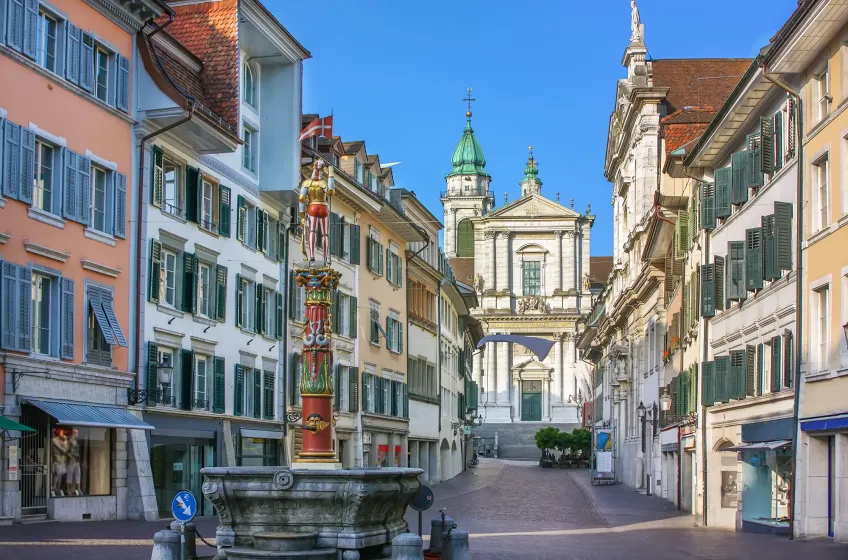
Solothurn Canton is worth visiting because it combines one of Switzerland’s most attractive small cities with extensive countryside and surprisingly rugged Jura scenery. Solothurn city is often described as Switzerland’s finest Baroque town, with grand churches, fountains and pale stone façades lining a compact old centre beside the River Aare.
Beyond the capital, the canton becomes much more rural. Forested ridges, limestone cliffs, farming villages and quiet valleys provide excellent opportunities for walking and cycling. The Weissenstein mountain above Solothurn offers broad views over the Swiss Plateau and, in clear conditions, towards the Alps.
The canton also has an interesting religious and political history. Monasteries, pilgrimage churches, castles and defensive sites appear throughout the region, while industrial towns such as Olten reflect its important position on Switzerland’s transport network.
Solothurn Canton works well for a long weekend, although a longer stay allows time for the capital, the Jura, the Aare Valley and neighbouring destinations such as Bern, Basel and the Three Lakes region.
Solothurnin Highlights: Things to See and Do in Solothurn Canton
Explore Solothurn Old Town
Solothurn’s old town is the cultural and architectural highlight of the canton.
The centre is compact, largely pedestrianised and filled with Baroque buildings, fountains, arcaded streets and historic towers. Hauptgasse forms the principal route through the old town, connecting the cathedral with cafés, shops and civic buildings.
The city has a relaxed atmosphere and is easy to explore without a strict itinerary. Narrow side streets, hidden courtyards and riverside passages reveal much of its character.
Early morning is best for quiet photographs, while the evening brings a livelier atmosphere around the restaurants beside the Aare.
Visit St Ursus Cathedral
St Ursus Cathedral dominates Solothurn’s skyline with its pale stone façade and tall tower.
The church was completed during the 18th century and is one of Switzerland’s finest examples of Baroque and Neoclassical religious architecture. A broad ceremonial staircase leads to the main entrance.
Inside, visitors can see decorative plasterwork, paintings, side chapels and a spacious central nave. The tower may be open for climbing during selected periods, providing views over the old town and surrounding countryside.
The cathedral remains an active place of worship, so access may be restricted during services.
Walk Beside the River Aare
The River Aare gives Solothurn much of its charm.
Promenades run along both banks, passing cafés, bridges and views towards the old town. The riverside is especially pleasant during summer, when locals gather at outdoor tables or sit beside the water.
Walking west or east from the centre quickly leads into quieter green areas. Cycling routes also follow parts of the river.
Swimming is popular among experienced locals in warm weather, but the current can be strong. Use recognised access points and never underestimate river conditions.
See the Clock Tower
The Zeitglockenturm is one of Solothurn’s oldest surviving structures.
Its astronomical clock and decorative figures reflect the city’s medieval and early modern history. The tower stands on Hauptgasse and forms one of the most recognisable views in the old town.
Watch the clock mechanism around the hour to see the figures in motion.
The tower is particularly attractive when seen from the surrounding pedestrian streets, framed by fountains and colourful façades.
Visit the Old Arsenal Museum
The Old Arsenal Museum contains a substantial collection of historic armour, weapons, uniforms and military equipment.
Displays cover several centuries of Swiss and regional military history, including pikes, swords, firearms and suits of armour. The building itself was originally used to store weapons and supplies.
The museum is particularly impressive for the scale and density of its collection. Even visitors without a specialist interest in military history may appreciate the craftsmanship and historic setting.
Allow around 60 to 90 minutes.
Explore the Solothurn Art Museum
The Solothurn Art Museum contains Swiss art from the late Middle Ages to the present day.
Its collection includes works by important Swiss painters and sculptors, alongside changing temporary exhibitions. The museum’s relatively modest size makes it easy to visit without feeling rushed.
The surrounding park provides a quiet break from the old town and riverfront.
Check the current exhibition programme before visiting, particularly when travelling for contemporary art.
Visit the Natural History Museum
The Natural History Museum in Solothurn is a useful family attraction and wet-weather option.
Its displays cover regional geology, wildlife, fossils and natural environments. Interactive elements make it particularly suitable for children.
The museum is centrally located and can be combined easily with the cathedral and old-town sights.
Walk Through the Verena Gorge
The Verena Gorge lies just outside Solothurn and offers one of the city’s most distinctive walks.
A wooded path follows a stream through a narrow limestone gorge towards hermitages, chapels and quiet religious sites. The route feels surprisingly secluded despite being close to the urban centre.
The gorge is suitable for a gentle walk, though surfaces may be damp or slippery after rain. The surrounding forest provides welcome shade during summer.
Visitors should respect the peaceful atmosphere, as the area retains a spiritual and contemplative role.
Visit Waldegg Castle
Waldegg Castle stands east of Solothurn in landscaped grounds.
The elegant Baroque residence contains furnished rooms, decorative interiors and exhibitions exploring the lives of its former owners. Its design reflects French influence and the wealth of Solothurn’s ruling families.
Gardens and surrounding paths add to the visit, particularly during spring and summer.
The castle can be combined with a walk through the Verena Gorge or reached by local transport.
Ride to Weissenstein
Weissenstein is the principal mountain excursion from Solothurn.
A cable car climbs from Oberdorf to the Jura ridge, where visitors find walking routes, restaurants and panoramic viewpoints. In clear weather, the view extends across the Swiss Plateau towards the Alps.
The landscape is gentler than the high Alps but still feels mountainous, with forests, limestone formations and open meadows.
Weissenstein is popular in every season. Summer brings hiking and cycling, while winter may provide snowshoeing, sledging and cross-country skiing when conditions allow.
Walk the Weissenstein Ridge
The Weissenstein area has routes ranging from short viewpoint walks to longer ridge hikes.
Paths cross meadows, woodland and exposed limestone terrain. Several routes provide views towards the Bernese Alps, Jura valleys and surrounding cantons.
Weather can change quickly, and cloud may obscure the panorama. Proper footwear is advisable even on moderate routes.
Check the final cable-car time before beginning a longer walk.
Explore Balsthal
Balsthal is the main town of the Thal district and a gateway to the eastern Solothurn Jura.
The town itself is modest, but its location among wooded hills and castle ruins makes it a useful base for walking and cycling.
Balsthal is also served by a regional railway from Oensingen, giving it straightforward public-transport access.
Visit Neu-Falkenstein Castle
Neu-Falkenstein Castle stands above Balsthal on a rocky ridge.
The ruined fortress provides views across the valley and surrounding hills. Its elevated position illustrates the strategic importance of the route through the Jura.
Access involves an uphill walk, and surfaces around the ruins can be uneven.
The site is especially attractive in spring and autumn, when the surrounding woodland adds colour.
Explore the Thal Nature Park
The Thal Nature Park covers a broad area of the Solothurn Jura.
Its landscape includes forests, limestone ridges, pastures, farms and traditional villages. Walking and cycling routes connect communities such as Balsthal, Mümliswil and Herbetswil.
The park focuses on sustainable tourism and regional products. Local cheese, meat, bakery goods and crafts are available through farms and village businesses.
Public transport reaches the principal settlements, but some trailheads require careful planning.
Visit Mariastein Abbey
Mariastein Abbey lies in the northern part of the canton near the French border.
The Benedictine monastery is one of Switzerland’s most important pilgrimage sites. Its most distinctive feature is an underground chapel reached by descending a long staircase into the rock.
The abbey church, courtyards and surrounding village create a peaceful atmosphere. Pilgrims continue to visit throughout the year.
The site combines well with excursions into the Basel countryside.
Discover Dornach and Goetheanum
Dornach lies at the northern edge of Solothurn Canton, close to Basel.
Its principal attraction is the Goetheanum, an extraordinary concrete building designed as the international centre of the Anthroposophical Society. The structure is known for its sculptural form, curved interiors and unusual architectural philosophy.
Guided tours provide the best introduction to the building and Rudolf Steiner’s ideas. Concerts, theatre and conferences also take place there.
Dornach works well as a day trip from Basel or as part of a wider northern Solothurn itinerary.
Explore Olten
Olten is one of Switzerland’s most important railway junctions.
The town is often treated as a place to change trains, but its compact old centre and riverside setting reward a short visit. The wooden bridge across the Aare is one of its best-known landmarks.
Olten also has museums, cafés and walking routes along the river. Its central location makes it a practical base for exploring several parts of northern Switzerland.
Visit Grenchen
Grenchen is known internationally for watchmaking and precision industry.
The town has a more modern, industrial character than Solothurn, but it provides insight into an important side of Swiss economic history. Museums and local institutions may explore watches, technology and manufacturing.
Grenchen is also a useful starting point for cycling and walking in the Jura foothills.
Practical Advice for Visitors
Getting There
Solothurn Canton is very well connected by rail.
Solothurn city has direct or straightforward services to Bern, Biel, Basel, Zurich and Lausanne. The journey from Bern generally takes around 35 to 45 minutes, while Basel can often be reached in about an hour.
Olten is one of Switzerland’s main rail hubs and offers frequent connections across the country.
Zurich, Basel and Geneva airports can all be used, though Basel and Zurich are usually the most convenient for the canton.
Choosing Where to Stay
Solothurn city is the best base for first-time visitors, with the widest choice of hotels, restaurants and cultural attractions.
Olten is practical for railway travel and day trips throughout Switzerland.
Balsthal suits walkers exploring the Thal Nature Park and eastern Jura.
Dornach is convenient for Basel and the Goetheanum.
Rural guesthouses around Weissenstein, Mariastein and the Jura provide a quieter stay, though evening transport and dining choices may be limited.
Getting Around
Trains connect the principal towns, while buses serve rural villages and mountain areas.
The Solothurn–Moutier rail and bus corridors provide access towards the Jura, though engineering work can occasionally affect services.
Cable cars and seasonal transport operate independently, so check current times before travelling to Weissenstein or remote trailheads.
A car is useful in rural areas but unnecessary for Solothurn city, Olten and most major towns.
Parking
Solothurn has several public garages near the old town and railway station.
The historic centre is largely pedestrianised, so parking outside the central streets is the easiest option.
Parking near Weissenstein, rural villages and popular walking areas can fill during sunny weekends.
Always use marked spaces and check local payment rules.
Dining
Solothurn’s food reflects both central Swiss and Jura traditions.
Menus commonly include rösti, sausages, veal, cheese dishes and seasonal game. River fish may appear in towns beside the Aare.
The canton is also known for regional sausages, bakery products and farmhouse cheese.
Solothurn city has the broadest dining choice, while Olten provides a good range of international and casual restaurants.
Mountain inns around Weissenstein and the Thal region serve hearty dishes suited to walking and winter outings.
Try Solothurner Torte
Solothurner Torte is the canton’s best-known sweet speciality.
The cake combines layers of hazelnut meringue, sponge and buttercream. It has a rich, nutty flavour and is sold in bakeries and cafés throughout Solothurn city.
Individual slices are widely available, making it easy to try without buying a whole cake.
Shopping
Solothurn’s old town contains independent shops, Swiss retailers and specialist food businesses.
Typical purchases include Solothurner Torte, local cheese, sausages, honey and regional wine or spirits.
Olten and Grenchen offer more practical everyday shopping.
Farm shops in rural districts may sell cheese, eggs and preserves, sometimes through self-service kiosks.
When to Visit
April to June is excellent for city walks, river paths and green Jura landscapes.
July and August offer warm weather, long evenings and the broadest range of outdoor activities. Some towns can become hot, though the Jura provides cooler conditions.
September and October are ideal for walking, autumn colours and regional food.
December brings Christmas markets and seasonal events in Solothurn and other towns.
Winter can be attractive on Weissenstein when snow falls, but conditions are unreliable at lower elevations.
Local Events
The Solothurn Film Festival is one of Switzerland’s most important events devoted to national cinema.
The Solothurn Literary Days bring writers, readers and publishers to the city.
Carnival is celebrated with processions, costumes and music before Lent.
The old town also hosts markets, concerts and seasonal festivals throughout the year.
Village fairs, cattle events and traditional celebrations take place in the rural Jura districts.
Dates vary annually, so check the local programme before arranging travel around a specific event.
Exploring Beyond Solothurn Canton
Bern is an easy excursion for its UNESCO-listed old town, museums and riverside scenery.
Basel offers major art museums, modern architecture and a historic centre on the Rhine.
Biel provides access to Lake Biel, bilingual culture and the wider Three Lakes region.
Aargau lies east of the canton and contains castles, spa towns and the River Aare.
The Bernese Jura and canton of Jura offer further forested landscapes, watchmaking towns and quiet walking routes.
Lucerne is reachable by train and provides a contrasting combination of lake scenery, historic streets and mountain excursions.
Shortlist
- Your Shortlist is empty