
Discover Zug | A Visitor's Introduction to Zug
Recommended places to stay, places to visit and things to do in or near Zug
Zug is a picturesque lakeside town in central Switzerland, located between Zurich and Lucerne. It’s the capital of the canton of Zug and sits serenely on the eastern shore of Lake Zug, with panoramic views of Mount Rigi and the surrounding pre-Alpine landscape. Known for its high quality of life, wealth, and beautiful sunsets, Zug is a unique blend of small-town charm and international flair. Though often associated with business and finance, Zug has plenty to offer leisure travellers too—historic streets, scenic walks, and culinary delights all wrapped in a peaceful, elegant atmosphere. Whether you're here for a quiet getaway or a cultural day trip, Zug is one of Switzerland’s most underrated gems.
Search All Zug Accommodation
Pre-book Zug Attractions, Tours & Experiences
Why is Zug Worth a Visit?
Zug is worth visiting for its understated beauty, rich history, and spectacular lakeside setting. It’s one of those places that feels like a well-kept secret—often overlooked by international tourists, yet highly prized by locals and expats alike. The town’s well-preserved Old Town, framed by the calm waters of Lake Zug and the snow-dusted peaks beyond, is a picture-perfect setting for a relaxing escape.
Zug is also known for its wealth, but it wears it subtly. You’ll find polished streets, spotless public spaces, and a refined sense of style without pretension. Its central location makes it ideal for travellers wanting to explore central Switzerland without the crowds. Plus, it offers a fascinating mix of Swiss tradition and modern innovation, especially with its growing reputation as a hub for blockchain and crypto startups—hence its nickname, “Crypto Valley.”
Whether you come for a lakeside stroll, a museum visit, or a leisurely dinner at sunset, Zug’s quiet elegance and scenic beauty make it a destination worth discovering.
Zug Highlights: Things to See and Do in Zug
Zug Old Town (Altstadt)
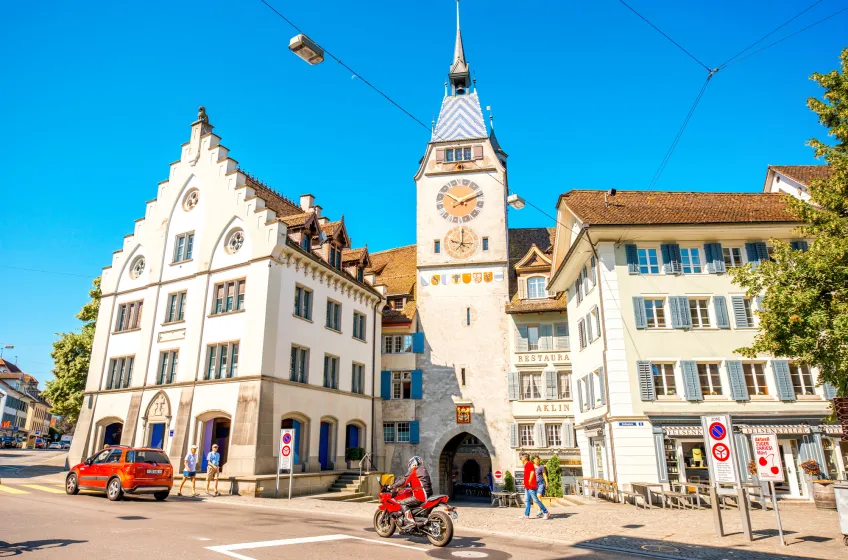
Zug’s Old Town is compact but beautifully preserved, with winding cobblestone streets, pastel-coloured buildings, and hidden courtyards. It's a joy to explore on foot, with landmarks such as the Zytturm (Clock Tower), charming fountains, and ornate facades that hint at the town’s medieval past. The Kollegium St. Michael complex and the Town Hall (Rathaus) are also worth a look for their architecture and historic significance.
The Old Town is dotted with small galleries, artisan shops, and cafés. It’s particularly magical in the evening when the streets are quieter and the buildings are lit up against the lake and mountains.
Zytturm (Clock Tower)
The Zytturm is Zug’s most iconic building, dating back to the 13th century. Originally built as part of the city’s fortifications, it now houses a working astronomical clock and is open to visitors. Climb the spiral staircase to reach the viewing platform for fantastic views over the rooftops of the Old Town and across Lake Zug to the mountains beyond. It's a relatively short climb and well worth the effort.
Lake Zug Promenade (Seepromenade)
The lakeside promenade is one of Zug’s most loved features, popular with both locals and visitors. It stretches for several kilometres along the shore and is ideal for walking, cycling, or simply sitting and enjoying the view. The promenade is lined with benches, trees, and sculptures, and in warmer months, you'll see people sunbathing, having picnics, or even taking a swim in the clean lake water.
For the best experience, take a stroll at sunset—Zug is renowned for having some of the most beautiful sunsets in Switzerland, with the sky reflecting on the still lake and the mountains glowing pink and gold in the distance.
Zug Castle (Zugerburg)
Zug Castle is a medieval fortress turned museum that tells the story of the region’s history through engaging exhibitions. It’s a small but well-curated museum featuring artefacts, period rooms, and displays about Zug’s development from Roman times to the present. The castle grounds and garden are peaceful and offer nice views over the town.
Kunsthaus Zug
Kunsthaus Zug is the town’s main art museum and focuses on modern and contemporary works, particularly those by Swiss and Austrian artists. The collection includes pieces by artists such as Klimt, Schiele, and contemporary Swiss creators. It’s a relatively small space, but the exhibitions are thoughtful and often rotate, so there’s usually something new to see.
Höllgrotten Caves (Baar)
Just a few kilometres outside Zug in nearby Baar, the Höllgrotten caves are a fascinating natural wonder. These limestone dripstone caves feature eerie stalactites, glowing pools, and underground chambers lit with soft, coloured lighting. The walk through the caves is short but memorable, especially for families or anyone interested in geology. The trail is well-maintained and suitable for most fitness levels.
Zugerberg Mountain
For panoramic views and gentle hikes, Zugerberg is the town’s local mountain. It’s accessible by a funicular railway from Schönegg, just outside the town centre. Once at the top, you’ll find a network of walking and biking trails, scenic lookouts, and picnic areas. In winter, the area transforms into a snow-covered playground for sledding and snowshoeing.
The Zugerberg Plateau offers a more tranquil alternative to busier Swiss mountains and is ideal for nature lovers looking to escape the crowds.
Museum Burg Zug
Separate from the art museum, Museum Burg Zug is the main cultural history museum housed in the castle. It offers in-depth exhibits on Zug’s past, from archaeology and medieval trade to the modern development of the canton. It’s especially good for those curious about the town’s role in Swiss Confederation history and its shift into a global finance centre.
Zugersee Boat Cruises
During the warmer months, the Zugersee Schifffahrt company operates scenic boat cruises on Lake Zug. These range from short round trips to longer journeys with dining options onboard. A lake cruise is a relaxing way to take in the area’s natural beauty and visit lakeside villages such as Cham and Walchwil. The boats often run from April to October, with special themed cruises like sunset dinners or fondue evenings.
Kolinplatz and Markets
Kolinplatz, in the heart of the Old Town, is a lively square surrounded by historic buildings and small shops. On Saturdays, the weekly market takes over the area, selling fresh produce, flowers, regional cheeses, and local specialities. It’s a great place to mingle with locals and get a taste of Zug’s community life.
Practical Advice for Visitors
Getting There
Zug is extremely easy to reach. It’s just 22 minutes by train from Zurich HB, with frequent S-Bahn and InterCity connections. From Lucerne, it’s about 30 minutes. The town’s main station is modern, well-equipped, and only a short walk from the Old Town and lake.
If driving, Zug lies on the A4 motorway. However, traffic and parking in the centre can be tricky, so train travel is usually more convenient.
Parking
Public parking is available at Parkhaus Altstadt-Casino, Parkhaus Zentrum, and Parkhaus Metalli. These are centrally located and within easy walking distance of major sights. Street parking in the Old Town is limited and metered. On weekends, spaces can fill quickly, so early arrival is advised.
Dining
Zug offers an excellent range of restaurants, with a focus on Swiss and international cuisine. For lakeside dining, Restaurant Hafenrestaurant and Fischerstube offer fish dishes with stunning views. In the Old Town, Aklin is a fine dining restaurant with a long-standing reputation for Swiss and European classics.
Restaurant Rathauskeller is housed in a vaulted medieval cellar and serves refined local fare, while Widder offers modern, seasonal dishes in a stylish setting. For a casual bite, Negishi is great for sushi, and Kaffee Frech is a local favourite for brunch and coffee.
Don’t forget to try Zuger Kirschtorte, a decadent cherry brandy cake that is the town’s signature dessert.
Shopping
Zug’s shopping scene centres around the Metalli shopping centre and the Old Town’s independent boutiques. You’ll find high-end fashion, jewellery, Swiss watches, and gourmet food shops. The Saturday market at Kolinplatz is perfect for local delicacies and handmade crafts.
For Swiss-made gifts, check out Zuger Chriesi products—cherry-based jams, liqueurs, and sweets that reflect the region’s fruit-growing heritage.
When to Visit
Zug is beautiful in every season:
-
Spring (April–May): Blossoming trees and lakeside greenery make this a picturesque time to visit.
-
Summer (June–August): Ideal for swimming, boat trips, and hiking. Expect long, sunny days and vibrant outdoor life.
-
Autumn (September–October): Golden light, harvest festivals, and fewer crowds make this a lovely, peaceful time.
-
Winter (November–February): Quiet and atmospheric, with festive lights, crisp air, and cosy cafés.
Zug is also known for its spectacular sunsets, especially in late summer and autumn, so plan an evening walk along the lake if the skies are clear.
Local Events
Zug Cherry Festival (Chriesisturm – June): Celebrates Zug’s cherry harvest with parades, music, and traditional cherry-pit spitting contests.
Zuger Messe (October): A regional fair showcasing everything from crafts and food to technology and innovation.
Zuger Seefest (July, every few years): A lakeside summer festival with live music, fireworks, food stalls, and entertainment.
Zug Christmas Market (December): A charming market in the Old Town with festive stalls, handmade gifts, and mulled wine.
Exploring Beyond Zug
Zug is a great base for exploring central Switzerland:
Lucerne (30 minutes): A must-see city with its famous Chapel Bridge, lake cruises, and access to Mount Pilatus and Mount Rigi.
Zurich (22 minutes): Perfect for shopping, art, and big-city culture.
Rigi Kulm (90 minutes): Easily accessible via Arth-Goldau, Mount Rigi offers breathtaking panoramic views and excellent walking trails.
Aegeri Valley (20 minutes): A peaceful area with rolling hills, forests, and the beautiful Ägerisee, ideal for walking, cycling, or a lakeside picnic.
Cham and Hünenberg (10–15 minutes): Quiet lakeside villages with scenic views and local charm.
Zug may not shout for your attention, but once you arrive, it wins you over quietly with its natural beauty, polished charm, and warm welcome. It’s the kind of place that invites you to slow down—watch the light shift on the lake, sip a coffee by the promenade, or simply stroll through the cobbled streets of a town that’s deeply Swiss yet cosmopolitan at heart. Whether for a relaxing day trip or a few days of exploration, Zug is a small town with a big appeal.
Shortlist
- Your Shortlist is empty