
Discover Ticino | A Visitor's Introduction to Ticino
Recommended places to stay, places to visit and things to do in Ticino
Ticino is Switzerland’s southernmost canton, and it’s like stepping into another world – a place where Swiss precision meets Italian flair, where palms and piazzas coexist with alpine peaks and lakeside villages. Bordered by Italy on three sides and shaped by centuries of cultural exchange, Ticino is Switzerland’s only fully Italian-speaking canton, offering a distinct Mediterranean atmosphere within the Alps.
Famous for its sunshine, laid-back lifestyle, historic towns, and stunning landscapes, Ticino is a favourite among locals and in-the-know travellers. With Lake Lugano and Lake Maggiore sparkling beneath steep mountains, and a wealth of castles, hiking trails, vineyards, and grotto restaurants, it’s a destination that delivers both relaxation and adventure in spades.
Whether you're exploring the refined streets of Lugano, the medieval charm of Bellinzona, or the rivers and waterfalls of the Verzasca Valley, Ticino is a place of unexpected beauty and joyful contrasts.
Search All Ticino Accommodation
Pre-book Ticino Attractions, Tours & Experiences
Why is Ticino Worth a Visit?
Ticino is worth visiting because it offers a unique blend of Swiss quality and Italian charm. The region boasts more sunny days than anywhere else in Switzerland, and the landscape reflects that – palm trees grow next to snow-capped peaks, and narrow cobbled lanes lead to lakeside promenades and stylish cafés. It’s a paradise for nature lovers, culture seekers, and foodies alike.
The canton’s diversity is one of its biggest assets. You can enjoy an espresso in an old Italianate piazza, then head off to hike along alpine ridges or swim in crystal-clear river pools. The food is deliciously rustic, the people warm, and the atmosphere unmistakably Mediterranean.
If you're after a relaxed, scenic getaway with a hint of dolce vita, but still want that clean, efficient Swiss touch, Ticino is the perfect place.
Ticino Highlights: Things to See and Do in Ticino
Lugano
Ticino’s largest city, Lugano blends elegant architecture with a relaxed lakeside vibe. Set on Lake Lugano and surrounded by mountains, it’s known for its parks, shopping, art, and festivals.
Top sights include:
-
Parco Ciani: One of Switzerland’s most beautiful parks, with lakeside paths, sculptures, and ancient trees.
-
Monte Brè and Monte San Salvatore: Take a funicular or hike for panoramic views of the lake and surrounding valleys.
-
LAC Lugano Arte e Cultura: A modern arts centre hosting concerts, exhibitions, and theatre.
-
Via Nassa: A historic shopping street perfect for browsing boutiques and sampling gelato.
Lugano feels like a mini-Italy wrapped in Swiss calm – ideal for culture lovers and relaxed city breaks.
Bellinzona and Its Castles
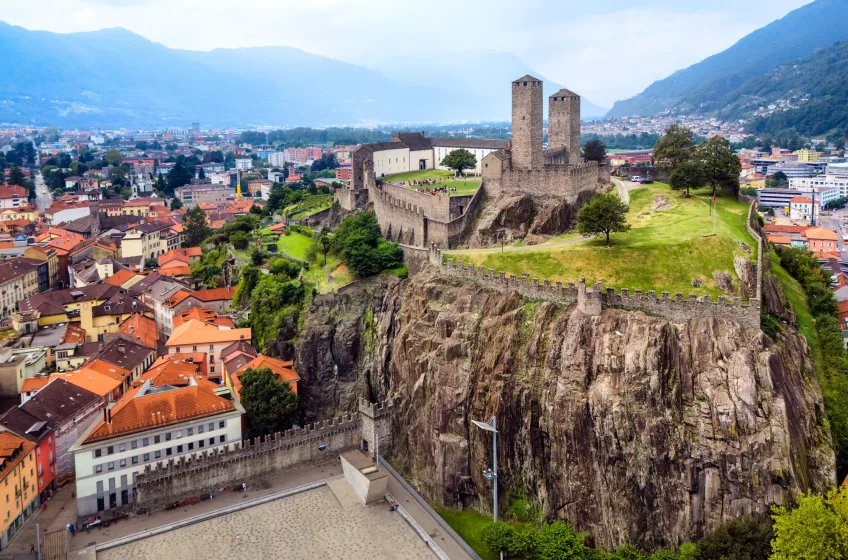
The capital of Ticino, Bellinzona is a UNESCO World Heritage site thanks to its three medieval castles:
-
Castelgrande, Montebello, and Sasso Corbaro were part of an important defensive complex built by the Dukes of Milan.
-
You can walk the ramparts, visit the museums, and enjoy sweeping views of the valley.
The old town is compact but charming, with baroque churches, market squares, and Italian-style cafés. Bellinzona is also a hub for reaching the northern valleys.
Locarno and Lake Maggiore
Locarno sits on the northern shore of Lake Maggiore and enjoys a particularly mild climate. With palm trees, lakeside walks, and a historic centre full of Renaissance and baroque architecture, it’s one of Ticino’s most atmospheric towns.
Highlights include:
-
Piazza Grande: A broad, open square that hosts festivals and markets.
-
Madonna del Sasso: A beautiful pilgrimage site perched above the town, offering views of the lake.
-
Cardada-Cimetta: A cable car leads to panoramic hiking and skiing with views from the lowest to the highest points in Switzerland.
Locarno is also the base for the Locarno Film Festival in August – one of Europe’s most important open-air film events.
Ascona
Just a few minutes from Locarno, Ascona is a stylish lakeside town known for its art galleries, pastel-coloured buildings, and Mediterranean feel.
-
The lakeside promenade is one of the prettiest in Switzerland.
-
The Monte Verità hill above Ascona was once a hub for artists, free-thinkers, and utopians in the early 20th century – now it hosts a museum, park, and cultural centre.
-
Ascona is also great for boating, lake swimming, and lazy days in elegant cafés.
Verzasca Valley
The Verzasca Valley is one of Switzerland’s hidden gems. Famous for its emerald-green river, natural rock pools, and stone villages, it's a paradise for nature lovers and photographers.
-
Lavertezzo is the postcard-perfect village with a famous double-arched Romanesque bridge over the river.
-
The Verzasca River is perfect for wild swimming and boulder lounging on hot days – but beware the currents.
-
Hiking trails connect small villages, chestnut forests, and panoramic viewpoints.
The 220-metre Verzasca Dam is also where the James Bond bungee jump scene (from GoldenEye) was filmed – and yes, you can do it yourself if you dare.
Valle Maggia
Next to Verzasca, the Maggia Valley offers similar beauty with slightly more space and fewer crowds.
-
Villages like Cevio and Moghegno are filled with stone houses, alpine meadows, and riverside picnic spots.
-
Waterfalls, hiking trails, and rock swimming pools make it ideal for day trips or nature stays.
In summer, many Ticinese locals come here to escape the heat and enjoy the simple, natural pleasures of the mountains.
Monte Tamaro and Monte Lema
These twin peaks offer some of Ticino’s best views and adventure activities.
-
Take the cable car up Monte Tamaro for mountain biking, zip lines, and scenic hikes to the stunning Church of Santa Maria degli Angeli, designed by architect Mario Botta.
-
From Monte Lema, you can hike along a high ridge trail with 360° views over Italy, Lake Maggiore, and the Alps.
Both mountains are reachable via cable cars from the towns of Rivera and Miglieglia, respectively.
Boat Trips and Lake Hopping
The boat networks on Lake Maggiore and Lake Lugano offer one of the most scenic ways to explore the region.
-
On Lake Maggiore, hop between Ascona, Brissago, and Cannobio (Italy). Don’t miss a stop at the Brissago Islands, home to a botanical garden with exotic plants.
-
On Lake Lugano, cruise to Morcote – often called Switzerland’s prettiest village – or explore Gandria, a traffic-free village clinging to the lakeside cliffs.
Boat rides are relaxing and let you appreciate the beauty of Ticino from the water.
Grotto Dining
No trip to Ticino is complete without visiting a grotto – a rustic, often open-air eatery serving traditional local food under the shade of chestnut trees.
Typical dishes include:
-
Polenta with braised beef or rabbit.
-
Risotto alla Ticinese.
-
Local Ticino Merlot wine, served in ceramic jugs.
-
Luganighe: Ticino-style sausages.
Great grottos can be found in the valleys or on hillsides just outside towns. They’re a wonderful place to slow down and savour the tastes of the region.
Practical Advice for Visitors
Getting There
-
By train: Ticino is served by the Gotthard Base Tunnel, which means high-speed trains from Zurich reach Bellinzona in under 2 hours. Direct trains also arrive from Milan, Lucerne, Basel, and Lugano.
-
By car: Driving into Ticino via the Gotthard Pass (summer) or tunnel is straightforward. Roads are scenic but can be busy in peak summer.
-
By air: The nearest international airport is Milan Malpensa. Lugano also has a small regional airport with limited service.
Getting Around
-
Ticino has an efficient public transport network, including trains, buses, and boats.
-
Consider buying a Ticino Ticket (offered by many hotels), which gives free travel on public transport and discounts on local attractions.
-
Boat travel is a great way to link towns along the lakes.
Parking
In cities like Lugano or Locarno, use underground car parks or blue zone street parking (disc required). Smaller towns may have limited space, especially in high season. Driving to valleys or grottos is a good option for more remote areas.
Dining
Ticino’s cuisine is hearty, rustic, and full of Italian influence. In addition to grottos, you’ll find:
-
Stylish lakefront restaurants in Lugano, Ascona, and Locarno.
-
Excellent gelato, espresso bars, and pizzerias.
-
Local markets selling cheese, salumi, chestnuts, polenta flour, and Ticinese wines.
Try a glass of Merlot bianco – a fresh, local white wine made from Merlot grapes.
Shopping
Look for:
-
Locally made grappa and wine.
-
Olive oil from Ticino’s southern microclimate.
-
Ceramics, textiles, and artisan soaps.
-
Markets in Bellinzona (Saturday) and Lugano (Tuesday & Friday) for local produce and crafts.
When to Visit
-
Spring (March–May): Wildflowers, mild temperatures, and fewer crowds. Great for hiking and sightseeing.
-
Summer (June–August): Peak season for lakes, rivers, and outdoor living. Expect hot days and busy resorts.
-
Autumn (Sept–Oct): Harvest season with golden vines and chestnut festivals. Perfect for walking and wine tasting.
-
Winter (Dec–Feb): Lower altitudes remain mild; ski resorts like Airolo, Carì, and Bosco Gurin open for winter sports.
Local Events
-
Locarno Film Festival (August): Open-air screenings in Piazza Grande with major international films.
-
Estival Jazz Lugano (July): Free concerts featuring global jazz and fusion artists.
-
Festa della Castagna (October): Chestnut festivals in many villages, celebrating this local staple.
-
Moon&Stars Locarno (July): Pop and rock concerts in a beautiful lakeside setting.
Exploring Beyond Ticino
-
Val Bavona: A remote, electricity-free valley with ancient stone houses and waterfalls – a step back in time.
-
Morcote: A breathtaking village on Lake Lugano with arcaded buildings and a hillside church with a view.
-
Swissminiatur (Melide): A fun, miniature version of Switzerland in a lakeside park – ideal for families.
-
Monte Generoso: Reachable by cogwheel train, with panoramic views over the Alps and Italian lakes.
Ticino is one of Switzerland’s most surprising and captivating destinations. With its lakes, valleys, villages, and vibrant towns, it offers a rich mix of outdoor adventure, cultural heritage, and Mediterranean ease. Whether you’re sipping espresso by a lake, hiking through chestnut woods, or cooling off in a river pool, you’ll find yourself falling for Ticino’s sunny, soulful charm. It’s a place that feels both effortlessly relaxing and endlessly inspiring – and once you’ve been, you’ll want to return again and again.
Shortlist
- Your Shortlist is empty