
Discover The Bernese Jura | A Visitor's Introduction to The Bernese Jura
Recommended places to stay, places to visit and things to do in The Bernese Jura
The Bernese Jura (French: Jura bernois) is a peaceful and often overlooked region in the northwestern part of the canton of Bern. Nestled along the Jura Mountains and bordering the French-speaking cantons of Neuchâtel and Jura, this area is known for its rolling hills, watchmaking heritage, pastoral landscapes, and bilingual culture. Predominantly French-speaking, the Bernese Jura offers a completely different flavour from the German-speaking Bernese Oberland—it’s slower, quieter, and deeply connected to tradition and nature.
If you’re looking to escape the tourist trail and discover Switzerland's more rural, authentic side, the Bernese Jura is a wonderfully rewarding destination. It’s perfect for nature lovers, hikers, culture seekers, and travellers curious to explore a lesser-known corner of the country.
Search All Bernese Jura Accommodation
Pre-book Bernese Jura Attractions, Tours & Experiences
Why is the Bernese Jura Worth a Visit?
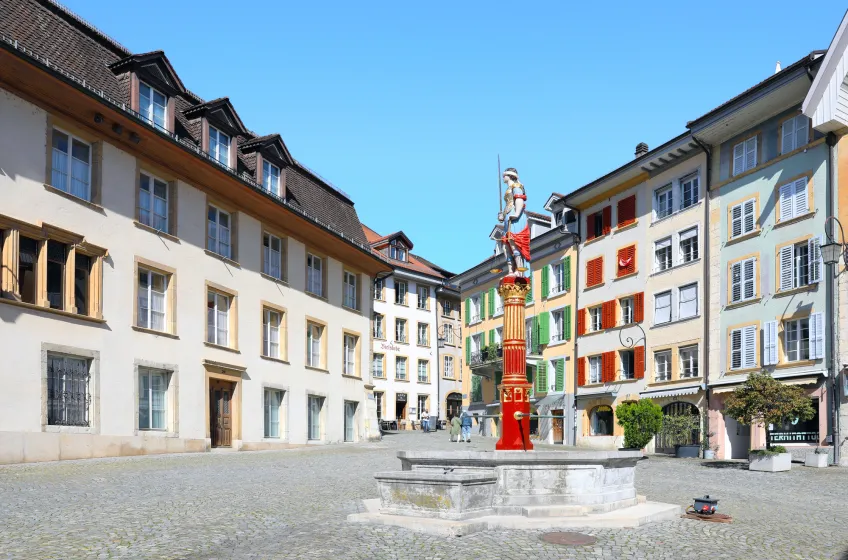
The Bernese Jura is worth visiting for its gentle landscapes, rich cultural heritage, and distinct French-Swiss identity. This region offers a calmer pace of life compared to the Alps or the big cities. Here, you’ll find pine-covered hills, wide pastures with grazing horses, tiny artisan villages, and deep-rooted traditions, especially in watchmaking, cheese production, and agriculture.
The area is criss-crossed with well-marked hiking and biking trails, many of which offer panoramic views across the Jura hills and even as far as the Alps on a clear day. You'll also find historical towns, UNESCO heritage sites, caves, and local festivals that reflect a rich yet understated culture.
For those who want to explore Switzerland beyond the clichés of fondue and mountain trains, the Bernese Jura provides a different, deeply authentic experience—one that’s rustic, charming, and full of character.
Bernese Jura Highlights: Things to See and Do in the Bernese Jura
Saint-Imier
One of the most important towns in the Bernese Jura, Saint-Imier is a historic centre of Swiss watchmaking. It’s the birthplace of Longines, and while the factory isn’t open for tours, the Musée Longines (by appointment only) showcases the brand’s heritage and craftsmanship. The town itself is charming and walkable, with a mix of French-influenced architecture and countryside surroundings.
Saint-Imier is also known for its anarchist past, being a hub for alternative politics in the 19th century, and continues to attract a diverse community of thinkers, artists, and students.
Chasseral Regional Nature Park
The Chasseral mountain (1,606 metres) is the highest point in the Bernese Jura and a fantastic destination for nature lovers. The Chasseral Regional Nature Park includes sweeping pastures, pine forests, and panoramic ridges that are perfect for walking, cycling, and wildlife spotting.
From the Chasseral summit, you can see across to the Alps, Lake Biel, Lake Neuchâtel, and even into France. The area is especially beautiful in late spring and early autumn. There’s also a hotel and restaurant near the top, as well as family-friendly walking trails and picnic spots.
Biel/Bienne
Though technically on the edge of the Bernese Jura, the bilingual city of Biel/Bienne is the main urban centre for the region. It’s known as the watchmaking capital of Switzerland, home to brands like Rolex, Omega, and Swatch.
The Old Town (Vieille Ville) is small but full of charm, with cobbled alleys, fountains, and colourful facades. Visit the Omega Museum, Swatch Museum, or Centre Müller for insights into the industry. You can also enjoy the lakeside promenade and take boat trips on Lake Biel or walk through the Twannbach Gorge, a hidden natural gem nearby.
Tavannes and the Vallée de Tavannes
The town of Tavannes and the surrounding Vallée de Tavannes are great bases for exploring rural life in the Bernese Jura. You’ll find peaceful villages, horse farms, and local food producers. This valley is also connected to the Jura bike route and several cross-country ski and snowshoe trails in winter.
Tavannes is an excellent spot to begin or end a hike to Montoz, one of the Jura’s prominent ridges offering panoramic views.
Tramelan
The village of Tramelan is another important watchmaking hub and offers a taste of small-town Jura life. Its central square hosts regular markets and small festivals, and the town is surrounded by forests and pastures ideal for walking and cross-country skiing.
Tramelan also has a regional aviation museum, Musée Jurassien des Sciences Naturelles, and good links to nearby villages via train and hiking trails.
Saut du Doubs (and Doubs River Valley)
Although just over the border in the canton of Neuchâtel, the Saut du Doubs waterfall and the Doubs River Valley are a must-visit for anyone exploring the Bernese Jura. The area is marked by rugged cliffs, deep green forests, and a sense of wilderness that’s rare in Switzerland.
You can access the Saut du Doubs by boat, footpath, or from nearby Le Locle and La Chaux-de-Fonds. It’s also part of the Trans Swiss Trail, one of Switzerland’s long-distance walking routes.
Le Fuet and Bellelay Abbey
The hamlet of Le Fuet is home to the Abbaye de Bellelay, a former monastery with baroque architecture and a long-standing association with Tête de Moine cheese. The abbey now hosts exhibitions, concerts, and events. The surrounding meadows and farms produce the iconic semi-hard cheese, which is traditionally shaved into rosettes with a Girolle.
You can visit dairies in the area, taste cheese, and learn about its production. The Bellelay region is also ideal for cycling and e-bike tours.
Mont Soleil
Just outside Saint-Imier, Mont Soleil is known for its pioneering solar and wind energy projects, making it a centre for renewable energy in Switzerland. Visitors can tour the solar power station, explore nature trails, or ride the funicular from Saint-Imier.
The area is also perfect for snowshoeing in winter, with marked routes and equipment rental available.
Nature Trails and Horseback Riding
The Bernese Jura is famous for its Franches-Montagnes horses—a sturdy Swiss breed used for trail riding and farm work. Horseback riding is a popular activity here, with several horse trails and guest farms (gîtes équestres) where you can experience multi-day treks or short rides through forests and meadows.
If walking is more your style, well-marked trails connect villages, viewpoints, and picnic areas, and there are several thematic routes such as the Chemin des Fromageries (Cheese Route) and Chemin des Horlogers (Watchmakers' Trail).
Practical Advice for Visitors
Getting There
The Bernese Jura is best accessed by train or car:
-
From Bern, take direct trains to Biel/Bienne, Tavannes, or Saint-Imier (around 30–60 minutes).
-
From Zurich, it’s about 90 minutes to Biel/Bienne.
-
From Lausanne, you can reach Tramelan or Moutier in about 1–1.5 hours by train.
The regional train network is extensive, with smaller lines connecting villages and nature spots. Roads are good and scenic but can be winding in some parts.
Parking
Towns like Biel, Tavannes, and Saint-Imier have public car parks near the centre. Most smaller villages offer free or low-cost parking, especially near trailheads or visitor centres. In rural areas, avoid blocking farm access roads or private property.
Dining
The cuisine of the Bernese Jura is hearty and rich in local ingredients. Don’t miss:
-
Tête de Moine: A spicy, aromatic cheese served in elegant rosettes.
-
Saucisse sèche du Jura: Cured sausages made from local pork.
-
Fondue jurassienne: A regional twist on the classic cheese fondue.
-
Wild game dishes: Especially in autumn, with venison or wild boar.
-
Rösti and local potatoes: Often served with cheese or sausage.
Restaurants are often found in inns and guesthouses, where menus are seasonal and portions generous. Try Auberge de Bellelay, Le Boeuf à Tramelan, or Chez Rüfi in Saint-Imier for quality local fare.
Shopping
Local products are your best bet here—think cheese, artisan sausage, locally milled flour, craft beer, and wood carvings. Visit farm shops or regional markets in Tavannes or Tramelan.
For a special souvenir, watchmaking workshops sometimes sell unique handcrafted timepieces directly to the public. Small independent chocolatiers can also be found in the larger towns.
When to Visit
-
Spring (April–June): Meadows in full bloom, ideal for walking and cycling.
-
Summer (July–August): Best weather for hiking, riding, and festivals.
-
Autumn (September–October): Beautiful foliage, seasonal game dishes, and quiet trails.
-
Winter (December–February): Cross-country skiing, snowshoeing, and winter hiking in areas like Mont Soleil and Chasseral.
The Bernese Jura doesn’t get the big alpine crowds, so it’s peaceful even in high season.
Local Events
-
Fête de la Tête de Moine (May): Cheese festival at Bellelay Abbey with tastings, demos, and music.
-
Festival du Film Français d’Helvétie (Biel/Bienne, September): Celebrates French-language cinema.
-
Marché Paysan (Various): Local farmers’ markets showcasing regional produce and crafts.
-
Summer horse festivals: Including horse parades and traditional riding events in the Franches-Montagnes.
Exploring Beyond the Bernese Jura
If you’re based in the region, here are some rewarding nearby excursions:
-
Neuchâtel (40 minutes): A lakeside French-speaking city with a chateau, vibrant arts scene, and elegant streets.
-
La Chaux-de-Fonds (1 hour): UNESCO-listed watchmaking town and birthplace of architect Le Corbusier.
-
Murten (1 hour): A mediaeval lakeside town on the language border.
-
Solothurn (45 minutes): A baroque gem with riverside cafés and a lively Old Town.
The Bernese Jura is one of Switzerland’s best-kept secrets. It may not have the dramatic peaks of the Alps or the big-name cities, but what it offers is a slower, more personal kind of travel. Here, you'll find space to breathe, trails to wander, and traditions to discover—all in a setting that feels like the real Switzerland, untouched by mass tourism. If you're after peace, authenticity, and local flavour, the Bernese Jura is where you’ll find it.
Shortlist
- Your Shortlist is empty