
Basel Canton | A Visitor's Introduction to The Canton of Basel
Recommended places to stay, places to visit and things to do in The Basel Canton
The Canton of Basel is unique in Switzerland, as it is actually divided into two separate half-cantons: Basel-Stadt (Basel-City) and Basel-Landschaft (Basel-Country). Together, they form a culturally rich and geographically diverse region in the northwest corner of Switzerland, right on the border with France and Germany. While Basel-Stadt is an urban hub known for its museums, international flair, and historic old town, Basel-Landschaft (or Baselland) is the green, hilly countryside surrounding the city, filled with charming villages, castles, vineyards, and peaceful walking and cycling paths.
Together, they offer the best of both worlds: cosmopolitan city life and tranquil Swiss countryside, all within a half-hour radius. The region is often overlooked in favour of the Alps or Lake Geneva, but it’s a hidden gem for travellers seeking authentic Swiss culture, history, and landscape without the crowds.
Search All Basel Canton Accommodation
Pre-book Basel Canton Attractions, Tours & Experiences
Why is the Canton of Basel Worth a Visit?
The Canton of Basel is worth visiting because it offers a compact yet incredibly rich variety of experiences: world-class museums, medieval towns, forested hills, scenic rivers, Roman ruins, local vineyards, and a strong local identity. It’s one of the most international regions in Switzerland, due to its tri-border location, but also deeply rooted in Swiss and Alemannic traditions.
Basel-Stadt gives you a vibrant urban experience, with art, architecture, and one of Switzerland’s most impressive historic centres, while Basel-Landschaft lets you slow down, explore castles and countryside, and immerse yourself in local life. Thanks to excellent public transport, you can be hiking in the Jura hills in the morning and enjoying an art exhibition in Basel city by the afternoon.
It’s also an ideal base for exploring surrounding regions like the Alsace wine route, Black Forest, and Bernese Jura. Whether you’re a culture enthusiast, hiker, foodie, or curious explorer, the Canton of Basel offers an elegant and under-the-radar Swiss experience.
Basel Canton Highlights: Things to See and Do in the Canton of Basel
Basel Old Town (Basel-Stadt)
The medieval heart of Basel city is a delight to explore on foot. Narrow alleys, colourful houses, and historic buildings like the Rathaus (Town Hall) and Basel Minster make it a must-see. The Pfalz terrace behind the cathedral offers some of the best views over the Rhine. This part of the city is also full of boutique shops, quiet courtyards, and cosy cafés.
Fondation Beyeler (Basel-Stadt)
In the leafy suburb of Riehen, this world-class modern art museum showcases works by Picasso, Rothko, Giacometti, and other masters. Designed by Renzo Piano, it’s as much about the art as it is about the serene atmosphere and architecture. It's widely considered one of Switzerland’s finest museums.
Augusta Raurica (Basel-Landschaft)
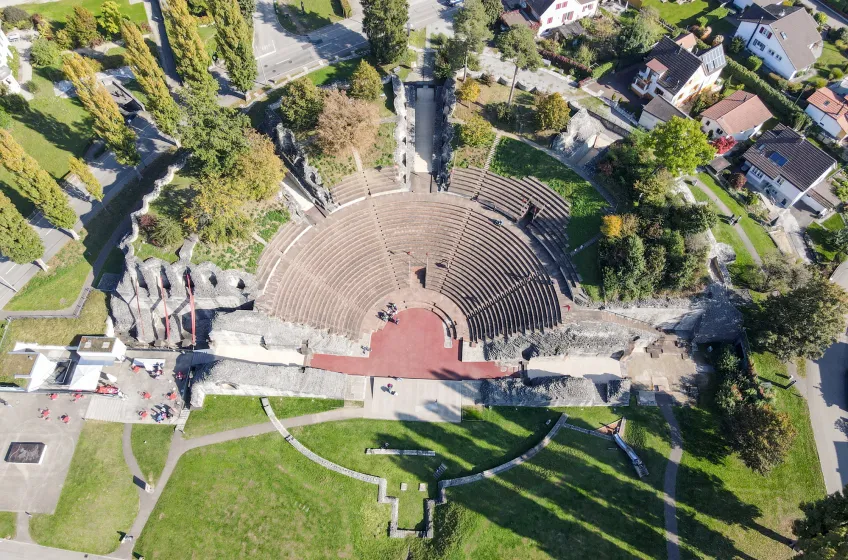
One of the most important Roman archaeological sites in Switzerland, Augusta Raurica lies near Augst, just a short train or bus ride from Basel. The site includes an impressively preserved Roman theatre, temple ruins, mosaic floors, and a museum with artefacts and reconstructions of Roman daily life. It's a must for history lovers and great for families.
Wasserfallen and the Jura Hills (Basel-Landschaft)
The Wasserfallen region, near Reigoldswil, is a favourite local escape into the Jura Mountains. A cable car takes you up to over 900 metres, where you’ll find hiking trails, bike routes, and views across the Basel region. You can even rent trottinettes (downhill scooters) to ride back down. It’s an ideal day out for walkers, nature lovers, and families.
Liestal (Basel-Landschaft)
The capital of Basel-Landschaft, Liestal is a charming and often-overlooked town with a pretty old town centre, half-timbered buildings, and excellent local restaurants. It's also famous for its dramatic Chienbäse festival, held during Fasnacht (carnival), where people carry flaming torches through the streets – one of Switzerland’s most unique and fiery traditions.
Arlesheim Cathedral and Hermitage (Basel-Landschaft)
The village of Arlesheim is home to the only cathedral in Switzerland not located in a bishop’s seat. This beautiful Baroque building is a peaceful stop, and nearby you'll find the Arlesheim Hermitage, the largest English-style landscape garden in Switzerland. Wander through romantic forest paths, past grottos, artificial ruins, and small ponds – it's a quiet, magical place.
Hiking the Wiesenberg and Gempen Plateau (Basel-Landschaft)
The Gempen Plateau is a rolling region of meadows, forests, and farms above Dornach and Arlesheim, offering panoramic views of the Alps and Vosges mountains. Hikes here are gentle and ideal for families or casual walkers. Popular routes include the loop from Seewen or the hike to the Wartenberg ruins above Muttenz – the remains of three medieval hilltop castles.
Thermal Baths in Rheinfelden (Basel-Landschaft)
The spa town of Rheinfelden, right on the Rhine and near the German border, offers relaxing thermal baths at sole uno, a large wellness centre with indoor and outdoor saltwater pools, saunas, steam rooms, and massage treatments. The town itself is charming, with a historic old town and riverside promenades.
Local Vineyards and Wine Tasting
Both Basel-Stadt and Basel-Landschaft have small but high-quality wine production. The Schweizer Weingut Klus near Aesch and the Weingut Tschäpperli near Liestal offer tastings of local specialities such as Pinot Noir and Chasselas. The Basel Wine Route (Rebwanderweg) is a lovely hiking trail through terraced vineyards, passing wine cellars and countryside taverns along the way.
Dreiländereck – The Three-Country Point (Basel-Stadt)
Located at the northern tip of Basel, this monument marks the exact point where Switzerland, France, and Germany meet. It’s a symbolic and scenic spot where you can stand in three countries in just a few steps. A great photo opportunity and an excellent starting point for a bike ride or river walk into the cross-border region.
Local Markets and Culinary Traditions
-
Basel’s weekly markets (in Marktplatz and St. Peter’s Square) are packed with local produce, flowers, cheese, and bread.
-
Liestal and Sissach also host regular farmer’s markets and village fairs celebrating local food and crafts.
-
Try regional dishes like Basler Mehlsuppe (flour soup), Zwiebelwähe (onion tart), and Basler Läckerli, a spiced biscuit unique to the region.
Practical Advice for Visitors
Getting There
-
By air: The region is served by EuroAirport Basel-Mulhouse-Freiburg, just 15 minutes from Basel city. It offers connections across Europe.
-
By train: Basel is a major rail hub. From Basel SBB station, you can reach Liestal and other Baselland towns in under 30 minutes.
-
By car: Motorways A2 and A3 connect the canton with Zurich, Bern, Lucerne, and Germany. Expect tight parking in Basel city; it’s easier to use public transport or stay in Basel-Landschaft and day-trip into town.
Public Transport
Basel has one of Switzerland’s best tram and bus networks, with cross-border routes into France and Germany. The TNW network (Tarifverbund Nordwestschweiz) covers both Basel cantons and makes it easy to explore the entire region using one ticket.
Most hotels offer guests a Basel Card, which gives free public transport and discounts on museums and attractions.
Parking
Basel-Stadt: Limited and expensive in the centre. Use park-and-ride at St. Jakob, Badischer Bahnhof, or Kantonsspital.
Basel-Landschaft: Easier and cheaper to park. Towns like Liestal and Aesch offer free or low-cost parking options near trailheads and train stations.
Dining
Basel has a wide culinary offering, including Michelin-starred restaurants, riverside bistros, and traditional Wirtschaften (Swiss inns).
-
Try Volkshaus Basel, Brasserie Les Trois Rois, or Walliser Kanne in Basel-Stadt.
-
In Baselland, try local taverns in Liestal, Binningen, or Arlesheim for traditional Swiss dishes in a homely setting.
Baselland also has a growing number of artisan producers making cheese, cured meats, beer, and natural wine.
When to Visit
-
Spring (April–June): Ideal for walking, cycling, and local festivals. Wildflowers bloom in the Jura hills.
-
Summer (July–August): Great for river swimming, hiking, open-air concerts, and evening walks in the vineyards.
-
Autumn (September–October): Wine harvests, golden forests, and local food festivals. A peaceful and scenic time to visit.
-
Winter (December–February): Christmas markets, Fasnacht parades, and cosy evenings in alpine-style restaurants. Snow is rare in the city, but possible in the hills.
Local Events
-
Basler Fasnacht (Feb/Mar): UNESCO-listed carnival with lantern parades and masked cliques.
-
Chienbäse in Liestal (Sunday before Ash Wednesday): Flaming torch parade that lights up the old town in dramatic style.
-
Arlesheim Wine Festival (Sept): Tastings, food stalls, and music in a charming village setting.
-
Em Bebbi sy Jazz (August): Open-air jazz festival in Basel city – free and lively.
-
Roman Festival at Augusta Raurica (Summer): Living history with gladiators, food, and Roman games.
Exploring Beyond the Canton
Thanks to its central location, Basel makes an excellent base for day trips to:
-
Alsace, France (30 mins): Colmar, Eguisheim, and the Alsace Wine Route.
-
Black Forest, Germany (1 hour): Freiburg, Triberg waterfalls, and spa towns like Badenweiler.
-
Solothurn or Jura Mountains (1 hour): Charming towns and nature trails.
-
Lucerne or Bern (1.5 hours): Switzerland’s scenic and cultural gems within easy reach.
The Canton of Basel, in both its city and countryside halves, is a rich and rewarding destination often overlooked in favour of more touristy parts of Switzerland. But here, you’ll find deep heritage, rolling green hills, an artistic soul, and warm Swiss hospitality. Whether you’re strolling Basel’s old town, walking through vineyard trails in Baselland, or floating down the Rhine on a summer’s day, this region quietly impresses – and invites you to stay a little longer.
Shortlist
- Your Shortlist is empty