
The Bernese Oberland | A Visitor's Introduction to The Bernese Oberland
Recommended places to stay, places to visit and things to do in The Bernese Oberland
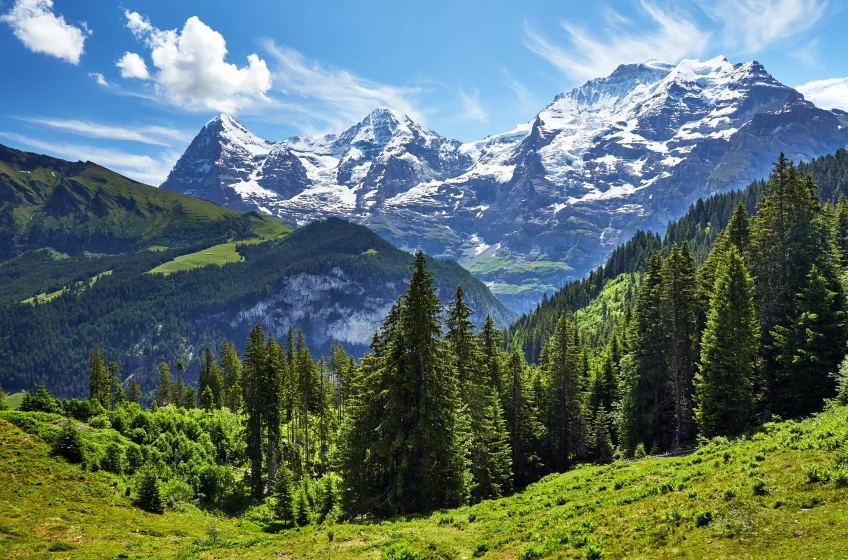
The Bernese Oberland (Berner Oberland in German) is one of the most spectacular and iconic regions of Switzerland. Located in the southern part of the canton of Bern, it stretches from the emerald lakes of Thun and Brienz up into the dramatic heart of the Alps, home to famous peaks like the Eiger, Mönch, and Jungfrau. This is classic Heidi-country—filled with steep valleys, charming chalet villages, cow-dotted meadows, and pristine mountain lakes.
Known as a paradise for nature lovers, hikers, and winter sports enthusiasts, the Bernese Oberland also attracts those simply in search of peace, beauty, and a breath of crisp alpine air. Whether you’re standing atop a glacier at Jungfraujoch, walking beside a waterfall in Lauterbrunnen, or sipping coffee by a lake in Thun, this region delivers Switzerland at its most dramatic and photogenic.
Search All Bernese Oberland Accommodation
Pre-book Bernese Oberland Attractions, Tours & Experiences
Why is the Bernese Oberland Worth a Visit?
The Bernese Oberland is worth visiting for its unrivalled alpine scenery, charming mountain villages, and year-round outdoor activities. Nowhere else in Switzerland combines such variety with accessibility—within a few hours from Bern or Zurich, you can be riding a cogwheel train up a glacier, hiking along a panoramic ridge, or relaxing beside a turquoise lake.
This region is also incredibly well-organised for tourism, with a dense network of trains, funiculars, and cable cars that take you smoothly from valley floors to soaring mountain viewpoints. Whether you're a seasoned hiker, a first-time visitor, or a family with kids, the Bernese Oberland makes it easy to access some of the most stunning natural scenery in Europe without ever needing a car.
Its villages—like Wengen, Mürren, Grindelwald, and Gstaad—are postcard-perfect and steeped in tradition, while towns like Interlaken, Thun, and Meiringen offer more urban amenities and access to lakes and valleys. It’s also a region that truly shines in all seasons—from snowy wonderlands in winter to flower-filled meadows in summer.
Bernese Oberland Highlights: Things to See and Do in the Bernese Oberland
Jungfraujoch – Top of Europe
No trip to the Bernese Oberland is complete without a visit to the Jungfraujoch, home to Europe’s highest railway station at 3,454 metres. The journey itself—via the Eiger Express and cogwheel train—is an experience in its own right, passing through the Eiger’s north face and past high alpine meadows.
At the top, you'll find the Aletsch Glacier, an ice palace, snow activities, and breathtaking panoramic viewing platforms. Dress warmly and book tickets in advance—it’s popular for good reason.
Lauterbrunnen Valley
Often described as the most beautiful valley in the Alps, Lauterbrunnen is flanked by sheer cliffs and home to 72 waterfalls, including the spectacular Staubbach Falls, which plunge nearly 300 metres beside the village. Take the cable car up to Mürren for more views, or visit the Trümmelbach Falls, a unique system of glacier-fed waterfalls inside the mountain.
Lauterbrunnen is also a base for accessing Wengen, Kleine Scheidegg, and the Jungfrau region.
Interlaken
Located between Lake Thun and Lake Brienz, Interlaken is the gateway to the Bernese Oberland and a hub for adventure tourism. It’s the place to go if you want to try paragliding, skydiving, bungee jumping, or jet boating. The town itself has plenty of hotels, shops, and restaurants, though it’s quite touristy.
Take the Harder Kulm funicular for stunning views over the lakes and the Jungfrau massif, especially at sunset.
Grindelwald
Set at the base of the Eiger, Grindelwald is a classic alpine resort with easy access to ski slopes in winter and hiking trails in summer. Try the thrilling First Cliff Walk, walk to Bachalpsee, or take the Eiger Express gondola toward Jungfraujoch.
Grindelwald has a lively atmosphere, excellent infrastructure, and good connections for mountain adventures, especially for those who want a mix of comfort and activity.
Mürren and Wengen
These two car-free mountain villages are perched above Lauterbrunnen and offer idyllic settings and a slower pace of life. Mürren, accessible by cable car and mountain railway, has spectacular cliffside views of the Jungfrau massif and access to the Schilthorn and Piz Gloria (of James Bond fame). Wengen, on the other side of the valley, is a favourite for families and offers access to the Lauberhorn ski run and hiking routes.
Both villages offer alpine serenity and traditional charm, making them perfect for longer stays.
Schilthorn and Piz Gloria
From Mürren, take a cable car to the Schilthorn, where the Piz Gloria revolving restaurant sits atop the peak. It was featured in the James Bond film On Her Majesty’s Secret Service. At 2,970 metres, the views are incredible, and you can also visit the Bond World 007 museum and walk along the Thrill Walk, a glass-bottomed walkway clinging to the mountain face.
Lake Thun and Lake Brienz
The twin lakes flanking Interlaken are both stunning and very different in character. Lake Thun is larger and deeper, surrounded by castles and elegant towns like Thun, Spiez, and Oberhofen, while Lake Brienz is known for its striking turquoise colour and wild, fjord-like beauty.
Both lakes offer boat cruises, swimming, and kayaking in summer, as well as easy lakeside walks and cycling routes.
Oeschinensee
Near Kandersteg, Oeschinensee is a glacier-fed lake surrounded by steep cliffs and alpine meadows. It’s one of Switzerland’s most beautiful mountain lakes and is accessible by cable car followed by a short walk. You can row a boat, have a lakeside picnic, or hike around the area. In winter, it transforms into a snowshoeing and sledging area.
Gstaad and Saanenland
Famous for its luxury chalets, celebrities, and high-end ski resorts, Gstaad is also a place of alpine beauty and calm. The surrounding Saanenland is dotted with authentic villages like Saanen, Rougemont, and Lauenen, where you’ll find wooden houses, peaceful trails, and gourmet food. In summer, enjoy hiking and open-air concerts; in winter, the slopes of the Glacier 3000 await.
Rosenlaui Glacier Gorge and Meiringen
A quieter corner of the region, Meiringen is famous for inventing meringues and being the place where Sherlock Holmes “died” at Reichenbach Falls. Visit the Sherlock Holmes Museum, hike into the Rosenlaui Glacier Gorge, or continue to the remote Grosse Scheidegg for off-the-beaten-track beauty.
Practical Advice for Visitors
Getting There
The Bernese Oberland is easily reached by train or car:
-
From Bern, Interlaken is just over 1 hour by train.
-
From Zurich, it takes about 2 hours to reach Interlaken or Grindelwald.
-
From Geneva, the journey is around 3 hours.
The Berner Oberland-Bahn (BOB) and Jungfrau Railways link Interlaken with Lauterbrunnen, Grindelwald, and the mountain resorts. The Swiss Travel Pass is a great way to get around, offering unlimited travel on most public transport and mountain routes (with discounts on some private lines).
Parking
If driving, note that some villages like Mürren and Wengen are car-free. Park in Lauterbrunnen or Stechelberg, and take a cable car or train to reach your destination.
Interlaken and Grindelwald have well-organised public car parks. In high season, parking fills up quickly—arrive early or consider leaving your car at the edge of town and walking or taking public transport in.
Dining
Local food reflects the alpine setting—hearty, traditional, and warming. Must-try dishes include:
-
Cheese fondue and raclette
-
Rösti (crispy fried potatoes)
-
Berner Platte (assorted meats with sauerkraut)
-
Alpine macaroni with potatoes, cheese, and onions
-
Meringues with double cream, especially in Meiringen
Great mountain restaurants include Bergrestaurant Allmendhubel (above Mürren), Alp Gschwantenmad (near Grindelwald), and Hotel Bellevue des Alpes (Kleine Scheidegg).
Shopping
You’ll find plenty of traditional Swiss souvenirs in the towns and villages—wood carvings, cowbells, chocolate, and Swiss Army knives. Interlaken is full of souvenir shops, while Grindelwald and Wengen have more boutique, locally made offerings.
For cheese, look out for Alpkäse (alpine cheese) made in mountain huts and sold at village markets.
When to Visit
-
Summer (June–September): Best for hiking, boat cruises, wildflowers, and open cable cars. Warm days and long evenings.
-
Autumn (September–October): Fewer crowds, golden larches, and clear skies. Ideal for photography and peaceful walks.
-
Winter (December–March): Excellent skiing, snowshoeing, and festive charm in resorts like Grindelwald, Wengen, Mürren, and Gstaad.
-
Spring (April–May): Waterfalls in full flow, green valleys, and snow still visible on the peaks.
Local Events
-
Unspunnen Festival (Interlaken, every 12 years): A huge celebration of Swiss traditions, with wrestling, yodelling, and stone throwing.
-
International Lauberhorn Ski Races (Wengen, January): One of the world’s oldest downhill ski races.
-
Gstaad Menuhin Festival (summer): A prestigious classical music festival in a stunning alpine setting.
-
Alpabfahrt (late summer): The traditional descent of cows from the mountains, often celebrated with local festivals.
Exploring Beyond the Bernese Oberland
If you’ve got extra time:
-
Bern (1 hour): The capital city offers a stunning Old Town and cultural sights.
-
Lucerne (2 hours): For lakeside beauty and Mount Pilatus or Rigi day trips.
-
Zermatt (3 hours): To see the Matterhorn and experience the Glacier Express.
-
Gruyères (2 hours): For cheese, chocolate, and a fairytale castle.
The Bernese Oberland is Switzerland at its most magical. Whether you come for snow-covered peaks or sunlit mountain lakes, you'll find scenes that stay with you forever. It’s a place where every train ride feels like a cinematic experience, every village looks like a postcard, and every day is filled with moments of awe. Perfect for travellers of all kinds, the Bernese Oberland promises a truly unforgettable alpine adventure.
Shortlist
- Your Shortlist is empty