
Discover Basel City | A Visitor's Introduction to Basel
Recommended places to stay, places to visit and things to do in or near Basel
Basel is a vibrant, culturally rich city in the northwest of Switzerland, nestled along the banks of the River Rhine and right on the border with France and Germany. It’s Switzerland’s third-largest city, but often flies under the radar compared to Zurich and Geneva. That’s a shame – because Basel is one of Europe’s most compelling city-break destinations, renowned for its world-class museums, historic old town, architectural contrasts, and the unique tri-national flavour of its daily life.
With a mix of Swiss orderliness, French flair, and German efficiency, Basel has a distinct personality. It's the cultural capital of Switzerland, home to the Art Basel fair, the country’s largest carnival (Fasnacht), and over 40 museums. The city also plays an important role in science and business, as the headquarters of pharmaceutical giants like Novartis and Roche. But even with this global status, it remains compact, walkable, and delightfully laid-back.
Search All Basel Accommodation
Pre-book Basel Attractions, Tours & Experiences
Why is Basel Worth a Visit?
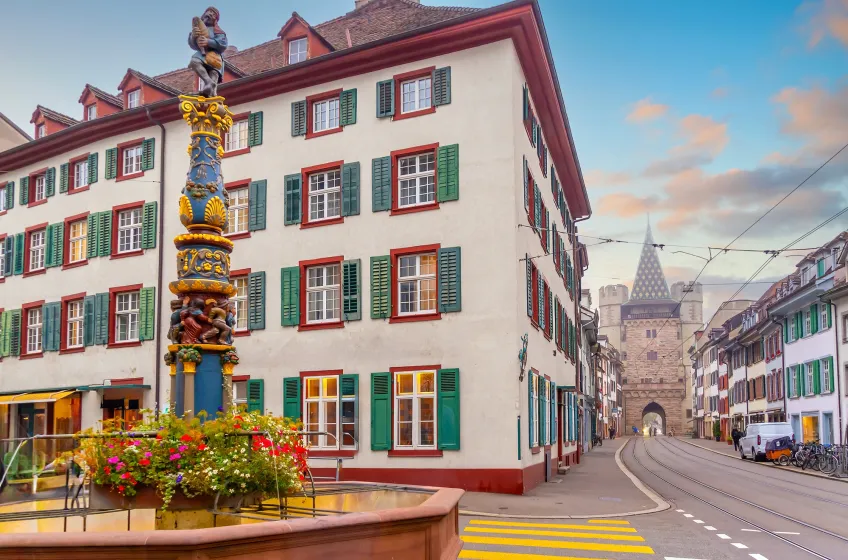
Basel is worth visiting for its effortless mix of the old and new, its vibrant cultural life, and its enviable position straddling three countries. You can be admiring medieval architecture in the morning, checking out cutting-edge contemporary art in the afternoon, and enjoying dinner in Germany or France in the evening – all without straying far from the city centre.
Its riverside setting, well-preserved Old Town, and diverse neighbourhoods give Basel a truly liveable feel. Whether you want to float down the Rhine with the locals, dive into modern art, explore Roman ruins, or sip coffee in a quiet courtyard, there’s always something to discover – and often with fewer crowds than other European cities.
It’s also a year-round destination, with snowy rooftops and Christmas markets in winter, warm evenings on the Rhine in summer, and major cultural festivals throughout the year. In short, Basel offers a rich, authentic, and relaxed Swiss experience – with an international twist.
Basel Highlights: Things to See and Do in Basel
Old Town (Altstadt)
Basel’s Old Town is one of the best preserved in Switzerland and ideal for aimless wandering. Cobbled alleys, medieval houses, and fountains line the hilly streets. Key sights include:
-
Marktplatz: The city’s central square, home to the red sandstone Rathaus (Town Hall) with its ornate façade and courtyard.
-
Spalenberg: A historic shopping street full of boutiques, galleries, and bookshops.
-
Basel Minster: A striking Gothic cathedral made of red sandstone, with twin towers and a cloister. Don’t miss the Pfalz terrace behind the cathedral for views over the Rhine.
Kunstmuseum Basel
This is the crown jewel of Basel’s art scene and one of the most prestigious museums in Europe. Its collection spans from the Middle Ages to the present, featuring artists like Holbein (who lived in Basel), Rembrandt, Picasso, Van Gogh, Monet, and Rothko. The museum is housed in three buildings – the Hauptbau, Neubau, and Gegenwart – each focusing on different periods and styles.
Fondation Beyeler
Located in the leafy suburb of Riehen, this museum is a must-visit for modern art lovers. It features works by Cézanne, Matisse, Rothko, Bacon, and Giacometti, and hosts temporary blockbuster exhibitions. The building itself, designed by Renzo Piano, is surrounded by gardens and offers a peaceful experience just outside the city.
Tinguely Museum
Dedicated to Jean Tinguely, a Swiss kinetic artist known for his playful mechanical sculptures, this museum sits on the banks of the Rhine and invites interaction and curiosity. The building, designed by Mario Botta, adds another layer of visual interest, and the riverside setting is perfect for a post-museum stroll.
Basler Fasnacht (Carnival)
Held in February or March, Basler Fasnacht is Switzerland’s largest and most unique carnival. Unlike other Swiss cities, Basel kicks things off at 4 am on a Monday with the Morgestraich parade – the city centre goes dark and lantern-carrying cliques march through the streets playing eerie pipe and drum music. It lasts for 72 hours and is an unforgettable cultural experience, complete with confetti storms, costumed bands, and traditional satire.
River Rhine and Wickelfisch Swimming
In summer, locals pack their clothes into colourful Wickelfisch waterproof bags and float down the Rhine – a beloved Basel tradition. There are designated swimming areas and exit points, and the current does most of the work. If you prefer to stay dry, enjoy a riverside walk or relax at one of the "buvettes" – seasonal open-air bars along the riverbanks.
Museum Tinguely and Wettsteinbrücke
Along the eastern side of the Rhine, the area near the Wettstein Bridge is perfect for walking, cycling, and enjoying modern Basel. It’s also a good spot for panoramic views of the Old Town across the river.
Basel Zoo (Zolli)
Switzerland’s oldest and one of its most respected zoos, Basel Zoo is great for families or animal lovers. It’s centrally located and home to gorillas, penguins, lions, elephants, and many more. The vivarium and birdhouse are particular highlights.
Rheinfähre (Rhine Ferries)
For a unique mode of transport, hop on a Rheinfähre – the traditional ferry boats that cross the Rhine using only the current and a pulley system. There are four operating across the river, and they offer a peaceful, nostalgic way to see the city from the water.
Vitra Design Campus (Weil am Rhein, Germany)
Just across the German border, the Vitra Design Campus is an architectural playground. See buildings by Zaha Hadid, Frank Gehry, and Herzog & de Meuron, and visit the Vitra Design Museum, one of the world’s best for contemporary furniture and industrial design. It’s easily reached by tram and bus from central Basel.
Natural History Museum and Toy Worlds Museum
Great options for families or a rainy day. The Naturhistorisches Museum features fossils, dinosaur skeletons, and geology displays, while the Spielzeug Welten Museum (Toy Worlds) has the largest collection of teddy bears and dollhouses in the world.
Practical Advice for Visitors
Getting There
-
By Air: EuroAirport Basel-Mulhouse-Freiburg is just 15 minutes from the city centre and serves budget and major airlines from across Europe.
-
By Train: Basel is a key rail hub with two main stations: Basel SBB (Swiss and international trains) and Basel Badischer Bahnhof (operated by Deutsche Bahn).
-
By Car: Basel is well connected by motorways, but driving in the city centre is discouraged due to limited parking and excellent public transport.
Public Transport
Basel has an extensive tram and bus network, covering the entire city and even crossing into France and Germany. Most hotels offer guests the Basel Card, which includes free public transport and discounts on attractions, museums, and boat rides.
Parking
If you arrive by car, use the city’s Park & Ride system or park in one of the underground car parks like Kunstmuseum, St. Jakob, or Claraplatz. Street parking is limited and pricey.
Dining
Basel’s food scene reflects its tri-national roots and cosmopolitan crowd. Highlights include:
-
Basler Läckerli: A traditional spiced biscuit – great for gifts or with coffee.
-
Basler Mehlsuppe: A dark, flour-based soup traditionally eaten during Fasnacht.
-
Cordon bleu, fondue, and rosti: Found in traditional Swiss eateries.
Where to eat:
-
Volkshaus Basel: A hip bistro with Swiss dishes and art deco interiors.
-
Les Trois Rois: Fine dining by the Rhine in one of Switzerland’s most historic hotels.
-
Markthalle: A dome-shaped food hall with international street food.
-
Klara: A trendy food and drink venue with global kitchens and lively events.
Shopping
-
Freie Strasse: Basel’s main shopping street with big brands and Swiss favourites.
-
Spalenberg: For local boutiques, artisan shops, and bookshops in a historic setting.
-
Markets: Farmers’ markets are held at Marktplatz and St. Peter’s Square several days a week.
Pick up local chocolate, watches, Läckerli biscuits, and quality crafts.
When to Visit
-
Spring (April–June): Mild weather, blooming gardens, and fewer crowds.
-
Summer (July–August): Perfect for river swimming, festivals, and open-air events.
-
Autumn (September–October): Wine tastings and golden colours in nearby hills.
-
Winter (November–February): Basel is magical with Christmas markets and Fasnacht.
Local Events
-
Basler Fasnacht (Feb/Mar): Carnival season with lantern parades and masked processions.
-
Art Basel (June): The world’s top modern and contemporary art fair.
-
Basel Tattoo (July): A military music festival with international marching bands.
-
Autumn Fair (Herbstmesse) (Oct–Nov): Traditional funfair dating back to the 15th century.
-
Christmas Markets (Nov–Dec): Basel’s markets at Münsterplatz and Barfüsserplatz are among the best in Switzerland.
Exploring Beyond Basel
Thanks to its location, Basel is ideal for short trips to:
-
Alsace, France: Explore Colmar, Mulhouse, or the Alsace wine route (45–60 minutes).
-
Black Forest, Germany: Visit Freiburg, St. Blasien, or go hiking in the forest (1 hour).
-
Augusta Raurica: Roman ruins, including a theatre and museum, just 20 minutes from the centre.
-
Lucerne and Bern: Two of Switzerland’s most beautiful cities – reachable in around 1.5 hours.
Basel may not be as famous as Zurich or Geneva, but it quietly offers one of Europe’s most engaging and rewarding city experiences. From world-class culture to riverside relaxation, traditional festivals, and a cosmopolitan lifestyle, Basel charms those who take the time to explore it. Whether you're here for art, architecture, history, or just to enjoy the rhythm of daily life along the Rhine, Basel is a place where Switzerland – and Europe – come alive.
Shortlist
- Your Shortlist is empty