
Discover Graubünden | A Visitor's Introduction to Graubünden
Recommended places to stay, places to visit and things to do in Graubünden
Graubünden is Switzerland’s largest and most easterly canton, nestled in the heart of the Alps and known for its dramatic mountain landscapes, rich cultural heritage, and charming alpine villages. Home to some of the most famous Swiss ski resorts like St. Moritz and Davos, Graubünden is a dream destination for outdoor adventurers, history lovers, and anyone seeking peace in nature. With three official languages – German, Romansh, and Italian – it’s also Switzerland’s most linguistically diverse canton, offering a unique blend of traditions and cultures.
Search All Graubünden Accommodation
Pre-book Graubünden Attractions, Tours & Experiences
Why is Graubünden Worth a Visit?
Graubünden is worth visiting for its stunning alpine beauty, pristine nature, and the sense of tranquillity that comes from being surrounded by majestic peaks and crystal-clear lakes. It offers world-class skiing in winter and some of Europe’s best hiking and mountain biking in summer. The canton is also known for its spa towns, historic villages, and the Swiss National Park – Switzerland’s only national park. Whether you’re carving down snowy slopes, exploring ancient castles, or indulging in gourmet mountain cuisine, Graubünden delivers a truly Swiss experience with its own distinctive flair.
One of the region’s most appealing traits is its authenticity. While the big-name resorts like St. Moritz draw international crowds, much of Graubünden remains charmingly understated and deeply rooted in local tradition. Picture timber-framed chalets, quiet trails through larch forests, and hearty local dishes like capuns and pizokel served in rustic mountain inns. The sense of space and serenity here is unmatched, and the sheer variety of landscapes – from glacial valleys to sun-drenched plateaus – means there’s always something new to discover.
Graubünden Highlights: Things to See and Do in Graubünden
St. Moritz
One of the world’s most famous ski resorts, St. Moritz is synonymous with luxury and alpine glamour. But there’s more to this town than its glitzy image. It’s the birthplace of winter tourism, hosting two Winter Olympics, and offers some of Switzerland’s best skiing, hiking, and cultural events. Don’t miss a stroll around Lake St. Moritz or a ride on the Corviglia funicular for jaw-dropping mountain views. In summer, the area transforms into a haven for mountain bikers and hikers.
The Bernina Express
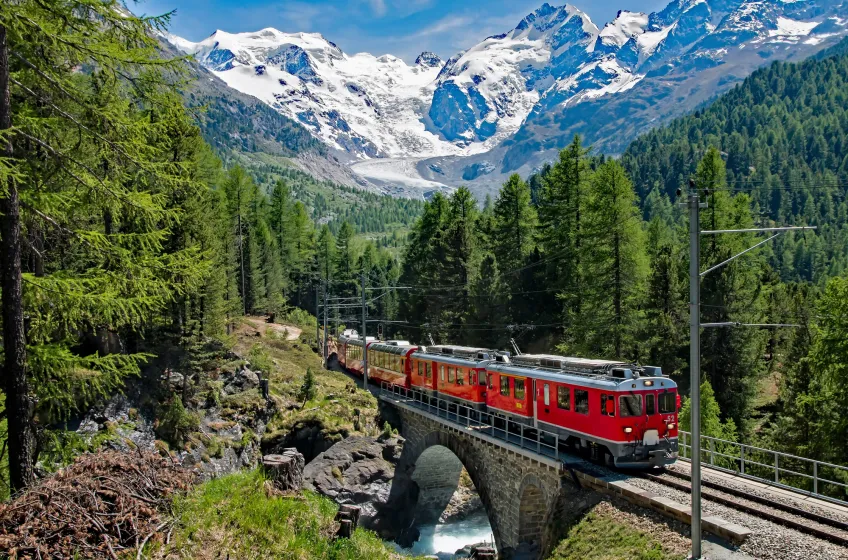
Arguably Switzerland’s most scenic train journey, the Bernina Express travels from Chur (Graubünden’s capital) to Tirano in Italy, crossing the UNESCO-listed Albula and Bernina railway lines. This route takes you through spiral tunnels, over dramatic viaducts, and past glaciers and mountain lakes, all from the comfort of panoramic train carriages. It's a must for anyone wanting to soak up the region’s beauty without hiking boots or skis.
Davos
Famous for the annual World Economic Forum, Davos is also a major alpine resort with a rich offering of outdoor activities all year round. In winter, it boasts over 300 km of pistes, and in summer, it’s a paradise for mountain biking and hiking. The town also has a strong spa tradition, with wellness centres and the high-altitude air drawing visitors since the 19th century. The Kirchner Museum, showcasing the work of German expressionist Ernst Ludwig Kirchner, is another cultural gem.
Swiss National Park
Located near Zernez in the Engadin valley, the Swiss National Park is the country’s oldest and only official national park. This protected area offers a rare glimpse into untouched Alpine wilderness, with marked trails that take you through dramatic landscapes of rocky cliffs, pine forests, and alpine meadows. Wildlife such as marmots, ibex, chamois, and golden eagles can often be spotted. Note that hiking is strictly regulated – stick to paths and leave no trace.
Chur
As Switzerland’s oldest city, Chur is full of charm and historical depth. Its compact old town is pedestrian-friendly and perfect for wandering, with winding lanes, colourful houses, and hidden courtyards. Highlights include the 12th-century Cathedral of Saint Mary and the Rätisches Museum, which explores the canton’s history. Chur is also a great base for exploring nearby mountains or boarding the Bernina and Glacier Express trains.
Arosa
Set at the end of a peaceful valley, Arosa is a family-friendly resort offering skiing in winter and lakeside fun in summer. It’s known for the Arosa Bear Sanctuary, where rescued bears from poor living conditions are given a second chance in a natural alpine environment. The scenic train ride from Chur to Arosa is worth the journey alone, winding through forested hills and across high bridges.
Soglio
Described by the poet Rainer Maria Rilke as “the gateway to paradise,” Soglio is a tiny mountain village in the Bregaglia Valley that captures the timeless beauty of the Alps. Stone houses, narrow lanes, and views of the towering Sciora mountains make this an ideal spot for a quiet retreat. It’s also a great base for walks in the surrounding countryside.
The Viamala Gorge
A dramatic natural feature near Thusis, the Viamala Gorge is a steep, narrow chasm carved by the Hinterrhein river. Wooden walkways and stairs allow you to descend into the gorge and admire the turquoise water and swirling rock formations. It’s a short but impressive visit, combining nature, geology, and a bit of vertigo.
Lake Cauma and Lake Cresta
Near the town of Flims, these two alpine lakes are known for their surreal turquoise colour and idyllic settings. Surrounded by pine forest and mountain peaks, they’re perfect for summer swimming, picnicking, or renting a rowboat. Lake Cauma even has a floating restaurant and sunbathing platforms, making it feel like an alpine beach escape.
The Engadin Valley
Stretching from the Maloja Pass to the Austrian border, the Engadin is one of the most striking valleys in the Alps. With its bright light, deep blue skies, and traditional villages like Guarda and Scuol, it’s a dream for nature lovers. Scuol is also known for its mineral springs and historic spa culture, while the entire valley offers hiking, cross-country skiing, and scenic drives.
Guarda
This picture-perfect village perched on a sunny slope in Lower Engadin is famous for its painted houses and well-preserved architecture. Recognised as a site of national importance, Guarda is also the setting for the beloved children’s book Schellen-Ursli. It’s a peaceful and culturally rich stop, especially for those interested in traditional Romansh culture.
Valposchiavo
Tucked away in the Italian-speaking part of Graubünden, this remote valley feels worlds away from the rest of Switzerland. It offers a taste of Italian charm mixed with alpine landscapes, and is known for its slow food ethos, organic farming, and picturesque villages like Poschiavo. It’s also the final destination of the Bernina Express, making it easily accessible.
Heidi Village in Maienfeld
Fans of Johanna Spyri’s classic children’s book Heidi can visit the place that inspired the story. Maienfeld, located in the northern part of the canton, is home to a reconstructed "Heidi House" and trails that bring the story to life against a backdrop of vineyards and mountain pastures. It’s a fun and family-friendly stop that blends literature with landscape.
Splügen Pass and San Bernardino Pass
For a scenic drive or a bit of Alpine history, these two mountain passes offer jaw-dropping views and a sense of old-world travel. The Splügen Pass in particular is a winding road of hairpin turns and remote charm, connecting Switzerland with Italy. In summer, both are popular routes for motorcyclists, cyclists, and adventurous road-trippers.
Practical Advice for Visitors
Getting There
Graubünden is well connected to the rest of Switzerland and beyond. The easiest way to reach the region is by train, especially via Zurich, which is about 90 minutes by rail to Chur. From Chur, regional trains and buses provide access to the rest of the canton, including popular resorts like Davos, Arosa, and St. Moritz. For scenic travel, the Glacier Express and Bernina Express are not just transport but experiences in their own right.
Driving is also a good option, particularly if you want to explore the more remote valleys, but be prepared for narrow mountain roads and potential snow in winter. The San Bernardino Tunnel and Julier Pass are key routes into the region, depending on the season.
Parking
Most major resorts and towns have ample parking, though it can be expensive and limited during high season. In places like St. Moritz and Davos, parking garages are common, and your accommodation may offer on-site parking. In smaller villages, street parking may be limited to residents, so check signs carefully. Always keep snow chains in winter.
Dining
Graubünden’s cuisine is hearty, rustic, and locally rooted. Be sure to try regional specialities like capuns (Swiss chard-wrapped dumplings), pizokel (a type of pasta or dumpling), and Bündnerfleisch (air-dried beef). Alpine restaurants often serve dishes made from local cheese and mountain herbs. For a fine dining experience, look for gourmet spots in St. Moritz or boutique hotels with acclaimed kitchens.
In towns like Chur and Scuol, you’ll also find charming cafés and wine bars. In the Italian-speaking south, expect polenta, risotto, and Mediterranean flavours.
Shopping
Graubünden offers a good mix of artisan crafts, outdoor gear, and local food products. Chur and Davos have the best range of shops, including boutiques, bakeries, and cheese shops. Don’t leave without sampling local Alpine cheese, nut cakes (Nusstorte), or handwoven woollen goods. In Poschiavo and other southern valleys, you’ll find Italian-influenced delicacies and handmade pastas.
When to Visit
Winter (December to March) is peak ski season, with snow-covered landscapes and festive atmosphere. Summer (June to September) is ideal for hiking, cycling, and lake swimming, with warm days and cool nights. Autumn brings colourful foliage and quieter trails, making it a favourite for photographers and walkers.
Avoid the shoulder months (April and November) if you’re hoping for mountain activities, as many resorts shut down between seasons.
Local Events
Key annual events in Graubünden include the Snow Polo World Cup and White Turf horse racing on the frozen lake in St. Moritz (January–February), the Davos Festival (classical music in August), and the Churer Fest (summer street festival in Chur). In many villages, traditional celebrations tied to the Alpine calendar – such as Alpabfahrt (cow descent in autumn) – are colourful and authentic.
Exploring Beyond Graubünden
If you have time, the neighbouring regions of Ticino and the Lake Como area in Italy are within easy reach, especially via the Bernina Pass. Closer to home, the Walensee (Lake Walen) and the Glarus Alps offer more hiking and lake views. Liechtenstein is also just over an hour from Chur and makes for a quirky side trip with its own castles and capital.
Graubünden is more than just a pretty backdrop – it’s a living, breathing part of the Swiss Alps where tradition, nature, and quiet adventure intertwine. Whether you're chasing powder in Davos, tracing the route of the Bernina Express, or simply relaxing with a view of the mountains, you'll find Graubünden's appeal runs deep.
Shortlist
- Your Shortlist is empty