
The Romantic Road | A Visitor's Introduction to The Romantic Road
Recommended places to visit, places to stay and things to do along The Romantic Road
The Romantic Road is one of Germany’s most iconic and picturesque tourist routes, stretching approximately 350 kilometres (about 220 miles) from Würzburg in northern Bavaria to Füssen in the south, near the Austrian border. Known for its fairy-tale castles, half-timbered towns, medieval walled cities, and scenic countryside, the Romantic Road is a dream journey through the heart of Bavaria and Baden-Württemberg. Perfect for road-trippers, history buffs, photographers, and lovers of quaint European charm, this route encapsulates the storybook image of Germany that many travellers dream of.
Search: All Romantic Road Accommodation
Pre-book: Romantic Road Attractions, Tours & Experiences
Why is the Romantic Road Worth a Visit?
The Romantic Road is worth visiting for its unrivalled blend of historical richness, breathtaking landscapes, and cultural variety. This route connects some of Germany’s most photogenic and historically important towns and landmarks, offering travellers an immersive experience through the centuries. From grand baroque palaces and medieval fortifications to vibrant local traditions and alpine backdrops, the Romantic Road delivers a taste of “Old World” Europe with every stop.
This scenic journey is more than just a route—it’s a deep dive into the culture and soul of southern Germany. Whether you're enjoying a plate of hearty Bavarian fare in a timber-framed gasthaus, wandering through cobbled streets, or gazing at snow-capped peaks from a mountaintop castle, the Romantic Road delivers charm and adventure in equal measure. The pace is as relaxed or packed as you like, making it a fantastic choice whether you're on a romantic getaway, a family holiday, or a solo cultural trip.
Romantic Road Highlights: Things to See and Do on the Romantic Road
Würzburg
At the northern gateway to the Romantic Road, Würzburg is a vibrant university town famous for its wine and baroque architecture. The jewel here is the Würzburg Residence, a UNESCO World Heritage Site and one of the most opulent palaces in Germany, complete with a stunning staircase and frescoed ceilings by Tiepolo. Don’t miss the Marienberg Fortress, which offers panoramic views over the Main River and vineyards, and the Old Main Bridge, which is lined with statues and often alive with music and wine stalls.
Rothenburg ob der Tauber
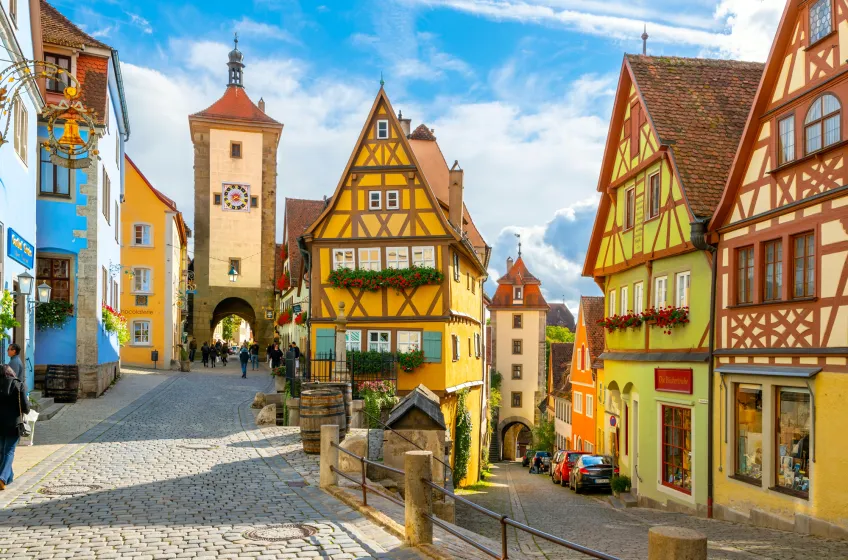
Arguably the most iconic stop on the Romantic Road, Rothenburg ob der Tauber is a perfectly preserved medieval town that looks like it stepped out of a Brothers Grimm fairy tale. Surrounded by intact city walls, Rothenburg features charming narrow lanes, timber-framed houses, and the picturesque Plönlein corner—one of the most photographed spots in Germany. Climb the Town Hall Tower for great views, visit the Medieval Crime Museum for some fascinating (and macabre) history, and don’t leave without trying a Schneeball, the town’s signature sweet pastry.
Dinkelsbühl
Often overshadowed by its famous neighbour Rothenburg, Dinkelsbühl is a hidden gem with its own fair share of medieval charm. Unlike many towns, Dinkelsbühl was spared from destruction in both World Wars, so its historical buildings are authentic and remarkably intact. Walk the town’s perimeter along the old walls, explore the St. George’s Minster, and enjoy the peaceful atmosphere of its colourful squares.
Nördlingen
Unique for being built inside a 15-million-year-old meteorite crater, Nördlingen is another walled medieval town that stands out for its geology as well as its architecture. You can walk the entire circumference of the old city wall and climb the Daniel Tower of St. George’s Church for fantastic views of the perfectly round town. Keep an eye out for buildings containing suevite, a rare rock formed by the meteor impact.
Augsburg
One of Germany’s oldest cities, Augsburg offers a richer, more urban contrast to the quaint towns along the route. It was once a Free Imperial City and a major centre of banking and commerce during the Renaissance. Visit the Fuggerei, the world’s oldest social housing complex still in use, founded by the wealthy Fugger family. Explore the Augsburg Cathedral, admire the fountains and architecture along Maximilianstraße, and learn about the city’s Roman roots at the Roman Museum.
Landsberg am Lech
Set on the banks of the turquoise Lech River, Landsberg is a smaller town that exudes tranquillity and charm. Its colourful facades, fortified gates, and lively market square are picture-perfect, and the town is a lovely place to pause and wander. The Mother’s Tower (Mutterturm) and historic Bayertor Gate are notable landmarks. It’s also a good place to enjoy a riverside stroll or stop at a café.
Schongau and Peiting
These twin towns are less touristy but offer a chance to see authentic Bavarian life away from the crowds. Schongau retains parts of its old city wall and medieval character, while Peiting offers beautiful natural landscapes and opportunities for walking and cycling. They make a great stopover before heading into the alpine foothills.
Wieskirche (Pilgrimage Church of Wies)
This dazzling rococo church in a peaceful alpine meadow is a UNESCO World Heritage Site and a major pilgrimage destination. The Wieskirche is renowned for its stunning interior with pastel frescoes and gilded stucco, set against a backdrop of green fields and blue mountains. It's free to enter and well worth a detour even if you're not religious—it’s simply one of the most beautiful churches in Germany.
Neuschwanstein Castle
The Romantic Road concludes (or begins, depending on your direction) with the world-famous Neuschwanstein Castle, perched dramatically above the village of Hohenschwangau near Füssen. Built by King Ludwig II and modelled after a medieval knight’s castle, this 19th-century fantasy inspired Disney’s Cinderella castle and is one of the most photographed landmarks in the world. Take the tour inside for a glimpse of the king’s eccentric vision, then hike up to Marienbrücke for that classic panoramic shot. Note that timed tickets sell out fast—book in advance.
Füssen
Nestled in the Bavarian Alps, Füssen is a beautiful alpine town with cobbled lanes, baroque churches, and a lovely riverside setting. It’s the ideal end-point to your journey. Visit the High Castle (Hohes Schloss) with its trompe-l’œil painted facade, enjoy lakeside walks, or simply relax in a beer garden with mountain views. Füssen is also a popular starting point for hiking or heading deeper into the Alps.
Practical Advice for Visitors
Getting There
The Romantic Road can be travelled in either direction, but most visitors begin in Würzburg and end in Füssen. Driving is the most flexible and popular way to explore the route, as it allows for stops in smaller towns and countryside detours. However, a Romantic Road Coach service runs from spring through autumn, connecting the main stops for those without a car. Trains also service some sections, especially between larger towns like Würzburg, Augsburg, and Füssen, though connections to smaller villages may be limited.
From Frankfurt, Würzburg is just 1.5 hours by train or car. Füssen is about two hours from Munich by train or road.
Parking
Most towns along the Romantic Road have well-organised car parks just outside the historic centres, which are often pedestrianised. Expect to pay for parking, typically around €1–€2 per hour or €6–€10 per day. In busier towns like Rothenburg and Neuschwanstein, parking fills quickly, so arrive early, especially in peak season.
Dining
You’ll be spoiled for choice when it comes to traditional German cuisine. Local specialities include Schnitzel, Spätzle (soft egg noodles), Bratwurst, and Rostbraten (roast beef). In Würzburg, try the local Franconian wine, while Bavaria is beer territory, with Weißbier (wheat beer) a staple. Stop at traditional Gasthäuser or Biergärten for hearty meals in cosy surroundings.
In Rothenburg, seek out Zur Höll, one of the town’s oldest inns. In Füssen, Gasthof Krone is a favourite for regional dishes with a modern twist.
Shopping
Each town offers unique shopping experiences, from Rothenburg’s famed Käthe Wohlfahrt Christmas Village (open year-round) to artisan craft shops, wine boutiques, and cuckoo clock stores. Dinkelsbühl and Nördlingen also have charming little boutiques and local craft shops. Keep an eye out for hand-carved wooden figures, traditional clothing, and locally produced beer or wine.
When to Visit
Spring and early autumn are ideal for avoiding crowds while enjoying pleasant weather. May to June sees blooming flowers and lush greenery, while September to early October offers cooler temperatures and autumn colours. Summer (July and August) is the busiest and warmest period, but towns can get crowded, especially around Neuschwanstein.
Winter has its own magic, particularly in Rothenburg and Würzburg, where Christmas markets fill the towns with festive charm and warming mulled wine. Snow adds a fairy-tale touch, but some attractions have limited hours, and mountain roads may be trickier to navigate.
Local Events
Each town has its own calendar of local festivals. Highlights include:
-
Rothenburg’s Meistertrunk Festival (Whitsun): A historical re-enactment celebrating the town’s survival in the Thirty Years’ War.
-
Dinkelsbühler Kinderzeche (July): A colourful children's parade with traditional costumes.
-
Augsburg Peace Festival (August 8): A public holiday celebrated only in Augsburg, commemorating religious peace.
-
Würzburg Wine Festivals (May–September): Numerous events celebrating local Franconian wines.
-
Christmas Markets (late November–December): Found in nearly every town along the route, with Rothenburg’s Reiterlesmarkt being a standout.
Exploring Beyond the Romantic Road
If you have extra time, consider extending your journey to explore the nearby Bavarian Alps for hiking, skiing, or spa retreats. From Füssen, it’s a short drive to Garmisch-Partenkirchen, home of the Zugspitze, Germany’s highest peak.
Alternatively, visit Lake Constance (Bodensee) to the southwest for lakeside relaxation and even cross-border day trips to Switzerland or Austria. To the north, Bamberg, a UNESCO World Heritage town, is about 90 minutes from Würzburg and known for its smoked beer and medieval centre.
Final Thoughts
The Romantic Road is more than a scenic route—it’s a journey through history, landscape, and the soul of southern Germany. With its blend of majestic castles, storybook towns, alpine beauty, and rich cultural traditions, it offers something unforgettable for every type of traveller. Whether you drive the full route or pick a few key stops, you’ll be left enchanted by the charm, warmth, and timeless allure of the Romantic Road.
Shortlist
- Your Shortlist is empty