
Discover Nuremberg | A Visitor's Introduction to Nuremberg
Recommended places to visit, places to stay and things to do in and around Nuremberg
Nuremberg is a captivating city in the Franconian region of Bavaria, Germany, steeped in medieval charm and layered with significant historical depth. Known for its impressive castle, half-timbered houses, and pivotal role in both the Holy Roman Empire and 20th-century world events, Nuremberg seamlessly blends the old and the modern. This city is a perfect destination for history buffs, Christmas market lovers, architecture enthusiasts, and foodies with a taste for hearty German fare. With its winding cobbled streets, atmospheric old town, and vibrant cultural life, Nuremberg offers an immersive and varied travel experience.
Recommended Nuremberg accommodation: Hotels Apartments
Pre-book Nuremberg Attractions, Tours & Experiences
Why is Nuremberg Worth a Visit?
Nuremberg is worth visiting for its fascinating historical tapestry, well-preserved medieval architecture, and vibrant cultural scene. Once the unofficial capital of the Holy Roman Empire, it was a major hub of commerce, art, and politics during the Middle Ages. The city’s rich legacy is visible in its architecture, from the mighty Nuremberg Castle to the grand churches that punctuate the skyline.
But Nuremberg isn’t only about the past. It’s also a lively, youthful city with bustling markets, eclectic museums, a thriving arts scene, and one of the most famous Christmas markets in the world. The culinary scene is equally impressive, anchored by regional specialities like Nürnberger Rostbratwurst and Lebkuchen (gingerbread). Whether you're keen to dive into history, explore atmospheric streets, or sip a beer in a medieval cellar pub, Nuremberg is a delight to discover.
Nuremberg Highlights: Things to See and Do in Nuremberg
Nuremberg Castle (Kaiserburg)
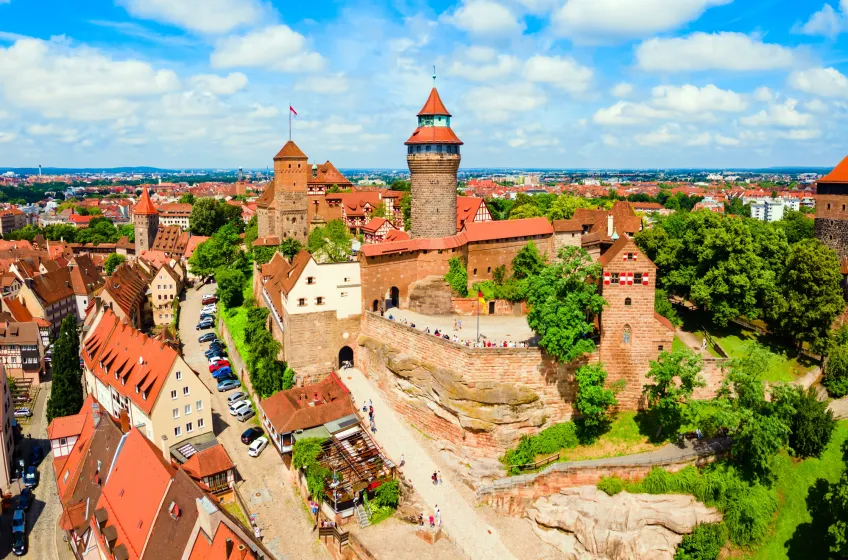
Towering over the city from a sandstone ridge, Nuremberg Castle is one of Germany’s most important imperial castles. This vast complex once hosted Holy Roman Emperors and is a striking symbol of the city’s historical significance. The climb up is rewarded with panoramic views over the Altstadt (Old Town), and inside, visitors can explore the castle museum, the Deep Well, and the Sinwell Tower. Arrive early to avoid crowds and give yourself at least an hour or two to explore.
Albrecht Dürer’s House
Art lovers shouldn’t miss the former home of Albrecht Dürer, one of the Renaissance’s most celebrated painters. Located near the castle, this 15th-century half-timbered house offers a glimpse into Dürer’s life and work through interactive exhibits and restored living quarters. It’s a rare example of a historic artist’s residence still standing and adds a personal touch to the city's artistic heritage.
Documentation Centre Nazi Party Rally Grounds
For those interested in 20th-century history, this powerful museum is a must-visit. Housed in a wing of the unfinished Congress Hall built by the Nazis, the museum explores the rise of National Socialism, the propaganda machine behind the Nazi party, and Nuremberg’s role in it all. The exhibition is sobering and excellently curated, offering essential context to Germany’s recent history. Allow at least two hours for a visit.
St. Lorenz Church (Lorenzkirche)
This stunning Gothic church is one of the city’s most beautiful and prominent religious buildings. Built in the 13th century and heavily restored after WWII, its elaborate façade, rose window, and intricate stonework are mesmerising. Inside, visitors can view exquisite artwork, including the Angelic Salutation by Veit Stoss. The organ music during services or concerts is also well worth hearing.
Hauptmarkt and the Nuremberg Christmas Market
The main square, Hauptmarkt, is a focal point of the old town and home to the world-famous Christkindlesmarkt (Christmas Market), which lights up the city from late November to Christmas Eve. This traditional market is one of the oldest and most atmospheric in Germany, featuring rows of wooden stalls selling festive crafts, mulled wine, and Nuremberg's signature gingerbread. Even outside the festive season, the square buzzes with activity and hosts weekly markets.
Schöner Brunnen (Beautiful Fountain)
Located in the Hauptmarkt, this ornate 14th-century fountain is one of the city’s most iconic landmarks. Designed like a Gothic spire, it features 40 colourful figures representing philosophy, theology, and key figures of the Holy Roman Empire. Visitors traditionally spin the golden ring on the fence for good luck—look for the inconspicuous brass ring embedded in the ornate grill.
Germanisches Nationalmuseum
This vast museum houses the largest collection of cultural and historical artefacts in the German-speaking world. From medieval art and weaponry to musical instruments and fashion, the Germanisches Nationalmuseum is a treasure trove for curious minds. Don't miss the stunning cloistered courtyards and the historical scientific instruments section.
Nuremberg Trials Memorial and Courtroom 600
Courtroom 600, where the Nuremberg Trials were held after WWII, is still used today but is open to the public when not in session. A detailed exhibition and audio guide walk you through the events and legacy of these historic trials, including films, personal testimonies, and artefacts. It’s a moving and intellectually engaging site that’s not to be rushed.
Handwerkerhof (Craftsmen's Courtyard)
Just inside the medieval walls near the Königstor gate, Handwerkerhof is a charming little area that recreates the feel of a medieval artisan village. It’s home to local craftspeople selling handmade goods like leather, pewter, and glassware, and there are also traditional Franconian eateries to enjoy. It’s a great spot for picking up authentic souvenirs in a picturesque setting.
Tiergärtnertorplatz and Weißgerbergasse
These neighbouring areas in the Altstadt are perfect for a scenic stroll. Tiergärtnertorplatz is a lovely square flanked by colourful half-timbered houses and local cafés, while Weißgerbergasse is one of the best-preserved medieval streets in the city. With its photogenic buildings and relaxed vibe, it’s a great place for a leisurely afternoon wander.
Nuremberg Transport Museum
Train and history enthusiasts will enjoy this museum, which is one of the oldest of its kind. Exhibits cover the history of the German railway system, with impressive full-size locomotives, interactive displays, and a model railway. There's even a section devoted to communication history and postal services.
Pegnitz River and City Walls Walk
Nuremberg’s old town is bisected by the picturesque Pegnitz River, creating a postcard-worthy setting of arched bridges and medieval towers. A walk along the riverside paths or atop the old city walls offers beautiful views and quiet corners to relax. Don’t miss the Henkersteg (Hangman’s Bridge), one of the city’s most iconic timber structures.
Museum Tucher Mansion
This Renaissance townhouse gives a glimpse into the life of Nuremberg’s wealthy patricians during the 16th century. With beautifully preserved interiors, lush gardens, and period furniture, it’s a lesser-known gem that offers a quieter, more intimate cultural experience.
Practical Advice for Visitors
Getting There
Nuremberg is well-connected by rail, road, and air. The city has its own international airport (NUE), just 15 minutes from the city centre by U-Bahn. Direct flights from major European cities make it a convenient gateway. High-speed ICE trains link Nuremberg to Munich (just over 1 hour), Frankfurt (2.5 hours), and Berlin (around 3 hours). If driving, the city is well served by the A3, A6, and A9 motorways.
Parking
Driving in Nuremberg is straightforward, but the Altstadt can be tricky for parking. There are several car parks around the old town perimeter such as Parkhaus Hauptmarkt, Parkhaus Adlerstraße, and Sterntor, which are well signposted. Expect to pay between €1.50–€2.50 per hour. Park-and-ride options are available at U-Bahn stations outside the city centre.
Dining
Nuremberg’s culinary scene is hearty and delicious. Try the city’s famous Nürnberger Rostbratwurst, small spiced sausages traditionally served three at a time in a bun or on a plate with sauerkraut. Bratwurst Röslein and Zum Gulden Stern are popular spots for traditional fare. For Franconian cuisine with a modern twist, head to Albrecht-Dürer-Stube or Essigbrätlein (a Michelin-starred option). Cafés like Café Neef and Konditorei Beer offer excellent coffee and cakes.
Shopping
The old town is packed with unique boutiques, bookshops, and specialty food stores. Look out for Lebkuchen Schmidt for beautifully packaged Nuremberg gingerbread, or Kathe Wohlfahrt for traditional Christmas decorations year-round. The pedestrianised Karolinenstraße and Breite Gasse are main shopping streets featuring both global brands and local names.
When to Visit
The best time to visit Nuremberg depends on what you're looking for. For festive charm, December is unbeatable thanks to the Christmas Market. Spring and early autumn (April–June and September–October) offer pleasant weather and fewer crowds. Summer can be lively but warm, with plenty of outdoor events and beer gardens in full swing. Winter is cold but magical if you don’t mind the chill.
Local Events
The Nuremberg Christkindlesmarkt is the city’s flagship event, running from late November until Christmas Eve. The opening ceremony with the Christkind angel on the church balcony is especially memorable. Other highlights include the Blaue Nacht (Blue Night) in May, a city-wide art and light festival, and the Nürnberger Volksfest, a traditional Bavarian fair held in spring and autumn. The International Human Rights Film Festival and the Nuremberg Bardentreffen (a huge world music festival) draw creative crowds.
Exploring Beyond Nuremberg
If you have extra time, the Franconian countryside offers a wealth of day trips. The picturesque town of Bamberg (about an hour away by train) is a UNESCO World Heritage Site with a stunning old town and unique smoked beer. Rothenburg ob der Tauber, another medieval gem, is a bit farther but worth the detour for its fairy-tale architecture. Regensburg and Würzburg are also easily accessible for a full-day adventure and rich in Baroque and Romanesque architecture.
Nuremberg strikes a perfect balance between historical richness and modern vibrancy. Whether you're wandering through medieval streets, learning about world-changing events, or enjoying a bratwurst under the stars, this Bavarian city delivers depth, charm, and plenty of reasons to linger.
Shortlist
- Your Shortlist is empty