
A Visitor's Introduction to Baden-Württemberg
Recommended places to visit, places to stay and things to do in Baden-Württemberg
Baden-Württemberg is one of Germany’s most picturesque and culturally rich states, stretching from the Black Forest to the shores of Lake Constance and bordering France, Switzerland, and Austria. Known for its medieval towns, romantic castles, rolling vineyards, and innovative cities, Baden-Württemberg is a place where fairy tales meet cutting-edge technology. It’s the home of Mercedes-Benz and Porsche, the setting of Grimm-like landscapes, and one of Germany’s most important wine regions. Whether you’re seeking outdoor adventure, culinary delights, or architectural splendour, this southwestern gem offers something for every traveller.
Recommended Baden-Württemberg accommodation: Hotels Bed & Breakfasts Holiday Homes
Pre-book Baden-Württemberg Attractions, Tours & Experiences
Why is Baden-Württemberg Worth a Visit?
Baden-Württemberg is worth visiting because it brings together the best of Germany’s cultural, natural, and culinary traditions. The Black Forest (Schwarzwald) is a haven for hikers, bikers, and spa enthusiasts, while Lake Constance (Bodensee) offers Mediterranean-style relaxation with views of the Alps. Cities like Stuttgart and Karlsruhe showcase modern innovation and vibrant cultural life, while Heidelberg and Freiburg embody the romantic spirit of old Germany with cobbled streets and Gothic architecture.
Food and drink are another highlight. Baden-Württemberg is one of Germany’s gourmet capitals, boasting Michelin-starred restaurants, hearty Swabian cuisine (think Maultaschen dumplings and Spätzle noodles), and fine wines from the Neckar and Kaiserstuhl vineyards. Add in thermal spas, medieval castles, and some of Germany’s sunniest weather, and you’ll see why Baden-Württemberg is a must.
Baden-Württemberg Highlights: Things to See and Do in Baden-Württemberg
Heidelberg
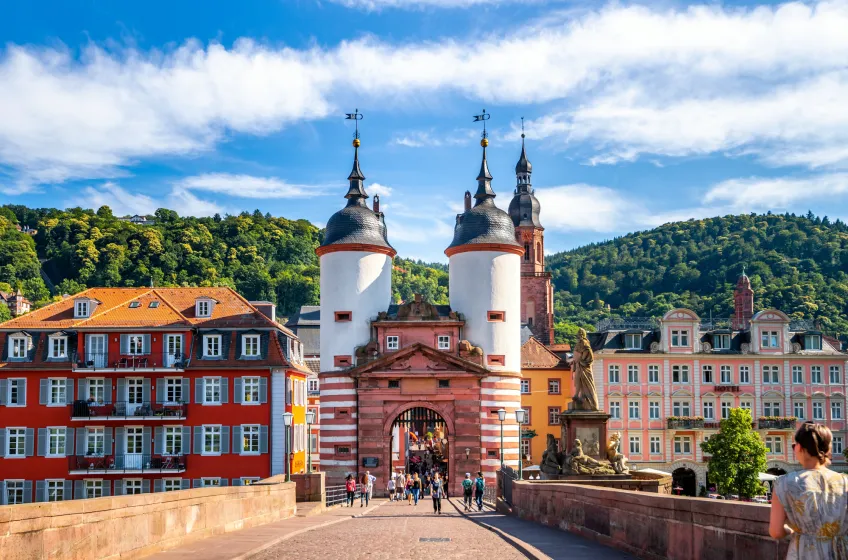
Heidelberg is perhaps Germany’s most romantic city, famed for its ruined Heidelberg Castle overlooking the Neckar River. The Old Bridge and Altstadt (Old Town) are perfect for wandering, with baroque houses and lively student pubs. The city’s university, one of Europe’s oldest, adds youthful energy. A climb (or funicular ride) up to the castle rewards you with sweeping views of the river valley.
Stuttgart
The state capital, Stuttgart, is both an industrial powerhouse and a cultural hub. Car lovers flock to the Mercedes-Benz Museum and the Porsche Museum, both architectural landmarks as well as showcases of automotive history. The city also has a fine art museum, a grand opera house, and the lovely Wilhelma Zoo and Botanical Garden. Surrounded by vineyards, Stuttgart is unique among big cities for its wine-growing heritage.
The Black Forest (Schwarzwald)
The Black Forest is the most iconic landscape in Baden-Württemberg, a region of dense woods, rolling hills, and traditional farmhouses with wide roofs. It’s ideal for hiking, cycling, and winter sports. Towns like Triberg, known for its waterfalls and cuckoo clocks, and Baden-Baden, a world-famous spa town, are highlights. Baden-Baden’s thermal baths and casino attract visitors from around the globe, while the Schwarzwaldhochstraße (Black Forest High Road) offers stunning scenic drives.
Freiburg im Breisgau
On the edge of the Black Forest, Freiburg is a sunny, laid-back university city. Its cathedral (Münster) is a Gothic masterpiece, and the medieval streets are lined with Bächle, small water channels that add charm. The city is also a gateway to the Kaiserstuhl wine region, known for excellent Pinot varieties, and is a model of eco-friendly urban planning.
Lake Constance (Bodensee)
Bordering Switzerland and Austria, Lake Constance is one of Europe’s largest lakes and a summer paradise. The island of Mainau, with its botanical gardens and butterfly house, is a highlight, while Lindau (just across the Bavarian border) offers a postcard-perfect harbour. The town of Konstanz has a vibrant old town and serves as a base for boat trips across the lake. Water sports, cycling, and vineyard visits are all popular here.
Ulm
Ulm is famous for its cathedral (Ulmer Münster), which boasts the tallest church spire in the world at 161 metres. Visitors can climb its 768 steps for incredible views. The city also has a pretty Fishermen’s Quarter with half-timbered houses, and it’s the birthplace of Albert Einstein.
Karlsruhe
Laid out in a fan-shaped design centred on its baroque palace, Karlsruhe is a lively city with a reputation for law and culture—it’s the seat of Germany’s Federal Constitutional Court. The ZKM (Centre for Art and Media) is a must for contemporary art lovers.
Tübingen
A quintessential university town, Tübingen is a jewel of half-timbered houses, cobbled streets, and a youthful vibe. The Neckar River is famous for its traditional Stocherkähne (punting boats), which glide past the pastel-coloured houses along the waterfront. The city feels like a step into the Middle Ages, but with bustling cafés and bookshops.
Hohenzollern Castle
Perched dramatically on a hilltop, Hohenzollern Castle is one of Germany’s most spectacular castles. Ancestral seat of the Prussian royal family, it looks straight out of a fairy tale, with towers, ramparts, and sweeping views of the Swabian Alps.
Schwäbische Alb (Swabian Jura)
The Swabian Alb is a rugged plateau of limestone cliffs, caves, and castles. Highlights include Lichtenstein Castle, a neo-Gothic gem perched on a cliff, and the Blautopf, a deep blue spring in Blaubeuren shrouded in legend. The Alb is also a UNESCO Geopark, known for fossils and Ice Age cave art.
Baden Wine Route (Badische Weinstraße)
Running along the edge of the Black Forest, this scenic wine route passes through rolling vineyards, baroque towns, and charming villages. Baden is Germany’s sunniest wine region, producing Riesling, Pinot Noir, and Müller-Thurgau. Wine festivals in late summer and autumn are a highlight of local life.
Maulbronn Monastery
A UNESCO World Heritage Site, Maulbronn Monastery is one of the best-preserved medieval monasteries in Europe. Founded in the 12th century by Cistercians, it’s a fascinating place to explore Romanesque and Gothic architecture in a tranquil setting.
Practical Advice for Visitors
Getting There
Baden-Württemberg is well connected. Stuttgart Airport offers international flights, while Frankfurt Airport (just north in Hesse) is a major gateway. The rail network links Stuttgart, Heidelberg, Freiburg, and Karlsruhe with ease. Driving is popular, especially for exploring the Black Forest, Lake Constance, and castles.
Parking
Cities like Stuttgart and Freiburg have multi-storey car parks and park-and-ride options. Smaller towns often have designated car parks outside their pedestrianised centres. Popular spots such as Heidelberg Castle or the Saarschleife viewpoint (if you extend into Saarland) can fill quickly in summer—arrive early.
Dining
Baden-Württemberg is a paradise for food lovers. Classic dishes include Maultaschen (stuffed pasta similar to ravioli), Spätzle (egg noodles often served with cheese), and Schwarzwälder Kirschtorte (Black Forest Gateau). The state is also home to more Michelin-starred restaurants than almost anywhere else in Germany. Pair your meal with a local wine or a glass of Federweißer (young wine) in autumn. In Stuttgart, try a traditional wine tavern, while in Baden-Baden, indulge in gourmet dining.
Shopping
Local souvenirs include cuckoo clocks from the Black Forest, wine from Baden or Württemberg, and traditional crafts such as woodcarvings. Freiburg and Heidelberg have lively markets, while Stuttgart and Karlsruhe offer modern shopping districts. Baden-Baden is known for luxury boutiques.
When to Visit
Spring and summer (April–September) are perfect for hiking, cycling, and wine tours, with festivals in full swing. Autumn (September–October) is wine harvest season, with colourful landscapes and food festivals. Winter is quieter but atmospheric, with charming Christmas markets in towns like Stuttgart, Heidelberg, and Freiburg. Skiing is possible in the Black Forest and Swabian Jura.
Local Events
-
Stuttgart Wine Village (late August–early September): One of Germany’s largest wine festivals.
-
Cannstatter Volksfest (late September–October): Stuttgart’s version of Oktoberfest, with rides, beer tents, and food.
-
Schwetzingen Asparagus Festival (May–June): Celebrating the region’s famous white asparagus.
-
Christmas Markets (December): Particularly atmospheric in Stuttgart, Heidelberg, and Freiburg.
-
Heidelberg Castle Illuminations (summer dates): Fireworks light up the castle and Neckar Valley.
Exploring Beyond Baden-Württemberg
From Baden-Württemberg, you can easily venture into neighbouring regions. To the west, Alsace (France) offers Strasbourg and Colmar. To the south, Switzerland and the Alps beckon, just across Lake Constance. To the north lies Hesse, with Frankfurt and the Rheingau wine region. The Romantic Road of Bavaria also begins nearby, leading to Rothenburg ob der Tauber.
Baden-Württemberg combines the elegance of its cities with the romance of its landscapes. Whether you’re sipping Riesling in a vineyard, relaxing in a thermal bath, hiking through the Black Forest, or exploring castles perched high on cliffs, the state captures the very best of Germany’s cultural and natural riches.
Shortlist
- Your Shortlist is empty