
A Visitor's Introduction to Rothenburg ob der Tauber
Recommended places to visit, places to stay and things to do in and around Rothenburg
Rothenburg ob der Tauber is a storybook town nestled in the heart of Bavaria, Germany, perched along the Romantic Road. Famed for its impeccably preserved medieval architecture, timber-framed buildings, and winding cobbled lanes, Rothenburg is a dreamlike destination that seems plucked straight from the pages of a fairy tale. This charming Franconian town is ideal for history lovers, photographers, romantic getaways, and anyone who wants to experience an authentic slice of medieval Europe. With its scenic walls, quaint squares, and unique museums, Rothenburg ob der Tauber offers a magical escape into the past.
Recommended Rothenburg Hotels & Other Accommodation
Pre-book Rothenburg Attractions, Tours & Experiences
Why is Rothenburg ob der Tauber Worth a Visit?
Rothenburg ob der Tauber is worth visiting for its extraordinary preservation of medieval heritage, a feat that few places in Europe can rival. The town, which dates back to the 10th century, gives visitors the rare chance to walk through a fully intact walled town that looks much as it did hundreds of years ago. The half-timbered houses, gothic churches, and defensive walls have all been meticulously maintained or restored, especially after damage in World War II.
What sets Rothenburg apart is not just its beauty, but the atmosphere. There’s a certain magic to wandering its lantern-lit streets in the evening, popping into a traditional bakery for a Schneeball pastry, or exploring its quirky museums. It also hosts world-famous seasonal events, including one of the most picturesque Christmas markets in Germany. Whether you're tracing the footsteps of medieval knights, admiring panoramic views from the ramparts, or just enjoying a slice of Franconian cuisine, Rothenburg offers a deeply enriching and visually stunning experience.
Rothenburg Highlights: Things to See and Do in Rothenburg ob der Tauber
The Town Walls
Rothenburg’s medieval city walls are among its most iconic features. Visitors can walk nearly the entire 1.5-mile length of the ramparts for a bird’s-eye view of the red-roofed town and surrounding countryside. Along the way, you’ll encounter ancient towers and gates, each with its own unique history. The Tower Trail (Turmweg) is well-marked and a fantastic self-guided walk for history buffs.
Plönlein and Siebers Tower
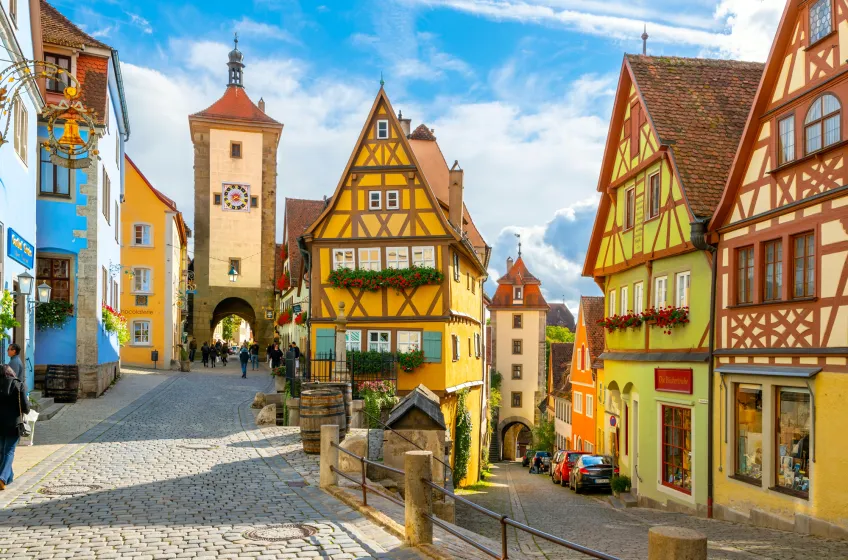
Arguably the most photographed corner of Rothenburg, Plönlein is a charming fork in the road framed by a crooked yellow house, the Siebers Tower, and the Kobolzeller Tower below. It looks exactly like a fairy tale illustration and is a must-see for any visitor. Early morning or late afternoon are the best times to snap photos without crowds.
Market Square (Marktplatz) and Town Hall (Rathaus)
The heart of Rothenburg’s social life, Marktplatz is a lovely square lined with historical buildings, cafés, and shops. The Town Hall combines Gothic and Renaissance architectural styles and features a 60-metre-high tower that visitors can climb for sweeping views over the town. Try to time your visit for 11am, 12pm, or 5pm when the famous clock on the square’s Ratstrinkstube building re-enacts the “Master Draught” legend with automated figures.
St. James’s Church (St. Jakobskirche)
This grand Gothic church houses one of the town’s true artistic treasures: the Holy Blood Altarpiece carved by Tilman Riemenschneider. Made from limewood in the early 1500s, it’s a stunning example of late-Gothic woodwork. The church also has beautiful stained glass and a quiet, spiritual atmosphere.
The Medieval Crime and Justice Museum
This unique and slightly macabre museum offers a deep dive into 1,000 years of crime, punishment, and legal history. Featuring everything from torture instruments to legal texts, it’s both fascinating and unsettling. Exhibits are well curated, with English translations available. It’s an eye-opening experience that appeals to older children and adults alike.
The Christmas Museum and Käthe Wohlfahrt Store
Open year-round, the Christmas Museum celebrates Germany’s rich festive traditions. Adjacent to it is the world-famous Käthe Wohlfahrt Christmas Village, a sprawling store selling every imaginable decoration, from handmade ornaments to nutcrackers and cuckoo clocks. It's an enchanting experience even outside the holiday season.
Burggarten and Castle Gate (Burgtor)
Though the original castle was destroyed in an earthquake, the surrounding gardens remain and are one of Rothenburg’s most peaceful spots. The Burggarten offers panoramic views over the Tauber Valley and is ideal for a picnic or a moment of quiet reflection. The nearby Burgtor gate is one of the strongest in the city walls and features a small museum inside.
Night Watchman’s Tour
This evening walking tour is one of Rothenburg’s most beloved attractions. Led by a costumed guide playing the role of the town's medieval night watchman, the tour is both humorous and informative, giving visitors a vivid sense of the town’s history after dark. Tours are available in English and German and run from spring through autumn.
The Imperial City Museum
Housed in a former Dominican convent, this museum showcases Rothenburg’s history as a Free Imperial City of the Holy Roman Empire. Exhibits cover religious art, medieval weaponry, and local culture. Don’t miss the 13th-century cloister garden and the atmospheric kitchen, preserved in its original medieval form.
Rothenburg’s Schneeballen
While not a sight in the traditional sense, tasting a Schneeball is a rite of passage here. These round, fried pastries made of shortcrust dough and dusted with sugar or dipped in chocolate come in dozens of flavours. You’ll find them at bakeries all over town – try Diller or Zuckerbäckerei Striffler.
Tauber Valley Walks and Cycling Trails
If you want a break from cobblestones, head down into the Tauber Valley. Scenic walking and cycling routes connect Rothenburg with nearby villages, vineyards, and forests. The Topplerweg is a great short walk, leading to the quirky Topplerschlösschen – a 14th-century summer house built on stilts.
RothenburgMuseum (formerly Reichsstadtmuseum)
This excellent museum gives a deeper insight into Rothenburg's civic history, including its time as a Reichsstadt (imperial city). It includes fascinating artefacts, armour, and even a full-scale medieval kitchen. It's a quieter, less tourist-heavy attraction perfect for a rainy day.
Practical Advice for Visitors
Getting There
Rothenburg ob der Tauber is most easily reached by train or car. From Nuremberg, the journey takes just under two hours by train, with a change in Steinach. From Munich or Frankfurt, the trip takes around three hours. Drivers can enjoy the scenic Romantic Road route, which connects Rothenburg to other picturesque Bavarian towns like Dinkelsbühl and Augsburg.
For international visitors, the nearest major airports are in Nuremberg (1.5 hours), Frankfurt (2 hours), and Munich (2.5–3 hours).
Parking
The old town is pedestrian-friendly, and driving within the walls is restricted. Several public car parks (P1 to P5) are located just outside the walls, all within walking distance. Parking fees are reasonable and usually charged by the hour or day. During peak tourist months, arrive early to secure a spot, especially near Plönlein or the main gates.
Dining
Rothenburg offers a delightful mix of traditional Franconian cuisine and modern German fare. For a hearty meal, try Gasthof Goldener Greifen or Zur Höll, one of the oldest taverns in town. Both serve classics like sausages with sauerkraut, Franconian roast pork, and spätzle.
For a more upscale experience, Restaurant Alter Keller is known for its seasonal menu and intimate setting. Vegetarians and lighter eaters will enjoy Michelangelo, an Italian restaurant just inside the town walls. Be sure to stop at Café Einzigartig for coffee and cake in a quirky, art-filled atmosphere.
And of course, don’t miss the Schneeball – love it or hate it, it's a local icon.
Shopping
Rothenburg is a haven for those who love browsing unique boutiques and traditional craft shops. Along Obere Schmiedgasse and Herrngasse you’ll find everything from hand-painted pottery to carved wooden toys and Christmas decorations.
The Käthe Wohlfahrt flagship store is a must-see, but also explore smaller shops like Weinstube Glocke for wine and regional products or Handwerkerhaus for handmade textiles and homeware. Antiques and traditional German glassware are also popular souvenirs.
When to Visit
The best times to visit Rothenburg are spring (April–June) and autumn (September–October), when the weather is pleasant and the crowds are manageable. Summer sees the highest number of tourists, particularly during weekends and school holidays.
Winter, though quieter, is magical thanks to the snow-dusted roofs and the Reiterlesmarkt, the town’s famous Christmas market that runs from late November to just before Christmas. It's one of the most atmospheric in Germany and well worth braving the cold for.
Local Events
Rothenburg has a busy cultural calendar that reflects its deep historical roots. The most famous annual event is:
Der Meistertrunk Festival (Whitsun weekend, usually May or June): This colourful historical reenactment celebrates the legendary moment when the town was saved from destruction in 1631 by a mayor who drank a huge tankard of wine in one go. Expect parades, costumes, and medieval flair.
Imperial City Festival (first weekend in September): A massive celebration of Rothenburg’s imperial history, with over 1,000 locals dressing up as medieval citizens, knights, and monks. There are markets, jousts, concerts, and fireworks.
Christmas Market (Reiterlesmarkt): One of Germany’s most beautiful festive markets, with twinkling lights, mulled wine, and carol singers set against a medieval backdrop.
Exploring Beyond Rothenburg ob der Tauber
If you have extra time, there are several delightful places nearby worth exploring:
Dinkelsbühl (about 45 minutes by car): Another Romantic Road gem with colourful houses and impressive ramparts, but with fewer tourists.
Würzburg (about 1 hour away): A baroque beauty known for the Residenz palace and Franconian wine.
Bad Windsheim (30 minutes): Visit the Franconian Open Air Museum for a deeper look at rural life in the region.
Schillingsfürst Castle (25 minutes): A baroque hilltop castle with eagle and falcon shows in summer.
Tauberzell and the Tauber Valley: Excellent for wine tasting and cycling through picturesque vineyards and fields.
Rothenburg ob der Tauber may be small in size, but it offers a truly unforgettable experience packed with charm, culture, and history. Whether you're visiting for a day or staying for a few nights, you'll find yourself enchanted by this timeless town.
Shortlist
- Your Shortlist is empty