
Discover Schwäbisch Hall | A Visitor's Introduction to Schwäbisch Hall
Recommended places to visit, places to stay and things to do in and around Schwäbisch Hall
Schwäbisch Hall is a beautifully preserved medieval town in Baden-Württemberg, set on the meandering River Kocher. Known for its timber-framed houses, broad market square and grand flight of steps up to St Michael’s Church, this historic town is a delight for lovers of architecture, theatre and art. With cobbled lanes, riverside promenades and first-rate museums, Schwäbisch Hall offers a characterful slice of southern Germany without the crowds.
Recommended Schwäbisch Hall Hotels & Other Accommodation
Pre-book Baden-Württemberg Attractions, Tours & Experiences
Why is Schwäbisch Hall Worth a Visit?
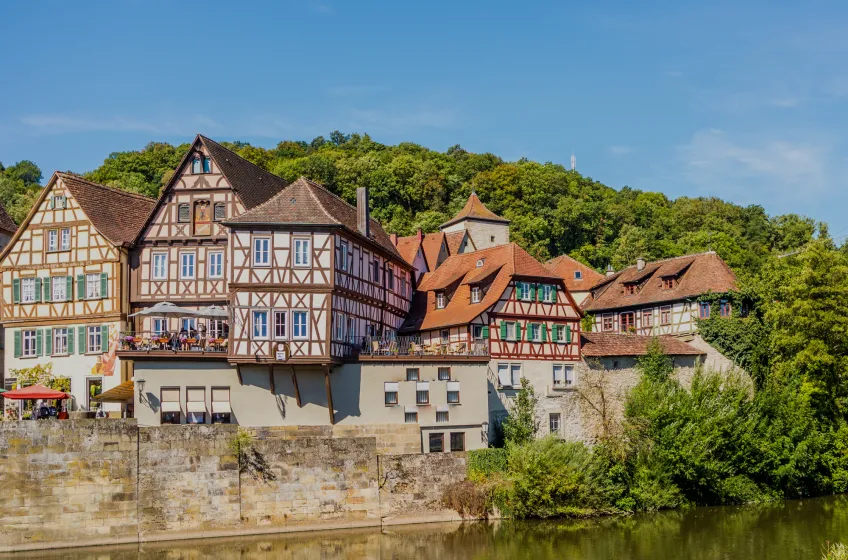
Schwäbisch Hall is worth visiting for its rare blend of medieval atmosphere and modern cultural clout. The old town climbs steeply from the river, revealing gabled houses, stone bridges and intimate squares that feel made for wandering. Its very name recalls centuries of salt production, which brought wealth and confidence to the city; today that heritage is woven through engaging museums and local traditions. At the same time, Schwäbisch Hall punches far above its weight in the arts, with outstanding galleries supported by the Würth Collection and an acclaimed summer open-air theatre staged on the iconic steps of St Michael’s. Whether you’re here for architecture, art, theatre, riverside strolls or regional Swabian food, the town rewards slow exploration and invites you to linger.
Schwäbisch Hall Highlights: Things to See and Do in Schwäbisch Hall
Marktplatz and St Michael’s Church
Begin on the magnificent Marktplatz, a broad, sloping square framed by handsome guild houses and the imposing St Michael’s Church. A sweeping staircase of stone steps rises to the church portal and doubles as one of Germany’s most dramatic theatre stages in summer. Come early or late in the day for golden light on the half-timbered façades, then step inside the church to admire its stately interior and lingering sense of calm. The square hosts markets and seasonal events, and it’s the natural heart of town life.
Kunsthalle Würth
This sleek, contemporary gallery brings a world-class rotating programme of modern and contemporary art to a medieval setting. Exhibitions draw from the expansive Würth Collection and visiting loans, presented in beautifully lit spaces. Even if you’re not a typical gallery-goer, the curating is accessible and the building itself is a striking contrast to the town’s historic fabric. It’s an easy cultural win on any itinerary.
Johanniterkirche – Würth Collection Old Masters
A few minutes’ walk from the Marktplatz, a deconsecrated Gothic church has been transformed into a serene museum space for Old Masters. The play of daylight through tall lancet windows gives paintings and sculpture a contemplative, almost weightless quality. It’s a superb place to slow down, appreciate craftsmanship and feel the centuries fold away around you.
Hällisch-Fränkisches Museum
Set within a cluster of historic buildings, this engaging local-history museum traces the story of the town and the wider Hohenlohe-Franconia region. Highlights include exhibits on salt-boiling traditions, medieval life and craft guilds, all brought to life with tangible, well-explained displays. It’s ideal early in your visit for context, and a good choice on a rainy day.
Kloster Großcomburg (Comburg Monastery)
Perched on a hill just outside the centre, the former Benedictine monastery of Großcomburg looks and feels like a small fortress, with ring walls, towers and sweeping views over the Kocher valley. Inside you’ll find monastic architecture, traces of Romanesque and Gothic art and restful green spaces. The walk up is part of the pleasure, or you can reach it by local bus or car if you prefer a gentler approach.
River Kocher Promenade and Footbridges
Follow the riverside paths to see the town from fresh angles, with reflections of timber-framed houses dancing on the water. The small footbridges and weirs are wonderfully photogenic, and you’ll find benches and grassy patches for impromptu picnics. In summer, café terraces spill towards the river; in autumn, the trees along the banks turn a painterly mix of gold and russet.
Freilichtspiele Schwäbisch Hall (Open-Air Theatre)
From roughly June to August, the grand staircase of St Michael’s transforms into a spectacular stage. The city’s open-air theatre is a beloved tradition, with plays and musicals performed against the atmospheric backdrop of the old town. Even if you don’t attend a performance, catching a rehearsal or simply seeing the set-up is a treat. If you do want tickets, book early for weekend shows.
Hallia Venezia (Venetian Carnival)
Each late winter, Schwäbisch Hall hosts a Venetian-style carnival that fills the old lanes with elaborate masks, silks and feathers. The town’s intimate scale makes this event feel personal and photogenic, and the combination of Renaissance colours with timbered houses is striking. It’s a unique twist on German carnival traditions and a memorable time to visit.
Christmas Market and Advent Atmosphere
In the run-up to Christmas, the Marktplatz becomes a storybook scene with twinkling stalls, spiced aromas and the church steps as a backdrop. Expect handicrafts, local delicacies and warming mugs of Glühwein. The setting is one of the loveliest in the region, and the old town’s lights and shop windows add to the festive mood.
Kocher-Jagst Cycle Route
Cyclists will enjoy sections of the Kocher-Jagst Radweg, a well-signposted route that follows two tranquil river valleys through rolling countryside. From Schwäbisch Hall you can spin out for a few leisurely hours or plan a full-day adventure via small villages, mills and meadows. Expect gentle gradients, plenty of picnic spots and the occasional castle on a hill.
Neubau and Contemporary Culture
Beyond the open-air shows, the town’s theatre company stages productions in its indoor venue, and there is a steady calendar of concerts, readings and small festivals through the year. Keep an eye on local listings; you may find chamber music in a church, jazz in a hall or an art talk that adds extra colour to your stay.
Practical Advice for Visitors
Getting There
By train, Schwäbisch Hall is served by the nearby Schwäbisch Hall-Hessental station, with regional services linking to Stuttgart, Heilbronn, Crailsheim and Nuremberg. From the station, frequent local buses and short taxi rides connect to the old town, though keen walkers can make the journey on foot in around 30–40 minutes depending on where you’re staying. If you’re driving, the town sits conveniently north of the A6 motorway between Heilbronn and Nuremberg; follow signs via the B19 into the centre. For air travel, Stuttgart is the closest major airport, with Nuremberg and Frankfurt also viable if you don’t mind a slightly longer train or motorway hop.
Parking
The medieval core is compact and largely pedestrian-friendly, so it’s best to leave the car in a multi-storey or edge-of-centre car park and explore on foot. Look for central car parks near the Kocher and on the eastern edge of the old town; signage is clear and spaces turn over reasonably quickly outside peak evenings and market times. If you’re staying overnight, ask your accommodation about guest rates or permits. On busy summer weekends and during Christmas market season, arrive earlier in the day to secure a spot without circling.
Dining
This is Swabia, so come hungry for hearty regional cooking. Classic dishes include Maultaschen (filled pasta, often served in broth or pan-fried with egg), Linsen mit Spätzle (lentils with homemade noodles and sausage), Zwiebelrostbraten (steak with crisped onions) and Flädlesuppe (broth with sliced crêpe). You’ll find traditional Gasthäuser around the old town serving these alongside seasonal game, asparagus in spring and mushrooms in autumn. For something lighter, cafés near the Marktplatz and along the river do generous cakes, pastries and excellent coffee. Beer fans should try a local Haller brew, while wine lovers can explore Württemberg bottles by the glass, including regional Riesling and Trollinger. Vegetarians and vegans are increasingly well catered for, especially at contemporary bistros and museum cafés.
Shopping
Independent boutiques, galleries and delicatessens are dotted through the lanes climbing from the Marktplatz. Look for regional products such as honey, jams, artisan chocolate, spices and local spirits, along with design stores showcasing ceramics and woodwork. A weekly market typically brings fresh produce and flowers to the square, with stalls that are as photogenic as they are tempting. For a rainy-day browse, a small modern shopping quarter by the river sits comfortably alongside the historic streets.
When to Visit
There isn’t a bad season, but your experience will differ. Summer brings long evenings, café terraces and the open-air theatre, with the town feeling lively from June through August. Spring and autumn are quieter and often ideal for walking and cycling, with blossom or foliage adding charm and hotel rates usually a touch softer outside school holidays. Winter is magical if you time it for Advent, when lights and markets transform the old town; January and February are the stillest months, though Hallia Venezia adds a burst of colour. Do note that many museums and restaurants close on Mondays, and that steep cobbles and steps can be slippery after rain or snow—bring sensible footwear year-round.
Local Events
Beyond the headline Freilichtspiele and Hallia Venezia, keep an eye out for classical concerts in churches, jazz nights, museum openings and one-off weekend festivals that celebrate regional foods or crafts. A summer wine evening or courtyard concert can be a highlight of a short break. If you’re visiting over a weekend, check Friday afternoon listings; tickets for smaller events often remain available and make a great spontaneous add-on.
Exploring Beyond Schwäbisch Hall
The surrounding Hohenlohe countryside is quietly beautiful and rich in day-trip options. Langenburg sits on a ridge above the Jagst with a stately castle and a small car museum, while Weikersheim offers a Renaissance palace with formal gardens that are especially lovely in late spring. Vellberg, a pocket-sized medieval town, charms with towers and walls perfect for an hour’s wander. Rothenburg ob der Tauber, one of Germany’s most famous walled towns, is reachable by car in about an hour and pairs well with Hall if you’d like to compare two very different medieval atmospheres in a single trip. Closer to hand, pack a picnic and walk the loop to Großcomburg for valley views, or follow a stretch of the Kocher-Jagst cycle route and let the river guide you to quiet mills and meadows.
A final word: Schwäbisch Hall rewards unhurried exploration. Take time to climb side streets that don’t appear on your initial plan, duck into courtyards, cross the river just because there’s a bridge, and sit on the church steps when they’re quiet to watch life ebb and flow around the square. It’s exactly the sort of town that turns a simple weekend into a set of warm, lingering memories.
Shortlist
- Your Shortlist is empty