
Discover Neuschwanstein | A Visitor's Introduction to Neuschwanstein
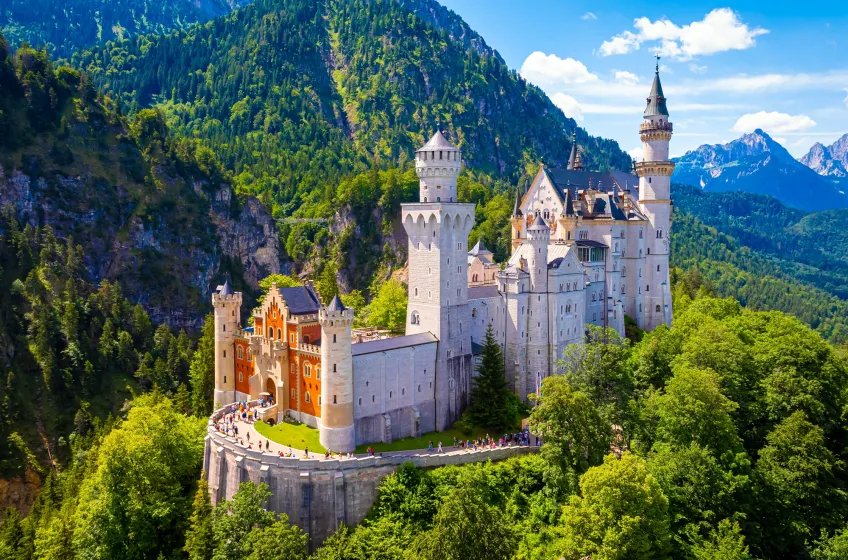
Neuschwanstein Castle is one of the most recognisable and frequently photographed landmarks in Germany. Located in the Bavarian Alps near the town of Füssen, this 19th-century Romanesque Revival castle was commissioned by King Ludwig II of Bavaria as a private retreat and homage to the operas of Richard Wagner. The castle stands perched on a rugged hill overlooking the Hohenschwangau valley, surrounded by dense forest and dramatic alpine scenery. Despite its medieval appearance, Neuschwanstein was constructed in the late 1800s, making it a relatively modern creation that combines historical romanticism with architectural innovation. Today, it is one of the most visited castles in Europe, drawing over a million tourists annually.
Pre-book Neuschwanstein tickets and tours
Recommended hotels and other accommodation near Neuschwanstein
Why is Neuschwanstein worth a visit?
Neuschwanstein Castle is worth visiting not only for its striking fairytale appearance but also for its historical significance, architectural design, and scenic setting. Although never completed, the castle offers a rare glimpse into the romantic imagination of King Ludwig II, who used it to retreat from public life and immerse himself in a world inspired by medieval legends and Wagnerian opera. Its elaborate interiors and technical innovations reflect both the artistic and technological aspirations of late 19th-century Europe.
Unlike many authentic medieval castles, Neuschwanstein was designed as an idealised version of one. It was never intended for defence, but instead for theatrical presentation. This distinction makes it a fascinating subject for those interested in the intersection of fantasy, history, and architectural artistry. Visitors can experience a castle that combines decorative features from Romanesque, Gothic and Byzantine styles with surprisingly modern conveniences such as central heating, running water and an early form of telephone.
The castle’s setting in the Bavarian Alps enhances its appeal. Panoramic views from the grounds and surrounding trails include the nearby Hohenschwangau Castle, Lake Alpsee, and the expansive forests of the Ammergebirge nature reserve. Neuschwanstein also offers a rich cultural experience, connecting with Germany’s broader history, royal legacy, and artistic traditions.
Highlights of Neuschwanstein Castle
The Throne Hall
The Throne Hall is among the most impressive rooms in the castle, designed in a Byzantine style with a magnificent chandelier, vaulted ceilings, and elaborate murals. While the throne itself was never completed, the rest of the room reflects Ludwig II’s vision of a sacred royal space, inspired by the architecture of churches and palaces from the Eastern Roman Empire. The floor mosaic and decorative wall paintings depict biblical and legendary figures, linking kingship to divine authority.
The Singer’s Hall
Located on the fourth floor, the Singer’s Hall was inspired by the Wartburg Castle’s banqueting hall and serves as a tribute to medieval minstrels and their music. It is one of the largest rooms in the castle and was designed to host theatrical performances and concerts. The room features murals illustrating scenes from Wagner’s operas and Germanic legends, including Lohengrin and Parsifal, which were central to Ludwig’s personal mythology.
The King’s Bedroom
In contrast to the grand public rooms, King Ludwig’s bedroom is a more intimate space but no less elaborate. The neo-Gothic woodcarvings in this room, particularly the ornate canopy above the bed, are remarkably detailed. The decoration includes motifs from the legend of Tristan and Isolde, another opera by Wagner. The room also has a hidden toilet and wash basin, highlighting the castle’s advanced plumbing systems for its time.
The Study and Living Room
King Ludwig’s study and adjacent living quarters continue the theme of operatic and medieval imagery. The study is decorated with scenes from Wagner’s Tannhäuser, and the living room features swan motifs, a reference to the legend of the Swan Knight and to the king’s own association with the swan as a personal emblem. These spaces, though private, are rich in symbolic decoration and craftsmanship.
The Kitchen
Although often overlooked, the castle’s kitchen showcases the modernity of Neuschwanstein’s design. Equipped with the latest technology of the 1880s, including automatic spits and a hot-air system, the kitchen offers insight into the behind-the-scenes operations of the castle. Its inclusion in tours reveals the contrast between the fantasy world of the royal chambers and the practical needs of running a household.
The Exterior Architecture
The castle’s exterior combines elements of Romanesque towers, Gothic turrets and balconies, and Byzantine arches, all blended into a single dramatic silhouette. The white limestone facade, blue-tiled roofs and steep gables evoke a romantic vision of a knight’s castle. Seen from afar, especially from Marienbrücke (Mary’s Bridge), the structure appears almost suspended in the landscape, making it one of the most photographed castles in the world.
Marienbrücke (Mary’s Bridge)
This bridge spans the Pöllat Gorge just behind the castle and offers some of the best views of Neuschwanstein. Originally built in 1845 by Ludwig’s father, King Maximilian II, the bridge was later reinforced with iron for better stability. It provides a popular vantage point for photographers and a dramatic perspective of the castle set against the alpine backdrop.
The Gatehouse and Courtyard
The approach to the castle begins with the lower gatehouse, built in red brick with defensive-style features such as arrow slits and battlements. Beyond this is the upper courtyard, which contains access points to the main residential areas. The courtyard’s blend of architectural styles and ornate decorative elements creates an atmospheric prelude to the castle interiors.
Museum of the Bavarian Kings
Located near the base of the hill in Hohenschwangau, this museum offers further context on the House of Wittelsbach, the ruling family of Bavaria. Exhibits include portraits, regalia, and personal items belonging to Ludwig II and his predecessors. Visiting the museum complements the castle tour by providing a deeper understanding of the dynasty’s history and the cultural backdrop to Ludwig’s vision.
The Castle Grounds and Walking Trails
The forested hills surrounding Neuschwanstein are crisscrossed with walking trails that allow visitors to experience the landscape that so inspired Ludwig II. Paths lead to Marienbrücke, nearby Hohenschwangau Castle, and the Alpsee lake. These trails vary in difficulty and offer different vantage points of the castle and surrounding scenery, particularly appealing during the autumn foliage or in winter snow.
Facilities
Neuschwanstein Castle is managed by the Bavarian Palace Department and offers well-organised visitor facilities. Entry to the castle is only possible with a guided tour, available in German, English, and several other languages through audio guides. Tour durations are relatively short (around 30 minutes), but provide access to the most significant rooms.
There is a visitor centre in the village of Hohenschwangau, where tickets must be purchased in advance or collected if pre-booked online. The centre includes toilets, a café, and souvenir shops. A shuttle bus and horse-drawn carriages provide alternative ways to reach the castle, although both still require some walking to reach the entrance.
Limited mobility access is a challenge due to the steep incline and many stairs within the castle. However, the visitor centre and nearby facilities are accessible. Public toilets are available at the base and along the access route. Photography is not permitted inside the castle, but outdoor photography is unrestricted and highly rewarding.
Dining options in Hohenschwangau range from traditional Bavarian inns to modern cafés. There is no restaurant inside the castle itself, but refreshments are available at kiosks near the base. Accommodation is available in Füssen and the surrounding area, catering to various budgets.
Nearby Attractions
Neuschwanstein is just one of several attractions in the Füssen region. Hohenschwangau Castle, located within walking distance, was the childhood home of Ludwig II and offers a contrasting view of royal life. Its interiors are more traditionally styled and retain original furnishings from the 19th century.
Alpsee Lake, situated between the two castles, is a scenic spot for walking, swimming in warmer months, or boat hire. The lake’s wooded shores and clear waters provide a tranquil escape, especially popular with families.
The town of Füssen, approximately 4km away, features a historic old town with cobbled streets, baroque churches, and the High Castle (Hohes Schloss), which contains an art museum and offers panoramic views over the region.
For nature enthusiasts, the nearby Tegelberg mountain can be reached by cable car and provides opportunities for hiking, paragliding, and winter sports. The Ammergebirge nature reserve, one of Bavaria’s oldest protected areas, offers a range of alpine flora and fauna.
Also within a reasonable drive are Linderhof Palace and Herrenchiemsee, two more of Ludwig II’s architectural projects. While quite different in style and scale, both provide further insight into the king’s extravagant vision and the artistic tastes of the period.
Practical Advice
Visiting Neuschwanstein Castle requires some planning, especially during peak tourist seasons (spring through early autumn). It is advisable to book tickets online well in advance, as same-day availability is limited and queues at the ticket centre can be long. Guided tours are scheduled by the hour and must be joined punctually, so visitors should allow ample time to reach the castle from the base.
The walk from Hohenschwangau village to the castle takes around 30–40 minutes uphill. Those wishing to avoid the climb can use the shuttle bus (when in operation) or take a horse-drawn carriage, although both options still involve walking the final section.
Weather can change rapidly in the mountains, so appropriate clothing and footwear are essential, particularly in colder months or if planning to walk the surrounding trails. In winter, snow and ice can make paths slippery, and some access points may be restricted.
Photography inside the castle is not allowed, so visitors keen on capturing the interiors should refer to official postcards or guidebooks. However, the exterior views, especially from Marienbrücke or surrounding trails, offer excellent photo opportunities.
Food and drink are not permitted inside the castle, and there are no dining facilities on the premises. Visitors should plan meals in the village or bring snacks if walking in the surrounding areas. Füssen offers a wider range of restaurants and accommodation and is easily accessible by car, bus, or rail.
Mobile reception is generally good in the area, though limited in some forested trails. English is widely spoken at tourist facilities, and signage is available in multiple languages. Visitors interested in learning more about King Ludwig II’s life may also consider visiting his birthplace at Nymphenburg Palace in Munich.
Overall, a visit to Neuschwanstein Castle offers not only an opportunity to admire a unique architectural creation but also a chance to explore Bavaria’s landscapes, history, and cultural heritage in one of its most iconic settings.
Shortlist
- Your Shortlist is empty