
Discover Passau | A Visitor's Introduction to Passau
Recommended places to visit, places to stay and things to do in and around Passau
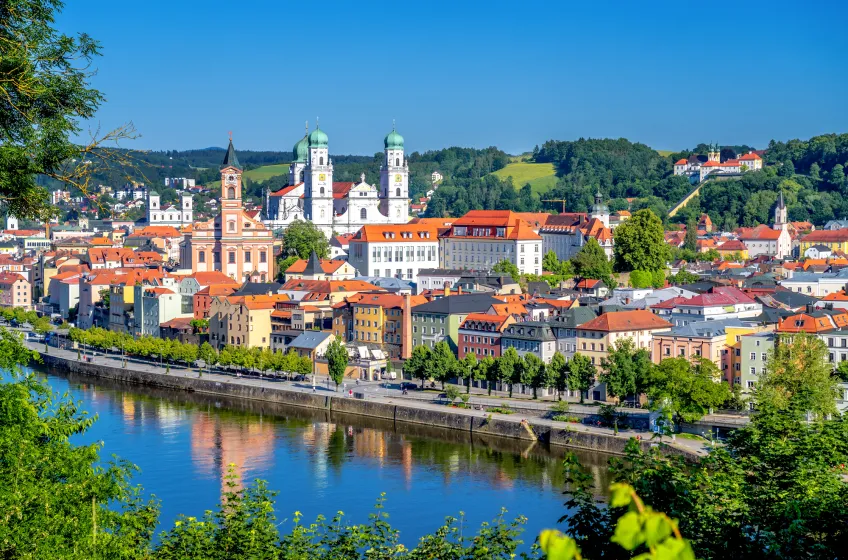
Passau is a small Bavarian city on Germany’s south-eastern edge, right on the Austrian border, where the Danube, Inn and Ilz rivers meet. Known as the “City of Three Rivers”, it blends Italianate baroque architecture, hilltop fortifications and sweeping waterside views. Compact and walkable, it’s a perfect stop for river-cruise passengers, city-breakers, cyclists on the Danube path and anyone who loves atmospheric old towns with big scenery.
Recommended Passau Hotels & Other Accommodation
Pre-book Passau Attractions, Tours & Experiences
Why is Passau Worth a Visit?
Passau is worth visiting for its unique geography alone: three distinct rivers converging beneath pastel façades and church domes is a sight you don’t forget. Add in one of Europe’s great baroque cathedrals, a fortress with knockout panoramas, and a tangle of cobbled lanes rebuilt by Italian craftsmen after a devastating 17th-century fire, and you’ve got a city with real character. The mood is relaxed and neighbourly, with a lively student population and a strong café culture. Whether you’re into boat trips, church music, fortress history, river-bank wandering or long, lazy lunches, Passau delivers a memorable mix of beauty and gentle bustle.
Passau Highlights: Things to See and Do in Passau
St Stephen’s Cathedral (Dom St Stephan)
The city’s showpiece is an exuberant baroque cathedral with bright white walls, green copper domes and a lavishly decorated interior. It’s famed for its monumental pipe organ, long celebrated as one of the world’s largest. Slip inside for the frescoes and stucco, and, if you can, time your visit for a daytime organ recital when the sound seems to pour from every corner of the nave.
Veste Oberhaus
High on the northern hill above the Danube sits a mighty 13th-century fortress. Inside you’ll find exhibitions on regional and city history, but the headline act is outside: terraces and battlements that open onto Passau’s classic postcard view, with the three rivers clearly visible and the old town tapering to its pointed tip.
Dreiflüsseeck and Ortspitze
At the sharpened end of the old town, stand at the confluence point where the differently coloured waters of the Inn, Ilz and Danube swirl together. On sunny days you can see the contrast vividly. The little park here, the Ortspitze, is a serene spot for photos, river-watching and a breather between sights.
Old Town (Altstadt) and Residenzplatz
Passau’s Altstadt is a compact grid of pastel houses, wrought-iron signs and stone lanes that run towards the water. Residenzplatz, with the cathedral on one side, is a handsome square for people-watching. Duck down side streets to find arcaded courtyards, tiny chapels and tucked-away cafés.
Town Hall and Flood Marks (Rathaus)
The rivers are Passau’s blessing, and sometimes its challenge. On the Town Hall façades you’ll spot high-water marks from historic floods, a striking visual timeline etched into the city’s memory. Inside, elaborate ceremonial rooms and murals tell stories of civic life and trade along the Danube.
Glass Museum (Glasmuseum Passau)
Housed in historic townhouses by the river, this dazzling collection charts 18th–20th century Central European glassmaking, with cabinets of colour, cut crystal and fantastically shaped art-glass pieces. It’s a sparkling detour that adds depth to the city’s craft heritage.
Pilgrimage Church of Mariahilf
Climb the covered staircase of 321 steps from the Inn bridge up to a peaceful pilgrimage church overlooking the city. The route itself is part of the experience, and the views from the terrace take in the cathedral domes, the fortress and the green sweep of the Inn valley.
Boat Trips on the Danube
Even if you’re not on a multi-day cruise, short sightseeing cruises are a fine way to appreciate Passau’s riverscapes and bridges. Evening departures often come with commentary and gentle music, and the light across the water at sunset can be glorious.
Höllgasse Artists’ Alley
This atmospheric lane near the cathedral is lined with studios and small galleries. Pop in to meet artists, browse ceramics, jewellery and prints, and pick up a souvenir that feels genuinely local.
Schaibling Tower and the Inn Promenade
Follow the Inn river’s promenade past colourful facades to the pointed medieval watchtower known as Schaiblingturm. The walkway is perfect for a gentle, scenic stroll, with benches for river-gazing and photo stops back towards the old town.
Roman Museum Kastell Boiotro
Across the Inn in Innstadt, a small museum marks the site of a late Roman fort. Exhibits showcase finds from antiquity and illuminate Passau’s strategic role at the empire’s edge.
Cycling the Danube Path (Donauradweg)
Passau is a classic starting point for the hugely popular cycle route to Vienna. Even if you’re short on time, rental shops make it easy to ride a short stage along flat, well-marked paths that cling to the riverbanks.
Practical Advice for Visitors
Getting There
Passau lies on main rail lines between Germany and Austria, with direct and frequent trains linking it to Munich and regular services to Linz and Vienna. From Munich, fast trains usually take around two hours; Linz is roughly an hour away and Vienna about three hours, depending on the service. By road, the A3 motorway runs close by, making the city an easy stop on a drive across southern Germany. Long-distance buses also call in. River-cruise passengers will often embark or disembark here, and taxis and shuttle coaches meet ships along the Danube quays.
Parking
The historic centre has narrow, partly pedestrian streets, so it’s simplest to use one of the multi-storey car parks on the edge of the Altstadt or near the station and continue on foot. On busy weekends, aim for earlier arrivals. After heavy rain or during spring snow-melt, avoid leaving your car in low riverside spaces, and always heed local signage about high water.
Dining
Passau’s food scene borrows happily from both Bavaria and Upper Austria. Expect generous plates of schnitzel, roast pork with dumplings, river fish, seasonal mushrooms and hearty stews in cooler months. Cafés serve excellent cakes and strudels, while riverside terraces are made for long lunches. Beer lovers should try local brews from traditional breweries such as Hacklberg or Andorfer, and in summer the beer gardens are convivial and family-friendly. For something lighter, look for modern Bavarian kitchens focusing on regional produce, plus a growing handful of vegetarian and international spots near the university.
Shopping
The old town rewards browsers, from Höllgasse’s studios to boutiques selling regional textiles, leather goods and Tracht (traditional dress). The Glass Museum shop is a good bet for distinctive gifts. You’ll also find delicatessens with Bavarian cheeses and smoked meats, and chocolatiers offering sweet souvenirs. Market days bring fresh local produce; ask your hotel for the latest schedule.
When to Visit
Late spring to early autumn is ideal for cruising, café-hopping and riverside walks, with May and September often bringing the best mix of mild temperatures and manageable crowds. Summer can be hot and lively, especially when riverboats arrive in numbers. December is atmospheric thanks to the Christmas market by the cathedral and twinkling old-town lights. Winter months are quieter overall, with crisp views from the fortress and cosy pub evenings.
Local Events
Passau puts on two traditional fairgrounds each year, the spring and autumn Dult, complete with beer tents, dirndls and oompah bands. Music fans should look out for organ concert series in the cathedral and the long-running Europäische Wochen Passau festival, which brings classical music and arts to venues across the city. In Advent, the Christmas market at Domplatz is the seasonal star, with craft stalls, hot punch and carols drifting across the square.
Exploring Beyond Passau
There’s plenty to see nearby if you’ve more time. Across the Inn, the Austrian town of Schärding charms with its baroque main square painted in cheerful pastels. Downriver in Austria, Engelhartszell is home to a Trappist abbey where you can taste monastic beers and liqueurs. Upstream, Vilshofen an der Donau makes a pleasant half-day jaunt. Nature lovers can head north into the Bavarian Forest for hiking, treetop walks and wildlife enclosures, while city day trips to Linz or even Salzburg are straightforward by train. If you’re cycling, the Passau–Vienna section of the Danube path is one of Europe’s classic multi-day rides, well served by baggage-transfer companies and bike-friendly guesthouses.
Enjoy Passau’s simple pleasures: river light on pastel walls, organ music reverberating under painted vaults, and the feeling of a small city perfectly formed between hills and water.
Shortlist
- Your Shortlist is empty