
Discover Bavaria | A Visitor's Introduction to Bavaria
Recommended places to visit, places to stay and things to do in Bavaria
Bavaria (Bayern in German) is Germany’s largest state and one of its most iconic destinations. Located in the country’s southeast, it stretches from the rolling Franconian hills in the north to the dramatic Alps in the south. Bavaria is known for its fairy-tale castles, medieval towns, pristine lakes, and a rich cultural identity shaped by centuries of tradition. From the bustling beer halls of Munich to the tranquil villages along the Romantic Road, Bavaria offers travellers the quintessential German experience.
Recommended Bavaria accommodation: Hotels Bed & Breakfasts Holiday Homes
Pre-book Bavaria Attractions, Tours & Experiences
Why is Bavaria Worth a Visit?
Bavaria is worth visiting because it embodies the images most people associate with Germany: alpine peaks, lederhosen, beer gardens, and castles perched on cliffs. Yet it’s far more than stereotypes. The region boasts Munich, one of Europe’s cultural powerhouses; Neuschwanstein Castle, the fairy-tale inspiration for Disney’s Sleeping Beauty; and UNESCO treasures like Bamberg and Würzburg.
Outdoor lovers will find plenty in Bavaria’s lakes and mountains, from hiking and skiing in the Alps to swimming in Lake Chiemsee or Königssee. Foodies will relish regional dishes such as Weißwurst (white sausage), pretzels, and Franconian wines. Bavaria is also deeply traditional, with folk festivals, Christmas markets, and religious customs woven into daily life. Its diversity means you can enjoy both big-city sophistication and quiet rural charm, all in one trip.
Bavaria Highlights: Things to See and Do in Bavaria
Munich
The Bavarian capital, Munich, blends royal elegance with modern energy. The Marienplatz is the heart of the city, with the famous Glockenspiel clock. Nearby, the Residenz Palace showcases Bavaria’s royal heritage, while the Deutsches Museum is one of the world’s largest science and technology museums. Munich is also home to the English Garden, one of the biggest city parks in the world, where you can watch surfers riding the Eisbach wave. And of course, Munich is the birthplace of Oktoberfest, the world’s largest beer festival held every autumn.
Neuschwanstein Castle
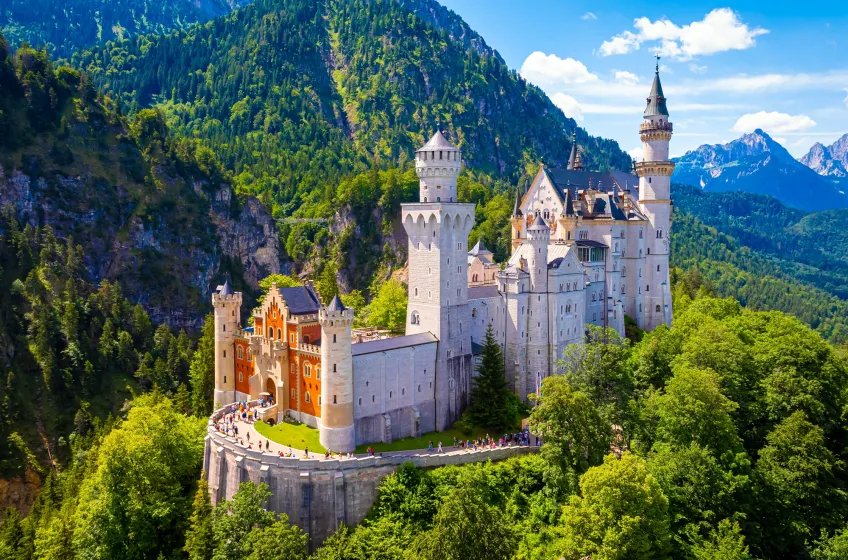
Perched high in the Bavarian Alps near Füssen, Neuschwanstein Castle is one of the most famous castles in the world. Built by King Ludwig II in the 19th century, its fairy-tale towers and alpine setting inspired Walt Disney. Inside, you’ll find lavish rooms decorated with Wagnerian themes, though the main highlight is the exterior view from nearby Marienbrücke bridge.
Nuremberg (Nürnberg)
A city rich in history, Nuremberg is known for its medieval old town, dominated by the Kaiserburg Castle. The Albrecht Dürer House celebrates the famous painter, while the Documentation Centre at the former Nazi Party Rally Grounds provides sobering insights into 20th-century history. During December, Nuremberg hosts Germany’s most famous Christmas market (Christkindlesmarkt), attracting visitors from all over the world.
Bamberg
A UNESCO World Heritage Site, Bamberg is a stunning town of seven hills, winding canals, and medieval architecture. The Bamberg Cathedral, Altes Rathaus (Old Town Hall) built on a river bridge, and the baroque New Residence are highlights. Bamberg is also famous for its smoked beer (Rauchbier), served in cosy breweries across town.
Würzburg and the Würzburg Residence
At the northern end of the Romantic Road, Würzburg is a baroque city with a lively student population. Its crown jewel is the Würzburg Residence, a UNESCO-listed palace with one of the world’s largest ceiling frescoes by Tiepolo. The Marienberg Fortress and surrounding vineyards offer panoramic views. Würzburg is also a great gateway to Franconian wine country.
Rothenburg ob der Tauber
Perhaps Germany’s most picturesque medieval town, Rothenburg ob der Tauber is a highlight of the Romantic Road. Its cobbled streets, half-timbered houses, and intact city walls make it feel like a step back in time. Don’t miss the Mediæval Crime Museum or the famous Christmas Museum. The town is especially magical during the winter season.
Regensburg
Another UNESCO World Heritage Site, Regensburg is one of the best-preserved medieval cities in Germany. Situated on the Danube, it boasts the Stone Bridge, St. Peter’s Cathedral, and a lively old town filled with cafés and pubs. Regensburg was once an important trading centre and still has a cosmopolitan air.
Passau
Known as the “City of Three Rivers,” Passau sits where the Danube, Inn, and Ilz rivers meet. The baroque St. Stephen’s Cathedral houses one of the largest pipe organs in the world. Passau is also a starting point for Danube river cruises.
Augsburg
Founded by the Romans, Augsburg is one of Germany’s oldest cities. It’s known for the Fuggerei, the world’s oldest social housing complex still in use, founded by the wealthy Fugger merchant family. The city also features Renaissance architecture, baroque fountains, and a lively cultural scene.
Berchtesgaden and Königssee
In the Bavarian Alps, the Berchtesgaden National Park is a paradise for hikers and nature lovers. The emerald-green Königssee, with its fjord-like setting, is one of Germany’s most beautiful lakes. Take a boat trip to St. Bartholomew’s Church, with its red onion domes against dramatic alpine peaks. Nearby, the Eagle’s Nest (Kehlsteinhaus) offers panoramic views and history from WWII.
Lake Chiemsee
Nicknamed the “Bavarian Sea,” Lake Chiemsee is Bavaria’s largest lake. Boat trips take you to Herrenchiemsee Palace, another of King Ludwig II’s creations, modelled after Versailles. The smaller Fraueninsel is home to a Benedictine convent and charming village.
Franconian Switzerland (Fränkische Schweiz)
This hilly region north of Nuremberg is famed for its dramatic rock formations, caves, castles, and dense network of breweries. It’s one of Germany’s top hiking and climbing destinations, with scenic valleys and rivers cutting through limestone landscapes.
Garmisch-Partenkirchen and Zugspitze
At the foot of Germany’s highest mountain, the Zugspitze (2,962 m), Garmisch-Partenkirchen is a major ski and hiking resort. Visitors can take a cable car to the summit for views stretching into Austria and Switzerland. The Partnach Gorge nearby offers spectacular walks between towering cliffs.
Practical Advice for Visitors
Getting There
Bavaria is extremely well connected. Munich Airport is one of Europe’s largest hubs, with direct flights worldwide. Nuremberg and Memmingen airports serve additional destinations. High-speed ICE trains link Munich, Nuremberg, Augsburg, and Würzburg with Frankfurt and Berlin. Driving is popular for exploring rural regions, castles, and the Alps.
Parking
Big cities like Munich and Nuremberg have multi-storey car parks and park-and-ride systems. Smaller medieval towns such as Rothenburg and Bamberg often require parking outside the old town and exploring on foot. At tourist hotspots like Neuschwanstein Castle or Königssee, parking fills quickly in summer—arrive early.
Dining
Bavarian cuisine is hearty and comforting. Staples include Weißwurst (white sausage served with sweet mustard), Leberkäse (meatloaf), and Schweinshaxe (roast pork knuckle). Pretzels and dumplings are ubiquitous, often washed down with Weißbier (wheat beer). In Franconia, try local wines and Rauchbier. Pastry lovers should sample Schneeballen (sweet dough balls) in Rothenburg. Munich’s beer gardens are a must-do cultural experience.
Shopping
Look for beer steins, dirndls and lederhosen, and wooden crafts from the Alps. Franconian wine, smoked beer, and gingerbread from Nuremberg (Lebkuchen) make excellent edible souvenirs. Christmas markets in towns like Nuremberg and Rothenburg are perfect for festive shopping.
When to Visit
-
Spring and Summer (April–September): Ideal for hiking, lake trips, and city sightseeing.
-
Autumn (September–October): Wine harvest and Oktoberfest season, with colourful foliage in the Alps.
-
Winter (December–February): Magical Christmas markets, skiing in Garmisch-Partenkirchen, and snow-dusted castles.
Local Events
-
Oktoberfest, Munich (late September–early October): The world’s largest beer festival.
-
Nuremberg Christkindlesmarkt (December): Germany’s most famous Christmas market.
-
Bayreuth Festival (July–August): Celebrating Richard Wagner’s operas in his purpose-built theatre.
-
Würzburg Wine Festival (May): Showcasing Franconian wines.
-
Passion Play, Oberammergau (every 10 years, next in 2030): A centuries-old religious theatre tradition.
Exploring Beyond Bavaria
Bavaria borders Austria, making Salzburg and Innsbruck easy day trips. Switzerland and northern Italy are also within reach from Munich or Garmisch. Within Germany, Bavaria connects well with Baden-Württemberg (Black Forest, Lake Constance) and Thuringia to the north.
Bavaria is Germany at its most iconic and diverse: castles in the clouds, bustling cities full of culture, vineyards and beer gardens, and mountains perfect for adventure. Whether you’re sipping beer in Munich, cruising down the Rhine-like Danube, or hiking to alpine lakes, Bavaria delivers unforgettable experiences steeped in history and tradition.
Shortlist
- Your Shortlist is empty