
Discover Bamberg | A Visitor's Introduction to Bamberg
Recommended places to visit, places to stay and things to do in and around Bamberg
Bamberg is a beautifully preserved medieval town in northern Bavaria, Germany, often referred to as “Franconian Rome” due to its seven hills and abundance of churches. A UNESCO World Heritage Site since 1993, Bamberg is famed for its charming Old Town, half-timbered buildings, and unique smoky beer known as Rauchbier. This picture-perfect destination is ideal for history lovers, architecture enthusiasts, and beer aficionados alike. With its winding cobbled streets, romantic riverbanks, and vibrant local culture, Bamberg offers an unforgettable journey into the heart of Franconia.
Recommended Bamberg accommodation: Hotels Apartments
Pre-book Bamberg Attractions, Tours & Experiences
Why is Bamberg Worth a Visit?
Bamberg is worth visiting for its exceptionally well-preserved medieval architecture, rich cultural heritage, and unique atmosphere. Unlike many German towns, Bamberg survived World War II virtually unscathed, meaning much of its original medieval and baroque structures remain intact. The town is split into three distinct parts: the Bergstadt (Hill City), Inselstadt (Island City), and Gärtnerstadt (Gardeners’ District), each offering its own character and attractions.
The town’s cathedral square feels like stepping into a time capsule, while its riverside pubs and leafy beer gardens keep things refreshingly lively. Bamberg’s role as a key religious and political centre in the Holy Roman Empire lends it immense historical significance, but it’s far from stuffy — the town buzzes with student life, quirky festivals, and of course, a thriving beer culture that sets it apart from anywhere else in Germany.
Whether you're into gothic cathedrals, boat rides along scenic canals, or simply sipping a pint of Rauchbier while watching the world go by, Bamberg’s blend of old-world charm and contemporary flair makes it a must-see destination.
Bamberg Highlights: Things to See and Do in Bamberg
Bamberg Cathedral (Bamberger Dom)
One of the most prominent landmarks in the city, Bamberg Cathedral dominates the skyline with its four imposing towers. Originally consecrated in 1012 and rebuilt in the 13th century in the Romanesque style, the cathedral is the final resting place of Pope Clement II — the only pope buried north of the Alps. Don’t miss the famous Bamberg Horseman (Der Bamberger Reiter), a mysterious equestrian statue whose rider’s identity still fuels debate among historians.
The cathedral square (Domplatz) surrounding it is equally stunning, flanked by historic buildings such as the Alte Hofhaltung and Neue Residenz.
Altes Rathaus (Old Town Hall)
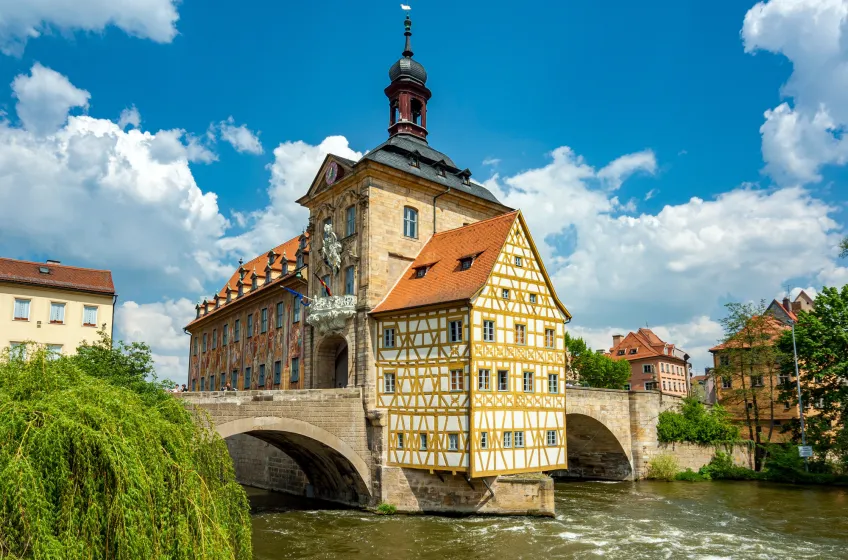
Perched dramatically over the Regnitz River, the Old Town Hall is perhaps Bamberg’s most photographed building. Straddling the river on an arched bridge, the half-timbered structure features gorgeous frescoes and a facade that seems to grow straight out of the water. According to legend, the bishop of Bamberg didn’t want to give the citizens any land to build a town hall, so they constructed it on an artificial island.
Inside, you’ll find the Ludwig Collection, a museum housing an impressive display of porcelain and baroque furnishings.
Klein-Venedig (Little Venice)
This enchanting stretch of former fishermen’s houses lines the Regnitz River and earns its nickname from its resemblance to Venice. The colourful, half-timbered homes with wooden balconies overlook the gently flowing water, making it a picturesque spot for a riverside stroll or a scenic boat ride. In summer, gondola tours and small cruises operate through this part of the city, offering a unique perspective of Bamberg’s waterways.
Neue Residenz and Rose Garden
The New Residence (Neue Residenz), once the seat of Bamberg’s prince-bishops, is a magnificent baroque palace with grand state rooms and a richly decorated ceiling by artist Melchior Steidl. Behind it lies the Rose Garden, a serene space filled with over 4,500 roses and a panoramic view of the Old Town’s red rooftops. It's a perfect spot for photos or a quiet moment of reflection.
Michelsberg Abbey
Towering above the city, the former Benedictine Abbey of St. Michael offers one of the best views of Bamberg. The church is currently undergoing renovations, but the grounds and panoramic terrace remain open to the public. It’s also adjacent to the Franconian Brewery Museum, which showcases Bamberg’s long and proud brewing tradition.
Gärtnerstadt (Gardeners’ District)
Unique among European cities, Bamberg’s Gardeners’ District is a living relic of urban agriculture. Since the Middle Ages, locals have cultivated vegetables here right in the heart of the city. You can still see plots of land where families grow produce, and visit the Gärtner- und Häckermuseum, a small museum that tells the story of Bamberg’s market gardeners and winegrowers.
Rauchbier Tasting at Schlenkerla
No trip to Bamberg is complete without sampling the city’s iconic Rauchbier – a smoked beer with a distinctive, bacon-like flavour. The best place to try it is at the historic Schlenkerla tavern on Dominikanerstraße, where the beer is poured straight from wooden barrels. It’s a love-it-or-hate-it experience, but it’s undeniably Bamberg.
Altenburg Castle
Just a short hike or drive from the city centre, Altenburg Castle dates back to the 12th century and offers stunning views over the Franconian countryside. Today, it houses a cosy restaurant and a small museum. It’s a lovely half-day outing for those who want a break from the bustle of the Old Town.
Historical Museum Bamberg
Located in the Alte Hofhaltung, this museum offers a deep dive into the history of the town and the region, with exhibitions on medieval Bamberg, religious art, and civic life. It’s a great way to contextualise everything you see while wandering the city.
Riverboat Cruise on the Regnitz
Take a leisurely cruise on the Regnitz River for a relaxing way to enjoy the city’s scenery. These short excursions typically last around 70 minutes and often include commentary on the architecture and history of the canals, bridges, and Little Venice.
Bamberg’s Christmas Markets
In December, Bamberg transforms into a festive wonderland with multiple Christmas markets, the main one taking place on Maximiliansplatz. The city is also known for its nativity scene trail (Krippenweg), with over 400 nativity scenes displayed in churches, museums, and shop windows throughout the Old Town.
Practical Advice for Visitors
Getting There
Bamberg is easily accessible by train, with regular direct connections from Nuremberg (around 45 minutes), Würzburg, and Munich. If you're flying in, the nearest major airport is Nuremberg Airport (NUE), which is just over an hour away by train. Driving is also an option, with good motorway links via the A70 and A73.
Once in Bamberg, the Old Town is best explored on foot due to its narrow streets and pedestrian-friendly layout.
Parking
Parking in Bamberg’s city centre can be tricky, especially on weekends and during festivals. Several multi-storey car parks are available near the Old Town, such as the Parkhaus Zentrum Süd or Parkhaus Geyerswörth. Free Park & Ride options are also available outside the centre with shuttle buses into town — a great choice during peak times.
Dining
Bamberg boasts an excellent culinary scene, blending hearty Franconian fare with modern European influences. For traditional dishes like Schäuferla (pork shoulder) or Bratwurst with sauerkraut, head to Zum Sternla or Kachelofen.
For fine dining, Weinhaus Messerschmitt and Eckerts Wirtshaus offer upscale takes on regional classics with great riverside settings. For lighter meals, the cafés along the Obere Brücke are lovely spots for coffee, cake, and people-watching.
And of course, don’t miss trying a Rauchbier at Schlenkerla or Spezial, two of the town’s most iconic breweries.
Shopping
Bamberg has a charming shopping scene with a mix of independent boutiques, bookshops, and artisan stores. Head to Karolinenstraße and Grüner Markt for clothing, jewellery, and Franconian wines. For souvenirs, local beer steins, Bamberg nativity sets, and handmade wooden toys are popular. The Gärtnerstadt area also sells fresh produce and locally grown goods.
When to Visit
Spring and early autumn are arguably the best times to visit Bamberg. From April to June, the gardens and countryside are in full bloom, while September and October bring harvest festivals and colourful foliage. Summer is lovely too, but it can be crowded with tourists.
Winter has its own charm, especially with the Christmas markets and festive decorations — just bring a warm coat and boots for cobbled streets that may be slippery in frost.
Local Events
-
Sandkerwa (August): Bamberg’s biggest street festival, attracting over 200,000 visitors. Held in the Sandstraße district, it features beer tents, music, fairground rides, and a lively atmosphere lasting five days.
-
Bamberg Magic Festival (May): A quirky, family-friendly event with street performers and illusionists from around the world.
-
Bamberg Short Film Festival (April): One of Germany’s most important festivals for short films and up-and-coming directors.
-
Christmas Markets (Late November – December): Multiple markets across the town, with the main one on Maximiliansplatz and a famous nativity trail throughout the city.
Exploring Beyond Bamberg
If you have extra time, the surrounding Franconian region offers plenty of worthwhile excursions.
-
Forchheim (30 minutes south) is known for its pretty Old Town and traditional beer cellars carved into the hillside.
-
Bayreuth (an hour east) is home to the famous Wagner Festival and opulent baroque architecture.
-
Fränkische Schweiz (Franconian Switzerland) is a picturesque region full of hiking trails, castles, and hidden breweries — ideal for a day of nature and fresh air.
Bamberg may not be as well-known as Berlin or Munich, but it offers something truly special: a town that has preserved its medieval roots while continuing to evolve and thrive. With its cobblestone charm, smoky beer, and architectural grandeur, it’s a gem that rewards those who venture slightly off the beaten path. Whether you’re wandering through Little Venice, sipping a Rauchbier, or catching the sunset from the Rose Garden, Bamberg will leave you enchanted.
Shortlist
- Your Shortlist is empty