
Discover Augsburg | A Visitor's Introduction to Augsburg
Recommended places to visit, places to stay and things to do in and around Augsburg
Augsburg is one of Germany’s oldest cities, nestled in the heart of Bavaria in southern Germany. With a history stretching back more than 2,000 years, it was founded by the Romans and later became one of the most powerful trading cities in medieval Europe. Known for its Renaissance architecture, rich cultural heritage, and connections to the Fugger banking dynasty, Augsburg offers a perfect blend of historical intrigue and modern charm. This attractive city is ideal for history lovers, architecture enthusiasts, and anyone seeking a more relaxed, less touristy alternative to Munich.
Recommended Augsburg accommodation: Hotels Apartments
Pre-book Magdeburg Attractions, Tours & Experiences
Why is Augsburg Worth a Visit?
Augsburg is worth visiting for its impressive historical legacy, charming old town, and unique mix of Roman roots and Renaissance elegance. It’s a city that once rivalled Venice in wealth and influence, thanks to the Fugger and Welser merchant families who helped finance European empires. The architecture alone tells a powerful story, with majestic churches, beautifully preserved guild houses, and quiet medieval alleyways. Augsburg is also known for its vibrant arts scene, delightful green spaces, and a strong connection to Martin Luther and the Protestant Reformation.
Unlike larger German cities, Augsburg offers a more laid-back pace without sacrificing cultural richness. Its manageable size makes it easy to explore on foot or by tram, while still offering enough attractions to fill a few rewarding days. Whether you’re into art galleries, engineering marvels, or simply sipping coffee in a cobbled square, Augsburg makes for a delightful and enriching stop on any Bavarian itinerary.
Augsburg Highlights: Things to See and Do in Augsburg
Augsburg Cathedral (Dom Mariä Heimsuchung)
The Augsburg Cathedral is one of the city’s most significant landmarks, with origins dating back to the 11th century. This Romanesque-Gothic structure is famous for its stained-glass windows – some of the oldest in Europe, dating from around 1065. Inside, visitors can admire medieval frescoes, intricate altars, and crypts containing relics. The cathedral also houses a famous bronze door from the 11th century decorated with biblical scenes, offering a true insight into the craftsmanship of the Middle Ages.
Fuggerei – The World’s Oldest Social Housing
One of Augsburg’s most unique attractions is the Fuggerei, a walled housing estate founded in 1521 by Jakob Fugger “the Rich”. It was created as social housing for poor Catholic families and is still functioning today under the same principle. Rent is symbolic – just one Rheinischer Gulden per year (about €0.88), plus daily prayers for the Fugger family. Visitors can walk through the charming streets, visit a small museum apartment showing what life was like in the past, and learn about the remarkable social vision behind the concept.
Augsburg Town Hall and the Golden Hall (Rathaus & Goldener Saal)
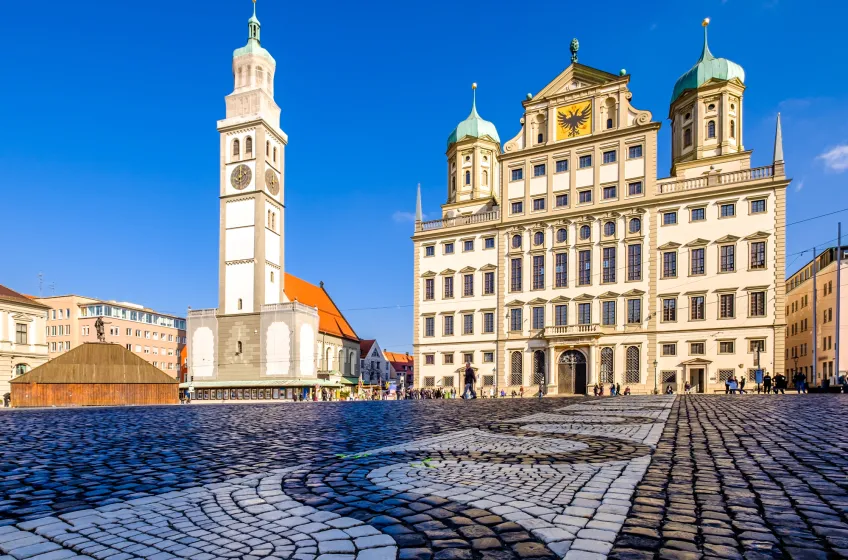
Built in the early 1600s by architect Elias Holl, Augsburg’s Town Hall is considered a masterpiece of Renaissance architecture. The real showstopper is the Golden Hall, completed in 1643, with its soaring ceiling, gilded stucco work, and stunning murals. It’s one of the most opulent ceremonial rooms in Germany, and standing beneath its gleaming arches offers a sense of Augsburg’s former grandeur. Entry is modestly priced, and there’s also a panoramic viewing platform in the nearby Perlachturm tower.
Perlachturm (Perlach Tower)
Adjacent to the Town Hall is the Perlachturm, a 70-metre tower originally built as a watchtower. Today, visitors can climb the 258 steps for sweeping views over Augsburg and the surrounding Bavarian countryside. It’s particularly rewarding on a clear day when the Alps are visible in the distance. The tower also plays a part in Augsburg's festivals, such as the Turamichele event, where a mechanical figure appears at the window to commemorate St. Michael.
Augsburg Puppet Theatre Museum (Die Kiste)
Perfect for families or lovers of quirky culture, the Augsburg Puppet Theatre Museum showcases the world of puppetry and marionettes. The museum is home to the beloved characters from the German TV show “Augsburger Puppenkiste”, as well as a fascinating collection of international puppets. Interactive exhibits and creative displays make this an unexpectedly delightful stop for all ages.
St. Anne’s Church (St. Anna Kirche)
This historic Protestant church is a key site in the Reformation story, as Martin Luther stayed here during his 1518 visit to Augsburg. The Fugger Chapel inside the church is a marvel of early Renaissance art and was designed as the burial place for the Fugger family. It’s also worth seeing the Luther rooms, where you can learn more about his theological debates and the tense atmosphere of that era.
Maximilianstraße – Augsburg’s Grand Boulevard
Maximilianstraße is Augsburg’s main thoroughfare and arguably one of the most beautiful streets in Germany. Lined with Renaissance and Baroque buildings, elaborate fountains, and grand palaces, it’s perfect for a relaxed stroll or some high-end shopping. Notable stops include the Herkules Fountain and Schaezlerpalais, which houses an impressive art collection. Cafés and restaurants spill out onto the pavement in warmer months, adding to the lively yet elegant atmosphere.
Schaezlerpalais and German Baroque Gallery
Art lovers should make time for the Schaezlerpalais, a Rococo palace that houses the German Baroque Gallery and the State Gallery of Old Masters. Highlights include works by Albrecht Dürer, Hans Holbein, and Canaletto. The building itself, with its lavishly decorated rooms and mirrored ballroom, is worth the visit alone. The adjoining garden is a peaceful oasis, ideal for a short break from sightseeing.
Augsburg Botanical Gardens and Zoo
For a change of pace, the Augsburg Botanical Gardens offer 10 hectares of beautifully landscaped grounds, with themed gardens, a Japanese garden, and more than a million tulips blooming in spring. Next door is the Augsburg Zoo, one of the oldest in Germany, featuring over 1,000 animals and a focus on conservation. Together, they make a pleasant afternoon outing for nature lovers and families.
Augsburg Water Management System – UNESCO World Heritage Site
Recognised as a UNESCO World Heritage Site in 2019, Augsburg’s water management system is an engineering marvel dating back to the 14th century. The city’s network of canals, water towers, and hydro-powered devices showcases over 800 years of water management history. Key sites include the Red Gate (Rotes Tor), Hochablass Dam, and various fountains along the historic water route. It’s a unique and fascinating aspect of the city’s heritage that you won’t find anywhere else.
Augsburg Christmas Market (Augsburger Christkindlesmarkt)
If you’re visiting during the festive season, the Augsburg Christmas Market is one of Bavaria’s oldest and most atmospheric. Held on the Rathausplatz in front of the illuminated Town Hall, it features more than 130 stalls selling handmade gifts, mulled wine, roasted almonds, and regional delicacies. The highlight is the “Engelesspiel”, a performance where live angels appear on the façade of the Town Hall – a magical tradition unique to Augsburg.
Practical Advice for Visitors
Getting There
Augsburg is well connected and easy to reach from major German cities. It’s just 40–50 minutes by direct train from Munich, making it a great day trip option or a quieter base for exploring Bavaria. Regular trains also link Augsburg to Nuremberg, Stuttgart, and Ulm. If you're flying into Munich Airport, the total journey time to Augsburg is around 90 minutes via public transport. Drivers will find it conveniently located just off the A8 motorway, which runs between Munich and Stuttgart.
Parking
If you’re arriving by car, Augsburg has several central car parks including the Parkhaus Ludwigstraße, City-Galerie, and the underground garage at Rathausplatz. Parking in the old town can be limited during busy times, so it’s advisable to use one of the Park & Ride facilities on the outskirts and take the tram into the centre. Fees are generally reasonable, but be sure to check for time limits and Sunday restrictions.
Dining
Augsburg offers a great mix of traditional Bavarian fare and international cuisine. Try Bayerisches Wirtshaus for hearty regional dishes like Schweinshaxe (pork knuckle) or Käsespätzle (cheese noodles), or Ratskeller Augsburg for an atmospheric meal in the vaulted cellar of the Town Hall. For something more contemporary, Anna Café on Maximilianstraße is a popular spot for brunch or coffee and cake. Don’t miss trying a Zwetschgendatschi, a plum tart that originated in Augsburg.
Shopping
The city’s compact centre makes for excellent shopping. Along Maximilianstraße and Annastraße you’ll find a mix of high street brands, local boutiques, and designer stores. The City-Galerie mall offers indoor shopping with over 100 retailers. For something more unique, head to the Rathausplatz area for artisan products, antiques, and handmade crafts. Keep an eye out for shops selling Augsburg silverware and Fuggerei souvenirs.
When to Visit
Augsburg is a year-round destination, but spring and early autumn are especially pleasant with mild weather and fewer crowds. Summer sees more visitors, particularly during events like the Augsburger Sommernächte, a lively open-air celebration. Winter has its own charm, particularly in December when the Christmas Market transforms the old town into a festive wonderland. Avoid Mondays if you’re planning to visit museums, as many are closed.
Local Events
Augsburg hosts several lively events throughout the year. In addition to the famous Christmas Market, don’t miss:
-
Plärrer Festival (Spring & Autumn): Augsburg’s own mini Oktoberfest, with beer tents, rides, and traditional music.
-
Augsburger Sommernächte (June): A city-wide street festival with live music, food, and open-air bars.
-
Turamichele Festival (end of September): A children’s festival celebrating the archangel Michael, featuring a mechanical puppet that appears from the Perlachturm.
Exploring Beyond Augsburg
If you have extra time, there are several rewarding places nearby. Landsberg am Lech is a picturesque town just 40 minutes away by train or car, known for its pastel-coloured houses and riverside walks. Ulm, an hour west, boasts the world’s tallest church spire. For nature lovers, the Ammersee and Lake Starnberg offer tranquil day trips from Augsburg, with opportunities for hiking, boat trips, and lakeside relaxation.
Augsburg may not be the most famous German destination, but that’s part of its charm. With fewer crowds than Munich and just as much history, it offers a chance to experience authentic Bavaria at your own pace. Whether you're fascinated by Renaissance art, intrigued by medieval innovations, or just looking for somewhere beautiful and walkable, Augsburg is a destination well worth discovering.
Shortlist
- Your Shortlist is empty