
Discover Berchtesgaden | A Visitor's Introduction to Berchtesgaden
Recommended places to visit, places to stay and things to do in and around Berchtesgaden
Berchtesgaden is a picturesque alpine town nestled in the Bavarian Alps of southeastern Germany, right on the doorstep of Austria. Known for its dramatic mountain scenery, crystal-clear lakes, and a blend of history and natural beauty, this charming town is an ideal destination for nature lovers, history buffs, and those looking to experience authentic Bavarian culture. With the iconic Watzmann mountain towering over the region and the pristine Königssee lake glimmering nearby, Berchtesgaden offers an unforgettable escape into the heart of the Alps.
Recommended Berchtesgaden accommodation: Hotels Apartments
Pre-book Berchtesgaden Attractions, Tours & Experiences
Why is Berchtesgaden Worth a Visit?
Berchtesgaden is worth visiting for its awe-inspiring alpine landscapes, deep historical roots, and tranquil Bavarian atmosphere. It’s one of those rare places where you can stand in a pristine natural setting and simultaneously be surrounded by echoes of centuries-old traditions and world-shaping history.
The town’s location within the Berchtesgaden National Park — Germany’s only Alpine national park — means that it offers unspoilt natural scenery, incredible hiking and outdoor activities, and a sense of calm that’s hard to find elsewhere. But Berchtesgaden is also notable for its historical significance, particularly during the 20th century, when the area became infamously associated with the Nazi regime due to the nearby Eagle’s Nest (Kehlsteinhaus).
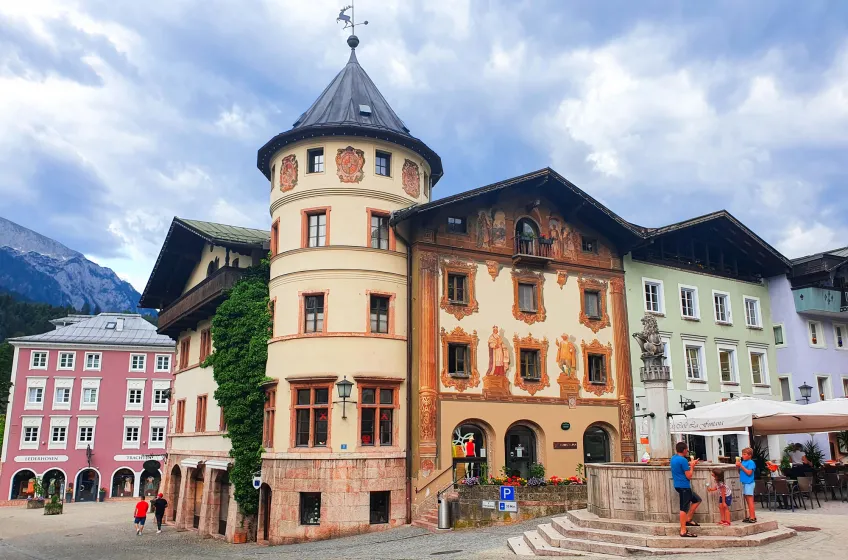
Despite its sombre past, modern-day Berchtesgaden is a peaceful and welcoming place, with beautifully painted buildings, cosy guesthouses, and friendly locals proud of their heritage. Whether you’re there for the scenery, the spa culture, or a deep dive into history, Berchtesgaden will captivate you.
Berchtesgaden Highlights: Things to See and Do in Berchtesgaden
Königssee
One of the most iconic natural sites in Germany, Königssee is a deep, fjord-like lake surrounded by steep mountains, including the mighty Watzmann. The emerald-green water is so clear and clean that it’s often compared to a mirror. A boat trip on Königssee is a must — electric passenger boats glide silently across the water, taking you to the pilgrimage chapel of St. Bartholomä, which looks like something out of a fairytale.
Don’t miss the famous echo demonstration performed by the boatmen, who blow a trumpet and let the sound bounce off the rock faces. The best time to visit is early in the morning before the crowds arrive.
The Eagle’s Nest (Kehlsteinhaus)
Perched atop the Kehlstein mountain, the Eagle’s Nest is infamous as Hitler’s former retreat, given to him on his 50th birthday. Today, the building functions as a restaurant with panoramic views over the Alps. The journey there is just as memorable as the destination — a steep mountain road leads to a brass-lined lift that ascends 124 metres through the rock to the summit.
While the building itself is relatively modest, the historical context combined with the 360° views makes it a compelling visit. The Eagle’s Nest is open from mid-May to October, weather permitting.
Berchtesgaden Old Town
The Altstadt (Old Town) of Berchtesgaden is a lovely area to stroll through, with colourful frescoed buildings, cobblestone streets, and a relaxed atmosphere. The central Marktplatz is framed by traditional houses and offers beautiful views of the Watzmann.
Highlights include the Royal Castle of Berchtesgaden, which was once a monastery and later became a residence of the Bavarian royal family. The town centre also has plenty of cosy cafés, souvenir shops, and spots to sample local delicacies.
Berchtesgaden National Park
Germany’s only Alpine national park, Berchtesgaden National Park is a protected area offering some of the best hiking in the country. It covers over 200 square kilometres of pristine alpine wilderness. Trails range from easy lakeside walks to challenging alpine climbs.
One standout route is the hike to Röthbachfall, Germany’s highest waterfall. The park is also home to ibex, golden eagles, marmots, and red deer. Whether you're a seasoned hiker or just after a gentle nature walk, this park delivers.
Salt Mine Berchtesgaden (Salzbergwerk)
This historic salt mine, operating since 1517, offers a fascinating underground adventure. Guided tours take visitors deep into the mountain via a small train, complete with wooden slides, an underground salt lake, and multimedia exhibits on salt mining’s importance to the region.
Great fun for families, the tour is educational and a bit thrilling. You’re given traditional miner’s overalls to wear, which makes for some fun photos!
Watzmann Mountain
The Watzmann, Germany’s third-highest mountain, dominates the skyline around Berchtesgaden and is the stuff of legend. According to local folklore, the peaks represent a king, his wife, and their children turned to stone for their cruelty.
Serious mountaineers attempt the Watzmann traverse, but there are easier hikes around its base. The views from any vantage point are incredible, especially from Watzmannhaus, a mountain hut reachable on a half-day hike.
Dokumentation Obersalzberg
A sobering but essential stop for those interested in World War II history, this museum provides context on the Nazi regime’s activities in the region. Built into the mountainside on the former Obersalzberg compound, the Dokumentation Obersalzberg explores how the Nazis used propaganda, power, and architecture in their foothold here.
The museum also gives access to the bunker system beneath the mountain, a chilling look into the scale of the regime’s operations.
Jennerbahn and Jenner Mountain
The Jenner cable car takes you up to Jenner Mountain, a favourite for hikers and sightseers. From the top station, you can enjoy panoramic views over Königssee and the surrounding Alps. There are also hiking trails for all abilities, as well as mountain huts serving hearty Bavarian food.
In winter, the area transforms into a small but charming ski resort, making Berchtesgaden a year-round destination.
Ramsau bei Berchtesgaden
Just a short drive away, the idyllic village of Ramsau is home to the picture-perfect Parish Church of St. Sebastian, often seen in calendars and postcards. Its setting — beside a wooden bridge with mountains behind — is pure Bavarian magic.
Nearby, the Hintersee lake offers tranquil walks, particularly beautiful in the early morning mist or late afternoon light.
Almbachklamm Gorge
This dramatic gorge just outside Berchtesgaden is perfect for a hot summer day. A wooden walkway leads you past waterfalls, turquoise pools, and narrow rock passages. The round trip takes about 2 hours and is relatively easy going, though good footwear is recommended.
Spa and Wellness at Watzmann Therme
If you're in the mood to relax, the Watzmann Therme is a family-friendly thermal spa with saunas, saltwater pools, and water slides. It’s a great option for rainy days or winding down after a long hike.
Practical Advice for Visitors
Getting There
Berchtesgaden is easily accessible from Salzburg, Austria — just 30 minutes away by car or bus. Trains from Munich take around 2.5 to 3 hours, with a change at Freilassing. Buses from Salzburg (Line 840) run regularly and are often the most convenient public transport option.
If you’re driving, the scenery on the way in is spectacular, especially coming through the alpine foothills. Just be aware of narrow mountain roads in winter.
Parking
There are several public car parks around Berchtesgaden, particularly near the Old Town and main attractions like the salt mine and Königssee. Parkhaus Zentrum is centrally located and reasonably priced. During peak times (especially summer), it’s best to arrive early to secure a spot.
Königssee has its own large car park, but this can fill up by mid-morning on sunny days. Use public transport where possible.
Dining
Berchtesgaden has a rich culinary scene rooted in Bavarian tradition. Look out for dishes like Schweinshaxe (pork knuckle), Kasnocken (cheesy dumplings), and Obatzda (cheese spread with pretzels).
For traditional Bavarian fare, Gasthof Neuhaus and Bräustüberl Berchtesgaden are reliable and atmospheric choices. For a view with your meal, try Panorama Restaurant at the Eagle’s Nest (open in summer only).
Vegetarian options are available, though more limited outside major restaurants. For something sweet, try a slice of Bienenstich (bee sting cake) with your coffee.
Shopping
The Old Town offers a good mix of souvenir shops, traditional Bavarian clothing stores, and artisan products. Look for hand-carved wooden items, Alpine herbs, and local schnapps.
The Berchtesgadener Land dairy products are renowned throughout Germany — especially their butter and cheese. The local farmers' market is small but worth a visit if you catch it.
When to Visit
May to October is the best time for hiking and lake excursions, with July and August being peak tourist season. If you prefer quieter visits, May/June and September are ideal — with pleasant weather and fewer crowds.
Winter (December to March) brings a magical feel to Berchtesgaden, with snow-covered rooftops and Christmas markets. It’s also a great time for skiing or snowshoeing.
Avoid the shoulder season in early spring (March–April) when some mountain attractions may be closed due to thawing conditions.
Local Events
-
Berchtesgadener Advent (late Nov – Dec): A beautiful Christmas market with handcrafted goods, mulled wine, and carol singing in the town square.
-
Almabtrieb (late September): A traditional event where cows are led down from mountain pastures with decorated headpieces — a lively and very local celebration.
-
Königssee Night Run (January): A quirky winter sports event that includes torch-lit skiing and snow celebrations.
Exploring Beyond Berchtesgaden
If you have time, the nearby city of Salzburg is a must-visit — just half an hour away and rich with Mozart heritage, baroque architecture, and cultural flair.
Also nearby is the Gollinger Waterfall in Austria, or head up to Bad Reichenhall, a historic spa town with salt springs and an old-world charm.
For more mountain magic, consider a drive into the Salzkammergut lake region or the Grossglockner High Alpine Road, both within a couple of hours’ reach.
Berchtesgaden is one of Germany’s hidden gems — a town where nature, history, and tradition blend seamlessly. Whether you're standing by the shores of Königssee, walking through alpine meadows, or contemplating the past on Obersalzberg, this special place invites you to slow down and take it all in.
Shortlist
- Your Shortlist is empty