
Discover Vorarlberg | A Visitor's Introduction to Vorarlberg
Recommended places to visit, places to stay and things to do in and around Vorarlberg
Vorarlberg is Austria’s westernmost federal state, positioned between Lake Constance, the Rhine Valley and the high mountains bordering Switzerland, Liechtenstein and Germany. Known for its modern timber architecture, compact Alpine villages, excellent public transport and varied mountain landscapes, the region is a perfect destination for walkers, skiers, architecture enthusiasts and travellers interested in combining several countries. With its lakeside culture, cheese-making traditions and dramatic valleys, Vorarlberg feels noticeably different from the rest of Austria.
Recommended Vorarlberg hotels and other accommodation
Pre-book Vorarlberg Attractions, Tours & Experiences
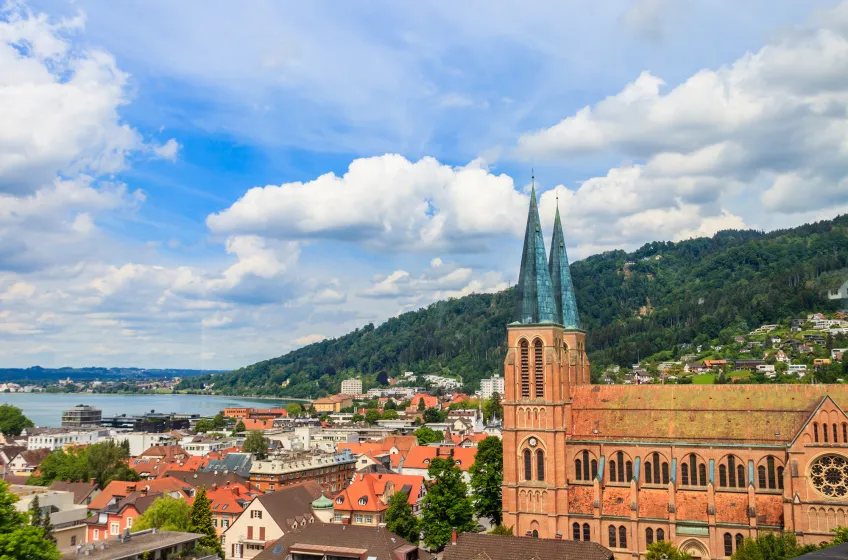
Why is Vorarlberg Worth a Visit?
Vorarlberg is worth visiting for its unusual combination of natural scenery and contemporary design. Traditional farmhouses, village churches and mountain pastures sit alongside some of Austria’s most inventive modern buildings, many constructed from locally sourced timber.
The landscapes are equally diverse. Bregenz occupies the Austrian shore of Lake Constance, while the Bregenzerwald consists of rolling green mountains, farming villages and cheese-producing communities. Farther south and east, the Brandnertal, Montafon, Klostertal and Arlberg provide higher peaks, large ski areas and extensive summer walking.
Vorarlberg also has a distinct regional identity. Local Alemannic dialects sound closer to those of neighbouring Switzerland and southern Germany than to standard Austrian German. Food traditions, architecture and village culture reflect the state’s position at a historic crossroads.
Despite its mountainous terrain, much of Vorarlberg can be explored without a car. Trains connect the Rhine Valley and major towns, while regional buses reach many mountain villages. Several accommodation guest cards include public transport and selected cable cars, making car-free touring particularly practical.
Vorarlberg Highlights: Things to See and Do in Vorarlberg
Explore Bregenz
Bregenz is the state capital and stands between Lake Constance and the Pfänder mountain. Its waterfront, cultural institutions and compact historic district make it the natural starting point for a first visit.
The lakeside promenade extends past gardens, boat landings and the famous festival complex. The modern Kunsthaus Bregenz presents changing contemporary exhibitions inside a striking glass-covered building.
Above the centre, the quiet Oberstadt preserves medieval streets, old houses and the distinctive Martinsturm tower. Its small scale contrasts sharply with the busier waterfront below.
Bregenz is especially attractive during the evening, when the sun sets over Lake Constance and the promenade fills with walkers and cyclists.
Attend the Bregenz Festival
The Bregenz Festival is Vorarlberg’s best-known cultural event. Its principal productions take place on a vast floating stage built on Lake Constance.
Large-scale opera is presented against an elaborate stage design, with the lake and evening sky forming part of the setting. The 2026 lake-stage production is Verdi’s La traviata.
Weather is an important part of the experience. Outdoor performances may continue during light rain, so bring suitable clothing rather than an umbrella, which could obstruct other spectators.
Tickets and central accommodation sell quickly. Reserve early and check the festival’s rules regarding weather, delayed performances and indoor alternatives.
Ride the Pfänder Cable Car
The Pfänder rises directly behind Bregenz and provides one of the best viewpoints over Lake Constance.
A cable car climbs from near the city centre to the upper station. On a clear day, the panorama extends across the lake towards Germany and Switzerland and over numerous Alpine peaks.
Short walking routes begin near the summit, while longer paths descend towards villages and woodland. A small Alpine wildlife area may also interest families.
Check visibility before travelling, as low cloud can hide the entire view. The mountain can be considerably cooler and windier than the lakeside.
Discover the Bregenzerwald
The Bregenzerwald is a region of green valleys, traditional farming villages, forested hills and distinctive contemporary architecture.
Villages such as Bezau, Mellau, Andelsbuch, Schwarzenberg and Au make good bases for walking and cultural exploration. Cable cars provide access to higher paths during summer and ski areas during winter.
The region’s bus stops have become design attractions in their own right. In Krumbach, architects from several countries created small shelters using local materials and experimental forms.
The Bregenzerwald rewards slow travel. Rather than trying to see every village, choose one valley and combine a walk, cable-car journey, cheese tasting and architectural tour.
Follow the KäseStrasse
Cheese production is central to Bregenzerwald culture. The KäseStrasse, or Cheese Road, is a network of farms, dairies, inns and shops rather than a single continuous road.
The most characteristic product is Bregenzerwälder Bergkäse, a firm mountain cheese made from unpasteurised milk. Its flavour becomes stronger and more complex as it matures.
Visitors can tour selected dairies, buy cheese directly from farms and try regional dishes in participating inns. Opening hours are often limited, particularly at small producers, so advance arrangements are helpful.
Traditional three-stage farming moves cattle between valley farms, mountain pastures and intermediate settlements according to the season. This system has shaped both the landscape and local architecture.
Visit Schwarzenberg
Schwarzenberg is one of the Bregenzerwald’s most attractive villages. Its central square is surrounded by wooden houses, inns and an onion-domed church.
The village is closely associated with the painter Angelika Kauffmann, who spent part of her childhood in the region. A small museum explores her life and work alongside local history.
Schwarzenberg also hosts the Schubertiade, an internationally respected festival devoted to chamber music, song and the works of Franz Schubert.
The surrounding countryside is suitable for gentle walks through meadows and traditional settlements.
See the Lünersee
Lünersee is a dramatic mountain reservoir at the end of the Brandnertal, surrounded by the limestone peaks of the Rätikon range.
A cable car climbs from near the valley head to the lake. From the upper station, a well-used path circles the water and provides changing mountain views.
The complete circuit is manageable for many reasonably fit walkers, though it still involves uneven terrain and changing weather. More demanding routes continue towards mountain huts and summits.
Snow may remain into summer, and the cable car operates seasonally. Check current trail and weather conditions before travelling.
Explore the Brandnertal
The Brandnertal extends south from Bludenz towards the Rätikon mountains. Brand and Bürserberg are its principal holiday villages.
Summer activities include walking, mountain biking, climbing and family trails. Cable cars reduce the initial ascent and provide access to panoramic routes and mountain restaurants.
In winter, the valley becomes a compact ski destination suited to families and mixed-ability groups. It is generally quieter than the large international resorts of the Arlberg.
The valley’s proximity to Bludenz railway station makes it relatively accessible by public transport.
Visit Bludenz
Bludenz is a small historic town at the meeting point of several Alpine valleys. Its position makes it a practical transport base for the Brandnertal, Montafon, Klostertal and Arlberg.
The centre contains arcaded streets, narrow lanes, pastel façades and the hilltop Laurentius Church. The old town is compact and can be explored in a few hours.
The Muttersberg cable car climbs from the edge of town to walking paths and views over the surrounding valleys.
Bludenz has more everyday services than the mountain resorts, making it a useful base for travellers moving around by train and bus.
Discover the Montafon
The Montafon is a long mountain valley in southern Vorarlberg, extending towards the Silvretta and Rätikon ranges.
Schruns and Tschagguns form the main central resort area. Gaschurn, Partenen, Gargellen and smaller villages provide access to different walking and skiing regions.
Summer activities include high-level hiking, mountain biking, climbing and family adventure routes. Several cable cars operate across the valley, though schedules vary between seasons.
The Montafon is also known for Sura Kees, a low-fat sour cheese traditionally produced on Alpine pastures. It has a sharp flavour and is often served with potatoes, salad or bread.
Travel the Silvretta High Alpine Road
The Silvretta High Alpine Road is one of Austria’s most scenic mountain drives. It climbs from the Montafon towards the Bielerhöhe pass and Silvretta reservoirs.
The route includes numerous bends, waterfalls, viewpoints and high-mountain landscapes. Short walks begin around the reservoirs and upper visitor areas.
The road is seasonal and may close because of snow, construction or weather-related damage. Check its current operating status before planning a journey.
It is a toll road and should be driven slowly. Cyclists also use the route, while livestock or maintenance vehicles may appear around bends.
Explore Lech and Zürs am Arlberg
Lech and Zürs are prestigious mountain resorts in eastern Vorarlberg, known primarily for skiing and high-end hospitality.
Winter brings access to the extensive Ski Arlberg area, linking numerous slopes across Vorarlberg and Tyrol. The terrain ranges from gentle village pistes to demanding high-mountain routes.
In summer, Lech becomes a quieter base for walking, mountain biking and scenic bus journeys. The Lechweg long-distance trail follows the River Lech from near its source towards Bavaria.
Accommodation can be expensive, particularly during the ski season. Travellers seeking better value can consider villages in the Klostertal while visiting Lech by bus.
Visit Feldkirch
Feldkirch is one of Vorarlberg’s best-preserved historic towns. It stands close to the borders with Switzerland and Liechtenstein.
The compact centre contains arcaded streets, old gateways, painted houses and the Gothic St Nicholas Cathedral. Schattenburg Castle rises above the rooftops and contains a museum of regional history.
The castle restaurant is known for substantial schnitzel, while its terrace and upper areas provide views across the town.
Feldkirch is an excellent base for cross-border excursions and is served by frequent regional and international trains.
Explore Dornbirn
Dornbirn is Vorarlberg’s largest city and has a stronger industrial and commercial character than Bregenz or Feldkirch.
The interactive inatura museum explores nature, technology and the human body, making it particularly suitable for families and wet-weather days.
The nearby Rappenloch Gorge has dramatic rock walls, water channels and walking paths. Access can change after storms or maintenance work, so check conditions before visiting.
Dornbirn is also a useful gateway to the Bregenzerwald and the Karren mountain, reached by cable car from the edge of the city.
Visit the Rhine Delta
The Rhine Delta lies where the Alpine Rhine enters Lake Constance. Its reed beds, shallow water and wet meadows form an important habitat for migratory and resident birds.
Walking and cycling paths provide access to observation areas around Fußach, Höchst and neighbouring communities. Binoculars are useful, particularly during spring and autumn migration.
The landscape is flat and exposed, with limited shade. Bring water, sun protection and insect repellent during warm weather.
Remain on marked routes and respect seasonal restrictions intended to protect nesting birds.
Experience Vorarlberg’s Modern Architecture
Vorarlberg has gained an international reputation for modern architecture, especially energy-efficient buildings constructed from timber.
New schools, municipal buildings, houses, chapels and cultural venues appear throughout the state. Many use simple forms, careful craftsmanship and local materials rather than attempting to imitate traditional Alpine architecture.
The Bregenzerwald is particularly rich in notable buildings. Werkraum Bregenzerwald in Andelsbuch presents regional craftsmanship, furniture-making and design through exhibitions and events.
Architecture enthusiasts should consider an organised tour, as many significant buildings are functional schools, homes or offices rather than conventional attractions.
Practical Advice for Visitors
Getting There
Vorarlberg has no major commercial airport. Zurich Airport is generally the most useful international gateway, with rail connections towards Feldkirch, Dornbirn and Bregenz.
Munich Airport is another option, particularly for travellers combining Vorarlberg with Bavaria. Friedrichshafen Airport in Germany and St Gallen–Altenrhein Airport in Switzerland are closer but have much smaller route networks.
Bregenz, Dornbirn, Feldkirch and Bludenz lie on the main railway line through the Rhine and Walgau valleys. International trains connect Vorarlberg with Vienna, Innsbruck, Zurich and southern Germany.
The Arlberg railway provides the principal connection with the rest of Austria. Engineering work or winter weather can occasionally affect services, so check your journey shortly before departure.
Choosing Where to Stay
Bregenz is best for Lake Constance, cultural events and easy rail connections. It becomes expensive during the summer festival.
Dornbirn is practical for transport, shopping and access to the Bregenzerwald. Feldkirch suits travellers interested in history and day trips to Switzerland or Liechtenstein.
Bezau, Mellau and Schwarzenberg are strong bases for the Bregenzerwald. Brand provides access to the Brandnertal and Lünersee.
Schruns is the most convenient central base in the Montafon, while Lech is best for luxury accommodation and high-level mountain access.
Getting Around
Vorarlberg has an integrated network of regional trains and buses. Rail services cover the main corridor between Bregenz, Dornbirn, Feldkirch and Bludenz.
Buses continue into the Bregenzerwald, Brandnertal, Montafon, Klostertal and Arlberg. Connections are generally good by rural Austrian standards, though evening services can be limited.
Several regional guest cards include bus and train travel throughout Vorarlberg, sometimes from the first night and sometimes after a minimum stay. Cable cars, swimming pools and other attractions may also be included depending on the destination.
Check the exact terms issued by your accommodation, as special buses, bicycle transport and some mountain services may be excluded.
Cable Cars and Mountain Lifts
Vorarlberg has numerous cable cars, chairlifts and gondolas providing access to hiking and skiing areas.
Operating dates differ between valleys. Many lifts close for maintenance during spring and autumn, and not every ski lift operates in summer.
Check the final downhill departure before beginning a walk. Missing the last cable car can result in a long or difficult descent.
Live webcams are useful for checking visibility. Conditions at upper stations may be cold and cloudy even when valleys are warm and sunny.
Driving and Parking
Austria requires a vignette for vehicles using most motorways and expressways. Some tunnels and panoramic roads charge additional tolls.
Drivers arriving through Switzerland may also require a Swiss motorway vignette, depending on the route. It is possible to use local roads in some cases, but journey times will increase.
Mountain roads can be steep and narrow. Use a low gear when descending and watch for cyclists, livestock and buses.
Parking is limited in popular mountain villages and beside Lake Constance during major events. Use railway travel, park-and-ride facilities or official visitor car parks where possible.
Dining
Vorarlberg cuisine has strong farming and dairy traditions. Cheese, potatoes, noodles and cured meats appear frequently.
Käsknöpfle is the best-known regional dish. These small dumpling-like noodles are mixed with melted mountain cheese and usually topped with fried onions.
Riebel is a simple maize-based dish traditionally eaten by farming families. It may be served sweet with fruit or savoury with cheese and coffee.
Bregenzerwald mountain cheese and Montafon Sura Kees are the state’s most distinctive dairy products.
Mountain huts generally serve hearty food, but kitchens may close before the final cable car. Carry some cash, as remote establishments do not always accept cards.
Shopping
Regional cheese is the most characteristic purchase. Dairies and farm shops often sell vacuum-packed portions suitable for travel.
Other local products include cured meats, fruit spirits, honey, herbal products, wooden objects and contemporary crafts.
Werkraum Bregenzerwald and selected design shops offer furniture, homeware and objects made by regional craftspeople.
Bregenz, Dornbirn and Feldkirch provide the broadest general shopping. Most ordinary shops close on Sundays.
When to Visit
June to September is the main period for walking, cycling, Lake Constance trips and high-level cable-car access.
July and August bring the fullest visitor programme but also higher prices and larger crowds. The Bregenz Festival makes accommodation around the lake particularly scarce.
September often provides pleasant walking weather and a quieter atmosphere. Some mountain services begin reducing their schedules later in the month.
December to March is the main ski season. Snow conditions are generally most reliable at higher resorts such as Lech, Zürs and parts of the Montafon.
April, May, October and November are transition periods. Many cable cars, mountain hotels and seasonal attractions close temporarily.
Local Events
The Bregenz Festival is Vorarlberg’s largest international event, staging opera and concerts during July and August.
The Schubertiade presents song recitals, chamber music and concerts in Schwarzenberg and Hohenems.
The Montforter Zwischentöne festival in Feldkirch combines music, discussion and performance around changing themes.
Village festivals, cattle drives, craft events and cheese celebrations take place across the mountain regions during summer and autumn.
Christmas markets are held in Bregenz, Dornbirn, Feldkirch and several smaller communities during Advent.
Exploring Beyond Vorarlberg
Lindau lies just across the German border and has an attractive island old town and harbour on Lake Constance.
Liechtenstein is easily reached from Feldkirch by regional bus. Vaduz contains museums, vineyards and views towards the princely castle.
St Gallen in Switzerland is known for its UNESCO-listed Abbey District and historic library.
Appenzell offers painted houses, traditional cheese and access to mountain scenery. It is particularly convenient from the northern part of Vorarlberg.
Tyrol lies beyond the Arlberg and provides access to St Anton, Innsbruck and the Inn Valley. Cross-border rail services make it straightforward to combine the two Austrian states.
Shortlist
- Your Shortlist is empty