
Discover Tyrol | A Visitor's Introduction to Tyrol
Recommended places to visit, places to stay and things to do in and around Tyrol
Tyrol is a mountainous federal state in western Austria, divided into North Tyrol and the geographically separate region of East Tyrol. Known for dramatic Alpine valleys, internationally famous ski resorts and historic Innsbruck, it is a perfect destination for hikers, winter-sports enthusiasts, families and travellers seeking mountain scenery. With its cable cars, traditional villages, clear lakes and extensive public transport, Tyrol offers both active holidays and relaxed Alpine escapes.
Recommended Tyrol hotels and other accommodation
Pre-book Tyrol Attractions, Tours & Experiences
Why is Tyrol Worth a Visit?
Tyrol is worth visiting for the scale and accessibility of its mountain landscapes. High peaks, glaciers, waterfalls and forested valleys are never far away, yet cable cars and well-marked paths make much of the scenery accessible without technical climbing.
The region is remarkably varied. Innsbruck combines museums and Habsburg architecture with mountain access directly from the city. The Zillertal and Ötztal offer extensive visitor infrastructure, while the Lechtal, Wipptal and East Tyrol provide quieter surroundings. Achensee adds swimming and boating, and places such as Kitzbühel or St Anton am Arlberg have very different personalities outside the ski season.
Tyrol is also one of Austria’s strongest winter destinations. Resorts range from large interconnected ski areas to small family slopes and high-altitude glacier areas. In summer, the same infrastructure supports walking, mountain biking, climbing and family attractions.
Although a car provides flexibility, many important valleys are accessible by train and bus. Innsbruck, Kufstein, Kitzbühel, St Anton and Jenbach are particularly convenient bases for car-free travel.
Tyrol Highlights: Things to See and Do in Tyrol
Explore Innsbruck
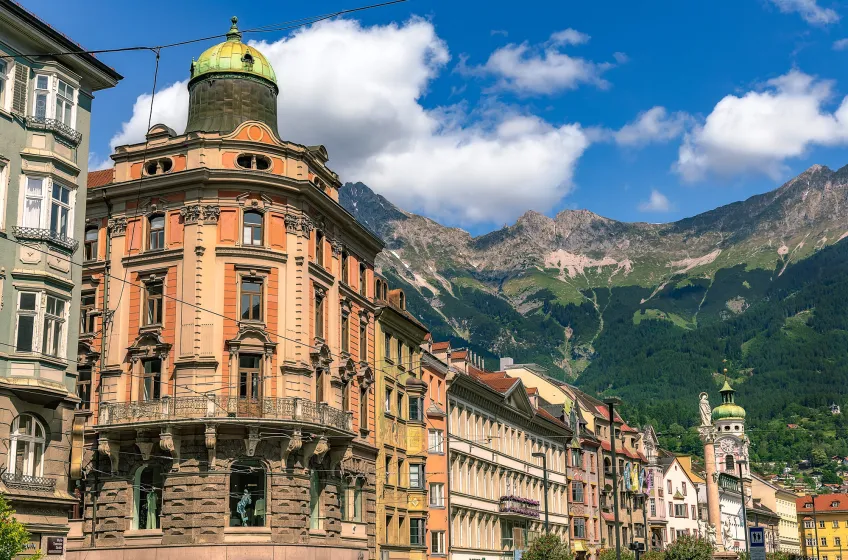
Innsbruck is Tyrol’s capital and the best starting point for a first visit. Its old town sits beneath the Nordkette mountains, creating one of Europe’s most dramatic urban settings.
The Golden Roof is the city’s best-known landmark. Nearby attractions include the Imperial Palace, Court Church and colourful houses beside the River Inn.
The Court Church contains the elaborate memorial of Emperor Maximilian I, surrounded by larger-than-life bronze figures. The neighbouring Tyrolean Folk Art Museum explores traditional clothing, crafts, domestic life and religious customs.
Allow at least two days for Innsbruck itself. Its compact centre is easy to explore on foot, while trams, buses and cable cars connect it with surrounding villages and mountains.
Ride the Nordkette Cable Cars
The Nordkette rises immediately north of Innsbruck and can be reached from the city centre through a sequence of funiculars and cable cars.
The journey begins near the old town and climbs through Hungerburg to Seegrube and Hafelekar. At the upper stations, views extend across Innsbruck towards the Stubai and Zillertal Alps.
Short walks are possible near the cable-car stations, but the surrounding terrain quickly becomes steep and exposed. Proper footwear is essential for anything beyond the viewing areas.
Weather at the summit can be entirely different from conditions in the city. Check live visibility before buying a ticket, as cloud may completely hide the panorama.
Visit Ambras Castle
Ambras Castle stands on a wooded hillside above Innsbruck. It was developed by Archduke Ferdinand II during the 16th century and contains important collections of armour, art and unusual objects.
The Spanish Hall is its architectural highlight, decorated with portraits of Tyrolean rulers. The armouries contain ceremonial and practical equipment associated with European nobles and soldiers.
The castle grounds provide a quiet contrast to central Innsbruck. Peacocks may be seen around the park during the warmer months.
Buses and trams reach the surrounding district, though the final approach involves some walking.
Explore the Zillertal
The Zillertal is one of Tyrol’s best-known holiday valleys, extending south from the main Inn Valley towards high Alpine peaks.
Mayrhofen is its principal resort and provides access to several cable-car areas, hiking routes and winter-sports slopes. Zell am Ziller, Fügen and smaller villages offer alternative accommodation.
The narrow-gauge Zillertal Railway connects the valley with the main railway station at Jenbach. This makes it one of Tyrol’s easier regions to explore without a car.
Summer activities include walking, mountain biking, climbing and family adventure parks. In winter, several large ski areas operate across different branches of the valley.
Discover the Ötztal
The Ötztal is a long valley west of Innsbruck, known for waterfalls, high mountains, traditional villages and large ski resorts.
Ötzi Village near Umhausen explores prehistoric life and the world of the famous Alpine ice mummy. Nearby Stuibenfall is Tyrol’s highest waterfall and can be viewed from paths, platforms and a suspension bridge.
Farther into the valley, Sölden is a major ski and mountain-biking destination. Obergurgl and Hochgurgl stand at higher elevations and have a more isolated Alpine setting.
Aqua Dome at Längenfeld combines indoor and outdoor thermal pools with mountain views. The complex is useful for poor weather or recovery after hiking.
Visit Achensee
Achensee is Tyrol’s largest lake, set between the Karwendel and Rofan mountains.
Its clear blue-green water is used for swimming, sailing, paddleboarding and windsurfing. Water temperatures remain cooler than those of lower Austrian lakes, even during summer.
Pertisau is a popular base for lake access and walks into the Karwendel valleys. Maurach provides cable-car access to the Rofan mountains, while Achenkirch offers a quieter setting at the northern end.
Seasonal passenger boats connect communities around the lake. The historic Achensee railway may also operate between Jenbach and the lakeshore.
Explore Kitzbühel
Kitzbühel is one of Austria’s most famous mountain resorts. Its centre contains colourful historic houses, smart boutiques and traditional inns beneath the Kitzbüheler Horn and Hahnenkamm.
The town is internationally known for the Hahnenkamm ski races, particularly the demanding Streif downhill course.
Outside winter, cable cars provide access to panoramic walks, mountain restaurants and cycling routes. The town itself is attractive enough for a day trip even without using the lifts.
Kitzbühel has direct railway connections and is easy to reach from Innsbruck, Salzburg and Wörgl.
Experience St Anton am Arlberg
St Anton is one of the world’s best-known ski resorts and has played an important role in the development of Alpine skiing.
Its extensive winter terrain is most suitable for confident intermediate and advanced skiers, although easier areas are also available. The resort is known for lively après-ski and a busy international atmosphere.
During summer, St Anton becomes much quieter. Cable cars provide access to walking routes, viewpoints and high mountain terrain.
The resort has a central railway station served by long-distance trains, making it one of Austria’s easiest major ski areas to reach without a car.
Wander Through Alpbach
Alpbach is a traditional village above the Inn Valley, known for timber farmhouses, flower-covered balconies and a carefully preserved architectural style.
Its compact centre is surrounded by meadows and mountain slopes. The village is particularly attractive during early summer, when wildflowers and balcony planting are at their best.
Cable cars and buses connect Alpbach with hiking areas and neighbouring communities. In winter, it forms part of the Ski Juwel Alpbachtal Wildschönau area.
Alpbach is popular, but evenings are usually calmer than those in the larger resorts.
Visit Kufstein
Kufstein lies beside the River Inn near the German border and is dominated by a large hilltop fortress.
Kufstein Fortress contains museums, defensive structures and viewpoints over the town and surrounding mountains. A panoramic lift provides easier access than the steep footpath.
The centre below has colourful houses, cafés and the narrow Römerhofgasse. The town is compact and suitable for a half-day or overnight stop.
Kufstein’s railway station has frequent connections with Innsbruck, Salzburg and Munich, making it a convenient gateway to Tyrol.
Explore Rattenberg
Rattenberg is Austria’s smallest city by area and one of the Inn Valley’s most attractive historic settlements.
Its narrow centre contains colourful houses, craft shops and cafés beneath ruined castle walls. The town is especially associated with glassmaking, and several workshops and shops continue this tradition.
Rattenberg railway station is close to the centre, making the town easy to combine with nearby Alpbach or Achensee.
The short climb to the castle ruins provides views across the rooftops and Inn Valley.
Discover the Stubai Valley
The Stubai Valley extends south-west from Innsbruck towards the Stubai Alps.
Neustift is the principal resort and a useful base for walking, skiing and family activities. The Stubai Glacier offers high-altitude skiing during an extended season, though conditions vary.
Summer cable cars reach panoramic trails, mountain huts and family adventure areas. The WildeWasserWeg walking route follows waterfalls, streams and mountain scenery through several sections of the valley.
Public buses connect the Stubai villages with Innsbruck, making the valley practical without a car.
Walk in the Karwendel
The Karwendel is a vast mountain range north of Innsbruck, extending towards the German border.
Its limestone peaks, forests and secluded valleys offer some of Tyrol’s finest walking and mountain-biking terrain. Pertisau, Scharnitz and Seefeld are useful access points.
Routes range from gentle valley tracks to exposed summit climbs. Cable cars reduce some ascents, but many trails still require strong fitness and mountain experience.
The area is protected, so remain on permitted routes and respect wildlife restrictions.
Explore East Tyrol
East Tyrol is separated from North Tyrol by parts of Salzburg state and South Tyrol in Italy. It feels quieter and less developed than many western Austrian resorts.
Lienz is the regional centre, with a colourful main square, castle and access to the Lienz Dolomites. The town has a sunnier, more southern atmosphere than much of North Tyrol.
The valleys around Matrei, Kals and Prägraten provide access to the Hohe Tauern National Park and views towards the Grossglockner and Grossvenediger.
East Tyrol is particularly rewarding for walkers seeking quieter trails, traditional villages and fewer large resorts.
Practical Advice for Visitors
Getting There
Innsbruck Airport is Tyrol’s main airport, though its international route network varies by season.
Munich Airport is often the most practical major gateway for North Tyrol. Trains reach Innsbruck with a change in Munich or on selected direct services.
Salzburg, Zurich and Verona airports may suit eastern or western parts of the region. Bolzano can be useful for some routes, though its flight network is limited.
Innsbruck Hauptbahnhof is the main railway hub. Direct trains connect it with Vienna, Salzburg, Munich, Zurich and several Italian cities.
Choosing Where to Stay
Innsbruck is the best base for a mixture of culture, restaurants and day trips. It suits visitors who want mountain access without staying in a resort.
Mayrhofen and the Zillertal are ideal for broad visitor infrastructure, families and varied mountain activities.
Sölden suits active visitors seeking large lift networks and a lively resort. Alpbach offers a more traditional village atmosphere.
St Anton is best for major skiing and convenient rail access, while Achensee suits swimming, lakeside scenery and moderate walking.
Lienz is the strongest base for East Tyrol and the southern side of the Hohe Tauern.
Public Transport
Tyrol has a useful network of regional trains and buses. Main railway corridors follow the Inn Valley and connect Innsbruck with Kufstein, Jenbach, Imst, Landeck and St Anton.
Branch lines serve the Zillertal and other selected valleys. Buses connect most resort communities, though evening services can be limited.
Guest cards issued by accommodation providers may include local transport, guided activities or lift discounts. Benefits vary substantially by destination.
Check whether a guest card is valid on the journey to your accommodation, as some regional schemes include arrival-day transport while others do not.
Cable Cars
Cable cars provide access to high viewpoints, walking routes, mountain restaurants and ski areas.
Operating dates vary between resorts. Many lifts close for maintenance between winter and summer or between summer and the next ski season.
Always check the final downhill journey before starting a walk. Missing the last lift can leave you facing a long and potentially difficult descent.
Cable-car tickets can be expensive. Regional guest cards, family tickets or multi-day passes may provide savings when several journeys are planned.
Driving and Parking
Austria requires a vignette for most motorways and expressways. Certain tunnels and mountain routes charge additional tolls.
Some Tyrolean motorway sections near international borders may have special arrangements, but these can change. Check the official rules for your exact route.
Mountain roads may include steep gradients, hairpin bends and narrow sections. Use a low gear when descending and do not rely continuously on the brakes.
Parking is limited in historic centres and popular trailhead areas. Use official car parks and arrive early during summer weekends or peak ski periods.
Hiking Safety
Choose routes according to your experience rather than their distance alone. A short Tyrolean walk may include steep ascents, loose rock or exposed sections.
Weather changes quickly in the mountains. Carry waterproof clothing, water, sun protection and a warm layer, even when the valley forecast appears settled.
Wear proper walking shoes. Trainers may be adequate for easy surfaced routes but are unsuitable for rocky or muddy mountain trails.
Check route conditions and final cable-car times locally. Turn back when storms approach or when the trail is beyond your ability.
Winter Safety
Ski only on terrain suited to your ability. Tyrol has many advanced ski areas where marked runs can still be steep and challenging.
Do not enter closed pistes or uncontrolled terrain. Off-piste skiing requires avalanche knowledge, appropriate equipment and preferably a qualified local guide.
Winter tyres are legally required under specified wintry conditions. Snow chains may be compulsory on some mountain roads.
Accommodation and transport fill quickly during Christmas, New Year, February school holidays and major sporting events.
Dining
Tyrolean food is hearty and well suited to active mountain holidays.
Typical dishes include Tiroler Gröstl, made with fried potatoes, meat and onion; cheese dumplings; bacon dumplings; Kasspatzln and schnitzel.
Tyrolean speck is a regional cured ham served with cheese, pickles and bread. Mountain huts often offer soups, dumplings, sausages and sweet dishes such as Kaiserschmarrn.
Restaurant kitchens may close earlier than visitors from the UK expect. Reserve dinner in small villages, especially outside the busiest holiday periods.
Shopping
Popular regional products include Tyrolean speck, mountain cheese, honey, schnapps and herbal products.
Innsbruck has the broadest shopping selection, including Austrian brands, outdoor equipment and traditional clothing.
Rattenberg is known for glass, while rural farm shops sell cheese, cured meats and preserves.
Most ordinary shops close on Sundays. Selected bakeries, railway-station shops and tourist businesses may remain open.
When to Visit
June to September is the main period for hiking, cycling and high-level cable-car access. July and August offer the fullest schedules but also the largest crowds.
Late May and early June are attractive for valley walks and green scenery, though snow may block higher routes.
September is often excellent, with cooler walking conditions and quieter resorts. Some lifts begin reducing their schedules later in the month.
December to March is the principal ski season. High-altitude areas may operate for longer, but snow conditions vary.
April, May, October and November are transition periods. Many resort hotels, restaurants and lifts close temporarily between seasons.
Local Events
The Hahnenkamm Races bring international ski competition and large crowds to Kitzbühel each winter.
Innsbruck hosts concerts, Christmas markets, sporting events and traditional celebrations throughout the year.
Village festivals, cattle drives and harvest celebrations take place across Tyrol during late summer and autumn. Cattle-drive dates depend on local farming arrangements and weather.
Christmas markets are held in Innsbruck, Hall in Tirol, Kufstein, Rattenberg and several resorts.
Event dates change annually, so confirm the programme before booking non-refundable accommodation.
Exploring Beyond Tyrol
Salzburg is easily reached by train from Innsbruck and eastern Tyrol. Its fortress, Baroque centre and Mozart heritage make it a natural extension.
Bavaria lies immediately north, with Munich, Garmisch-Partenkirchen and Neuschwanstein Castle within reach from parts of Tyrol.
South Tyrol in Italy offers the Dolomites, vineyards and towns such as Bolzano, Bressanone and Merano.
Vorarlberg lies west of Tyrol and provides access to the Arlberg, Bregenz and Lake Constance.
Carinthia borders East Tyrol and offers warm bathing lakes, the southern Hohe Tauern and routes towards Slovenia and Italy.
Shortlist
- Your Shortlist is empty