
Discover Melk | A Visitor's Introduction to Melk
Recommended places to visit, places to stay and things to do in and around Melk
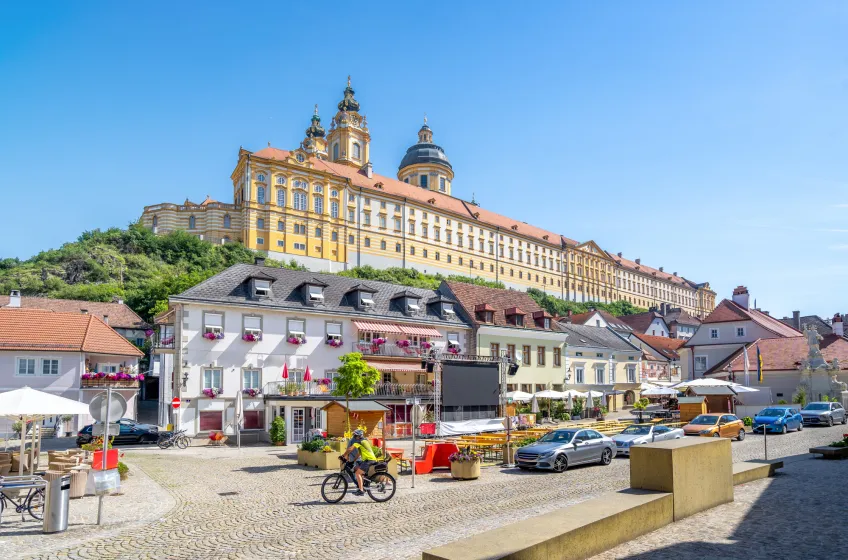
Melk is a small historic town on the River Danube in Lower Austria, best known for its magnificent hilltop Benedictine abbey. Positioned at the western entrance to the Wachau Valley, this attractive town is a perfect destination for architecture enthusiasts, cyclists, river-cruise passengers and visitors exploring Austria’s wine country. With its Baroque monastery, compact old centre and easy links to Vienna, Melk offers an excellent introduction to the landscapes and cultural heritage of the Danube.
Recommended Melk hotels and other accommodation
Pre-book Melk Attractions, Tours & Experiences
Why is Melk Worth a Visit?
Melk is worth visiting primarily for Melk Abbey, one of Austria’s greatest Baroque landmarks. The enormous golden-and-ochre complex rises above the town and river, creating one of the most memorable architectural sights in the country.
The abbey is much more than an impressive façade. Its ceremonial rooms, Marble Hall, historic library and lavishly decorated church reveal the wealth and cultural influence of the Benedictine community. The monastery remains active, giving the site a different atmosphere from a palace or conventional museum.
Melk is also an important gateway to the Wachau, a UNESCO-listed section of the Danube known for terraced vineyards, apricot orchards, ruined castles and wine villages. Visitors can continue towards Spitz, Weissenkirchen, Dürnstein and Krems by boat, bicycle, bus or car.
The town itself is compact and easily explored in half a day, although an overnight stay allows time for the abbey, riverside walks and a relaxed journey through the surrounding countryside.
Melk Highlights: Things to See and Do in Melk
Melk Abbey
Melk Abbey dominates the town from a rocky ridge above the Danube. The present Baroque complex was largely constructed during the early 18th century, although a Benedictine community has occupied the site for centuries.
The visitor route usually begins in the former imperial rooms, where exhibitions explain the abbey’s religious, political and educational history. These spaces lead towards the Marble Hall, a ceremonial room decorated with columns, coloured stone and an elaborate ceiling fresco.
One of the abbey’s greatest treasures is its library. Dark wooden bookcases, painted ceilings and thousands of historic volumes create a suitably scholarly atmosphere. Only part of the much larger monastic collection is visible to visitors.
The route concludes in the abbey church, a richly decorated Baroque interior filled with frescoes, gilded sculpture and coloured marble. Allow at least two hours for an unhurried visit.
Abbey Park and Gardens
The abbey’s gardens provide a quieter contrast to the ornate interiors. Formal planting, mature trees, fountains and woodland paths extend behind the monastery.
The Baroque garden pavilion contains decorative frescoes and may be used for exhibitions or events. Its terrace and surrounding grounds are pleasant places to rest after touring the main building.
The gardens are at their best from late spring to early autumn. Some areas operate seasonally and may close during poor weather or maintenance.
Melk Old Town
Melk’s old town lies directly below the abbey and consists of narrow streets, pastel-coloured houses and small public squares.
Hauptstrasse forms the principal route through the centre, with cafés, restaurants and shops occupying historic buildings. Several streets provide dramatic views upwards towards the monastery.
The old town is easy to overlook when arriving on an organised abbey tour, but it is worth allowing an hour to explore. Early morning and late afternoon are particularly pleasant, after many excursion groups have departed.
Town Hall Square
Rathausplatz is one of Melk’s main public spaces. It is surrounded by attractive façades, local businesses and outdoor café seating.
The square provides a convenient place for lunch or coffee between the railway station, abbey and river. Seasonal markets and small public events may also take place here.
Look beyond the principal square into the side streets, where decorative signs, small courtyards and older houses reveal more of the town’s character.
Melk Parish Church
The parish church stands within the old town and offers a more modest religious setting than the grand abbey above.
Its interior reflects several periods of reconstruction and decoration. The church remains an active place of worship, so access may be restricted during services or ceremonies.
A brief visit provides an interesting comparison with the theatrical Baroque design of the abbey church.
Danube Promenade
The Danube lies beyond the old town and railway line. Riverside paths provide views of passing boats, floodplains and the surrounding countryside.
The modern riverbank is relatively quiet compared with the abbey area. It is particularly enjoyable for walkers and cyclists continuing along the Danube route.
Boat landing stages operate during the main visitor season. From here, passenger vessels travel downstream through the Wachau towards villages including Spitz and Dürnstein.
Melk–Dürnstein Boat Journey
A river journey between Melk and Dürnstein is one of the most scenic ways to experience the Wachau.
The route passes wooded slopes, vineyard terraces, village churches and ruined castles. Travelling downstream from Melk is generally quicker than making the same journey against the river’s current.
Boat schedules are seasonal and may include only a few departures each day. Check the final connections carefully, especially when returning by a combination of bus and train.
A popular arrangement is to travel by boat in one direction and return by public transport, avoiding the need to repeat the same slow river journey.
Cycle Through the Wachau
Melk is a convenient starting point for cycling along the Danube towards Krems.
The riverside cycle route is largely level and passes orchards, vineyards and historic settlements. The section between Melk and Dürnstein is particularly attractive and can be completed as a day ride by reasonably active cyclists.
The two sides of the Danube offer different scenery. Local ferries allow cyclists to cross between the banks at selected points.
Bicycle hire may be available in Melk or nearby towns, although advance booking is sensible during summer weekends. Confirm where the bicycle can be returned when planning a one-way ride.
Schallaburg Castle
Schallaburg Castle lies a short distance south of Melk and is known for its elegant Renaissance courtyard.
Decorative terracotta figures line the arcades, while the building also retains medieval defensive features. Major temporary exhibitions are regularly staged inside and often focus on broad historical or cultural subjects.
Gardens, family activities and seasonal events add to the visit. The castle is easiest to reach by car, although occasional buses or shuttle arrangements may operate.
Leiben Castle
Leiben Castle stands in the countryside north of the Danube, within easy reach of Melk by car.
The building hosts exhibitions, markets and cultural events, with a particular emphasis on rural technology and regional history. Its hilltop position provides views across the surrounding landscape.
Leiben is less famous than Schallaburg and can offer a quieter excursion when an event or exhibition is taking place.
Practical Advice for Visitors
Getting There
Melk has direct regional rail connections with Vienna and several towns in Lower Austria. The journey from Vienna generally takes around one hour to 90 minutes, depending on the departure station and service.
Faster trains may require a change at St Pölten. Check whether the connection stops at Melk rather than continuing along the main railway without calling there.
Melk railway station is approximately a 10-minute walk from the old town. Reaching the abbey involves an uphill route, although it is not particularly long.
Drivers can reach Melk conveniently from the A1 motorway between Vienna and Linz. A motorway vignette is required.
Parking
Visitor parking is available near Melk Abbey and around the town centre. Follow the official signs rather than attempting to drive through narrow central streets.
The abbey car parks can become busy during summer mornings, when tour coaches and day visitors arrive. Reaching Melk earlier in the day usually makes parking easier.
Some parking areas charge a fee or impose time restrictions. Keep your ticket visible where required.
Once parked, the centre, abbey and principal restaurants are all within walking distance.
Dining
Melk has a selection of Austrian restaurants, cafés and hotel dining rooms concentrated around the old town and abbey approach.
Traditional dishes include schnitzel, roast pork, dumplings, goulash and seasonal game. Menus often feature regional wine from the Wachau and neighbouring areas.
Wachau apricots are an important local speciality. Depending on the season, they appear in dumplings, cakes, jam, juice, liqueur and schnapps.
Restaurants serving excursion groups can become crowded around lunchtime. Eating slightly earlier or later often provides a more relaxed experience.
Some establishments close one or two days each week, particularly outside the main season.
Wine
Melk stands at the western entrance to the Wachau wine region, which is known principally for Grüner Veltliner and Riesling.
The vineyards become more prominent downstream towards Spitz, Weissenkirchen and Dürnstein. Wine-focused visitors should consider combining Melk with one of these villages rather than expecting a large concentration of tasting rooms in the town itself.
Small producers may receive visitors only by appointment. Seasonal wine taverns also operate on limited schedules.
Use boats, buses, taxis or a designated driver when planning several tastings.
Shopping
The abbey shop offers books, religious items, gifts, local food and products connected with Benedictine life.
Shops in the old town sell Wachau wine, apricot products, confectionery and regional souvenirs. Check labels carefully when looking for locally produced items.
Bakeries are useful for pastries, bread and simple picnic supplies. General retail options are limited compared with larger towns such as Krems or St Pölten.
Most ordinary shops close on Sundays, although selected tourist businesses may remain open.
When to Visit
April to June is an excellent period for gardens, cycling and mild sightseeing conditions. Spring blossom adds colour to the Wachau countryside.
July and August offer the widest range of boat services and attraction hours. They also bring the largest crowds and potentially hot weather.
September and early October are particularly attractive for vineyards, wine events and autumn colours. Accommodation in the wider Wachau can fill during sunny weekends.
November to March is much quieter. The abbey remains the main focus, while boat services, gardens and some rural businesses operate reduced schedules or close.
December may bring Advent events and seasonal markets, although programmes vary from year to year.
Local Events
Concerts are held at Melk Abbey and other local venues throughout the year, often using the monastery’s historic spaces.
The Melk Summer Games traditionally bring theatre and cultural performances to the town during the warmer months.
Religious celebrations remain important because the abbey is an active Benedictine monastery. These may affect tourist access to the church or certain areas.
Apricot, wine and harvest festivals take place across the wider Wachau, particularly from summer into autumn. Dates vary annually, so confirm arrangements before booking travel.
Exploring Beyond Melk
Dürnstein is one of the Wachau’s most recognisable villages, known for its blue abbey tower and castle ruins associated with Richard the Lionheart.
Spitz is surrounded by vineyards and makes an attractive stop for wine tasting, cycling or a riverside meal.
Weissenkirchen has a fortified church, traditional houses and several respected wine estates.
Krems is the largest town in the Wachau, offering museums, restaurants, rail connections and a more extensive historic centre.
The pilgrimage town of Maria Taferl stands above the Danube west of Melk. Its basilica and elevated terrace provide broad views across the river valley.
St Pölten, the capital of Lower Austria, can be reached easily by train and offers Baroque architecture, museums and a modern government district.
Shortlist
- Your Shortlist is empty