
Discover Burgenland | A Visitor's Introduction to Burgenland
Recommended places to visit, places to stay and things to do in and around Burgenland
Burgenland is Austria’s easternmost federal state, stretching along the Hungarian border from the foothills south of Vienna to the rolling countryside near Slovenia. Known for Lake Neusiedl, warm-climate vineyards, extensive wetlands and a rich mixture of Austrian, Hungarian and Croatian influences, this largely rural region is a perfect destination for cyclists, birdwatchers, wine lovers and visitors seeking quiet countryside. With its reed-fringed lake, historic estates and sunny climate, Burgenland offers a distinctive alternative to Austria’s Alpine regions.
Recommended Burgenland hotels and other accommodation
Pre-book Burgenland Attractions, Tours & Experiences
Why is Burgenland Worth a Visit?
Burgenland is worth visiting because it feels unlike almost anywhere else in Austria. Instead of high mountains and narrow valleys, much of the state consists of open plains, low hills, vineyards, reed beds and wide skies. Its landscape and architecture often feel closer to neighbouring Hungary than to western Austria.
Lake Neusiedl is the region’s defining natural feature. This shallow steppe lake supports important bird habitats, watersports, cycling routes and wine-producing communities. The surrounding cultural landscape forms part of a UNESCO World Heritage Site shared with Hungary.
Wine is another major reason to visit. Northern Burgenland is known for mineral white wines, sweet wines and increasingly respected red varieties, while the central and southern districts produce some of Austria’s best Blaufränkisch. Many estates offer tastings, vineyard walks and informal seasonal taverns.
The region also has a complex cultural identity. German, Croatian and Hungarian traditions coexist in local villages, festivals, food and religious buildings. Baroque palaces, village churches and traditional wine-cellar lanes add historical interest to the natural scenery.
Burgenland is best explored slowly. A car is useful for reaching small villages and wineries, though Lake Neusiedl is also well suited to cycling and selected destinations have direct rail connections from Vienna.
Burgenland Highlights: Things to See and Do in Burgenland
Lake Neusiedl
Lake Neusiedl, or Neusiedler See, is Central Europe’s largest endorheic steppe lake. It is extremely shallow, surrounded by reeds and divided between Austria and Hungary.
The Austrian shore contains lakeside resorts, sailing centres, cycling routes and protected wetlands. Neusiedl am See, Podersdorf, Rust, Mörbisch and Illmitz are among the most practical visitor bases.
The lake’s character changes considerably with the weather and season. In summer, it supports swimming, sailing and windsurfing, while spring and autumn are particularly rewarding for birdwatching and cycling.
Water levels can fluctuate significantly, and some bathing areas or boat services may be affected during exceptionally dry periods. Check local conditions before planning activities centred on swimming or sailing.
Neusiedler See–Seewinkel National Park
The Seewinkel National Park protects a remarkable landscape of shallow saline ponds, reed beds, meadows and pasture east of Lake Neusiedl.
It is one of Austria’s best birdwatching regions, particularly during spring and autumn migration. Species may include spoonbills, avocets, geese, herons and birds of prey.
The flat landscape is ideal for cycling, and observation towers provide views over wetlands that are otherwise difficult to access. Guided walks are useful because the open countryside can look deceptively empty without expert knowledge.
Begin at the national park visitor centre near Illmitz for information on seasonal conditions, trail access and recent wildlife sightings. Bring binoculars, sun protection and water, as shade is limited.
Rust
Rust is a small historic town on the western shore of Lake Neusiedl, known for wine, colourful houses and nesting storks.
Its protected centre contains Renaissance and Baroque façades arranged around quiet streets and courtyards. During the warmer months, storks build nests on chimneys and rooftops, creating one of Burgenland’s most memorable sights.
Rust is also associated with Ruster Ausbruch, a celebrated sweet wine made from grapes affected by noble rot. Local estates and taverns provide opportunities to taste both sweet and dry wines.
The town is compact and easy to explore on foot. Combine it with a lakeside walk, boat trip or visit to nearby Mörbisch.
Esterházy Palace in Eisenstadt
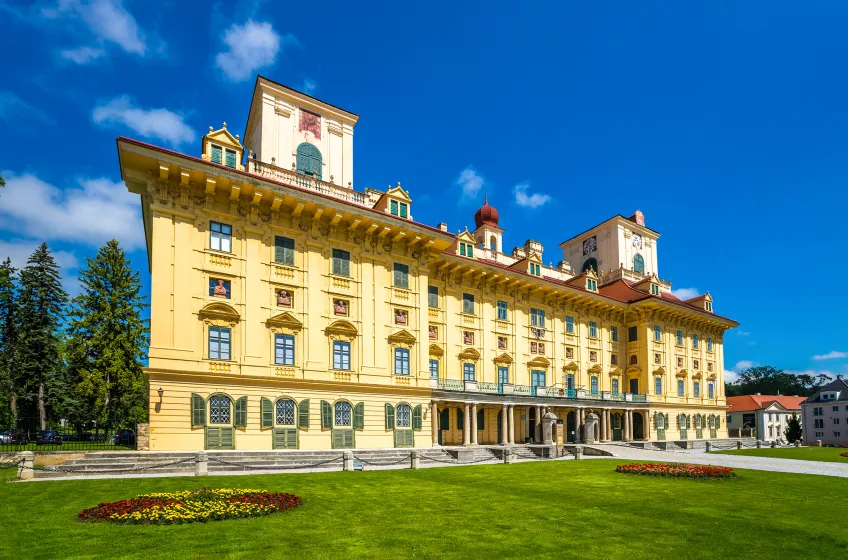
Esterházy Palace is Burgenland’s most important historic residence. The Esterházy family transformed the building into an elegant Baroque palace and employed the composer Joseph Haydn for much of his career.
The highlight is the Haydn Hall, an ornate concert room praised for its acoustics. Exhibitions explore the Esterházy dynasty, court life, music and the palace’s art collections.
The palace gardens provide a pleasant extension to the visit, with mature trees, lawns and historic structures. Concerts continue to be held in the palace, maintaining its musical tradition.
Allow at least half a day for the palace and central Eisenstadt. Guided tours or audio interpretation add useful context to the interiors.
Haydn House
Joseph Haydn lived in this modest Eisenstadt house while working for the Esterházy family. It now contains exhibitions devoted to his daily life, compositions and connections with the city.
The rooms are smaller and more personal than those of Esterházy Palace. Manuscripts, portraits and period furnishings help place the composer within the social world of 18th-century Eisenstadt.
Music enthusiasts should combine the house with the palace, Haydn Church and the composer’s mausoleum.
Mörbisch am See
Mörbisch lies among vineyards on the western shore of Lake Neusiedl, close to the Hungarian border.
The village is known for its traditional courtyard houses and seasonal wine taverns. Many properties have long, narrow layouts extending back from the street, reflecting historic farming and winemaking patterns.
Mörbisch is also famous for open-air musical performances staged on the lake during summer. The waterside setting and large floating stage create a distinctive atmosphere.
Outside performance periods, the harbour is a useful departure point for boat trips and cross-lake services. The surrounding vineyard paths are suitable for walking and cycling.
Podersdorf am See
Podersdorf is one of the main lakeside resorts on the eastern shore and is known for its small lighthouse, beach and watersports.
Unlike much of Lake Neusiedl, where dense reeds separate villages from the water, Podersdorf has relatively open access to the lake. This makes it popular for swimming, windsurfing, sailing and paddleboarding.
The long shoreline is especially attractive around sunset. Strong winds can develop quickly, however, so follow local safety guidance before entering the water.
Podersdorf is also a useful cycling base for the Seewinkel and national park. Summer weekends can be busy, so reserve accommodation and bicycle hire ahead.
Schloss Halbturn
Schloss Halbturn is a Baroque palace in northern Burgenland, originally used as an imperial hunting residence.
The palace hosts changing exhibitions, cultural events and concerts. Its architecture and formal setting provide a contrast to the nearby wetlands and farming landscape.
The surrounding estate is also connected with wine production. Opening arrangements depend on exhibitions and events, so it is best treated as a planned stop rather than assuming full daily access.
Halbturn can be combined with Frauenkirchen, the Seewinkel or a visit to nearby wineries.
Forchtenstein Castle
Forchtenstein Castle stands dramatically above the Rosalia Mountains in northern Burgenland. It was developed by the Esterházy family as a fortress, treasury and symbol of power.
The castle contains extensive collections of weapons, portraits, historic furniture and family treasures. Its thick walls, courtyards and elevated position create a more defensive atmosphere than Esterházy Palace.
Guided visits provide access to the most important interiors. The site includes steep slopes, steps and uneven surfaces, so visitors with limited mobility should check access arrangements.
Views from the castle extend across the surrounding countryside towards the Hungarian plain.
Central Burgenland Wine Country
Central Burgenland is often called Blaufränkischland because of its strong association with the Blaufränkisch grape.
Towns and villages such as Deutschkreutz, Horitschon, Lutzmannsburg and Neckenmarkt are surrounded by vineyards producing structured, spicy red wines. Many estates combine modern tasting rooms with traditional family ownership.
Wine tourism here feels quieter and less formal than in some internationally famous regions. Appointments are often essential, particularly with smaller producers.
Cycling routes connect several wine villages, although tasting and riding should be approached cautiously. A driver, organised tour or taxi arrangement is safer for visiting multiple estates.
Kellerviertel Heiligenbrunn
Heiligenbrunn’s historic cellar district is one of southern Burgenland’s most distinctive cultural landscapes.
Rows of small thatched wine cellars stand on grassy slopes, some dating back several centuries. These buildings were used for pressing grapes and storing wine rather than as permanent homes.
The area is especially associated with Uhudler, a strongly aromatic wine made from direct-producing grape varieties. Its distinctive flavour can suggest wild berries or strawberries.
Not every cellar is open to visitors, so festivals or organised tours provide the best opportunity to see interiors and taste local wine. Respect private property when walking through the district.
Güssing Castle
Güssing Castle occupies an extinct volcanic cone above the town of the same name in southern Burgenland.
Founded during the Middle Ages, it became closely connected with the powerful Batthyány family. The castle complex includes defensive walls, courtyards, a chapel and museum displays.
Its elevated position provides broad views over the rolling countryside towards Hungary and Slovenia. Access involves an uphill journey, though seasonal transport may reduce the climb.
Güssing is far removed from the busier Lake Neusiedl area and offers a quieter introduction to southern Burgenland.
Raiding and the Liszt Birthplace
The composer Franz Liszt was born in Raiding, now a small village in central Burgenland.
His birthplace has been preserved as a museum, while a modern concert hall beside it hosts recitals and festivals. Exhibitions explore Liszt’s childhood, international career and musical importance.
The site is relatively compact but particularly rewarding for classical-music enthusiasts. Combine it with a wider route through Blaufränkischland or nearby Lockenhaus.
Lockenhaus Castle
Lockenhaus Castle stands on a wooded hill in central Burgenland and retains a strong medieval atmosphere.
The fortress contains courtyards, defensive rooms, a chapel and a distinctive underground hall. Legends involving knights, secret societies and bats add to its appeal.
It is especially popular with families and visitors interested in medieval architecture. Events and themed programmes are sometimes held within the castle grounds.
The approach is hilly, and some interior areas involve narrow stairs and uneven floors.
Practical Advice for Visitors
Getting There
Vienna International Airport is the most convenient major gateway for northern Burgenland. Eisenstadt, Neusiedl am See and several lakeside towns can be reached by rail or a combination of train and bus.
Eisenstadt is approximately an hour from Vienna by car, depending on traffic. Rail journeys generally require regional services and may involve a change.
Southern Burgenland is more difficult to reach without a car. Graz can be a useful gateway for places such as Güssing, Heiligenbrunn and the southern wine districts.
Travellers arriving from Hungary can cross at several road and rail border points. Carry valid identification, as border checks may occasionally occur.
Choosing Where to Stay
Eisenstadt is the best base for palace history, museums and convenient access from Vienna. It has more urban facilities than the wine villages but is not directly on Lake Neusiedl.
Rust suits visitors seeking historic atmosphere, wineries and access to the western shore. It is attractive and compact, though accommodation can be expensive during summer and festival periods.
Podersdorf is ideal for beaches, watersports and cycling. Illmitz is better for birdwatching, national park excursions and a quieter village setting.
Mörbisch combines wine, cultural performances and boat access. Neusiedl am See provides strong transport links, shopping and practical facilities.
Central or southern Burgenland suits travellers seeking wine estates, rural inns and fewer crowds. A car is much more important in these areas.
Getting Around
Regional trains serve parts of northern Burgenland, particularly the corridor between Vienna, Neusiedl am See and selected lakeside communities.
Buses connect additional towns, but services can be infrequent during evenings, weekends and school holidays. Check the return journey before leaving a major centre.
Cycling is one of the best ways to explore Lake Neusiedl. The main circuit around the lake crosses Austria and Hungary and can be shortened using seasonal ferries.
A car is the most practical option for central and southern Burgenland, where villages, castles and wineries are more dispersed.
Cycling
The Lake Neusiedl Cycle Route is largely flat and suitable for leisure riders, though wind can make exposed sections surprisingly demanding.
The full circuit extends through both Austria and Hungary. Carry identification and check whether your bicycle-hire agreement permits cross-border travel.
Ferries can shorten the route by linking towns on opposite shores. Bicycle capacity may be limited during busy periods, so arrive early.
E-bikes are widely available and useful for vineyard slopes or longer distances. Confirm whether your accommodation offers secure storage and charging.
Driving and Parking
Roads through Burgenland are generally easy to navigate, but some village centres contain narrow streets and limited parking.
Use official car parks when visiting Rust, Eisenstadt, major castles and lakeside resorts. Parking charges may apply during the summer season.
Austria requires a motorway vignette for vehicles using motorways and expressways. Some routes near Lake Neusiedl can be completed on ordinary roads, but check your planned journey carefully.
Drink-driving limits are strict. Wine tastings should be combined with a designated driver, taxi, organised tour or overnight stay.
Dining
Burgenland cuisine reflects Austrian, Hungarian and Croatian influences. Paprika, freshwater fish, poultry and hearty stews appear frequently on traditional menus.
Common dishes include Bohnensuppe, cabbage specialities, dumplings, grilled fish and variations of goulash. Goose is particularly associated with autumn, when seasonal menus may feature roast goose with red cabbage and dumplings.
Lake fish may be served in lakeside restaurants, though availability and origin vary. Ask whether it is locally sourced when this matters to you.
Village inns often close on one or two days each week, and kitchens may finish early. Reserve dinner in small communities, especially outside summer.
Wine
Burgenland is one of Austria’s most varied wine regions. Around Lake Neusiedl, warm conditions favour full-bodied whites, red wines and internationally recognised sweet wines.
The Seewinkel is especially associated with Beerenauslese and Trockenbeerenauslese, produced from grapes affected by noble rot.
Central Burgenland specialises in Blaufränkisch, while the Leithaberg area produces mineral whites and structured reds. Southern Burgenland is known for Blaufränkisch and the unusual Uhudler tradition.
Many small estates open by appointment. Contact wineries before visiting rather than assuming a tasting room will always be staffed.
Shopping
Wine is the most characteristic purchase. Estate shops provide the best opportunity to compare grape varieties, vineyard sites and vintages.
Other local products include pumpkin-seed oil, fruit preserves, honey, paprika products, spirits and cured meats.
Farm shops and roadside stalls sell seasonal fruit and vegetables, particularly around Lake Neusiedl and the Seewinkel.
Ask for protective packaging when transporting bottles. Travellers crossing into Hungary or flying home should check applicable customs and baggage restrictions.
When to Visit
April to June is excellent for cycling, birdwatching and fresh vineyard scenery. Spring migration makes this one of the strongest periods for wildlife enthusiasts.
July and August provide the warmest weather and the fullest watersports programme. They also bring crowds, high accommodation prices and intense heat across the exposed plains.
September and October are ideal for wine tourism, harvest events and autumn food. Vineyard colours become particularly attractive during October.
Winter is quiet, and many rural attractions, taverns and boat services reduce their opening hours. Eisenstadt remains suitable for a cultural break, while parts of the countryside can feel extremely sleepy.
Local Events
Summer performances at Mörbisch are among Burgenland’s most famous cultural events, using the lakeside setting for large-scale operetta and musical productions.
St Margarethen’s former quarry hosts major open-air opera performances in a dramatic stone setting.
The Liszt Festival in Raiding presents classical concerts connected with the composer’s legacy.
Wine festivals, cellar-lane celebrations and harvest events take place across the state from late summer into autumn. Rust, Eisenstadt and the villages of central Burgenland are particularly active.
Event dates vary each year. Book accommodation and transport early for major lakeside performances.
Exploring Beyond Burgenland
Vienna is the easiest major-city extension, offering imperial palaces, museums, concerts and extensive public transport.
Bratislava lies north of Lake Neusiedl and can be reached from northern Burgenland by road or through Vienna. Its castle, old town and Danube setting make it suitable for a day trip.
Sopron in Hungary stands close to the western shore of Lake Neusiedl. It has a compact historic centre, medieval streets and strong wine traditions.
Fertőd, on the Hungarian side of the lake, is known for the grand Esterházy Palace associated with Joseph Haydn.
Graz is a useful extension from southern Burgenland, with Renaissance courtyards, modern architecture and a hilltop old town.
Eastern Styria lies west of southern Burgenland and offers thermal spas, castles, orchards and vineyard routes.
Shortlist
- Your Shortlist is empty