
Discover Austria | A Visitor's Introduction to Austria
Recommended places to visit, places to stay and things to do throughout Austria
Austria is a landlocked Central European country shaped by the eastern Alps, the River Danube and centuries of Habsburg rule. Known for imperial cities, classical music, dramatic mountain scenery and clear bathing lakes, it is a perfect destination for culture lovers, walkers, skiers, families and travellers exploring Europe by rail. With its grand palaces, historic towns, vineyard regions and well-developed outdoor infrastructure, Austria offers far more variety than its relatively compact size suggests.
Why is Austria Worth a Visit?
Austria is worth visiting because it combines major cultural destinations with easily accessible landscapes. Vienna’s palaces and museums can be followed by vineyards, Alpine villages or lakes within only a few hours of travel.
Its cities have distinct personalities. Vienna provides imperial architecture and exceptional art collections, Salzburg combines Mozart heritage with a mountain setting, Graz has Renaissance courtyards and a creative food scene, while Innsbruck places historic streets directly beneath high Alpine peaks.
Outside the cities, Austria ranges from the glaciers of the Hohe Tauern to the warm lakes of Carinthia and the open wetlands of Burgenland. The Salzkammergut brings together mountains, lakes and historic salt-mining communities, while the Wachau Valley offers vineyards, abbeys and Danube scenery.
Austria is also one of Europe’s easiest countries to tour by public transport. Fast trains link the main cities, regional lines reach many valleys and lakes, and buses provide connections to smaller resorts. A car is useful for remote villages and panoramic roads, but it is not essential for a well-planned multi-centre holiday.
Austria Highlights: Things to See and Do in Austria
Explore Vienna
Vienna is Austria’s capital and the natural starting point for a first visit. Its historic centre contains St Stephen’s Cathedral, the Hofburg Palace, the Vienna State Opera and the grand buildings of the Ringstrasse.
Schönbrunn Palace reveals the scale and ceremony of Habsburg court life, while the Belvedere houses Gustav Klimt’s The Kiss. The Kunsthistorisches Museum has outstanding collections of European painting, ancient art and imperial treasures.
Vienna’s traditional coffee houses are attractions in their own right. Order a Melange with cake and expect table service rather than a quick takeaway experience.
Allow at least three full days for the main sights. A longer stay provides time for the Prater, Danube Island, vineyard walks and the city’s outer neighbourhoods.
Discover Salzburg
Salzburg is one of Austria’s most beautiful cities, with Baroque church towers, enclosed squares and the Hohensalzburg Fortress rising above the old town.
Mozart was born here, and places connected with his life include his birthplace on Getreidegasse and the family residence across the river. The Salzburg Festival reinforces the city’s international musical importance each summer.
The Mirabell Gardens, cathedral and fortress can be covered during a compact walking itinerary. The Mönchsberg and Kapuzinerberg hills provide elevated views without requiring a journey outside the city.
Salzburg becomes crowded during summer and December. Staying overnight allows you to experience the old town before day visitors arrive or after they leave.
Tour the Salzkammergut
The Salzkammergut is a broad lake and mountain region east of Salzburg. It contains more than 70 lakes, historic resort towns, salt-mining landscapes and a mixture of gentle and demanding outdoor activities.
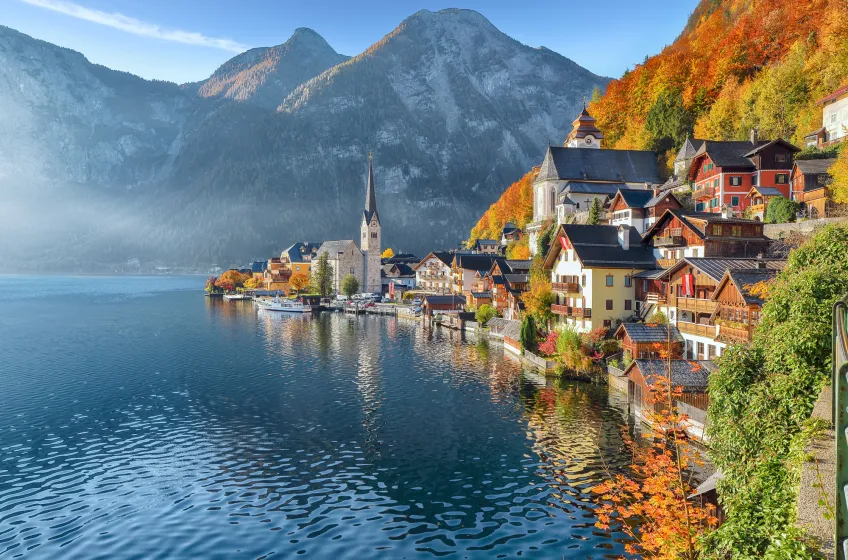
Hallstatt is the region’s most famous village, known for its tightly packed houses between the mountain and Hallstätter See. Its setting is beautiful, but daytime crowds can be intense.
Bad Ischl has imperial associations, elegant villas and a traditional spa-town atmosphere. St Wolfgang, St Gilgen and Mondsee provide further historic centres and access to boats, cable cars and walking routes.
Use a larger base such as Bad Ischl when travelling without a car. Smaller lakeside villages may have limited evening transport and restaurant choices.
Visit Innsbruck and the Tyrolean Alps
Innsbruck combines an attractive historic centre with immediate access to high mountains. The Golden Roof is its best-known landmark, while the Hofburg and Court Church reflect the city’s Habsburg connections.
The Nordkette cable cars climb from the city towards exposed Alpine terrain in a remarkably short time. On a clear day, the upper stations provide extensive views over Innsbruck and the surrounding peaks.
Nearby attractions include Ambras Castle, the Bergisel ski jump and the Swarovski Crystal Worlds at Wattens.
Innsbruck works well for visitors who want a city base with hiking or skiing nearby. Mountain weather may differ completely from conditions in the valley, so carry warm and waterproof clothing.
Experience the Wachau Valley
The Wachau follows the Danube between Melk and Krems. Its steep vineyards, apricot orchards, ruined castles and riverside villages form one of Austria’s most attractive cultural landscapes.
Melk Abbey is the region’s grandest landmark, with richly decorated Baroque interiors and a historic library. Farther downstream, Dürnstein is known for its blue church tower and the castle ruins associated with Richard the Lionheart.
Cycling is one of the best ways to explore the Wachau. The riverside paths are generally manageable, though some village and vineyard detours involve climbs.
Passenger boats operate seasonally. Combining a boat journey in one direction with cycling, rail or bus for the return creates a varied day trip.
Explore Graz
Graz is Austria’s second-largest city and the capital of Styria. Its centre combines Renaissance courtyards, red-tiled roofs and modern architecture.
The Schlossberg rises above the old town and is crowned by the Uhrturm clock tower. Visitors can walk, use the funicular or take a lift inside the hill.
The armoury contains an extraordinary collection of historic weapons and armour. Nearby, the Kunsthaus provides a striking contemporary contrast to the surrounding historic buildings.
Graz is also one of Austria’s strongest food destinations. Farmers’ markets, Styrian pumpkin-seed oil, local wine and creative restaurants distinguish it from the more formal atmosphere of Vienna.
See the Grossglockner and Hohe Tauern
The Hohe Tauern form Austria’s largest high-mountain region and contain glaciers, waterfalls and the country’s highest summit, the Grossglockner.
The Grossglockner High Alpine Road crosses spectacular terrain between Salzburg state and Carinthia. Viewpoints, walking trails and visitor centres provide access to the landscape without technical mountaineering.
The road is seasonal and may close because of snow or severe weather. Even in summer, conditions can change quickly at higher elevations.
Other notable areas include the Krimml Waterfalls, the Gastein Valley, Kaprun and the village of Heiligenblut. Walk only on routes suited to your fitness, equipment and the forecast.
Relax at Carinthia’s Lakes
Carinthia is known for warm summer lakes surrounded by forested mountains. Wörthersee is the liveliest, with resorts including Velden and Pörtschach, while Millstätter See and Ossiacher See provide a more relaxed atmosphere.
Faaker See is known for its turquoise water, and Weissensee stands out for its largely undeveloped shoreline and peaceful setting.
Public beaches often charge admission but provide changing rooms, toilets and well-maintained lawns. Much of the shoreline around popular lakes is privately owned, so use designated access points.
Carinthia is particularly suitable for a family holiday combining swimming, easy mountain excursions and historic attractions such as Hochosterwitz Castle.
Visit Hallstatt and the Dachstein
Hallstatt occupies a narrow strip of land beside Hallstätter See beneath the Dachstein mountains. Its historic salt industry has shaped the settlement and surrounding region for thousands of years.
The village contains a lakeside market square, Catholic church, ossuary and steep lanes. Salt-mine visits and elevated viewpoints may be available depending on seasonal operations and maintenance.
Across the wider Dachstein region, cable cars provide access to caves, viewing platforms and mountain walks. High-level facilities may close in poor weather.
Hallstatt is busiest between late morning and mid-afternoon. Stay overnight or visit early for a calmer experience, and avoid entering private gardens or residential doorways while taking photographs.
Explore the Austrian Lake Constance Shore
Austria occupies a short but attractive section of Lake Constance in Vorarlberg. Bregenz is the principal city, known for its waterfront, floating opera stage and access to the Pfänder mountain.
The Pfänder cable car provides broad views across the lake and towards the Alps when visibility is clear. The lakeside promenade is suitable for walking and cycling.
Nearby, the Rhine Delta contains wetlands and bird habitats, while Feldkirch offers a compact medieval centre farther inland.
The region is easy to combine with Germany, Switzerland and Liechtenstein. Carry identification and remember that Switzerland uses the Swiss franc rather than the euro.
Discover Burgenland and Lake Neusiedl
Burgenland is Austria’s easternmost state and has a markedly different landscape from the Alpine west. It is characterised by vineyards, open plains, wetlands and influences from neighbouring Hungary.
Lake Neusiedl is a shallow steppe lake surrounded by reed beds and cycling routes. Podersdorf is popular for swimming and watersports, while Rust is known for wine, historic houses and nesting storks.
The Seewinkel National Park is among Austria’s best birdwatching regions. Spring and autumn migration bring the greatest variety.
Burgenland is also an important wine region, producing dry whites, Blaufränkisch reds and internationally respected sweet wines.
Visit Eisriesenwelt and the Salzburg Mountains
Eisriesenwelt near Werfen is one of the world’s largest accessible ice-cave systems. A guided visit leads through enormous chambers containing frozen formations.
Reaching the cave involves a combination of road access, cable car travel and uphill walking. Even during summer, the interior is cold, so wear warm clothing and sturdy shoes.
Nearby, Hohenwerfen Castle occupies a dramatic hilltop position above the Salzach Valley. Its fortifications, mountain setting and seasonal bird-of-prey demonstrations make it a strong family attraction.
Both sites are seasonal and weather dependent. Check access before making a special journey.
Ski or Hike in the Arlberg
The Arlberg region spans parts of Tyrol and Vorarlberg and is one of Austria’s most famous mountain destinations.
St Anton am Arlberg is known for challenging skiing, extensive lift connections and a lively winter atmosphere. Lech and Zürs offer a more exclusive resort experience.
During summer, the same valleys provide hiking, mountain biking and cable-car access to panoramic routes. Accommodation is often quieter and more affordable than during the ski season.
Winter visitors should select terrain carefully. Some Arlberg slopes and off-piste areas are intended for experienced skiers, and avalanche conditions must be taken seriously.
Travel Through the Zillertal
The Zillertal is a broad Tyrolean valley with traditional villages, major ski areas and convenient mountain transport.
Mayrhofen is the principal resort and a useful base for cable cars, hiking and winter sports. Farther into the valley, routes lead towards glaciers and high Alpine scenery.
The narrow-gauge Zillertal Railway connects the valley with the mainline station at Jenbach. This makes the area comparatively easy to explore without a car.
The valley is busy during school holidays. Reserve accommodation, ski equipment and popular mountain activities in advance.
Follow Austria’s Wine Regions
Austria’s wine country extends well beyond Vienna. The Wachau, Kamptal and Kremstal are known for Grüner Veltliner and Riesling, while the hills of southern Styria produce fresh aromatic whites.
Burgenland offers dry whites, powerful reds and sweet wines. Vienna itself has working vineyards and traditional Heurigen wine taverns within the city boundary.
Many small wineries receive visitors by appointment rather than operating permanent tasting rooms. Contact producers before travelling.
Autumn is particularly atmospheric, with harvest activity, wine festivals and taverns serving newly fermented wine.
Practical Advice for Visitors
Getting There
Vienna International Airport is Austria’s largest airport and the main gateway for long-distance visitors. Salzburg, Innsbruck, Graz, Linz and Klagenfurt also have airports with more limited route networks.
Austria has direct international rail connections with Germany, Switzerland, Italy, the Czech Republic, Slovakia, Hungary and Slovenia. Night trains link Austrian cities with several European destinations.
Vienna Hauptbahnhof, Salzburg Hauptbahnhof and Innsbruck Hauptbahnhof are the most useful major interchanges. Trains between Vienna and Salzburg generally take less than two and a half hours, while Salzburg and Innsbruck are linked in under two hours on faster services.
Reserve discounted long-distance tickets early. These are usually tied to a particular train, whereas flexible fares cost more.
Getting Around by Train
ÖBB operates Austria’s main railway network. Railjet trains connect the major cities, while regional trains and buses serve smaller towns and valleys.
The ÖBB app is useful for checking timetables, purchasing tickets and viewing platform changes. Private operator Westbahn also serves selected intercity routes.
Seat reservations are not always compulsory, but they are advisable on busy services, particularly Friday and Sunday evenings, summer weekends and around Christmas.
Regional guest cards may include local buses or trains. Ask your accommodation what is covered before buying separate tickets.
Driving
Austria requires a vignette for vehicles using most motorways and expressways. Digital and physical versions are available for different periods.
Some tunnels, Alpine passes and panoramic roads charge additional section tolls. Paying for a motorway vignette does not automatically cover these routes.
Certain digital purchases made online by private consumers may not become valid immediately because of consumer cancellation rules. Check the activation date carefully rather than buying at the last moment.
Mountain roads can involve steep gradients, sharp bends and rapid weather changes. Use a low gear when descending and avoid continuous heavy braking.
Parking
Parking rules differ between cities and regions. Vienna, Salzburg, Graz and Innsbruck have controlled zones, resident restrictions and expensive central garages.
Park-and-ride facilities are often the simplest choice in larger cities. Leave the car outside the centre and continue by tram, underground train or bus.
Historic villages and lake resorts can also become congested during summer. Use official car parks rather than attempting to drive into pedestrianised centres.
Hotel parking is not always included in the room price. Confirm availability and charges before arriving.
Dining
Austrian cuisine varies considerably by region. Familiar dishes include Wiener Schnitzel, Tafelspitz, dumplings, goulash and Kaiserschmarrn.
Salzburg is associated with Salzburger Nockerl, Styria with pumpkin-seed oil, Carinthia with filled pasta called Kasnudeln, and Tyrol with bacon, cheese and dumpling dishes.
A Gasthaus or Wirtshaus usually serves traditional food, while a Beisl is an informal Viennese-style restaurant. Mountain huts offer simple, filling meals rather than elaborate dining.
Restaurant kitchens may close earlier than in the UK. In smaller towns, establishments often take one or two weekly rest days, so check before arriving late.
Shopping
Typical Austrian purchases include wine, cheese, cured meats, pumpkin-seed oil, preserves, confectionery and regional craft products.
Vienna has the broadest shopping selection, from luxury stores to independent design shops. Salzburg specialises in Mozart-themed gifts, while rural regions have farm shops and winery outlets.
Most ordinary shops close on Sundays. Exceptions include selected businesses at airports, major railway stations and petrol stations.
Carry a reusable bag, as shops commonly charge for carrier bags.
When to Visit
April to June and September to October are ideal for city breaks, lower-level walking and touring. Temperatures are generally comfortable and the largest summer crowds are absent.
July and August are best for swimming, high mountain roads and extensive cable-car operations. They can also be hot, busy and expensive.
September often combines warm lake water with quieter resorts. October brings vineyard colours and harvest events, though mountain facilities may begin to close.
December is popular for Christmas markets, Advent concerts and early skiing. January to March is the principal winter-sports period, with the most reliable conditions generally found at higher-altitude resorts.
Late spring and November can be awkward transition periods. Some cable cars, hotels and seasonal attractions close temporarily between the main summer and winter seasons.
Local Events
Vienna’s cultural calendar includes the ball season, classical concerts, opera, summer film events and numerous Christmas markets.
The Salzburg Festival presents opera, theatre and concerts during summer and creates intense demand for accommodation.
The Bregenz Festival stages opera on a floating platform on Lake Constance. The dramatic outdoor setting makes it one of Austria’s most recognisable cultural events.
Ski competitions, village festivals, harvest celebrations and cattle drives take place across the Alpine regions. Dates and routes vary each year.
Major events can affect hotel prices, transport and road access. Confirm the current programme before making non-refundable bookings.
Language, Payments and Etiquette
German is Austria’s main language, although local dialects may sound very different from standard German. Slovene, Croatian and Hungarian have recognised regional importance in parts of the country.
English is widely understood in major cities and tourist destinations, but a few basic German phrases are appreciated in smaller communities.
Cards are increasingly accepted, though cash remains useful in mountain huts, small taverns, rural car parks and village businesses.
Tipping is customary in restaurants and cafés. State the total amount you wish to pay when handing over cash or using the card terminal rather than leaving a large tip silently on the table.
Outdoor Safety
Mountain conditions can change rapidly, even when the valleys are warm and sunny. Carry waterproof clothing, water and an extra layer.
Choose routes suited to your experience and footwear. Cable-car access does not mean the surrounding terrain is easy or risk-free.
Check weather forecasts, trail conditions and final lift times before starting a walk. Turn back when conditions deteriorate rather than relying on the forecast improving.
In winter, do not enter closed pistes or uncontrolled terrain without appropriate avalanche knowledge and equipment.
Exploring Beyond Austria
Bratislava is an easy extension from Vienna and can be reached by train in roughly an hour.
Budapest, Prague, Munich, Ljubljana and Venice all have direct or straightforward rail connections from parts of Austria.
The Lake Constance region allows easy travel between Austria, Germany and Switzerland, while western Austria is also close to Liechtenstein.
From Carinthia and Styria, northern Italy and Slovenia make practical additions to a longer trip. Check motorway tolls, vignettes and border requirements before driving across neighbouring countries.
Shortlist
- Your Shortlist is empty