
Discover Eisenstadt | A Visitor's Introduction to Eisenstadt
Recommended places to visit, places to stay and things to do in and around Eisenstadt
Eisenstadt is the compact capital of Burgenland in eastern Austria, set beneath the wooded Leitha Mountains and surrounded by vineyards. Known for the magnificent Esterházy Palace and its close association with composer Joseph Haydn, this small city is a perfect destination for music lovers, wine enthusiasts and visitors interested in Habsburg-era history. With its Baroque centre, palace gardens and easy access from Vienna, Eisenstadt makes an enjoyable day trip or a relaxed base for exploring northern Burgenland.
Recommended Eisenstadt hotels and other accommodation
Pre-book Eisenstadt Attractions, Tours & Experiences
Why is Eisenstadt Worth a Visit?
Eisenstadt is worth visiting for its unusual concentration of music, aristocratic history and wine culture. The city was shaped by the powerful Esterházy family, whose palace became one of the most important cultural centres in the Habsburg lands.
Joseph Haydn spent much of his career working for the Esterházy court. His former home, the palace concert hall, church and mausoleum give Eisenstadt a particularly strong musical identity.
The city is also small enough to explore without rushing. Most central attractions lie within walking distance of one another, while vineyards and woodland begin close to the built-up area.
Eisenstadt is quieter and less monumental than Vienna, but that is part of its appeal. It provides an accessible introduction to Burgenland’s architecture, wine and multicultural history without requiring a complicated itinerary.
Eisenstadt Highlights: Things to See and Do in Eisenstadt
Esterházy Palace
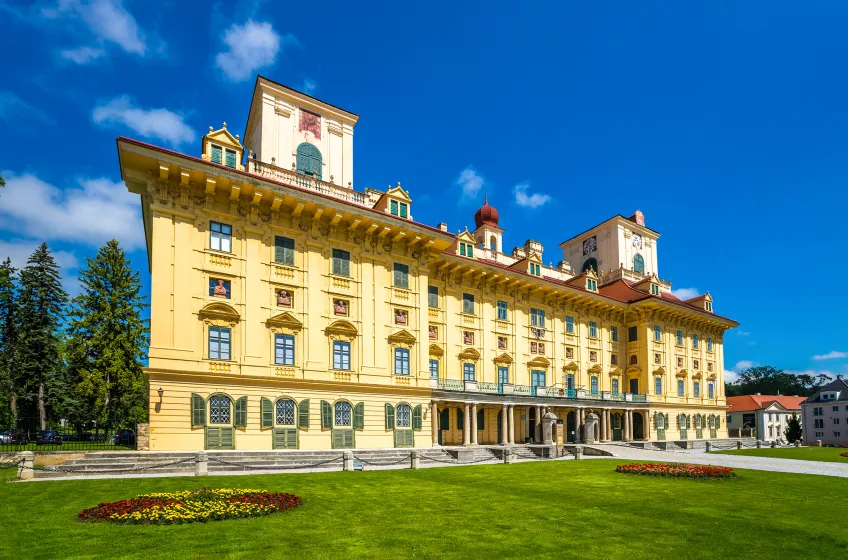
Esterházy Palace is Eisenstadt’s principal landmark and one of Austria’s most important aristocratic residences.
The building developed from a medieval fortress into an elegant Baroque palace under the Esterházy family. Its interiors reflect court life, family wealth and the dynasty’s cultural influence across Central Europe.
The palace’s greatest highlight is Haydn Hall, an ornate concert room celebrated for its acoustics. Joseph Haydn conducted and composed music for the Esterházy court here, and concerts continue to be staged in the hall.
Exhibitions normally explore the family, palace life and musical history. Ticket options may cover different areas, so check what is included before entering.
Haydn House
The Haydn House was the composer’s residence during his years in Eisenstadt.
Its modest rooms create a strong contrast with Esterházy Palace. Exhibitions explain Haydn’s daily life, family relationships and work for the Esterházy court through portraits, manuscripts, objects and reconstructed interiors.
The house is compact and usually takes around an hour to explore. Music enthusiasts should combine it with Esterházy Palace and the Haydn Church.
Haydn Church and Mausoleum
The Bergkirche, commonly called the Haydn Church, stands on a hill west of the centre.
Its most unusual architectural feature is the Kalvarienberg, a complex of chapels, passages, stairways and religious scenes representing Christ’s Passion. The route creates a highly theatrical devotional experience.
Joseph Haydn’s mausoleum is located within the church. His remains were moved here long after his death, following a complicated history involving the theft and eventual recovery of his skull.
The church remains an active place of worship, so access may be restricted during services and ceremonies.
Esterházy Palace Park
The palace park extends behind Esterházy Palace and provides a peaceful contrast to the compact city centre.
Originally designed as a formal Baroque garden, it was later transformed into an English-style landscape park with lawns, mature trees, ponds and winding paths.
Architectural features include the Temple of Leopoldine and the former orangery. Seasonal flowers and changing foliage make the park attractive from spring through autumn.
Entry to the grounds is generally free. It is a pleasant place for a picnic or a slow walk after touring the palace.
Schlosspark Orangery
The orangery within the palace park reflects the Esterházy family’s interest in exotic plants, courtly display and garden design.
Its long historic buildings once sheltered citrus trees and other delicate plants during winter. The setting is occasionally used for exhibitions, events and performances.
Even when the interiors are not accessible, the orangery and surrounding garden form one of the most elegant parts of the palace grounds.
St Martin’s Cathedral
St Martin’s Cathedral is the principal Catholic church in Eisenstadt and the seat of the local diocese.
Its origins are medieval, although later rebuilding introduced Gothic, Baroque and modern elements. The exterior is relatively restrained compared with the decorative interiors of Esterházy Palace.
Concerts are sometimes held here, reflecting Eisenstadt’s continuing musical traditions.
The cathedral is close to the pedestrian centre and can easily be visited during a short old-town walk.
Hauptstrasse and the Old Town
Eisenstadt’s central pedestrian area extends along Hauptstrasse between Esterházy Palace and the eastern side of town.
The street is lined with pastel-coloured houses, cafés, restaurants and small shops. It is more modest than the historic centres of Salzburg or Graz, but its compact scale gives it a relaxed local atmosphere.
Look for decorated façades, historic courtyards and small religious monuments along the route. Outdoor café seating makes the area particularly pleasant during warm weather.
Jewish Museum and Jewish Quarter
Eisenstadt once had an important Jewish community protected by the Esterházy family.
The Austrian Jewish Museum occupies a historic building within the former Jewish quarter. Its collections explore Jewish religious life, local history and the wider experience of Jewish communities in Burgenland.
A surviving private synagogue is one of the museum’s most important features. The nearby Jewish cemetery provides further evidence of the community’s long presence in the city.
Opening times can be more limited than those of the main palace attractions, so plan this visit in advance.
Landesmuseum Burgenland
The Burgenland State Museum explores the archaeology, history, culture and natural environment of Austria’s easternmost federal state.
Its displays help explain Burgenland’s complex identity, including Austrian, Hungarian, Croatian, Jewish and Roma influences. Exhibits also cover regional wine production, traditional life and the development of the modern state.
The museum provides useful context before travelling to Lake Neusiedl, the Seewinkel or southern Burgenland.
Gloriette
Eisenstadt’s Gloriette stands on a wooded slope above the city.
Built as an aristocratic garden pavilion, it offers an attractive elevated destination for a short walk. The route provides views across Eisenstadt and towards the surrounding countryside.
The building has been used as a restaurant and event venue at different times. Even when the interior is not accessible, the hill and exterior are worth visiting in good weather.
Walk Through the Vineyards
Vineyards begin close to Eisenstadt and extend across the slopes of the Leitha Mountains.
Walking routes lead from the city towards St Georgen, Kleinhöflein and nearby wine-growing areas. These paths offer views across northern Burgenland and, in clear weather, towards the plains surrounding Lake Neusiedl.
The landscape is particularly attractive during late summer and autumn. Carry water and sun protection, as vineyard paths can be exposed.
Remain on marked routes and avoid entering working vineyard rows without permission.
Visit St Georgen
St Georgen is a wine-growing district on the eastern side of Eisenstadt, with traditional houses, vineyards and seasonal taverns.
The area is associated with one of Austria’s most important Roman finds, a stone connected with the ancient wine culture of the region.
St Georgen is quieter than central Eisenstadt and works well as part of a vineyard walk or evening meal at a local wine tavern.
Opening periods for taverns vary, so check which establishments are serving before making the journey.
Practical Advice for Visitors
Getting There
Eisenstadt lies approximately 55 kilometres south-east of central Vienna.
Regional trains connect Vienna with Eisenstadt, usually taking around one hour to 90 minutes depending on the departure station and whether a change is required.
Buses also serve the city from Vienna and surrounding Burgenland towns. The most convenient option depends on the time of day and your starting point.
By car, the journey from Vienna generally takes around an hour in normal traffic. Vienna International Airport is closer than central Vienna and is the most practical major airport.
Getting Around
Central Eisenstadt is compact and easy to explore on foot. Esterházy Palace, Hauptstrasse, Haydn House and the principal museums are close together.
The Haydn Church stands farther uphill but remains walkable from the centre. The gradient may be tiring for visitors with limited mobility.
Local buses serve outer districts and nearby communities. A bicycle is useful for vineyard routes, although the streets and paths become hillier towards the Leitha Mountains.
Parking
Several public car parks and garages serve the city centre and Esterházy Palace.
Street parking may be controlled by time limits or payment zones. Check signs carefully and do not assume that spaces beside residential buildings are unrestricted.
Parking becomes busier during concerts, festivals and major palace events. Arrive early or use a car park slightly outside the pedestrian centre.
Once parked, there is little reason to move the car between central attractions.
Dining
Burgenland cuisine combines Austrian, Hungarian and Croatian influences. Paprika, poultry, cabbage, dumplings and seasonal game appear regularly on traditional menus.
Local dishes may include goulash, bean soup, roast goose and freshwater fish. Goose is particularly associated with autumn menus.
Restaurants around Esterházy Palace and Hauptstrasse provide the broadest choice. Smaller wine taverns in St Georgen and Kleinhöflein offer a more regional atmosphere.
Some restaurants close between lunch and dinner or take one or two weekly rest days. Check opening times before arriving late.
Wine
Eisenstadt lies within one of Burgenland’s most important wine-growing areas.
The surrounding Leithaberg region produces mineral white wines and structured reds. Common grape varieties include Chardonnay, Pinot Blanc, Blaufränkisch and Zweigelt.
Traditional Heurigen serve local wine with simple cold dishes, spreads, cheese and cured meats. Opening periods rotate, and not every tavern operates continuously.
Formal winery tastings often require advance booking. Use taxis, public transport or a designated driver when visiting several producers.
Shopping
Wine is the most characteristic purchase. Estate shops and specialist retailers can help visitors compare producers and grape varieties.
Other regional products include pumpkin-seed oil, paprika products, honey, fruit preserves and spirits.
Hauptstrasse contains small shops, bakeries and everyday retailers. The palace shop offers books, music-related gifts and items connected with the Esterházy family.
Most ordinary shops close on Sundays, with limited exceptions for tourist businesses and bakeries.
When to Visit
April to June is excellent for palace gardens, vineyard walks and comfortable sightseeing temperatures.
July and August bring summer concerts and warm weather, although exposed streets and vineyard paths can become hot.
September and October are particularly attractive for wine tourism and autumn colours. Harvest events create a lively atmosphere, but accommodation may fill during festival weekends.
December offers Advent events and seasonal concerts. Some smaller museums and rural taverns operate reduced winter hours.
A weekday visit is generally quieter than a summer weekend or major concert day.
Local Events
Concerts at Esterházy Palace are central to Eisenstadt’s cultural calendar. Haydn Hall regularly hosts classical performances and music festivals.
The Herbstgold Festival brings concerts, food and cultural events to the palace during autumn.
Haydn-related programmes take place throughout the year, including chamber music, exhibitions and commemorative events.
Wine festivals and open-cellar days are held in Eisenstadt and neighbouring communities, particularly from late summer into autumn.
Event dates change annually, so book performance tickets and accommodation before travelling for a specific programme.
Exploring Beyond Eisenstadt
Rust lies around 15 kilometres east of Eisenstadt and is known for colourful historic houses, vineyards, storks and sweet wine.
Lake Neusiedl is within easy reach by car or regional transport. Mörbisch provides lakeside performances and boat access, while Podersdorf is known for its beach and lighthouse.
The Seewinkel National Park lies on the eastern side of the lake and offers excellent birdwatching, cycling and wetland scenery.
Forchtenstein Castle stands west of Eisenstadt in the Rosalia Mountains. Its armour, family collections and defensive architecture provide a strong contrast to Esterházy Palace.
Vienna is close enough for a day trip, though Eisenstadt also works well as a quieter base before or after visiting the capital.
Sopron in Hungary is a convenient cross-border excursion with medieval streets, a compact centre and strong wine traditions. Carry valid identification and check current transport arrangements before travelling.
Shortlist
- Your Shortlist is empty