
Discover Upper Austria | A Visitor's Introduction to Upper Austria
Recommended places to visit, places to stay and things to do in and around Upper Austria
Upper Austria is a varied federal state in northern Austria, extending from the River Danube and the Czech border to the lakes and mountains of the Salzkammergut. Known for its lively capital Linz, beautiful lake districts, grand monasteries and historic market towns, the region is a perfect destination for cyclists, walkers, families and travellers interested in combining culture with outdoor scenery. With its riverside landscapes, Alpine foothills and strong regional food traditions, Upper Austria offers an appealing alternative to Austria’s more heavily visited destinations.
Recommended Upper Austria hotels and other accommodation
Pre-book Tyrol Attractions, Tours & Experiences
Why is Upper Austria Worth a Visit?
Upper Austria is worth visiting because it contains several distinct landscapes within a relatively compact area. The Danube crosses the state from west to east, passing monasteries, wooded hills, farming communities and the modern city of Linz. Farther south, the terrain rises towards the clear lakes and limestone mountains of the Salzkammergut.
The region is particularly good for travellers who enjoy mixing cultural attractions with outdoor activities. You can visit a major contemporary art museum in Linz, cycle beside the Danube, tour a Baroque abbey and spend the following day swimming or walking around an Alpine lake.
Upper Austria also has a strong industrial and technological identity. Linz has successfully transformed former industrial areas into cultural districts, while museums such as Ars Electronica explore the relationship between society, science and digital technology.
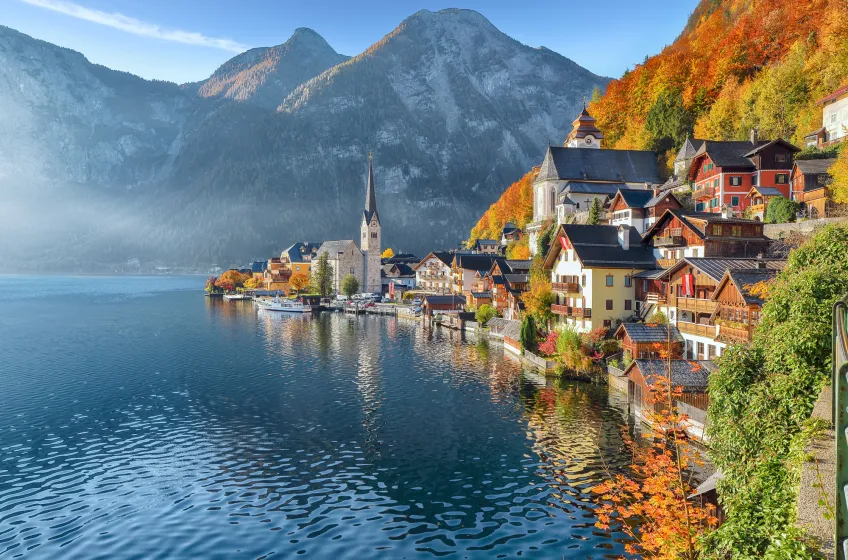
The village of Hallstatt is in Upper Austria, within the Salzkammergut, and it is the state’s most internationally recognised destination. However, places such as Bad Ischl, Gmunden, Steyr, Freistadt and the Danube Valley often provide richer and less crowded experiences.
Upper Austria Highlights: Things to See and Do in Upper Austria
Explore Linz
Linz is Upper Austria’s capital and the country’s third-largest city. It stands on both banks of the Danube and combines historic streets with contemporary architecture, industry and digital culture.
The large Hauptplatz forms the heart of the old town. Baroque façades surround the square, while the Trinity Column rises at its centre. Nearby streets contain cafés, shops, churches and passages leading towards the river.
Linz Castle overlooks the city from a low hill and houses collections devoted to art, archaeology, technology and regional history. The castle terrace also provides attractive views over the Danube.
The city is compact enough for a weekend break. Trams make it easy to travel between the centre, railway station and outer districts.
Visit Ars Electronica Center
The Ars Electronica Center stands beside the Danube in the Urfahr district and is one of Austria’s most distinctive museums.
Its exhibitions explore artificial intelligence, robotics, biotechnology, digital art and the social consequences of emerging technologies. Interactive displays make complex subjects accessible to adults and older children.
The Deep Space presentation uses large-scale wall and floor projections to create immersive journeys through scientific images, artworks and virtual environments. Scheduled demonstrations are often among the strongest parts of a visit.
Allow at least two or three hours. The museum is especially useful during poor weather and can be combined with an evening walk along the illuminated riverfront.
See the Lentos Art Museum
The Lentos Art Museum occupies a long glass building on the southern bank of the Danube.
Its collection focuses on modern and contemporary art, including works from Austrian and international artists. Temporary exhibitions frequently cover painting, photography, sculpture and socially engaged art.
The building forms part of Linz’s modern riverside landscape, directly opposite the Ars Electronica Center. At night, its illuminated façade becomes a prominent city landmark.
The museum café and riverfront setting make it a pleasant stop even for visitors with only a moderate interest in contemporary art.
Ride the Pöstlingbergbahn
The Pöstlingbergbahn is a historic mountain tram running from central Linz to the Pöstlingberg hill.
At the summit, visitors can see the pilgrimage basilica, enjoy broad views over the city and walk through wooded surroundings. On clear days, the panorama may extend towards the Alps.
The Grottenbahn is a family attraction inside a former defensive tower, with a dragon-themed railway and scenes inspired by fairy tales.
The tram journey itself is part of the experience. Services can become busy during sunny weekends and Christmas events, so travelling earlier in the day is advisable.
Visit St Florian Abbey
St Florian Abbey lies south-east of Linz and is one of Austria’s most impressive Baroque monasteries.
The complex contains ceremonial rooms, a richly decorated church, an extensive library and grand corridors. Composer Anton Bruckner worked here as an organist and is buried beneath the church organ.
Guided tours normally provide access to the principal interiors. The Marble Hall and library are particular highlights, while the church’s scale and acoustics reflect the abbey’s musical tradition.
St Florian is easiest to reach by car, though regional buses connect it with Linz. Check tour times before travelling, as independent access to the main rooms may be limited.
Wander Through Steyr
Steyr is one of Upper Austria’s most attractive historic towns. It stands where the Rivers Steyr and Enns meet, with colourful houses, narrow lanes and industrial heritage.
The long Stadtplatz is lined with Gothic, Renaissance and Baroque buildings. The Bummerlhaus, with its steep roof and decorative façade, is among the square’s most distinctive houses.
The confluence of the rivers provides one of the town’s best views. Bridges and riverside paths connect the old centre with quieter residential districts.
Steyr has a long association with metalworking and manufacturing. Museums and historic industrial sites reveal a side of Austrian history very different from palaces and monasteries.
Explore Gmunden
Gmunden stands at the northern end of Traunsee and is one of the principal gateways to the Salzkammergut.
The town is known for its lakeside promenade, ceramic tradition and mountain views. Historic buildings surround the centre, while boats depart for communities around the lake.
Schloss Ort is Gmunden’s most recognisable landmark. The small castle occupies an island close to the shore and is reached by a wooden walkway.
Gmunden makes a useful base for exploring Traunsee, Grünberg and nearby mountain areas. It has direct rail connections and local trams linking the station with the centre.
Discover Traunsee
Traunsee is one of Austria’s deepest lakes, surrounded by steep limestone mountains.
The Traunstein rises dramatically above the eastern shore and creates the lake’s most recognisable landscape. Its summit routes are demanding and suitable only for experienced mountain walkers.
Boat services connect Gmunden with places such as Traunkirchen and Ebensee during the main season. Traunkirchen is particularly attractive, with a church standing on a small wooded peninsula.
The lake is suitable for swimming, sailing and paddleboarding, although the water can remain cool. Wind and weather conditions can change rapidly.
Visit Hallstatt
Hallstatt occupies a narrow strip of land between Hallstätter See and the steep Dachstein mountains.
Its historic salt industry dates back thousands of years and has given its name to an important period of European prehistory. The village contains tightly packed houses, a small market square, churches and dramatic lake views.
The Catholic church’s ossuary contains hundreds of decorated skulls, reflecting historic burial customs created by limited cemetery space.
Hallstatt becomes extremely crowded between late morning and mid-afternoon. Visit early, arrive by train and ferry, or stay overnight for a quieter experience. Respect private homes, doorways and gardens when taking photographs.
Explore the Dachstein and Krippenstein
The Dachstein massif rises above the southern Salzkammergut and provides high-altitude scenery, caves and viewing platforms.
Cable cars from Obertraun climb towards Krippenstein. Depending on seasonal operations, visitors may be able to reach the Giant Ice Cave, Mammoth Cave and the Five Fingers viewing platform.
The Five Fingers platforms project above the mountain landscape and offer views over Hallstätter See. Reaching them requires a walk from the upper cable-car area.
Conditions at altitude may be cold, windy or snowy even when the valley is warm. Carry proper footwear, waterproof clothing and an extra layer.
Relax in Bad Ischl
Bad Ischl is an elegant spa town in the heart of the Salzkammergut. It became closely associated with Emperor Franz Joseph, who spent many summers here.
The Kaiservilla was the imperial family’s summer residence and can normally be visited on guided tours. Its interiors preserve furniture, portraits and hunting objects connected with Franz Joseph and Empress Elisabeth.
The town centre contains traditional cafés, villas, shops and riverside walks. Zauner is particularly famous for cakes, pastries and the chocolate-coated Ischler Törtchen.
Bad Ischl is a strong public-transport base for Hallstatt, St Wolfgang, Gmunden and other Salzkammergut destinations.
Visit St Wolfgang and Wolfgangsee
St Wolfgang lies on the northern shore of Wolfgangsee and is one of the Salzkammergut’s best-known resort towns.
Its pilgrimage church contains an exceptional late-Gothic winged altar by Michael Pacher. The lakeside centre also has traditional hotels, shops and boat landings.
The Schafbergbahn rack railway climbs from St Wolfgang towards the summit of the Schafberg. On a clear day, the upper station provides views over numerous lakes and surrounding mountains.
Passenger boats connect St Wolfgang with St Gilgen and Strobl. Services are seasonal, and popular sailings can become crowded during summer.
Explore Mondsee
Mondsee is a lakeside market town east of Salzburg, known for its colourful centre and large basilica.
The basilica’s twin towers dominate the town and became internationally recognised through its appearance in the wedding scene from The Sound of Music.
Mondsee’s waterfront includes lawns, swimming areas and views towards the Drachenwand mountain. The lake is warmer and more suitable for family swimming than some deeper Alpine lakes.
The town can be visited on a day trip from Salzburg or combined with a wider drive through the Salzkammergut.
Visit Attersee
Attersee is the largest lake lying entirely within Austria and is known for exceptionally clear water.
The lake is popular for sailing, diving, swimming and cycling. Resorts and villages around the shore include Attersee am Attersee, Unterach, Weyregg and Seewalchen.
Artist Gustav Klimt spent many summers in the area and painted numerous local landscapes. A themed trail and visitor centre explore his connection with the lake.
Attersee is less dominated by a single historic town than Wolfgangsee or Traunsee. Its appeal lies mainly in water activities, broad views and a relaxed holiday atmosphere.
Explore the Danube Valley
The Danube crosses northern Upper Austria before continuing towards Lower Austria.
The Schlögener Schlinge is the region’s most famous river landscape. Here, the Danube forms a dramatic double bend around wooded hills.
A short but steep walk reaches elevated viewpoints above the river. The area is particularly popular with cyclists following the Danube Cycle Path.
Small ferries, riverside inns and accommodation designed for cyclists make the valley suitable for a slow multi-day journey.
Visit Engelszell Abbey
Engelszell Abbey lies close to the Danube near the German border and is Austria’s only Trappist monastery.
The church has an elaborate Rococo interior, while the abbey is associated with the production of liqueurs and other monastic products.
The complex is relatively compact and combines well with a Danube cycling journey or drive towards the Schlögener Schlinge.
As it remains a religious community, access may be limited during services or private events.
Discover the Mühlviertel
The Mühlviertel occupies the hilly region north of the Danube towards the Czech border.
Its landscape includes forests, granite outcrops, farms and small historic towns. It is especially associated with brewing, hops and hearty rural food.
Freistadt is one of the region’s most appealing towns, with preserved walls, towers and a compact medieval centre. The town also has a strong brewing tradition.
The Mühlviertel is well suited to cycling, walking and quiet rural stays. A car provides the greatest flexibility, as public transport becomes less frequent away from the main towns.
Practical Advice for Visitors
Getting There
Linz Airport is Upper Austria’s main airport, though its international route network is limited.
Vienna, Salzburg and Munich airports may provide more convenient connections depending on your destination. Linz has excellent rail links with Vienna and Salzburg.
Linz Hauptbahnhof is one of Austria’s major railway stations. Fast trains connect it with Vienna in around one hour and 15 minutes and with Salzburg in roughly the same amount of time.
Regional trains serve Steyr, Gmunden, Bad Ischl, Hallstatt, Attnang-Puchheim and other towns. More remote lakes and rural districts require buses or a car.
Choosing Where to Stay
Linz is the best base for museums, restaurants, nightlife and easy rail travel.
Bad Ischl is the strongest public-transport base for the central Salzkammergut. It has year-round facilities and connections to Hallstatt, Gmunden and Wolfgangsee.
Gmunden suits visitors interested in Traunsee, lakeside scenery and a small-town atmosphere. St Wolfgang offers a more picturesque setting but becomes busy and expensive during summer.
Steyr is ideal for history, architecture and a quieter urban break. Rural accommodation in the Mühlviertel or Danube Valley suits travellers with a car or bicycle.
Getting Around Without a Car
Upper Austria’s main railway lines provide good connections between Linz, Steyr, Attnang-Puchheim, Gmunden and Bad Ischl.
Hallstatt railway station lies across the lake from the village. A small ferry normally meets many train arrivals and provides a scenic approach.
Regional buses connect Bad Ischl with St Wolfgang and other communities, though evening services may be limited.
Seasonal boats operate on Traunsee, Wolfgangsee, Attersee and Hallstätter See. They are best treated as part of the experience rather than frequent public transport.
Driving and Parking
A car is useful for exploring multiple lakes, rural monasteries and the Mühlviertel.
Austria requires a vignette for vehicles using most motorways and expressways. Some tunnels and mountain roads charge additional tolls.
Parking is particularly difficult in Hallstatt during busy periods. Use official visitor car parks and follow electronic signs rather than attempting to enter restricted residential streets.
Lake resorts can also fill on hot summer weekends. Arrive early or use public transport where possible.
Cycling
The Danube Cycle Path is Upper Austria’s best-known cycling route. It is largely level and supported by ferries, bicycle-friendly accommodation and luggage-transfer services.
The Salzkammergut has numerous lakeside routes, although some involve busy roads or significant climbs. Check the terrain rather than assuming every lake circuit is flat.
E-bikes are widely available and useful for hilly districts such as the Mühlviertel.
Bicycles may require separate tickets on trains and boats. Space can be limited during summer weekends, so avoid peak departure times.
Dining
Upper Austrian food is hearty and strongly connected with farming traditions.
The best-known speciality is Linzer Torte, a tart made with nuts, spices and fruit preserve beneath a lattice pastry top. It is widely available in Linz and across the state.
Savoury dishes include roast pork, dumplings, sausages and Innviertler Knödel, filled dumplings associated with the western part of the state.
Lake fish appears on Salzkammergut menus, though origin and availability vary. Ask whether the fish is locally caught when this matters.
Traditional restaurants may close early or take regular rest days. Reserve dinner in smaller towns outside the main holiday season.
Shopping
Typical purchases include Linzer Torte, cheese, cured meats, fruit preserves, schnapps and regional beer.
The Salzkammergut is known for salt-related products, traditional clothing and handmade crafts. Check where souvenirs were produced when looking for genuinely local goods.
Linz has the broadest retail selection, particularly around Landstrasse and the central shopping streets.
Farm shops and weekly markets are useful for bread, honey, dairy products and seasonal produce.
When to Visit
May, June and September provide an excellent balance of mild weather, open attractions and manageable crowds.
July and August are best for swimming, boat trips and high-level mountain access. They also bring heavy traffic and high accommodation prices around the lakes.
September often retains pleasant water temperatures while offering quieter towns. Mountain cable cars and seasonal boats begin reducing services later in autumn.
December is attractive in Linz, Steyr, Gmunden and other towns because of Christmas markets and Advent events.
Winter is suitable for city breaks and selected mountain activities, but many lake boats, caves and seasonal attractions close or reduce their hours.
Local Events
The Ars Electronica Festival is Linz’s best-known international event, combining digital art, technology, science and performance.
The Linz Klangwolke presents large-scale outdoor music and visual events beside the Danube.
Brucknerfest celebrates composer Anton Bruckner through orchestral and chamber performances.
The Salzkammergut hosts music festivals, lake events, traditional celebrations and Christmas markets throughout the year.
Steyr is especially atmospheric during Advent, with markets and seasonal displays across its historic centre.
Event dates change annually, so confirm the current programme before reserving non-refundable accommodation.
Exploring Beyond Upper Austria
Salzburg lies directly west and is easily reached by train. Its Baroque centre, fortress and Mozart heritage make it a natural addition to an Upper Austria itinerary.
Lower Austria begins east of the state, with the Wachau Valley, Melk Abbey and additional Danube cycling routes.
Styria lies south of the Salzkammergut and includes Graz, the Styrian lake district and the Gesäuse National Park.
The Bavarian city of Passau stands just across the German border near the western Danube. Its old town occupies the meeting point of three rivers.
The Czech region north of the Mühlviertel offers towns such as Český Krumlov and České Budějovice. Public transport across the rural border can be slow, so a car or organised excursion is often more practical.
Shortlist
- Your Shortlist is empty