
Discover Bayreuth | A Visitor's Introduction to Bayreuth
Recommended places to visit, places to stay and things to do in and around Bayreuth
Bayreuth is a compact cultural city in Upper Franconia, northern Bavaria, shaped by Baroque architecture, royal ambition and the music of Richard Wagner. Known for its UNESCO-listed opera house and world-famous summer festival, the city is a perfect destination for music lovers, history enthusiasts and travellers who enjoy elegant gardens, museums and traditional Franconian food. With its palaces, leafy parks and relaxed old centre, Bayreuth offers a rewarding escape between Nuremberg and the landscapes of the Fichtel Mountains.
Recommended Bayreuth accommodation: Hotels Apartments
Pre-book Bayreuth Attractions, Tours & Experiences
Why is Bayreuth Worth a Visit?
Bayreuth is worth visiting because it brings together two unusually distinct cultural worlds. The first is the extravagant 18th-century court of Margravine Wilhelmine, who transformed the city with theatres, palaces and gardens. The second is the legacy of Richard Wagner, who built his revolutionary Festival Theatre here and made Bayreuth an international centre of opera.
The result is far more varied than Bayreuth’s reputation as a destination solely for Wagner enthusiasts might suggest. You can step inside one of Europe’s best-preserved Baroque theatres, wander through palace gardens filled with fountains and artificial ruins, visit Wagner’s former home and finish the day with Franconian beer in a traditional inn.
The historic centre is manageable on foot, while major attractions such as the Hermitage and Fantaisie Palace are within easy reach by bus, bicycle or car. Bayreuth is particularly appealing for a two- or three-night break, although it also works as a day trip from Nuremberg or Bamberg.
Bayreuth Highlights: Things to See and Do in Bayreuth
Margravial Opera House
The Margravial Opera House, or Markgräfliches Opernhaus, is Bayreuth’s architectural masterpiece and a UNESCO World Heritage Site. Built during the 1740s for Margravine Wilhelmine, it preserves an extraordinary Italian-style auditorium made largely from painted wood and canvas.
Its tiers of richly decorated boxes create the illusion of carved marble, while gilded ornament, painted columns and theatrical figures cover almost every visible surface. The comparatively restrained stone exterior gives little warning of the splendour inside.
Admission normally includes access to the adjoining museum, which explains Baroque theatre, court festivals and stagecraft. Entry to the auditorium may be organised in timed slots, so booking ahead is sensible during weekends and school holidays.
Bayreuth Festival Theatre
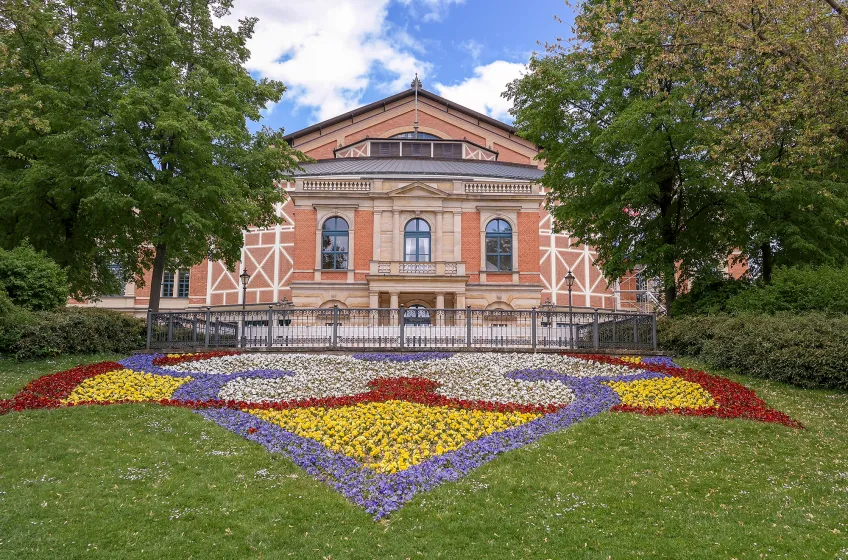
The Bayreuth Festival Theatre, known as the Festspielhaus, stands on the Green Hill north of the city centre. Richard Wagner had it constructed specifically for performances of his operas, with innovative features including a concealed orchestra pit and a fan-shaped auditorium designed to focus attention on the stage.
The building is deliberately less ornate than a conventional royal opera house. Its significance lies in its acoustics, stage design and continuing role as the home of the annual Bayreuth Festival.
Outside festival performances, access is usually possible only through scheduled guided tours. English-language public tours are more limited than German tours, so check the current programme before arriving. The walk from the railway station takes roughly 20 minutes and becomes quite steep near the top.
Wahnfried and the Richard Wagner Museum
Wahnfried was the home built for Richard Wagner and his family close to the Hofgarten. Wagner lived here from 1874 until his death in 1883, and he is buried with his wife Cosima in the garden.
The modern Richard Wagner Museum combines the restored villa with exhibition spaces exploring his life, compositions and influence. Displays also address the Wagner family’s later links with nationalism and National Socialism, making this a more thoughtful and critical museum than visitors may expect.
Allow at least 90 minutes, particularly when temporary exhibitions are included. The garden and grave provide a quiet conclusion to the visit.
The Hermitage
The Hermitage, or Eremitage, is Bayreuth’s most distinctive outdoor attraction. This landscaped park on the eastern edge of the city contains fountains, woodland paths, artificial ruins, grottos and fantastical palace buildings created for the margravial court.
Its star attraction is the New Palace of the Hermitage, an extraordinary curved structure decorated with coloured glass stones. The central Sun Temple, crowned by a golden Apollo, forms one of Bayreuth’s most memorable sights.
The park is free to enter, though palace interiors may require a guided tour and operate seasonally. Fountain displays generally take place during the warmer months. Wear comfortable shoes, as the grounds are extensive and include uneven surfaces.
New Palace and Court Garden
Bayreuth’s New Palace was built after a fire destroyed the earlier residence in 1753. Its interiors reflect Margravine Wilhelmine’s highly personal taste, particularly in the Palm Room, whose walnut panelling is decorated with carved palm trees, and the delicate Japanese Room.
Behind the palace, the Court Garden extends towards Wahnfried. Its canals, mature trees, lawns and sculptures make it one of the most pleasant places for a central walk or picnic.
The palace interior is generally visited by guided tour. Arrive early enough to secure a place, especially when English-language information or tours are limited.
Bayreuth Old Town
Bayreuth’s centre is smaller and calmer than those of nearby Bamberg or Nuremberg, but it rewards an unhurried wander. Maximilianstrasse forms the main pedestrian thoroughfare, lined with cafés, shops and historic façades.
Look for the Old Palace, the octagonal Castle Church and the striking fountain dedicated to Margrave Christian Ernst. Sternplatz and the streets around the Margravial Opera House are particularly attractive.
The old town is at its liveliest during markets and festivals, while early mornings are best for photographs and quiet sightseeing.
Franz Liszt Museum
Composer Franz Liszt died in Bayreuth in 1886 while visiting his daughter Cosima Wagner. The small museum dedicated to him occupies the house where he spent his final days.
Rooms display portraits, manuscripts and personal objects connected with Liszt’s career and relationship with the Wagner family. The museum is modest in size and works particularly well as part of a wider musical itinerary including Wahnfried and the Festival Theatre.
Jean Paul Museum
Bayreuth was also home to the German Romantic writer Jean Paul, whose humorous and unconventional novels made him one of the most celebrated authors of his era.
The Jean Paul Museum stands near Wahnfried and the Liszt Museum, making all three easy to combine. Exhibits include manuscripts, first editions and personal possessions. Much of the interpretation is in German, but literary visitors will still appreciate the atmospheric setting.
Maisel’s Beer-Erlebnis-Welt
Beer is central to Upper Franconian culture, and Bayreuth is home to the historic Maisel brewery. Its visitor attraction, often described as a beer experience museum, occupies an extensive former brewing complex filled with original machinery, copper vessels, historic vehicles and advertising.
Guided tours explain traditional brewing methods and usually conclude with an opportunity to sample local beer. The adjoining Liebesbier restaurant and bar offers a large range of beers alongside contemporary pub food.
Tours can sell out, so reserving a place is advisable, especially on Friday evenings and Saturdays.
Catacombs Beneath Bayreuth
A network of historic sandstone passages lies beneath parts of Bayreuth. Often called the Bayreuth Catacombs, these tunnels were used for purposes including beer storage and shelter.
Guided visits provide an unusual look at the city below street level and explain the importance of cool underground cellars to local brewing. Temperatures remain low even in summer, so take an extra layer. Tours are generally conducted in German, although printed information may be available in other languages.
Fantaisie Palace and Garden Museum
Fantaisie Palace lies west of Bayreuth near Donndorf. Its landscaped grounds contain formal garden elements, terraces, woodland and water features, while the palace houses Germany’s first museum devoted to the history of garden design.
The recreated Spindler Cabinet, decorated with intricate marquetry, is an interior highlight. Fantaisie is less crowded than Bayreuth’s central attractions and makes a peaceful half-day excursion.
Ecological-Botanical Garden
The University of Bayreuth’s Ecological-Botanical Garden presents plants from different climatic regions, including mountain, prairie, forest and desert environments.
It is an excellent choice for families, keen gardeners or anyone seeking a quieter break from museums. Outdoor sections are at their best from late spring to early autumn, while glasshouses provide interest in less favourable weather.
Practical Advice for Visitors
Getting There
Bayreuth has good regional rail connections but is not on Germany’s main high-speed railway network. Most journeys involve a change at Nuremberg, Bamberg, Coburg or Lichtenfels.
Trains from Nuremberg generally take around one hour to 90 minutes, depending on the service. From Munich, allow roughly two and a half to three hours. The nearest major international airport is Nuremberg Airport, approximately 85 kilometres away.
Drivers can reach Bayreuth conveniently via the A9 motorway between Nuremberg and Leipzig or the A70 from the Bamberg direction. The section of the A9 through Franconia can become congested during holiday periods.
The old town is about a 10- to 15-minute walk from Bayreuth Hauptbahnhof. Local buses serve the Hermitage, Festival Theatre, university and outer districts.
Parking
Several multi-storey and surface car parks serve the centre. The Rotmain-Center and central car parks near the old town are convenient for day visitors, though spaces can fill during festivals and major events.
The pedestrianised centre is compact, so it is usually easier to park once and explore on foot. The Hermitage and Fantaisie Palace have separate visitor parking.
Special traffic arrangements apply around the Festival Theatre during performances. Official festival parking is signposted, and parking charges may be collected on arrival. Leave generous time before a performance, as security checks and formal arrival traditions can slow access.
Dining
Bayreuth is a good place to try Upper Franconian cooking. Typical dishes include roast pork, sausages, carp in season, potato dumplings and Schäufele, a slow-roasted pork shoulder with crisp crackling.
Oskar – Das Wirtshaus am Markt is a central option for generous Bavarian and Franconian dishes. Manns Bräu serves traditional food with locally brewed beer, while Liebesbier combines a broad craft-beer selection with modern burgers, grilled dishes and vegetarian choices.
For coffee and cake, explore the cafés around Maximilianstrasse, Opernstrasse and the Margravial Opera House. Restaurant bookings are strongly recommended during the Bayreuth Festival, when the city becomes exceptionally busy and prices may rise.
Shopping
The pedestrianised centre contains a mixture of independent shops, specialist food retailers and familiar German chains. Look for Franconian beer, locally roasted coffee, confectionery and products associated with Wagner or the Margravial Opera House.
The Rotmain-Center is the main modern shopping centre. Weekly markets and seasonal stalls bring additional food, flowers and regional produce to the city centre.
Museum shops at Wahnfried and the Margravial Opera House are useful for books, recordings and more distinctive souvenirs.
When to Visit
May, June and September provide the best balance of mild weather, green parks and manageable visitor numbers. The Hermitage is particularly attractive when its gardens and fountains are operating.
Late July and August are dominated by the Bayreuth Festival. This creates a memorable atmosphere, but accommodation becomes scarce and expensive. Visitors without performance tickets can still enjoy the excitement around the city, although booking rooms and restaurants well in advance is essential.
December brings Christmas markets and a more intimate winter atmosphere. Some garden attractions, fountains and palace tours operate on reduced seasonal schedules, so check individual opening arrangements.
Local Events
The Bayreuth Festival is the city’s defining event and usually runs from late July into August. The 2026 season marks the festival’s 150th anniversary, with the programme beginning on 24 July and including Wagner productions, concerts and associated events. Tickets for major performances are highly sought after.
The Bayreuth Volksfest takes place from 22 to 31 May 2026, bringing fairground rides, festival beer, food stalls and live entertainment to the Volksfestplatz.
The Citizens’ Festival turns the city centre into a large open-air celebration with music, food and performances. Bayreuth’s Wine Festival is scheduled for 6 to 10 August 2026 on the market square, providing a lively contrast to the formal opera season.
Programmes can change, so confirm dates and ticket arrangements directly with organisers before travelling.
Exploring Beyond Bayreuth
Bamberg, approximately 65 kilometres west, is the strongest choice for a day trip. Its UNESCO-listed old town, cathedral, riverside houses and smoked-beer tradition are very different from Bayreuth’s courtly character.
The Fichtel Mountains begin to the north-east and offer forest walks, cycling and viewpoints. Ochsenkopf, roughly 35 kilometres away, is popular for hiking in summer and winter sports when snow conditions permit.
Kulmbach, around 25 kilometres north-west, is known for Plassenburg Castle and its brewing heritage. To the south-west, the rocky landscape of Franconian Switzerland provides caves, castles, small breweries and walking trails.
Sanspareil, about 30 kilometres west of Bayreuth, is especially distinctive. Its woodland garden contains dramatic rock formations and an 18th-century Ruin Theatre created for Margravine Wilhelmine, making it a natural extension of a palace-and-gardens itinerary.
Shortlist
- Your Shortlist is empty