
Discover Saarland | A Visitor's Introduction to Saarland
Recommended places to visit, places to stay and things to do in Saarland
Saarland is Germany’s smallest non-city state, tucked in the country’s southwest corner on the borders with France and Luxembourg. Despite its size, it packs in a surprising variety: lush forests, winding rivers, remnants of heavy industry, and a culture deeply influenced by its French neighbours. Once known for coal and steel, Saarland has reinvented itself as a green and peaceful region, full of hiking trails, culinary delights, and fascinating history. With its relaxed pace of life and cross-border atmosphere, Saarland is a hidden gem for travellers looking for something a little different.
Recommended Saarland accommodation: Hotels Bed & Breakfasts Holiday Homes
Pre-book Saarland Attractions, Tours & Experiences
Why is Saarland Worth a Visit?
Saarland is worth visiting because it offers an intimate, off-the-beaten-path experience of Germany. It’s a place where you can wander through baroque town squares in the morning, hike through vast woodlands in the afternoon, and enjoy French-inspired cuisine in the evening. The region is famous for the Saar Loop (Saarschleife), a breathtaking river bend surrounded by dense forest, and for Völklingen Ironworks, a UNESCO World Heritage Site that tells the story of Saarland’s industrial past.
With its strategic location, Saarland has changed hands between France and Germany several times, leaving it with a unique identity that blends the best of both. It’s a destination for history enthusiasts, outdoor adventurers, wine lovers, and those seeking a slower pace of travel.
Saarland Highlights: Things to See and Do in Saarland
Saarbrücken
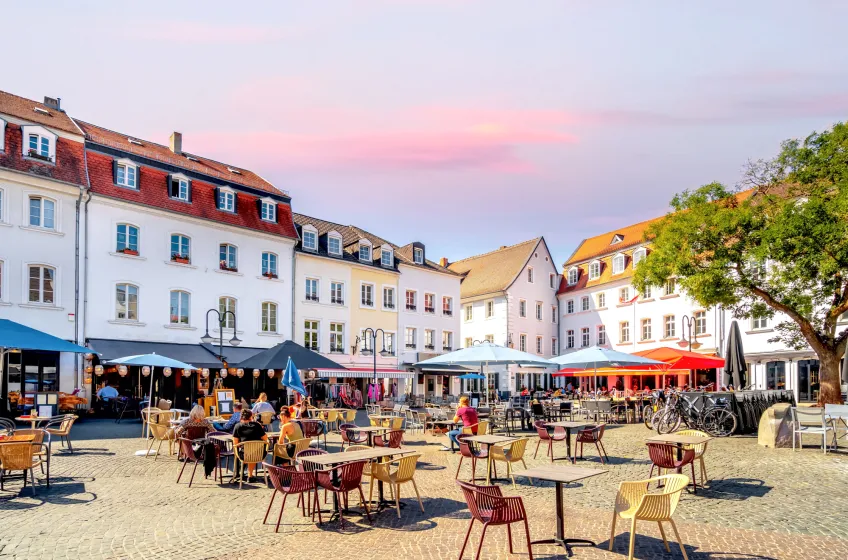
The capital of Saarland, Saarbrücken, is a lively university city with a mix of historic charm and modern flair. Highlights include the Ludwigskirche, a stunning baroque church, and the Saarbrücken Castle, with a museum that tells the story of the region’s shifting borders. The St. Johanner Markt square is lined with cafés, bars, and boutiques, making it the perfect place to soak up the city’s atmosphere. Saarbrücken is also known for its cultural festivals, theatres, and galleries.
Völklingen Ironworks
A UNESCO World Heritage Site, the Völklinger Hütte is a vast 19th-century ironworks complex, once one of the largest steel plants in Europe. Today, its blast furnaces, machinery halls, and conveyor belts are preserved as a monument to industrial history. Visitors can walk through the site, which also hosts art exhibitions, concerts, and festivals in its striking industrial setting. It’s a must-see for anyone interested in history, architecture, or engineering.
Saarschleife (Saar Loop)
The Saarschleife, near Mettlach, is Saarland’s most iconic natural landmark. The river Saar makes a dramatic hairpin bend through thick forest, creating a view that looks straight out of a painting. The best vantage point is from the Cloef Viewpoint, which can be reached by walking trails or the Saarschleife Treetop Walk, a wooden walkway that winds through the forest canopy to an observation tower.
Mettlach and Villeroy & Boch
The town of Mettlach is home to ceramics giant Villeroy & Boch, whose headquarters are in an old Benedictine abbey. Visitors can explore a ceramics museum, factory outlet, and gardens. The town is also a gateway for exploring the Saar Loop and has lovely riverside walks.
Saarlouis
Founded by Louis XIV of France, Saarlouis is often called the "most French city in Germany." The old town still has remnants of its star-shaped fortress, and its squares and cafés reflect its Franco-German character. It’s a lively place with a reputation for good food and nightlife.
Roman Villa Borg
Near Perl, the Roman Villa Borg is a reconstructed villa complex that gives a vivid impression of Roman life in the Saar-Moselle region. It includes baths, gardens, and even a Roman kitchen serving authentic recipes. Combined with the region’s Roman wine heritage, it’s a fascinating stop for history lovers.
Bliesgau Biosphere Reserve
A UNESCO Biosphere Reserve, the Bliesgau is a landscape of rolling hills, orchards, and meadows rich in biodiversity. It’s home to rare orchids, beech forests, and grazing herds of sheep. Hiking and cycling trails crisscross the area, which is also known for its organic farming and local produce.
Wolfspark Werner Freund
For something unusual, the Wolfspark Werner Freund near Merzig is a wildlife park dedicated to wolves from around the world. Visitors can see European, Arctic, Canadian, and Mongolian wolves in naturalistic enclosures and learn about the behaviour of these fascinating animals.
Nohfelden Castle and Bostalsee
In northern Saarland, the ruins of Nohfelden Castle tower over the surrounding countryside. Nearby, the Bostalsee lake is a popular recreation area for swimming, sailing, and hiking, with sandy beaches and water sports facilities. It’s ideal for a summer family outing.
Wine and the Saar Valley
The Saar Valley, part of the Moselle wine region, is renowned for producing some of Germany’s finest Riesling wines. The steep vineyards along the river are as beautiful as they are productive. Wine tastings in villages like Wiltingen and Ockfen are a highlight for wine enthusiasts.
Practical Advice for Visitors
Getting There
Saarland is easily reached by car or train. The nearest major international airport is Frankfurt, about two hours away, though Luxembourg Airport is also close. Saarbrücken has its own small airport with limited flights. High-speed trains connect Saarbrücken with Paris (under 2 hours), making it a convenient stop on a European trip.
Parking
Parking is straightforward in most towns and cities, with multi-storey car parks in Saarbrücken and Saarlouis. At popular attractions like the Saarschleife, car parks are available but can fill quickly in peak season—arrive early for the best spots.
Dining
Saarland’s cuisine is a blend of German heartiness and French finesse. Local specialities include Dibbelabbes (a potato and bacon dish), Gefillde (potato dumplings with meat filling), and Lyoner sausage, often eaten with bread or in a stew. The region is also famous for its excellent cakes and pastries, as well as its wines and beers. In Saarbrücken, try traditional taverns around St. Johanner Markt or French-inspired fine dining in the city’s Michelin-starred restaurants.
Shopping
Popular souvenirs include Villeroy & Boch ceramics from Mettlach, local wines from the Saar Valley, and French-influenced delicacies like pâtés and cheeses. Saarbrücken has a good mix of shops, from boutiques to international brands. Weekly markets in smaller towns are great for local produce.
When to Visit
Spring and summer are ideal for hiking, cycling, and exploring castles and river valleys. Autumn is wine season, with harvest festivals and colourful vineyards. Winter is quiet but atmospheric, with Christmas markets in Saarbrücken and Saarlouis adding seasonal charm. The Saarschleife looks particularly magical in autumn fog or under a dusting of snow.
Local Events
-
Saarbrücken Old Town Festival (July): Music, food, and culture fill the city centre.
-
Max Ophüls Film Festival (January, Saarbrücken): A major event for young German-language cinema.
-
Völklingen Ironworks Festivals (summer): Cultural events set in the industrial UNESCO site.
-
Wine Festivals (September): Celebrated in Saar Valley villages, featuring local wines and food.
-
Christmas Markets (December): Saarbrücken and Saarlouis host charming festive markets.
Exploring Beyond Saarland
Saarland’s location makes it perfect for cross-border trips. To the west lies Luxembourg City, with its fortress and international flair. To the south, Metz and Strasbourg in France offer Gothic cathedrals and Alsatian charm. To the north, the Moselle Valley in Rhineland-Palatinate continues the wine and river theme with towns like Trier and Cochem.
Though small, Saarland offers an appealing mix of nature, history, and culture. Whether you’re gazing over the Saar Loop, wandering through industrial heritage at Völklingen, or sipping Riesling in a riverside village, this region proves that great experiences can come in compact packages.
Shortlist
- Your Shortlist is empty