
A Visitor's Introduction to Rhineland-Palatinate
Recommended places to visit, places to stay and things to do in Rhineland-Palatinate
Rhineland-Palatinate (Rheinland-Pfalz) is a land of rivers, vineyards, and castles in western Germany. Bordered by France, Luxembourg, and Belgium, it is a region where rolling hills meet half-timbered villages, Roman ruins neighbour Gothic cathedrals, and the mighty Rhine and Moselle rivers carve through romantic valleys. This is the heart of German wine country, producing world-class Rieslings and dotted with cosy wine taverns. Add to that fairytale castles like Burg Eltz, vibrant cities such as Mainz and Trier, and picturesque towns like Cochem and Bacharach, and Rhineland-Palatinate becomes one of Germany’s most rewarding destinations for travellers seeking history, nature, and authentic culture.
Recommended Rhineland-Palatinate accommodation: Hotels Bed & Breakfasts Holiday Homes
Pre-book Rhineland-Palatinate Attractions, Tours & Experiences
Why is Rhineland-Palatinate Worth a Visit?
Rhineland-Palatinate is worth visiting for its remarkable mix of landscapes and cultural heritage. The Rhine Gorge, a UNESCO World Heritage Site, is lined with castles and vineyards, while the Moselle Valley charms with its winding river and romantic villages. The state is steeped in history: Trier, Germany’s oldest city, preserves impressive Roman monuments, while Mainz is the birthplace of Johannes Gutenberg, inventor of the printing press.
Beyond history and wine, Rhineland-Palatinate offers superb opportunities for hiking and cycling, especially in the Palatinate Forest and along the rivers. The region’s wine festivals, Christmas markets, and culinary traditions add layers of atmosphere throughout the year. Its location, close to Luxembourg, France, and Belgium, makes it an easy addition to a European trip.
Rhineland-Palatinate Highlights: Things to See and Do in Rhineland-Palatinate
The Upper Middle Rhine Valley
This 65 km stretch of the Rhine between Bingen and Koblenz is a UNESCO World Heritage Site and one of Europe’s most romantic landscapes. Castles crown the hills, vineyards cling to steep slopes, and charming towns line the riverbanks. River cruises are the best way to admire the scenery, passing landmarks such as the Loreley Rock, associated with legends of a siren luring sailors to their doom. Towns like Bacharach, St. Goar, and Boppard are perfect bases for exploring.
Koblenz and the Deutsches Eck
At the confluence of the Rhine and Moselle rivers, Koblenz is a historic city with a lively atmosphere. The Deutsches Eck (German Corner), where the two rivers meet, is marked by a massive statue of Kaiser Wilhelm I. Across the river, the Ehrenbreitstein Fortress towers over the city, accessible by a scenic cable car ride. Koblenz is also a gateway to both the Rhine Gorge and the Moselle Valley.
Burg Eltz
Hidden in a forested valley near the Moselle, Burg Eltz is one of Germany’s most enchanting castles. With its turrets, towers, and medieval interiors, it looks like it has leapt out of a fairy tale. Unlike many castles, Burg Eltz has never been destroyed and has remained in the same family for over 800 years. Guided tours reveal its rich history, and the surrounding hiking trails offer beautiful views.
Trier
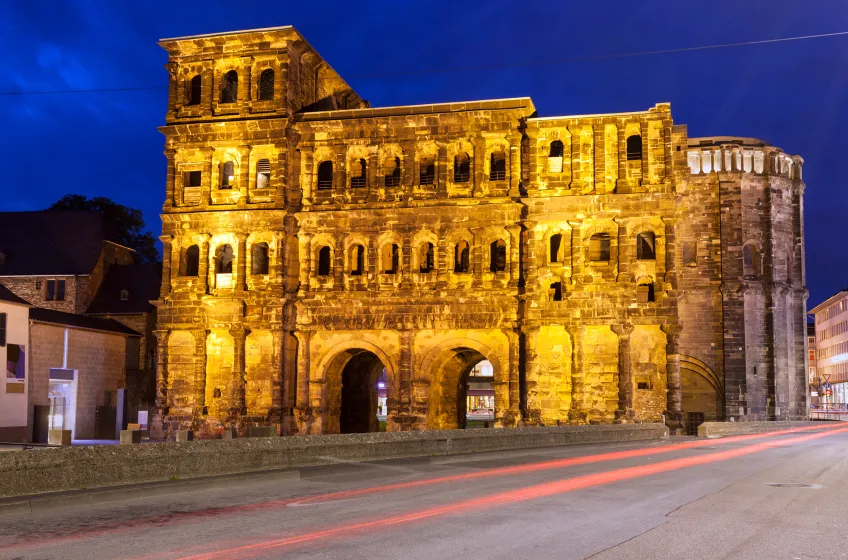
Trier is Germany’s oldest city, founded by the Romans more than 2,000 years ago. Today it boasts a wealth of Roman monuments, including the Porta Nigra gate, Imperial Baths, and amphitheatre—all UNESCO World Heritage Sites. Trier is also home to a stunning cathedral and the house where Karl Marx was born, now a museum. Its location in the Moselle Valley makes it a wonderful base for combining history with wine tasting.
Mainz
The capital of Rhineland-Palatinate, Mainz is famous as the home of Johannes Gutenberg, inventor of the printing press. The Gutenberg Museum showcases original Bibles and early printing equipment. Mainz also boasts a magnificent Romanesque cathedral, a lively old town with half-timbered houses, and a riverside setting along the Rhine. The city’s annual Fastnacht (Carnival) celebrations are some of the largest in Germany.
Moselle Valley
Winding from Trier to Koblenz, the Moselle River is lined with vineyards, castles, and picturesque villages. Towns like Cochem, with its fairytale Reichsburg Castle, and Bernkastel-Kues, with its colourful medieval market square, are particularly charming. The Moselle is ideal for cycling, hiking, and wine tasting—Riesling is the star grape here. River cruises provide a relaxing way to experience the valley’s beauty.
Speyer Cathedral
The Imperial Cathedral of Speyer is one of the largest Romanesque churches in the world and a UNESCO World Heritage Site. Built in the 11th century, it is the burial place of several Holy Roman Emperors. Its vast nave, crypt, and beautiful setting make it one of Germany’s most significant architectural landmarks.
Worms
Another historic city on the Rhine, Worms is known for its connections to both religion and legend. It was a key location in the Nibelungenlied, Germany’s national epic, and also played a role in the Reformation: Martin Luther defended his ideas here at the Diet of Worms in 1521. The Romanesque cathedral and Jewish heritage sites add depth to a visit.
Palatinate Forest (Pfälzerwald)
For nature lovers, the Palatinate Forest offers hiking, cycling, and castle ruins in a vast protected area. It is Germany’s largest continuous forest and forms part of a UNESCO Biosphere Reserve. The German Wine Route (Deutsche Weinstraße) runs along its edge, linking vineyards and wine villages. Autumn is a particularly beautiful time to visit, with colourful foliage and harvest festivals.
Idar-Oberstein
Known as Germany’s gemstone capital, Idar-Oberstein has a long tradition of gemstone mining and jewellery making. Visitors can explore gemstone mines, museums, and workshops, and the striking Felsenkirche (Church in the Rock), built into a cliff, is a unique sight.
Bad Dürkheim and the Wine Barrel
Wine lovers should not miss Bad Dürkheim, home to the world’s largest wine barrel, big enough to house a restaurant. The town also hosts the Wurstmarkt, one of the world’s largest wine festivals, held every September with thousands of visitors enjoying regional wines and food.
Practical Advice for Visitors
Getting There
Rhineland-Palatinate is well connected by rail and road. Frankfurt Airport is the main international gateway, less than an hour from Mainz, Koblenz, and Worms. Trains from Frankfurt, Cologne, and Luxembourg reach the region’s main cities quickly. For river valleys and rural areas, a car offers greater flexibility, especially for vineyard visits.
Parking
Parking is available in city centres like Mainz and Trier, with multi-storey car parks. In small river towns such as Bacharach or Cochem, parking can be tight in summer—arriving early is recommended. Many castles and viewpoints have designated parking areas outside the old towns.
Dining
Cuisine in Rhineland-Palatinate is strongly influenced by its wine culture. Regional specialities include Saumagen (stuffed pork stomach, a favourite of Helmut Kohl), Zwiebelkuchen (onion tart), and dishes featuring game from the forests. Along the rivers, freshwater fish like pike and trout are popular. Pair meals with local Rieslings or Spätburgunder (Pinot Noir). In Mainz, don’t miss Handkäse mit Musik, a tangy cheese dish served with onions and vinegar.
Shopping
Look for bottles of local wine, especially Riesling from the Moselle or Rhine, or Dornfelder red from the Palatinate. Gemstones and jewellery from Idar-Oberstein make distinctive souvenirs. Traditional Christmas markets in Trier, Mainz, and Koblenz are wonderful places to pick up crafts, decorations, and regional delicacies.
When to Visit
Spring and summer are ideal for river cruises, vineyard tours, and hiking. Autumn (September–October) is harvest season and brings wine festivals and colourful scenery. Winter is quieter but atmospheric, with charming Christmas markets in Trier, Mainz, and Koblenz.
Local Events
-
Mainz Carnival (February/March): One of Germany’s largest and most colourful carnival celebrations.
-
Rhine in Flames (May–September): A series of spectacular firework and light shows along the Rhine.
-
Bad Dürkheim Wurstmarkt (September): One of the world’s biggest wine festivals, held since the 15th century.
-
Trier Christmas Market (November–December): Set against the backdrop of the cathedral and medieval square.
-
Cochem Wine Festival (August): A lively event with parades, music, and, of course, wine.
Exploring Beyond Rhineland-Palatinate
Rhineland-Palatinate borders several exciting destinations. To the north lies Cologne and the wider North Rhine-Westphalia region. To the south, Alsace in France beckons with its own vineyards and towns like Strasbourg. To the west, Luxembourg is an easy day trip. To the east, Hesse offers Frankfurt, Wiesbaden, and the Rheingau wine region.
With its rivers, castles, vineyards, and ancient towns, Rhineland-Palatinate captures the romantic image of Germany at its best. Whether you’re sipping Riesling on a terrace overlooking the Moselle, wandering among Roman ruins in Trier, or cruising past castles on the Rhine, this state offers an unforgettable blend of beauty, history, and hospitality.
Shortlist
- Your Shortlist is empty