
Discover Koblenz | A Visitor's Introduction to Koblenz
Recommended places to visit, places to stay and things to do in and around Koblenz
Koblenz is a historic city nestled at the meeting point of the Rhine and Moselle rivers in western Germany. With its roots stretching back over 2,000 years, Koblenz is one of the country’s oldest cities and offers a picturesque blend of ancient architecture, riverfront beauty, and relaxed Rhineland charm. Known for its fortress-crowned hills, scenic river promenades, and UNESCO World Heritage surroundings, this city is a dream destination for history enthusiasts, romantic wanderers, and river cruise lovers alike. Whether you're exploring medieval castles, sipping Riesling in a sun-drenched square, or taking in panoramic views from a cable car, Koblenz offers a wonderfully balanced blend of culture and relaxation.
Recommended Koblenz accommodation: Hotels Apartments
Pre-book Koblenz Attractions, Tours & Experiences
Why is Koblenz Worth a Visit?
Koblenz is worth visiting for its rare location at the confluence of two of Germany’s most storied rivers, the Rhine and the Moselle. This strategic spot made it a key military and trade hub for centuries, and today it remains a fascinating mix of historical layers and natural splendour.
What sets Koblenz apart is its ability to balance its rich past with a warm, leisurely vibe. The old town is full of winding alleys, quaint squares, and traditional taverns serving local wines. Just minutes away, you can find grandiose fortresses, lush vineyards, and some of the most beautiful stretches of the Rhine Valley. As part of the Upper Middle Rhine Valley UNESCO World Heritage Site, Koblenz acts as a gateway to one of the most scenic and romantic landscapes in Germany.
Whether you’re interested in exploring castles, riding cable cars, sampling regional wines, or simply watching riverboats glide past from a sunny terrace, Koblenz delivers a captivating experience in every season.
Koblenz Highlights: Things to See and Do in Koblenz
Deutsches Eck (German Corner)
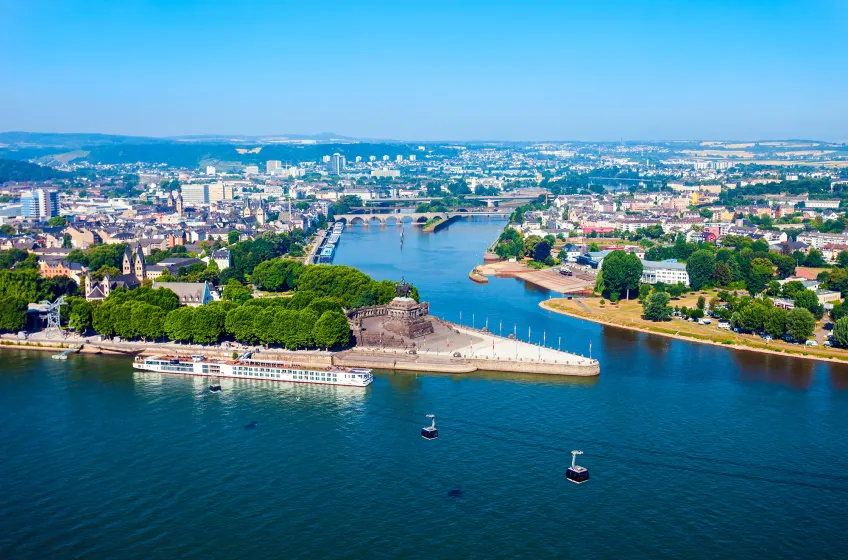
This iconic landmark marks the exact point where the Rhine and Moselle rivers converge. Towering over the confluence is a monumental equestrian statue of Emperor Wilhelm I, a striking symbol of German unity. The riverside promenade here is perfect for a leisurely walk, offering panoramic views and photo opportunities galore. It’s also the best spot to appreciate the meeting of two distinct waterways — one clear, one darker — flowing side by side.
Ehrenbreitstein Fortress
Perched high above the Rhine, Ehrenbreitstein Fortress is one of Europe’s largest preserved fortifications. Accessible via a scenic cable car ride from the city centre, the fortress offers spectacular views over Koblenz and the surrounding valleys. Inside, you'll find exhibitions on regional history, archaeology, and military life, plus rotating cultural events and concerts in the summer. The cable car ride alone, crossing the Rhine with glass-floored cabins, is worth the trip.
Koblenz Old Town (Altstadt)
The charming Altstadt is a maze of cobbled lanes, half-timbered buildings, and lively squares. Make time to explore Jesuitenplatz with its baroque town hall, and the historic Schängelbrunnen fountain in front of it, which unexpectedly spits water at passers-by. The Altstadt is full of cosy cafés, traditional wine taverns, and boutique shops, making it an ideal area to wander with no fixed agenda.
Basilica of St. Castor
This Romanesque church near Deutsches Eck dates back to the 9th century and is one of the most important ecclesiastical buildings in the city. With its distinctive twin towers and tranquil courtyard, St. Castor’s has long stood as a spiritual and cultural anchor in Koblenz. It's also surrounded by peaceful gardens and medieval buildings, offering a quiet respite from the busier parts of town.
Rhine and Moselle River Cruises
Koblenz is a key stop on many river cruise routes, but you can also enjoy shorter day cruises departing from the city. Whether you're heading up the Rhine toward the Lorelei Rock or down the Moselle into vineyard country, a boat trip gives you a unique perspective on the area’s stunning landscapes. These cruises often pass storybook castles, steep vineyard-covered slopes, and charming riverside villages.
Electoral Palace (Kurfürstliches Schloss)
Built in the late 18th century, this elegant neoclassical palace sits right on the banks of the Rhine. It’s more subdued than some of Germany’s grander palaces but no less stately, with manicured gardens and a riverside promenade ideal for a sunset stroll. While the interior is not always open to the public, the gardens are freely accessible and particularly beautiful in spring and summer.
Stolzenfels Castle
Just a short drive (or cycle) south along the Rhine, Stolzenfels Castle is a fairytale-like structure rebuilt in the 19th century in the Romantic style. Overlooking the river from a wooded hillside, the castle’s turrets, terraces, and medieval-style halls make it a popular destination. Guided tours offer insights into both the original medieval structure and its 19th-century revival under Prussian royalty.
Forum Confluentes and Mittelrhein Museum
This modern cultural centre, located at Zentralplatz, houses the Mittelrhein Museum, a public library, and tourist information. The museum has a fascinating collection of artworks from the Middle Rhine region, ranging from medieval to modern, including Romantic period landscapes that capture the spirit of the Rhine.
Florinsmarkt and Old Merchants' Quarter
Florinsmarkt is one of the city’s most atmospheric squares, with beautifully preserved medieval buildings such as the Old Mint and Florinskirche (St. Florin's Church). This area is perfect for soaking up the medieval flavour of Koblenz and is also close to several small galleries and shops.
Wine Tasting in the Moselle Valley
Koblenz sits at the gateway to one of Germany’s most prestigious wine-growing regions. Numerous local wine bars offer tastings of Rieslings from the Moselle, often in rustic cellars or outdoor terraces. For a more immersive experience, head to nearby towns like Winningen or Güls for vineyard tours and tasting sessions with winemakers.
Romanticum – Rhine Experience Centre
This interactive museum within Forum Confluentes brings the legends, landscapes, and history of the Rhine to life through modern exhibits, digital installations, and even a simulated river cruise. It’s a great stop for families or anyone wanting to understand the cultural importance of the Rhine.
Cable Car Ride Over the Rhine
The Koblenz Seilbahn (cable car) is not just a mode of transport but an experience in itself. Gliding silently over the river with views of the Altstadt, Deutsches Eck, and Ehrenbreitstein Fortress, it's a must-do for any visitor. Try to ride just before sunset for the most dramatic views.
Practical Advice for Visitors
Getting There
Koblenz is easily accessible by train, car, or river cruise. It lies roughly 1.5 hours from Frankfurt and Cologne by train, with frequent services running throughout the day. The main train station (Koblenz Hauptbahnhof) is a short walk or quick bus ride to the city centre.
If you’re driving, Koblenz is well connected via the A61 and A48 motorways. It’s also a popular stop for Rhine and Moselle river cruises, with several docking points close to the Old Town.
Parking
While the Altstadt has limited parking, several large car parks are available nearby, including the Schloss car park near the Electoral Palace and the Forum Mittelrhein shopping centre. Most are pay-and-display, with hourly or daily rates. Street parking can be tricky during weekends and events, so it’s worth using a central garage.
Dining
Koblenz has a vibrant food scene that blends traditional Rhineland fare with international cuisine. For regional specialities, try Weindorf Koblenz or Winninger Weinstuben, where you can enjoy hearty German dishes paired with local wines.
If you’re after something more contemporary, Verbene offers a fresh take on seasonal ingredients. For a scenic meal, head to one of the restaurants along the Moselle promenade or dine at the Ehrenbreitstein Fortress with sweeping views.
Don’t miss trying Sauerbraten (a marinated pot roast) or Zwiebelkuchen (onion tart) during the autumn wine festivals.
Shopping
Koblenz offers a nice balance of modern retail and quaint, independent boutiques. Löhrstraße and the Forum Mittelrhein shopping centre cater to mainstream shoppers, while the Old Town is full of smaller shops selling handmade gifts, wines, antiques, and local crafts.
For gourmet souvenirs, look for Moselle wines, Riesling jam, or locally made mustard. The weekly farmers' market at Jesuitenplatz (usually Tuesdays and Fridays) is a great spot to pick up fresh regional produce.
When to Visit
Koblenz is a year-round destination, but the best time to visit is between May and September, when the weather is warm, river traffic is busy, and outdoor events are in full swing. The vineyards are lush, the café terraces are buzzing, and boat trips run frequently.
Autumn (late September to October) is perfect for wine lovers, with harvest festivals and colourful foliage in the surrounding valleys. Winter brings a quieter, festive charm with a cosy Christmas market in the Altstadt.
Local Events
Koblenz hosts several festivals and events throughout the year. The most famous is Rhein in Flammen (Rhine in Flames), held in August, when a spectacular fireworks display lights up the riverbanks, accompanied by music, food stalls, and boat parades.
Other highlights include:
-
Koblenz Summer Festival – live music and open-air events throughout July and August.
-
Weinfest in Winningen – one of Germany’s oldest wine festivals, held in a nearby village every September.
-
Koblenz Christmas Market – a traditional festive market from late November through December, spread across several squares with crafts, mulled wine, and seasonal treats.
Exploring Beyond Koblenz
If you have extra time, Koblenz is the perfect base for day trips into the Rhine and Moselle valleys.
Cochem (around 40 minutes by train) is a postcard-perfect town on the Moselle, famous for its clifftop castle and riverfront promenade.
Boppard, just 20 minutes upstream on the Rhine, offers sweeping views from the Vierseenblick chairlift and a charming old town.
Marksburg Castle, a well-preserved medieval stronghold in Braubach, is the only hilltop castle on the Middle Rhine never destroyed and is just across the river from Koblenz.
You can also explore Lorelei Rock, Bad Ems (a historic spa town), or head south along the Romantic Rhine toward Rüdesheim for more wine, music, and scenic beauty.
Whether you’re watching the rivers flow past from a sunny café, delving into centuries-old fortresses, or cruising through vineyard-draped hills, Koblenz offers a perfect blend of culture, relaxation, and Rhine romance. This friendly, historic city makes an ideal base for exploring one of Europe’s most enchanting river landscapes.
Shortlist
- Your Shortlist is empty