
A Visitor's Introduction to North Rhine-Westphalia
Recommended places to visit, places to stay and things to do in North Rhine-Westphalia
North Rhine-Westphalia (Nordrhein-Westfalen, often abbreviated as NRW) is Germany’s most populous state and one of its most dynamic. Located in the country’s west, bordering Belgium and the Netherlands, it combines buzzing modern cities with historic towns, UNESCO-listed sites, and picturesque landscapes. Home to the mighty Rhine and Ruhr rivers, this is a region of contrasts: futuristic architecture in Düsseldorf, medieval cathedrals in Cologne and Aachen, industrial heritage in the Ruhr area, and fairy-tale castles along the Rhine Valley. Whether you’re into art, history, football, or carnival parades, North Rhine-Westphalia offers a rich and varied travel experience.
Recommended North Rhine-Westphalia accommodation: Hotels Bed & Breakfasts Holiday Homes
Pre-book North Rhine-Westphalia Attractions, Tours & Experiences
Why is North Rhine-Westphalia Worth a Visit?
NRW is worth visiting because it represents Germany in miniature: historic and modern, urban and rural, traditional and forward-looking. Culturally, it’s unmatched—this is the state of Cologne Cathedral, Beethoven’s birthplace in Bonn, and cutting-edge art in Düsseldorf. The Ruhr area tells the story of Europe’s industrial past, with former coal mines and steel plants now transformed into cultural venues.
At the same time, NRW offers beautiful natural escapes: the Eifel National Park with its volcanic lakes, the Sauerland with its hills and ski resorts, and romantic river valleys dotted with castles and vineyards. Add to that its festivals, from Carnival to Christmas markets, and you have a destination full of colour and energy.
North Rhine-Westphalia Highlights: Things to See and Do in North Rhine-Westphalia
Cologne and Cologne Cathedral
Cologne is NRW’s cultural heart. The towering Cologne Cathedral (Kölner Dom) is one of Europe’s greatest Gothic masterpieces and a UNESCO World Heritage Site. Inside you’ll find the Shrine of the Three Kings, said to contain relics of the Magi. The city also offers the Romano-Germanic Museum, a charming old town with breweries serving Kölsch beer, and lively riverside promenades. Cologne’s Carnival in February is legendary, filling the streets with costumes, parades, and music.
Düsseldorf
The state capital, Düsseldorf, is stylish and modern. Its Königsallee (Kö) is one of Germany’s most glamorous shopping streets, lined with luxury boutiques. The Altstadt (Old Town) is nicknamed “the world’s longest bar” thanks to its hundreds of pubs serving the city’s signature Altbier. Düsseldorf is also a centre for art, with the Kunstsammlung Nordrhein-Westfalen housing world-class collections. Along the Rhine, the modern MedienHafen district impresses with its striking architecture.
Aachen and its Cathedral
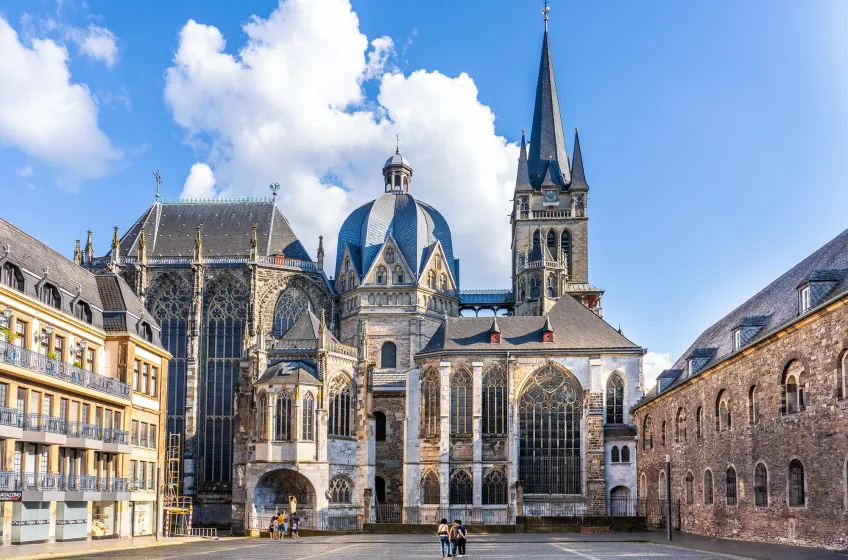
Near the borders with Belgium and the Netherlands, Aachen is a historic city best known for its cathedral, the burial place of Charlemagne and a UNESCO World Heritage Site. The Palatine Chapel, with its Byzantine mosaics, is breathtaking. Aachen is also a spa town, famous for its hot springs, and is known for its sweet speciality, Aachener Printen (a spiced gingerbread).
Bonn
Once the capital of West Germany, Bonn is a charming riverside city with a rich cultural scene. It’s the birthplace of Ludwig van Beethoven, and the Beethoven House museum is a highlight. The Museum Mile features excellent institutions, including the House of German History and the Art and Exhibition Hall of the Federal Republic. In spring, Bonn’s cherry blossoms transform its old town into one of the most photogenic spots in Germany.
Ruhr Area (Ruhrgebiet)
The Ruhrgebiet, once Germany’s industrial powerhouse, has reinvented itself as a cultural destination. Former coal mines and steelworks have been turned into museums, theatres, and parks. Highlights include the Zollverein Coal Mine Industrial Complex in Essen (a UNESCO site), the Dortmund U-Tower with art and media exhibitions, and the Landscape Park Duisburg-Nord, where old blast furnaces now host climbing walls and light shows. Football fans can also visit famous clubs like Borussia Dortmund and Schalke 04.
Rhine Valley Castles
The stretch of the Rhine between Bonn and Koblenz (partly in NRW) is one of Germany’s most romantic landscapes. Vineyards climb the hillsides, and medieval castles overlook the river. Castles such as Drachenburg near Königswinter and Burg Eltz (just beyond the state border) are highlights, while river cruises offer the best way to appreciate the scenery.
Münster
Münster is a beautiful city known for its historic architecture, bike-friendly culture, and lively student life. The Prinzipalmarkt, with its arcaded houses, is stunning, and the St. Paulus Cathedral adds grandeur. Münster also played a key role in the Peace of Westphalia, which ended the Thirty Years’ War in 1648. Today, its museums, lake, and relaxed vibe make it a great city break.
Wuppertal and the Schwebebahn
Wuppertal is famous for its Schwebebahn, a suspended monorail that has been gliding above the river and streets since 1901. Riding it is a unique experience. The city also has beautiful parks and the Von der Heydt Museum, with an impressive art collection.
Eifel National Park
The Eifel is a natural paradise of forests, volcanic craters (now lakes), and wildlife. Hiking and cycling trails crisscross the park, and stargazing is excellent thanks to the area’s designation as a Dark Sky Park. The picturesque towns of Monschau and Bad Münstereifel make great bases for exploring the region.
Sauerland
In southern NRW, the Sauerland is known for rolling hills, lakes, and winter sports. Towns like Winterberg and Willingen are popular for skiing and hiking, while reservoirs such as the Biggesee provide opportunities for boating and swimming.
Detmold and the Externsteine
In eastern NRW, Detmold is home to a magnificent Renaissance castle and the Hermannsdenkmal, a giant monument commemorating the Battle of the Teutoburg Forest. Nearby, the Externsteine are striking sandstone rock formations with ancient carvings and legends attached.
Practical Advice for Visitors
Getting There
NRW is extremely well connected. Düsseldorf Airport is Germany’s third largest, while Cologne/Bonn Airport serves many international routes. High-speed ICE trains link Cologne, Düsseldorf, Bonn, and Dortmund to other German cities like Berlin and Frankfurt. Driving is straightforward, though traffic around major cities can be heavy.
Parking
Parking is plentiful but can be expensive in central Cologne and Düsseldorf. Park-and-ride systems are useful for visiting larger cities. Smaller towns like Münster or Aachen are easier to navigate on foot or by bike once parked.
Dining
North Rhine-Westphalian cuisine is hearty and regional. Specialities include Rheinischer Sauerbraten (marinated beef roast), Himmel un Ääd (mashed potatoes with apple sauce and sausage), and Flönz (blood sausage). In Cologne, try a glass of Kölsch, the local beer, while Düsseldorf prides itself on Altbier. The Aachener Printen are a sweet souvenir, and Münster is known for its Pumpernickel bread.
Shopping
Cologne’s Schildergasse and Düsseldorf’s Königsallee are top shopping streets, while Bonn and Münster offer smaller, boutique experiences. Look for souvenirs like Kölsch glasses, football merchandise, and regional food products. Christmas markets are excellent for handmade gifts.
When to Visit
Spring and summer are great for exploring river valleys, parks, and city squares. Carnival season (February/March) is the most colourful time of year, especially in Cologne and Düsseldorf. Autumn brings wine festivals along the Rhine, while winter is magical for Christmas markets in Cologne, Aachen, and Dortmund (home to one of the world’s largest Christmas trees).
Local Events
-
Cologne Carnival (February/March): One of the biggest street parties in Europe.
-
Kiel Week of the West – Rheinkirmes Düsseldorf (July): A massive funfair with rides and fireworks.
-
Documenta (every five years, Kassel nearby): For contemporary art fans.
-
Christmas Markets (late November–December): Cologne, Dortmund, Aachen, and Münster are especially famous.
-
Ruhrtriennale (August–September): A festival of theatre, music, and art held in industrial heritage sites.
Exploring Beyond North Rhine-Westphalia
NRW borders the Netherlands and Belgium, making day trips to Maastricht, Liège, or Brussels easy. Within Germany, the Moselle Valley and Rhine Gorge are nearby, while Frankfurt and Luxembourg are within a few hours by train or car.
North Rhine-Westphalia is Germany at its most varied: Gothic cathedrals, modern art, fairy-tale castles, industrial history, and rolling countryside all within easy reach. Whether you’re joining the carnival crowds, cruising down the Rhine, or hiking in the Eifel, this state guarantees a rich and colourful journey.
Shortlist
- Your Shortlist is empty