
Discover Münster | A Visitor's Introduction to Münster
Recommended places to visit, places to stay and things to do in and around Münster
Münster is a vibrant and historic city in the northwest of Germany, nestled in the heart of the Westphalia region. Known for its charming blend of medieval architecture and modern lifestyle, this university town is a perfect destination for cyclists, culture buffs, and lovers of urban green spaces. With its cobbled old town, impressive churches, lively student atmosphere, and deep historical roots, Münster offers a laid-back yet engaging escape into the cultural fabric of Germany.
Recommended Münster Hotels & Other Accommodation
Pre-book Münster Attractions, Tours & Experiences
Why is Münster Worth a Visit?
Münster is worth visiting for its unique blend of old-world charm and youthful energy. It’s a city where bicycles outnumber cars, where Gothic spires rise above bustling squares, and where history is palpable around every corner. As the site of the Peace of Westphalia treaties that ended the Thirty Years’ War in 1648, Münster holds an important place in European history. But it’s also thoroughly modern – home to one of Germany’s largest universities, a thriving café culture, and a strong commitment to sustainability and liveability.
The city’s atmosphere is relaxed yet intellectually vibrant, shaped by its large student population and well-preserved historic core. Whether you’re exploring its striking churches, cycling along scenic canals, or relaxing at one of its many outdoor terraces, Münster delivers an authentic and enjoyable experience that mixes heritage with youthful flair.
Münster Highlights: Things to See and Do in Münster
Prinzipalmarkt
The heart of Münster’s old town, Prinzipalmarkt is a stunning, arcaded street lined with beautifully restored gabled houses, boutique shops, cafés, and restaurants. This historic marketplace captures the essence of the city's medieval charm, with architecture that dates back to the 12th century (though much of it was rebuilt after WWII). Don’t miss the impressive Old Town Hall (Historisches Rathaus), which played a key role in the Peace of Westphalia negotiations. The best time to visit is early morning or late afternoon, when the light hits the sandstone facades and the square buzzes with activity.
St. Paulus-Dom (Münster Cathedral)
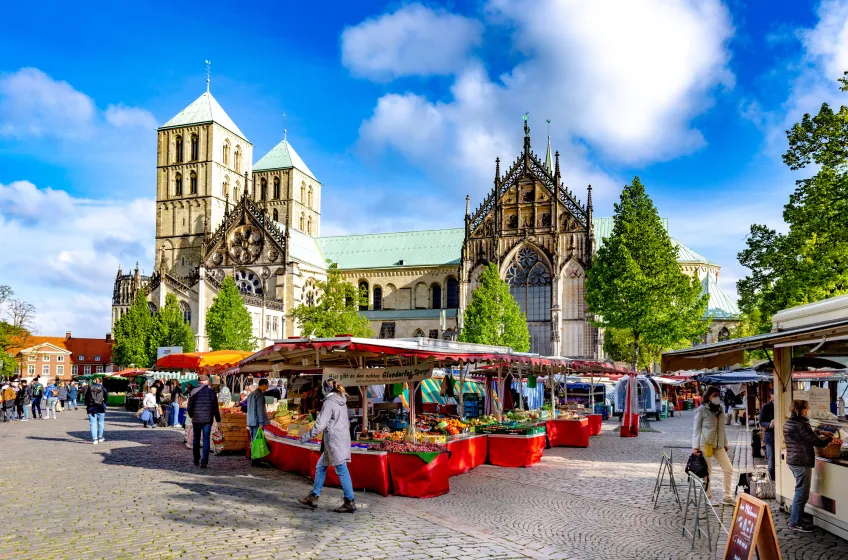
St. Paulus-Dom is one of Münster’s most iconic landmarks. This impressive cathedral combines Romanesque and Gothic styles and houses a unique astronomical clock dating back to the 16th century. Every day at 12 noon, the clock puts on a small mechanical show featuring the Three Wise Men. Inside, the cathedral is tranquil and spacious, with intricate stonework and impressive stained-glass windows. It's free to enter and centrally located near Domplatz, making it an essential stop on your visit.
Pablo Picasso Art Museum
Germany’s only Picasso museum, this modern gallery houses more than 800 lithographs and graphic works by Pablo Picasso, alongside rotating exhibitions of other major 20th-century artists. It's a cultural gem nestled just off the Prinzipalmarkt, offering a fascinating insight into Picasso’s printmaking and design processes. Even those not usually drawn to modern art will find something captivating here, thanks to the museum's thoughtful curation and accessible layout.
Aasee (Lake Aa)
A short walk from the city centre, the Aasee is Münster’s scenic urban lake, surrounded by parks, footpaths, and recreational facilities. Popular with joggers, cyclists, and families, the lake offers boat rentals, lakeside cafés, and even swan-shaped pedal boats. On sunny days, it’s the perfect place to relax with a book or enjoy a picnic. You can also walk or cycle to the nearby Mühlenhof Open-Air Museum or the Allwetterzoo, both located just beyond the lake's southern shore.
Münster Allwetterzoo
A great option for families or animal lovers, the Allwetterzoo (literally “all-weather zoo”) lives up to its name with covered walkways linking many of its exhibits. The zoo is home to over 300 species, including elephants, big cats, and a fantastic seal and penguin enclosure. It’s well laid out and offers educational exhibits and interactive experiences. Located near the Aasee, it’s a fun and educational way to spend a day outside the city centre.
Mühlenhof Open-Air Museum
This charming museum just south of the Aasee recreates life in Westphalia from the 17th to 19th centuries. You can wander through authentic farmhouses, windmills, and workshops that were transported here from all over the region. The site feels like stepping back in time, and regular demonstrations of traditional crafts (like blacksmithing or baking) bring the historical setting to life. It’s a peaceful and enriching experience, especially if you’re interested in rural history or folk traditions.
LWL Museum of Art and Culture
Another cultural highlight, this museum is home to a rich collection of art from the Middle Ages to the present day. Expect to see everything from Westphalian religious art to contemporary installations. The building itself is a blend of classical and modern design, with spacious galleries and a relaxed café in the atrium. Special exhibitions often highlight regional themes or lesser-known European artists, giving you something new to discover on each visit.
Schloss Münster and Botanical Gardens
The Baroque palace of Schloss Münster, built for the Prince-Bishop in the 18th century, is now part of the university. Its grand facade and symmetrical layout make it a picturesque spot, particularly when viewed from the adjacent Botanical Gardens. The gardens, maintained by the university, are a quiet oasis with over 8,000 plant species and themed sections like a medicinal herb garden, alpine garden, and tropical greenhouse. Entry is free, and it’s a lovely place for a quiet stroll or a moment of reflection.
Bicycle Tour of the Promenade
Münster is Germany’s cycling capital, and the best way to see the city is on two wheels. The Promenade is a leafy, car-free ring road that circles the old town, built on the site of the old city walls. It’s ideal for a gentle ride, and from there you can branch off into the suburbs or towards scenic countryside routes. Numerous rental stations across the city make it easy to hire a bike, and the signage is excellent for navigating your way around.
Wochenmarkt am Dom (Cathedral Market)
Every Wednesday and Saturday, the square in front of the cathedral transforms into one of the region’s best open-air markets. Farmers, bakers, florists, and cheesemongers set up colourful stalls selling local produce, fresh flowers, and handmade delicacies. Try some fresh Westphalian ham or a slice of rustic bread with mountain cheese, and soak in the lively local atmosphere. It’s a great place to buy picnic supplies or souvenirs like honey, preserves, or artisan sausage.
Erbdrostenhof and Baroque Quarter
Münster’s Baroque Quarter is an architectural gem, with its centrepiece being the Erbdrostenhof, a palace designed by renowned architect Johann Conrad Schlaun. The surrounding streets are elegant and refined, with high-end boutiques, galleries, and quiet cafés. This area is less crowded than Prinzipalmarkt and offers a glimpse of the city’s aristocratic past in a relaxed and picturesque setting.
St. Lamberti Church and the Cage Story
St. Lamberti is not only a beautiful Gothic church but also the site of one of Münster’s most bizarre historical footnotes. Look up at the church tower and you’ll see three iron cages hanging from the steeple – these once held the bodies of the executed leaders of the Münster Rebellion, a radical 16th-century religious movement. It’s a chilling but fascinating piece of local lore. You can also climb the tower with a guide for panoramic views of the city, particularly beautiful at sunset.
Practical Advice for Visitors
Getting There
Münster is well connected by train, with regular Deutsche Bahn services from major German cities like Cologne, Dortmund, and Hamburg. From Düsseldorf or the Ruhrgebiet, it’s an easy 1.5-hour journey. Münster Osnabrück International Airport (FMO) is about 30 minutes from the city centre and offers regional and limited international flights. If you’re driving, the A1 and A43 motorways provide easy access, though parking in the old town is limited.
Parking
Parking in central Münster can be tricky, especially on market days or weekends. Several multi-storey car parks are available just outside the old town, such as "Parkhaus Aegidiimarkt" and "Tiefgarage Theater." These are well-signposted and within walking distance of major attractions. Street parking is metered and often has short time limits. Consider using Park & Ride services on the outskirts of town if you're visiting during peak times.
Dining
Münster offers a great mix of traditional Westphalian cuisine and modern European fare. For a local experience, try "Altbier" (a dark beer) and dishes like Töttchen (a rich veal stew) or Pfefferpotthast (a beef and onion stew). For something casual, Großer Kiepenkerl in the old town serves hearty regional dishes in a cosy setting. Kuhviertel is a lively student area with plenty of affordable eateries and bars. For fine dining, Giverny or Ferment offer high-end, seasonal menus. For coffee and cake, head to Café Herr Hase or Roestbar, both known for their excellent brews and relaxed atmospheres.
Shopping
Münster is known for its independent boutiques and concept stores. Prinzipalmarkt is ideal for high-end shopping, while the side streets hide treasures like bookshops, design stores, and fashion outlets. The Ludgeristraße is more mainstream, with chain stores and department shops. Don’t miss Der Laden, a beautifully curated shop selling gifts, stationery, and homeware, or Münster Arkaden, a small indoor shopping centre for a mix of brands. Farmers’ markets and seasonal fairs offer excellent local produce and handmade items.
When to Visit
Spring and early autumn are the best times to visit Münster – the weather is mild, the city is lively, and the parks are in full bloom. Summer is pleasant too, but can occasionally be wet. Winter is quieter but magical, especially in December when the Christmas markets light up the old town. Avoid major university breaks (especially late summer) if you prefer a buzzier atmosphere, as the student presence contributes greatly to the city’s energy.
Local Events
Münster has a lively cultural calendar. The Münster Send, a funfair held three times a year, fills the city with rides and food stalls. Schauraum (early September) is a city-wide festival of art and culture, with installations, music, and late-night gallery openings. The Christmas markets are among the most beautiful in northern Germany, spread across six themed sites throughout the city. If you're lucky, your visit might coincide with a classical concert at St. Paulus-Dom or an outdoor film screening at the Aasee in summer.
Exploring Beyond Münster
If you have more time, the Münsterland region offers tranquil countryside and picturesque villages. The 100 Castles Route (100-Schlösser-Route) is a cycling route that links dozens of moated castles and manor houses – perfect for day trips. Burg Hülshoff, birthplace of poet Annette von Droste-Hülshoff, is just 10km away and offers beautiful grounds and literary exhibitions. You can also take a day trip to Osnabrück, another Peace of Westphalia city, just 45 minutes away by train.
Münster may not be Germany’s biggest city, but it has a personality all its own – thoughtful, cultured, and charmingly walkable (or cycleable). Whether you’re here for its history, its peaceful green spaces, or just to enjoy a slice of everyday German life with a twist of elegance, Münster is a city that will quietly win your heart.
Shortlist
- Your Shortlist is empty