
Discover Leipzig | A Visitor's Introduction to Leipzig
Recommended places to visit, places to stay and things to do in and around Leipzig
Leipzig is a vibrant city in eastern Germany, located in the federal state of Saxony. Known for its rich cultural heritage, musical legacy, and dynamic art scene, this historic city has long been a centre of creativity and progressive thought. Once a key player in the Holy Roman Empire's trading network and later a focal point of the peaceful revolution leading to German reunification, Leipzig is now a buzzing destination perfect for history buffs, music lovers, and modern-day urban explorers. With its grand architecture, lively coffee culture, and edgy subcultural flair, Leipzig offers an eclectic and exciting escape into the heart of Saxony.
Recommended Leipzig accommodation: Hotels Apartments
Pre-book Leipzig Attractions, Tours & Experiences
Why is Leipzig Worth a Visit?
Leipzig is worth visiting for its unique blend of old-world charm and contemporary energy. Unlike more commercialised German cities, Leipzig has retained a gritty, artistic soul that draws in creatives and thinkers from all over the world. Its legacy as the city of Bach and Mendelssohn means music runs deep in its veins, while its pivotal role in the fall of the Berlin Wall lends it historical weight. You'll find grand 19th-century arcades rubbing shoulders with graffiti-covered industrial spaces that have been transformed into art collectives and cultural hubs.
This is a city where classical concerts at the Gewandhaus can be followed by techno nights in an old power plant. Leipzig is also extremely walkable and green, with large parks, canal systems, and even a man-made beach on the edge of town. Whether you're into street art, symphonies, or sipping coffee in an old bookshop, Leipzig offers a well-rounded, off-the-beaten-track European experience that’s affordable, welcoming, and endlessly interesting.
Leipzig Highlights: Things to See and Do in Leipzig
1. St. Thomas Church (Thomaskirche)
St. Thomas Church is one of Leipzig’s most iconic landmarks and a pilgrimage site for classical music fans. This is where Johann Sebastian Bach served as cantor for over 25 years, and his remains are interred beneath the choir. The church still holds regular concerts by the world-renowned Thomanerchor (St. Thomas Boys Choir), a tradition that dates back more than 800 years. Don’t miss the statue of Bach outside the church or the informative museum nearby.
2. Leipzig Zoo and Gondwanaland
One of the most impressive zoos in Europe, Leipzig Zoo combines conservation with immersive design. The highlight here is Gondwanaland, a giant indoor tropical rainforest under a glass dome, complete with free-roaming animals, treetop walks, and boat rides along an artificial jungle river. It’s an especially great visit for families and wildlife lovers, offering close encounters with species from Africa, Asia, and South America.
3. Monument to the Battle of the Nations (Völkerschlachtdenkmal)
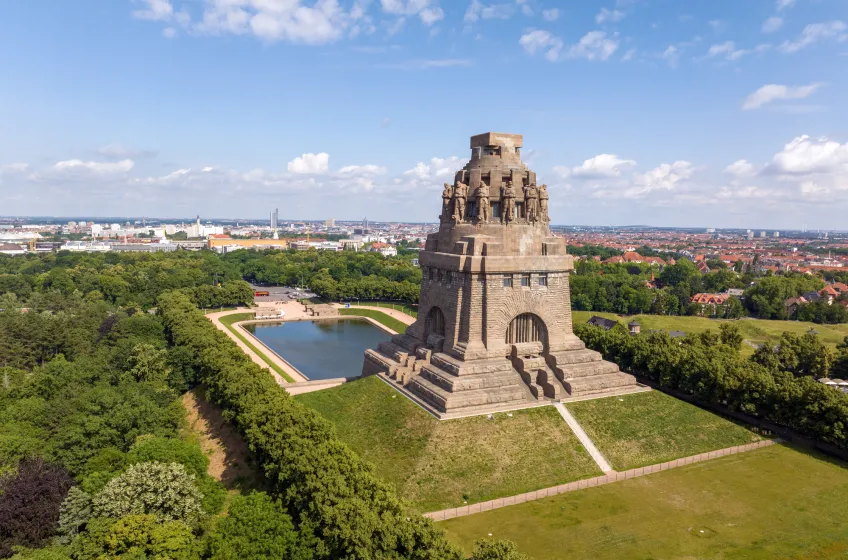
This imposing monument stands 91 metres tall and commemorates the Battle of Leipzig in 1813, where Napoleon suffered a major defeat. The Völkerschlachtdenkmal is one of Europe’s largest war memorials and offers spectacular views over the city from its observation platform. Inside, you'll find a crypt-like hall with gigantic stone statues and exhibitions detailing the historic battle. It’s a powerful and somewhat eerie place that gives a real sense of the scale of history.
4. The Leipzig Panometer
A unique and awe-inspiring attraction, the Panometer combines art, architecture, and history through enormous 360° panoramic images housed in a converted gasometer. Created by artist Yadegar Asisi, each installation immerses visitors in a different environment or historical moment. Past themes have included ancient Rome, the Titanic, and the Amazon rainforest. The scale and detail are breathtaking, and it’s a must-see for art lovers and curious minds.
5. Spinnerei – The Cotton Mill Art Centre
This sprawling former industrial complex on the city’s western edge has been reinvented as a major hub for contemporary art. Known as the Leipziger Baumwollspinnerei, or just Spinnerei, it houses galleries, artist studios, workshops, and design shops. It was instrumental in launching the New Leipzig School of painting and still functions as a cutting-edge creative hotspot. Visit for exhibitions, open studio days, or just to wander through the fascinating blend of industrial heritage and modern creativity.
6. Leipzig Market Square and Old Town Hall
The heart of the city, Leipzig’s Marktplatz is a lively place surrounded by elegant Renaissance and Baroque architecture. The Old Town Hall (Altes Rathaus) is a standout building, now home to the Museum of City History, which gives a detailed and engaging look at Leipzig’s evolution through the centuries. The square also hosts Christmas markets, food festivals, and open-air concerts throughout the year.
7. Bach Museum
Adjacent to St. Thomas Church, this museum delves into the life and works of Leipzig’s most famous resident, Johann Sebastian Bach. It features original manuscripts, historical instruments, and interactive exhibits. Music lovers will appreciate the listening stations and the chance to understand the daily life of a composer in 18th-century Leipzig. Entry is affordable, and the museum is compact enough for a quick yet satisfying visit.
8. Clara-Zetkin Park and the Leipzig Riverside Forest
For a break from urban sightseeing, head to Clara-Zetkin Park, a leafy expanse perfect for strolling, cycling, or just lying in the grass with a picnic. The park connects with the wider Leipzig Riverside Forest (Auenwald), a unique urban floodplain forest with miles of trails, meadows, and hidden lakes. You can even rent a kayak and paddle through Leipzig’s canals and waterways for a different perspective on the city.
9. The GRASSI Museums
This trio of museums housed in an elegant Art Deco building offers an intellectual and visual treat. The Museum of Applied Arts, Museum of Ethnography, and Museum of Musical Instruments make up the GRASSI complex. Expect a world-class collection of design objects, fascinating artefacts from around the globe, and one of the finest instrument collections in Europe. Perfect for a rainy day or for anyone with a curious mind.
10. Karl-Liebknecht-Straße (“KarLi”)
This buzzing street in the Südvorstadt district is Leipzig’s answer to Shoreditch or Kreuzberg. Lined with indie cafés, vintage shops, vegan bistros, and edgy bars, "KarLi" is the epicentre of Leipzig’s alternative scene. Great for an afternoon coffee crawl or an evening pub hop, the area offers a more relaxed and quirky slice of local life.
11. Leipzig Opera House and Gewandhaus
Culture vultures will want to catch a performance at the Leipzig Opera House, known for its refined productions and classical elegance. Just opposite, the Gewandhaus concert hall hosts the world-famous Gewandhaus Orchestra, one of the oldest symphonic ensembles in the world. Book in advance for performances, especially during festival seasons, and enjoy world-class music in a city steeped in musical tradition.
12. Coffe Baum Museum and Café
Dating back to 1711, this is one of the oldest continuously operating coffee houses in Europe. Inside, you’ll find a museum dedicated to the history of coffee in Saxony, as well as a charming café where you can enjoy traditional German cakes like Baumkuchen or Eierschecke. It’s both a sweet treat and a journey into Leipzig’s coffee culture.
13. Connewitz District
This former working-class district has become a countercultural stronghold. Connewitz is where you'll find radical bookshops, punk gigs, graffiti-covered buildings, vegan fast food joints, and a fiercely independent spirit. It’s raw, rebellious, and totally different from the rest of the city—ideal for travellers who want to see the edgier side of Leipzig.
Practical Advice for Visitors
Getting There
Leipzig is easily accessible by train, with direct connections to Berlin (1.5 hours), Dresden (1 hour), and Frankfurt (around 3.5 hours). The city’s main station, Leipzig Hauptbahnhof, is a major hub and also doubles as a shopping centre. Leipzig/Halle Airport is about 20 minutes away by train and serves both domestic and some international flights. If you're driving, Leipzig is well connected via the A9, A14, and A38 motorways.
Parking
Parking in central Leipzig can be tricky, especially around the Old Town. There are several multi-storey car parks, including those at Hauptbahnhof, Marktgalerie, and Augustusplatz, which are centrally located. Street parking is available but often metered and limited to a few hours. If you're staying overnight, ask your accommodation about nearby parking options.
Dining
Leipzig offers an exciting food scene that balances traditional Saxon fare with modern, international cuisine. Try Auerbachs Keller for a historic dining experience with hearty German dishes—it’s where Goethe famously set a scene in Faust. For something trendier, head to Südvorstadt or Plagwitz, where you’ll find a range of vegan eateries, Middle Eastern street food, and craft beer bars. Don’t miss out on trying local delicacies like Leipziger Lerche (a marzipan pastry) or a traditional Sächsischer Sauerbraten (Saxon pot roast).
Shopping
For a stylish retail experience, explore the Mädler Passage and other arcades near the Market Square, which feature everything from designer shops to artisanal boutiques. Leipzig also has a strong second-hand and indie shopping culture, particularly along KarLi and in Plagwitz. The Feinkost area has weekend markets and pop-up stalls selling everything from vinyl records to local honey and handmade jewellery.
When to Visit
Spring (April–June) and early autumn (September–October) are the best times to visit Leipzig, with mild weather and fewer crowds. Summer can be warm and lively, with lots of outdoor festivals and events. Winter brings charming Christmas markets, particularly the one in the Marktplatz, which is among Germany’s oldest. Avoid mid-February unless you love grey skies and quiet streets—many cultural venues take a winter break then.
Local Events
Key events in Leipzig include:
-
Bachfest Leipzig (June): A celebration of Bach’s life and work with concerts held across the city.
-
Wave-Gotik-Treffen (Pentecost): The world’s largest goth festival, transforming the city into a sea of black lace and leather.
-
Leipzig Book Fair (March): A major event in the publishing world with readings, signings, and bookish celebrations across the city.
-
Leipziger Weihnachtsmarkt (December): The city’s traditional Christmas market, complete with mulled wine, wooden toys, and twinkling lights.
Exploring Beyond Leipzig
If you have more time, consider visiting Naumburg, just 45 minutes away, home to a UNESCO-listed cathedral and charming medieval town centre. The Saxon Wine Route begins near Meissen, also reachable by train in under two hours. You can also head to Colditz Castle, infamous for its WWII prisoner-of-war history, or take a scenic drive through the Leipzig New Lakeland (Neuseenland), a group of lakes created from former open-pit mines, ideal for swimming and cycling.
Leipzig is a city that defies easy categorisation. With its deep roots in music, its radical political history, and its lively countercultural undercurrent, it offers visitors a rich and rewarding experience. Whether you’re wandering through historic churches, dancing at a warehouse party, or kayaking through canals, Leipzig invites you to see Germany from a new angle—creative, compelling, and full of surprises.
Shortlist
- Your Shortlist is empty