
Discover Görlitz | A Visitor's Introduction to Görlitz
Recommended places to visit, places to stay and things to do in and around Görlitz
Görlitz is a stunningly preserved town in eastern Saxony, right on the German-Polish border, and widely considered one of the most beautiful cities in Germany. Known for its dazzling array of architecture — from Gothic to Renaissance, Baroque to Jugendstil (Art Nouveau) — Görlitz is a living museum of European urban history. This fairy-tale town is perfect for architecture lovers, history buffs, film enthusiasts, and anyone who enjoys strolling through cobbled streets surrounded by centuries of grandeur. With its peaceful atmosphere, cultural richness, and cinematic charm, Görlitz is a true hidden gem of Saxony.
Search All Görlitz Accommodation
Pre-book Görlitz Attractions, Tours & Experiences
Why is Görlitz Worth a Visit?
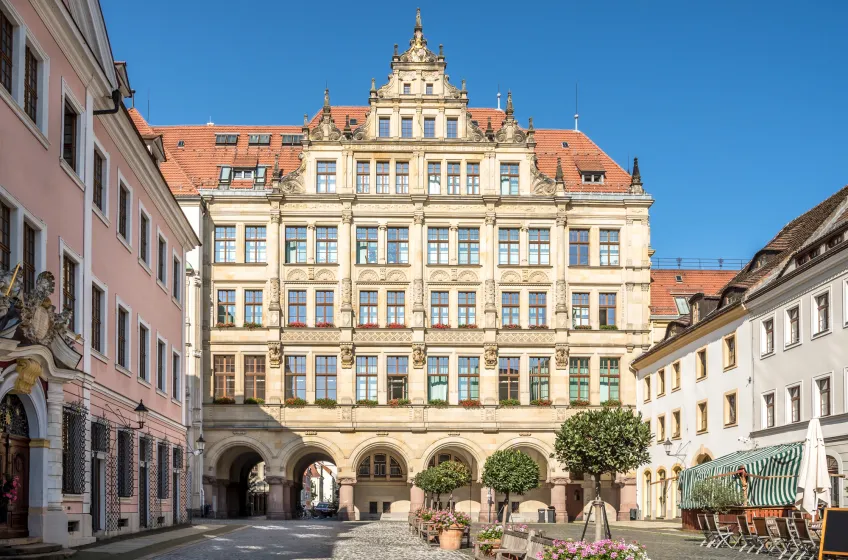
Görlitz is worth visiting for its architectural diversity, unspoiled beauty, and unique cross-border character. Unlike many German towns that were heavily damaged during WWII, Görlitz survived almost completely intact. As a result, it boasts over 4,000 protected historic buildings, making it one of the best-preserved historic towns in all of Europe.
What makes Görlitz even more special is its role as a film location — it’s often nicknamed “Görliwood” thanks to appearances in films such as The Grand Budapest Hotel, Inglourious Basterds, and The Reader. Many of its streets and interiors remain just as they appear on screen, offering visitors the feeling of stepping into a historical film set.
Additionally, Görlitz sits right on the River Neisse, and a pedestrian bridge connects it with Zgorzelec, its Polish twin town. Crossing from one country to another by foot in the heart of Europe is a unique and charming experience.
Whether you're captivated by grand churches, fascinated by history, or simply love a slow-paced, scenic city break, Görlitz offers something genuinely different.
Görlitz Highlights: Things to See and Do in Görlitz
Görlitz Old Town (Altstadt)
The Old Town is the heart and soul of Görlitz, filled with cobblestone streets, merchant houses, and architectural details from a dozen different eras. The best way to experience it is simply by wandering. Look out for oriel windows, arcades, and beautifully restored facades in every direction. The Obermarkt (Upper Market) and Untermarkt (Lower Market) are the main squares, lined with stately buildings and bustling cafés. The Rathaus (Town Hall) features a 16th-century astronomical clock and ornate tower — don’t miss the lion’s head with the moving tongue!
Peterskirche (St. Peter and Paul’s Church)
This dramatic late-Gothic church, with twin spires towering over the River Neisse, is one of Görlitz’s most iconic sights. Inside, you’ll find a vast nave and the world-famous Sonnenorgel (Sun Organ), known for its rich, clear sound and sunburst design. Try to attend a concert or organ performance if you can — the acoustics are extraordinary.
The Görlitz Department Store (Kaufhaus Görlitz)
This Art Nouveau masterpiece is a dream come true for architecture lovers and film fans alike. It famously featured in The Grand Budapest Hotel as the hotel lobby. Although it’s not a functioning department store at the moment, it regularly opens for guided tours and exhibitions, and restoration plans are underway. The sweeping staircases, elegant glass ceilings, and decorative ironwork are simply breathtaking.
Silesian Museum (Schlesisches Museum)
Housed in the Schönhof, one of the oldest Renaissance buildings in Germany, this museum explores the cultural and historical legacy of Silesia, the wider region that Görlitz was historically part of. It’s an absorbing visit for anyone interested in Central European history, offering context on the shifting borders, populations, and cultures over the centuries.
Nikolaivorstadt and Nikolaiturm
Just outside the historic core lies the peaceful Nikolaivorstadt district, home to quiet lanes and the Nikolaiturm, a medieval tower that once formed part of the city’s fortifications. You can climb the tower for views over the rooftops of Görlitz. The nearby Nikolaifriedhof (cemetery) is beautifully maintained and the resting place of many notable citizens.
Holy Sepulchre Complex (Heiliges Grab)
This religious site is one of the most important replicas of Jerusalem’s Holy Sepulchre in Europe. Built in the 15th century by a local merchant after a pilgrimage, it includes the Chapel of the Holy Cross, the Mount of Olives, and the Holy Tomb. It remains a site of pilgrimage and offers a quiet, spiritual atmosphere in a leafy setting.
The City Walls and Towers
Görlitz’s medieval fortifications are still visible in many places, including impressive towers like the Dicker Turm (Fat Tower) and Reichenbacher Turm. These structures provide insight into the town’s defensive past and offer excellent vantage points if you’re up for the climb.
The Viaduct and River Walk
The old railway viaduct that spans the River Neisse is one of Görlitz’s most photogenic landmarks. Stroll along the riverbanks and enjoy peaceful green spaces, swans on the water, and the sound of church bells from both sides of the border.
Cross into Zgorzelec (Poland)
A short walk across the pedestrian bridge takes you into Zgorzelec, Poland. Though smaller and more modern than Görlitz, it’s lovely for a riverside walk or to grab a bite to eat. The cultural centre Dom Kultury often hosts concerts and events, and it’s fun to compare the differences — and similarities — between the two towns.
Historic Courtyards and Passageways
Keep an eye out for hidden courtyards throughout the city centre. Many are open to the public and offer charming views of historic staircases, old stonework, and quiet gardens. The most famous is the Brauner Hirsch courtyard, near the Lower Market.
Film Locations Tour
Görlitz’s appeal to filmmakers is well-documented, and several guided tours take you to key filming locations from productions like The Book Thief, The Grand Budapest Hotel, and Goethe!. Even without a guide, it’s fun to spot scenes from familiar films as you walk the streets.
Görlitz Zoo and Nature Park
For families or those wanting a nature break, the Görlitz Nature Park and Zoo is a short distance from the town centre and features a mix of native and exotic animals, including red pandas, lynxes, and farm animals. It’s a relaxing green space and surprisingly extensive for a small-town zoo.
St. Nicholas Tower & Church Ruins (St. Nikolaikirche)
The gothic tower of the old St. Nicholas Church is still standing, though the rest of the church was destroyed. The ruins have been partially preserved and now serve as a memorial space. The tower offers another chance for a panoramic view over the town.
Practical Advice for Visitors
Getting There
Görlitz is located in eastern Saxony, near the Polish border. It’s easily accessible by train, car, or bus.
From Dresden, the train journey takes about 1.5 to 2 hours and is quite scenic. Trains run regularly from Dresden Hauptbahnhof or Neustadt stations. From Berlin, it's a longer trip — about 3 to 4 hours by train with one or two changes, but still very doable as a day trip or overnight stay.
If you’re driving, Görlitz is reached via the A4 Autobahn, about 90 minutes from Dresden and roughly two hours from Wrocław, Poland. The proximity to both German and Polish cities makes it an excellent base for cross-border travel.
The nearest airport is Dresden International, followed by Wrocław Airport in Poland.
Parking
There are several car parks and parking garages near the Old Town, including City Center Parkplatz, Frauentorplatz, and Königshufen. Street parking is available but regulated — make sure to pay attention to signs and fees. Parking is generally inexpensive and hassle-free compared to larger cities.
Dining
Görlitz has a surprisingly strong culinary scene, with a mix of Saxon, Silesian, and modern European cuisine. For traditional fare in a historic setting, try Gaststätte Dreibeiniger Hund, tucked away near the Lower Market. Lucie Schulte offers upscale modern dining in a beautiful old-world atmosphere.
Filetto Nero is a favourite for Italian food, and Patrizierhaus St. Jonathan is excellent for seasonal and regional German dishes. For coffee and cake, Café Herzstück and Kaffeehaus Lucullus are lovely options with plenty of charm.
Try local Silesian specialities such as Mohnklöße (poppy seed dumplings), Quarkkeulchen (fried cheese curd cakes), and locally brewed beer from Landskron Brewery.
Shopping
Görlitz is ideal for browsing small, independent shops. Along Bismarckstraße, Berliner Straße, and the streets radiating from the main squares, you’ll find antique shops, art galleries, second-hand bookshops, and boutiques.
The town is also known for handmade crafts, including ceramics, textiles, and wooden toys. Be sure to pick up something featuring the Sonnenorgel or local symbols, often sold as souvenirs in museum shops and artisan studios.
When to Visit
The best time to visit Görlitz is from May to September, when the weather is pleasant, the riverbanks are green, and events are in full swing. Spring brings blossoms and fewer crowds, while summer offers long evenings and open-air concerts.
Autumn is atmospheric with golden light and harvest markets, while December brings the magical Görlitz Christmas Market, which spreads through the historic squares in a warm and festive glow.
Winter is quieter but still beautiful, especially if you're after a peaceful city break.
Local Events
Altstadtfest (Old Town Festival) – Held in late August, this vibrant weekend transforms the town centre into a hub of music, medieval markets, and street performers. It’s the highlight of the local calendar.
Görlitz Jazz Festival – A must for music lovers, this autumn festival draws jazz musicians from across Europe and fills the city with lively rhythms.
Christmas Market (Schlesischer Christkindelmarkt) – One of the most picturesque small-town Christmas markets in Germany, held throughout Advent with traditional stalls, festive treats, and performances in the old town.
Silesian Tippelmarkt – A traditional pottery and craft market held in June, featuring artisans from the region selling hand-thrown pottery, ceramics, and local foods.
Exploring Beyond Görlitz
Zgorzelec (Poland) is directly across the pedestrian bridge and worth exploring for its riverside promenade, Polish cuisine, and shopping opportunities. It’s an easy way to add an international dimension to your trip.
Bad Muskau and Muskau Park – Around 40 minutes north, this UNESCO-listed park straddles Germany and Poland and was designed by Prince Pückler. It’s ideal for a day trip to enjoy English-style gardens, lakes, and a fairytale castle.
Löbau – A small town west of Görlitz with a curious cast-iron tower (the King Frederick Augustus Tower) and a historic modernist villa — Haus Schminke, one of Germany’s most important Bauhaus-era buildings.
Oybin and Zittau Mountains – About an hour south, this mountainous area is full of hiking trails, sandstone formations, and romantic ruins, including the hilltop Oybin Monastery, cloaked in forest and mist.
In summary, Görlitz is a place that takes you by surprise — a town of cinematic beauty, gentle rhythms, and cross-cultural stories. Whether you're hunting for filming locations, fascinated by old-world architecture, or just want to relax in one of the prettiest corners of Germany, Görlitz promises an experience that is both authentic and unforgettable.
Shortlist
- Your Shortlist is empty