
A Visitor's Introduction to Notre Dame Cathedral, Paris
Notre-Dame de Paris, one of the most significant architectural and religious landmarks in France, has officially reopened to the public in December 2024 following an extensive five-year restoration. Located on the Île de la Cité in central Paris, the cathedral has stood for more than 860 years as a masterpiece of French Gothic architecture and a symbol of the city’s spiritual and cultural life.
The cathedral was originally constructed between 1163 and 1345 and has been the site of numerous historic events, from royal weddings and coronations to national memorial services. Severely damaged by a fire in April 2019 that destroyed its roof and spire, Notre-Dame underwent a meticulous reconstruction effort that involved artisans, historians, architects, and craftspeople from across the country. Its reopening marks not only the return of a treasured monument but also the preservation of a major part of Parisian and European heritage.
Now fully restored and once again open to visitors and worshippers alike, Notre-Dame offers a blend of historical authenticity and renewed vitality, reclaiming its position as a centrepiece of Paris.
Recommended accommodation near Notre Dame: Hotels
Pre-book Notre Dame Skip-the-Line Tickets & Guided Tours
Why is Notre Dame worth a visit?
Notre-Dame is not only an outstanding example of Gothic architecture but also a living monument that reflects the layers of French history. From the time of its medieval construction to its 21st-century rebirth, the cathedral has borne witness to centuries of art, politics, and faith. Visitors can once again step inside and experience its vast nave, admire the restored stained glass windows, and appreciate the craftsmanship of the newly rebuilt wooden roof and spire.
The reopening provides a rare opportunity to see the results of one of the most ambitious heritage projects in recent history. Painstakingly restored using traditional methods and materials—oak timbers, lead roofing, and stone carvings—the project reflects France’s dedication to architectural preservation. Modern safety and accessibility improvements have also been introduced subtly, ensuring the cathedral is welcoming to a broader public without compromising its historic integrity.
In addition, Notre-Dame remains an active place of worship. Daily Masses, confessions, and major liturgical events have resumed, inviting not only tourists but also pilgrims and Parisians back into this sacred space. The sense of collective effort and emotional resonance surrounding its restoration adds a new layer of meaning to every visit.
Notre Dame Highlights
The Restored Roof and Spire
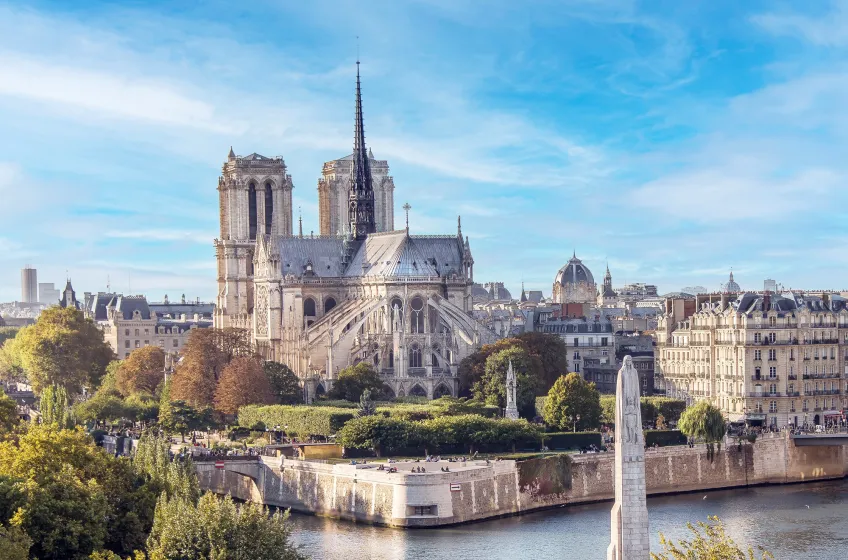
One of the most visually dramatic elements of the restoration is the rebuilt spire, a faithful replica of the 19th-century version by architect Eugène Viollet-le-Duc, which collapsed during the 2019 fire. The spire rises again above the transept, constructed using traditional carpentry methods and clad in lead. It now houses a new rooster-shaped weather vane containing relics saved from the original.
The wooden framework supporting the roof, known as “la forêt” (the forest) due to its hundreds of oak beams, has been rebuilt using timber sourced from French forests. This architectural feat has revived centuries-old techniques and has become a symbol of craftsmanship and renewal.
The Interior Nave and Choir
Visitors can once again enter the cathedral’s magnificent interior, which includes a soaring rib-vaulted ceiling, long central nave, and intricately carved choir stalls. The nave is designed to draw the eye toward the altar and apse, where dramatic lighting enhances the sense of verticality and spiritual transcendence.
The choir screen, chapels, and 14th-century sculpture groups have all been cleaned and restored. Many side chapels now feature newly interpreted displays and improved lighting, offering insights into their artistic and devotional importance.
The Rose Windows
Notre-Dame’s three great rose windows—the west, north and south—are among the finest in Europe and miraculously survived the fire intact. Composed of thousands of pieces of stained glass, these windows depict biblical scenes and saints in luminous colour. The restoration included delicate cleaning and protective reinforcement to ensure their continued preservation.
The Organ and Acoustics
The cathedral’s great organ, with nearly 8,000 pipes, was dismantled and cleaned in the years following the fire. It has now been fully restored and retuned. Known for its powerful sound and rich tonal range, the organ is again used during services and concerts. The acoustics of the cathedral, shaped by its vast stone vaults, remain one of its most moving sensory experiences.
The Treasury
The restored Treasury of Notre-Dame, located in the sacristy, is now open to visitors. It contains important religious relics, liturgical objects, and sacred vestments. Among the most revered items are the Crown of Thorns, a fragment of the True Cross, and one of the Holy Nails, all of which were saved during the 2019 fire and are now displayed with renewed security and interpretation.
Sculptural Decoration and Gargoyles
The cathedral’s façades are covered with hundreds of sculpted figures, including biblical scenes, saints, and allegorical creatures. The famous gargoyles and chimeras—many of which were added in the 19th century—have been cleaned and stabilised. The western façade, with its three intricately carved portals, is once again a visual focal point for those approaching from the Parvis.
The Towers
The twin towers on the western façade, standing 69 metres tall, are open once again to visitors willing to climb the 387 steps. The ascent offers panoramic views over Paris and a close look at the belfry and its massive bells, including Emmanuel, the cathedral’s largest bell weighing over 13 tonnes. The towers also provide a rare vantage point of the newly restored roof and spire.
Lighting and Presentation
New lighting systems have been discreetly integrated throughout the cathedral, highlighting architectural features, sculptures, and artworks. The improved presentation ensures a more contemplative and accessible visitor experience, both during the day and for special evening events.
Archaeological Crypt
The Crypt beneath the square in front of the cathedral remains open and offers archaeological insights into the history of Paris from Roman times to the modern era. Exhibits have been updated to reflect the recent restoration of the cathedral, and include digital displays and artefacts from past excavations.
Facilities
Notre-Dame now features updated visitor facilities following its reopening. A modern welcome centre has been created adjacent to the cathedral, offering multilingual information, toilets, lockers, and accessibility services. The main entrance is equipped with security screening, and pathways have been improved to accommodate those with reduced mobility.
Inside the cathedral, visitors will find printed guides, interactive displays, and updated signage in French and English. Guided tours are available daily and include general overviews as well as thematic explorations of architecture, theology, and restoration techniques.
There is no entrance fee for general admission to the cathedral, though separate tickets are required for the tower climb, treasury, and certain guided experiences. The Treasury and tower are accessible via designated entrances.
Outside the cathedral, the parvis (forecourt) has been redesigned to offer more space for visitors and interpretive displays. A small gift shop, located nearby, sells religious items, books, and souvenirs related to Notre-Dame and its history.
Nearby Attractions
Notre-Dame sits at the heart of historic Paris, surrounded by significant cultural landmarks. Directly to the east lies the square Jean XXIII and the memorial to the deportation of Jews during World War II. The garden behind the cathedral offers a quiet spot to sit with views of the apse and flying buttresses.
A short walk west leads to Sainte-Chapelle, a 13th-century royal chapel famed for its vivid stained glass windows. It is located within the Palais de Justice complex, which also houses the historic Conciergerie prison where Marie Antoinette was held before her execution.
Also on the Île de la Cité is the Marché aux Fleurs (flower market), operating daily and known for its colourful seasonal blooms. Across the bridge to the south is the Latin Quarter, with attractions such as the Panthéon, the Cluny Museum (Musée de Cluny), and the Luxembourg Gardens.
To the north lies the Marais district, featuring the Hôtel de Ville (City Hall), Place des Vosges, and the Centre Pompidou, which houses the National Museum of Modern Art. The Seine-side bookstalls (bouquinistes) along the riverbanks remain a quintessential Paris experience.
Practical Advice
With the cathedral now reopened, demand for entry—especially to the towers and special exhibits—is high. Visitors are advised to book timed tickets in advance online for tower access and guided tours. General admission to the cathedral remains free and does not require advance booking, though queues may form during peak hours.
Security screening is in place at all entrances, and large bags are not permitted. It is advisable to travel light and allow extra time during busy periods, especially on weekends and public holidays.
Notre-Dame is open daily, with services held throughout the week and public visiting hours usually starting mid-morning and ending in the early evening. Special concerts and evening events are occasionally held and may require separate registration.
The nearest public transport stops are Cité (Metro Line 4) and Saint-Michel – Notre-Dame (RER B and C), both a short walk from the cathedral. The area is also well connected by bus routes and pedestrian-friendly streets.
Photography is permitted inside the cathedral for personal use, though flash and tripods are not allowed. Silence is requested during religious services, and respectful dress is encouraged.
For those with mobility needs, step-free access is available to the main entrance, and assistance can be requested on-site. Audio guides and printed materials are available in multiple languages, and a new mobile app offers digital tours, historical commentary, and updates on events.
Visiting Notre-Dame in its renewed form offers a unique chance to witness history reborn. Whether viewed as a sacred site, an artistic masterpiece, or a monument to resilience, the cathedral continues to be one of Paris’s most meaningful and evocative destinations.
Shortlist
- Your Shortlist is empty